The North Coast 500, the great loop round the north of Scotland
An 830-kilometre loop from Inverness, through the mountains of the west coast, the beaches of the north and the cliffs of Caithness. Nine days on roads that are often single-track, at the pace of the passing places.
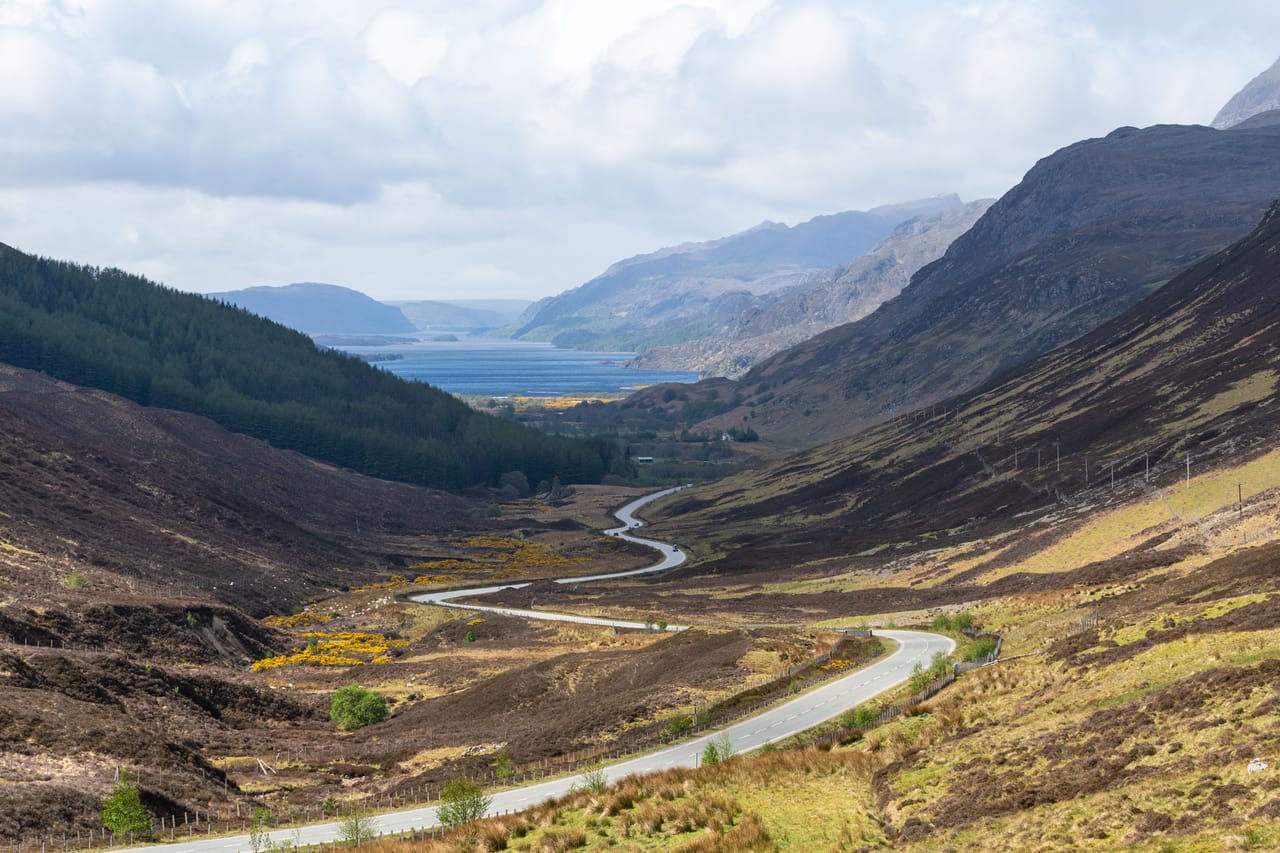
The loop of the Northern Highlands
The North Coast 500 goes round the north of Scotland from Inverness: about 830 kilometres. On the west and north coasts, the road is often single-track. At the passing places, you pull in on the left to let the oncoming car go by, and drivers wave to each other. You drive slowly, among the sheep and the deer.
The Bealach na Bà climbs from the sea to 630 metres in nine kilometres, with gradients close to 20%. From the top you can see Skye, then you drop back down to Applecross. Next come the mountains of Torridon, Loch Maree, the harbour of Ullapool and the white sand of Achmelvich.
In the north, the Kylesku Bridge, opened in 1984, spans a sea loch. The road then goes from one bay to the next. Then Caithness opens out, flat and edged with high cliffs, with Dunnet Head, the northernmost point of mainland Britain. The way back follows the firths of the east coast, where people watch for dolphins at Chanonry Point.
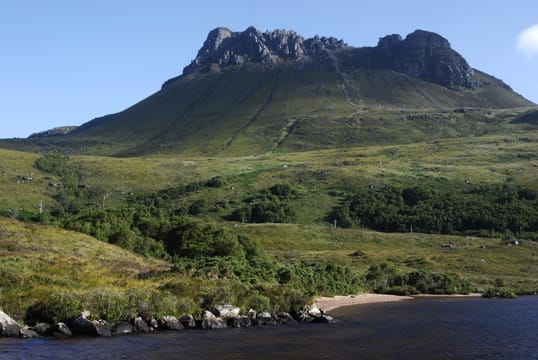
The North West Highlands Geopark
Part of the north-west is Scotland’s first geopark, created in 2004 and a UNESCO Global Geopark since 2015. The bedrock is a gneiss about three billion years old, among the oldest rocks in Britain. On the surface, it is low moorland dotted with small lochs. Above it rise lone mountains of Torridonian sandstone: Suilven, Quinag, Stac Pollaidh. Stac Pollaidh is only 612 metres high, but its jagged ridge can be seen from far away. A path goes all the way round it from Loch Lurgainn.
At Knockan Crag, north of Ullapool, a path runs along a cliff. Older rocks lie there on top of younger ones. Movements of the Earth’s crust pushed them westwards. This is the Moine Thrust. The geologists Ben Peach and John Horne explained it in the 1880s.
At Durness, the sea and a stream have carved Smoo Cave out of the limestone. Its entrance, about 40 metres wide, is said to be the largest sea-cave entrance in Britain.
The sheep brought in more than the families who lived there.
The Sutherland Clearances
In the early 19th century, the landowners of Sutherland emptied the inland glens to make way for large sheep farms. The sheep brought in more than the families who lived there. Between 1807 and 1821, thousands of people were sent to the coast to live by fishing; others emigrated. In 1814, in Strathnaver, the factor Patrick Sellar had houses burned. He was tried, and acquitted in 1816.
In Bettyhill, the Strathnaver Museum tells the story of these evictions. Near Durness, a path crosses the ruins of the village of Ceannabeinne. On the east coast, Dunrobin Castle, the seat of the Dukes of Sutherland, shows the landowners’ side, with towers in the style of French châteaux.
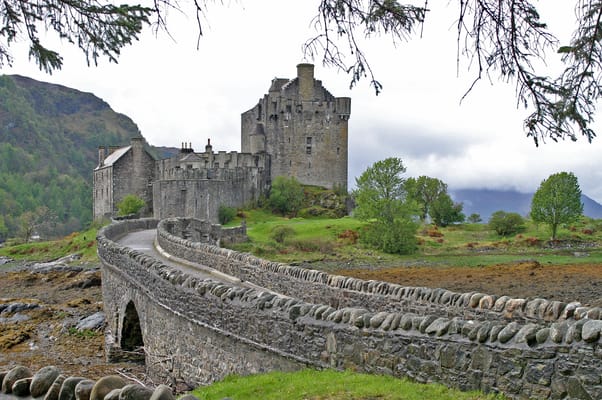
Eilean Donan Castle
A castle on an islet where three lochs meet, joined to the shore by a stone bridge. Destroyed in 1719, it was rebuilt between 1919 and 1932. You may have seen it in Highlander.
Practical notes
- When to go
- May to September, with days of nearly 18 hours in June. From June to September, bring repellent against midges, tiny biting flies.
- Getting there
- Inverness is about three and a half hours from Edinburgh on the A9. Airport and railway station in Inverness.
- Access
- You drive on the left, with no tolls. In a caravan or a large motorhome, go round the Bealach na Bà via Shieldaig (A896). Also avoid the B869, the coast road at Drumbeg: take the A837 then the A894. Satnavs often pick the B869, which is shorter.
- Sleeping in a van
- Scotland’s right of access does not cover spending the night in a vehicle, and several car parks ban it. Sleep at a campsite or on an aire, and book ahead in summer. Fill up in Ullapool, as petrol stations are scarce after that.
- Worth knowing
- Dunrobin opens from April to October, the Castle of Mey from May to September, Wednesday to Sunday, except for two weeks between late July and early August. No visitor levy is charged in the Highlands; one is being considered.
- Allow
- Nine days for the loop, two more for walking.
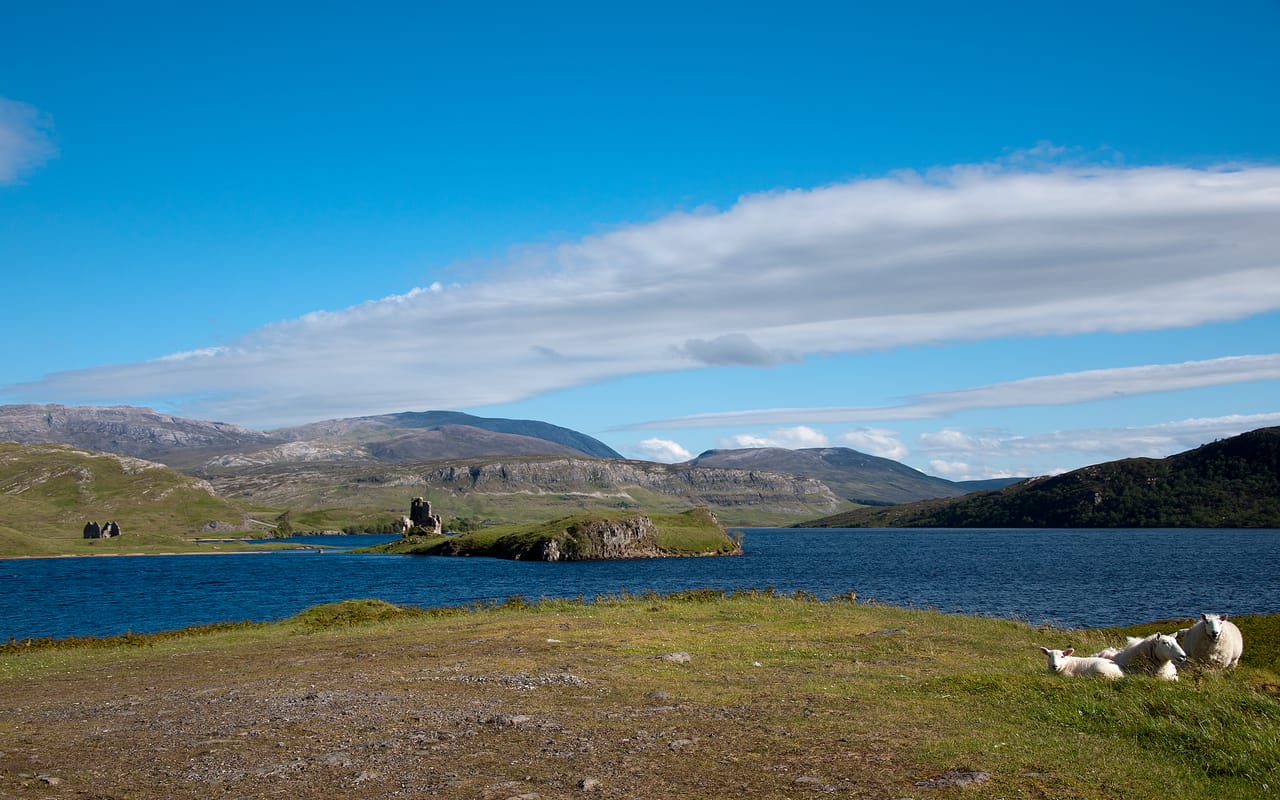
What not to miss
- 1Corrieshalloch GorgeA suspension footbridge over a gorge 60 metres deep and a 46-metre waterfall.
- 2Inverewe GardenA garden laid out in 1862, where plants from all over the world grow thanks to the North Atlantic Drift.
- 3Ardvreck CastleThe ruined stronghold of the MacLeods of Assynt, where the Marquis of Montrose was handed over to his enemies in 1650.
- 4Dunnet Head and DuncansbyThe lighthouse on the northernmost point of mainland Britain, then the sea stacks near John o’ Groats.
- 5Whaligoe StepsMore than 300 steps cut into the cliff, which the women climbed carrying loads of herring.
- 6Culloden and ClavaThe moor of the last pitched battle in Britain, in 1746, and Bronze Age cairns.
The North Coast 500 in pictures
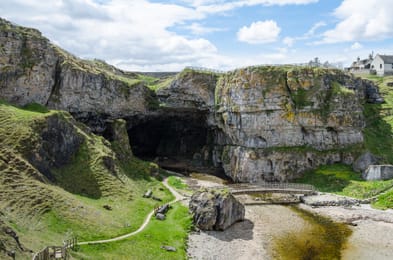
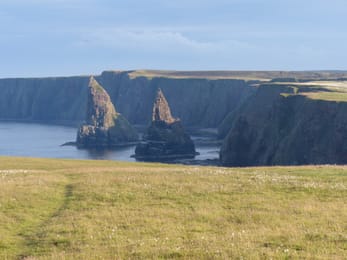
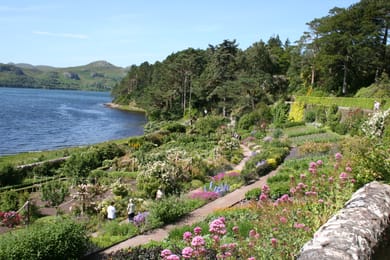
The entrance to Smoo Cave, beneath its limestone cliffs.
Food in the Highlands
On the west coast, langoustines and scallops come straight off the boats. Cullen skink, a soup of smoked haddock and potatoes, is on most menus, and so is venison.
The loop passes several whisky distilleries: Glenmorangie in Tain, with the tallest stills in Scotland, Old Pulteney in Wick, and Wolfburn in Thurso. Kitchens often close around 8 pm: in summer, book ahead.
Loop from Inverness


 +33stops
- 1Inverness Castle · Rogie Falls · Strome Castle · Bealach na Bà
- 2Sand, Applecross · Shieldaig Island · Glen Torridon · Victoria Falls
- 3Gairloch Museum · Inverewe Garden · Corrieshalloch Gorge · Ullapool
Free, no account needed — start from its places and make it yours.
Also worth reading
Wide open spaces
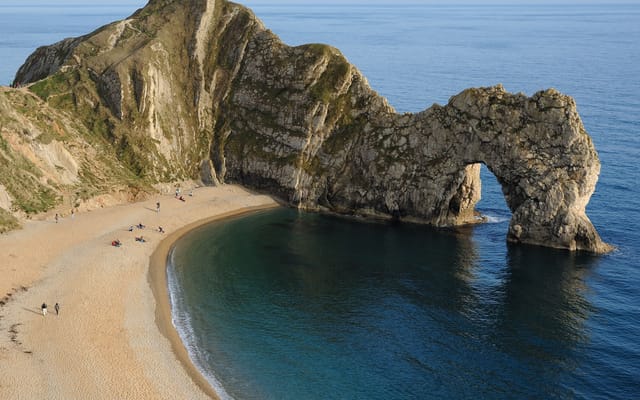
The Jurassic Coast, from Exmouth to Studland
On England’s south coast, red, then golden, then white cliffs show 185 million years of the Earth’s history. This trip follows them over five days, from Exmouth in Devon to Studland in Dorset.
Wide open spaces
The West Highlands, from Glasgow to Inverness
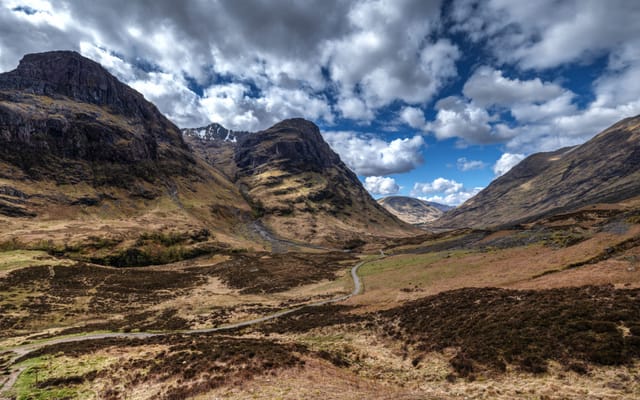
Six days from Glasgow to Inverness on the great road through the west of Scotland. Lochs, Rannoch Moor, Glencoe, the Road to the Isles and castles by the water.
Wide open spaces
The Lake District, from Windermere to Ullswater
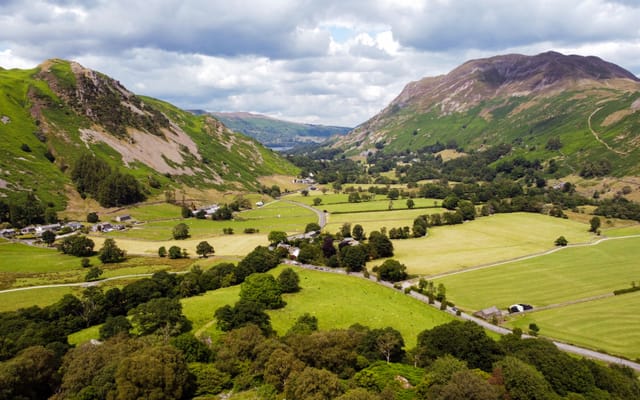
Lakes at the bottom of glacial valleys, single-track passes and villages of grey stone, in the north-west of England. A five-day loop from Kendal, in the country of Wordsworth and Beatrix Potter.
A starting point, a few wishes — ViaLooma builds the trip day by day, map, stops and roadbook included.