The West Highlands, from Glasgow to Inverness
Six days from Glasgow to Inverness on the great road through the west of Scotland. Lochs, Rannoch Moor, Glencoe, the Road to the Isles and castles by the water.
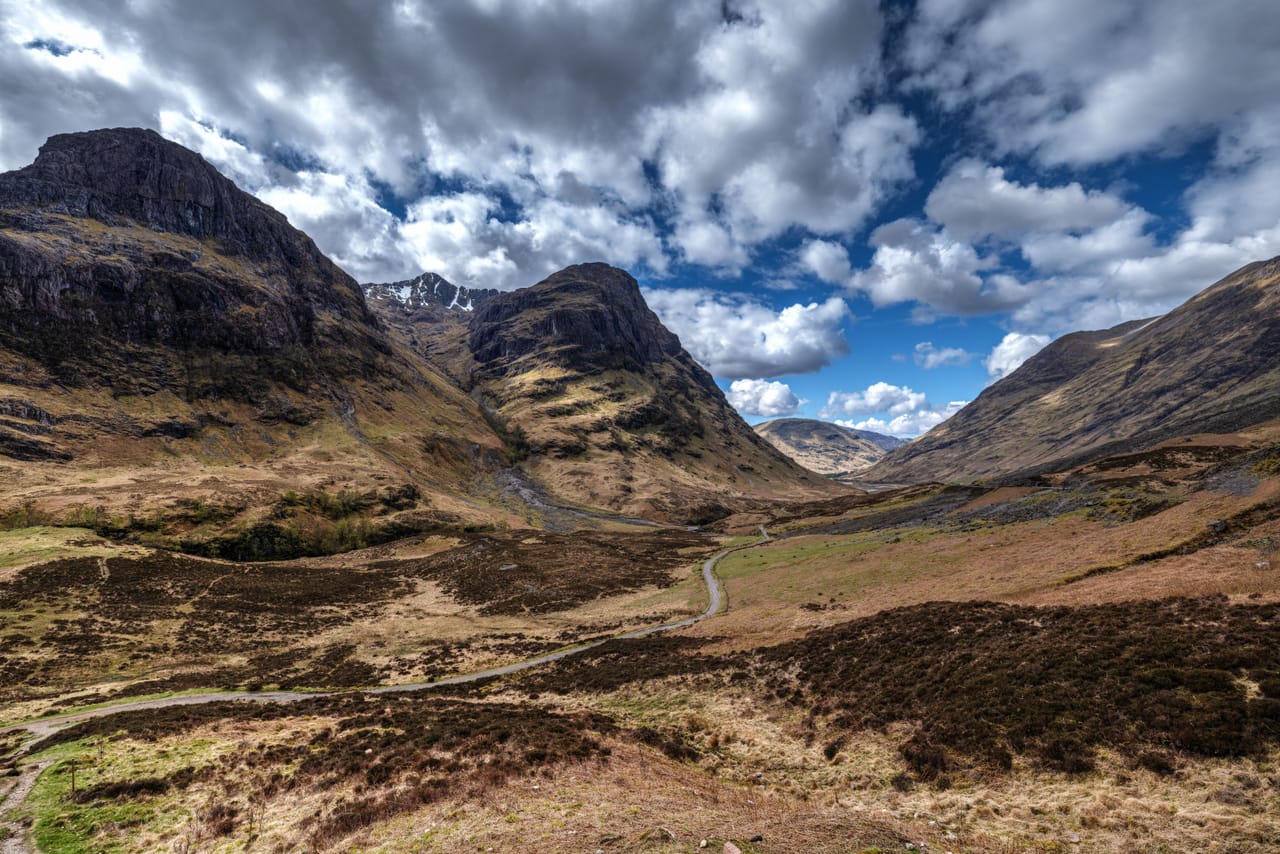
Lochs, moors and castles
The journey starts in Glasgow and mainly follows the A82, the great road of the Highlands. It first runs along Loch Lomond, the largest body of fresh water in Great Britain. At Tarbet, the A83 branches off, crosses the Rest and Be Thankful pass and drops down to Loch Fyne and Inveraray.
Beyond Bridge of Orchy, the A82 climbs onto Rannoch Moor, a plateau of peat bog and small lochs with almost no trees. Buachaille Etive Mòr rises beside the road, then the A82 drops into Glencoe, between the Three Sisters and the Aonach Eagach ridge. At Fort William, Glen Nevis runs up along the foot of Ben Nevis, the highest summit in the British Isles (1,345 metres).
The Road to the Isles leads from Fort William to the port of Mallaig, past the Glenfinnan Viaduct and the white sand beaches of Morar. No coastal road continues north: you go back through Fort William to reach Glen Shiel and Eilean Donan Castle. The last day follows Loch Ness to Inverness.
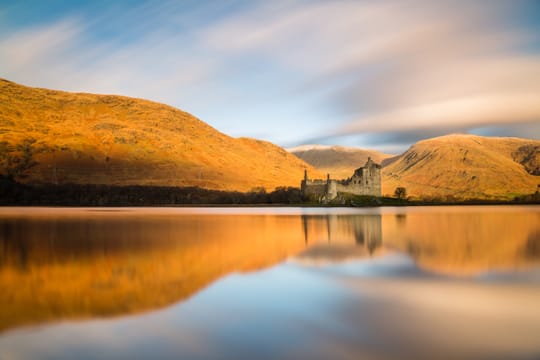
The Clans and the Jacobites
Kilchurn Castle was built around 1450 by the Campbells of Glenorchy, at the head of Loch Awe. Another branch of the clan, the Dukes of Argyll, rebuilt the castle and town of Inveraray in the 18th century. On 13 February 1692, in Glencoe, soldiers of Argyll’s Regiment, led by Robert Campbell of Glenlyon, turned on the MacDonalds who had been lodging them for almost two weeks. About thirty men were killed at dawn.
The pretext: the MacDonald chief had sworn his oath to King William III a few days late. Other people died of cold as they fled into the mountains.
The road also crosses paths with the Jacobites, supporters of the exiled Stuarts. Prince Charles Edward Stuart raised his standard at Glenfinnan on 19 August 1745. His army was defeated on 16 April 1746 at Culloden, near Inverness: it was the last pitched battle fought on British soil. So the journey links Glenfinnan to Culloden, from the beginning to the end of the last Jacobite rising.
So the journey links Glenfinnan to Culloden, from the beginning to the end of the last Jacobite rising.
Volcanoes, glaciers and the Great Glen fault
Glencoe is what remains of a volcano that was active about 420 million years ago. Its centre collapsed along a circular fault: it is one of the first places where this kind of caldera was described. Later, glaciers carved out the U-shaped valleys and left large boulders on Rannoch Moor.
The Great Glen follows a fault that cuts diagonally across Scotland. Its lochs, including Loch Ness, about 230 metres deep, are linked by Thomas Telford’s Caledonian Canal, opened in 1822. At Banavie, Neptune’s Staircase lines up eight locks: it is the longest staircase lock in Britain.
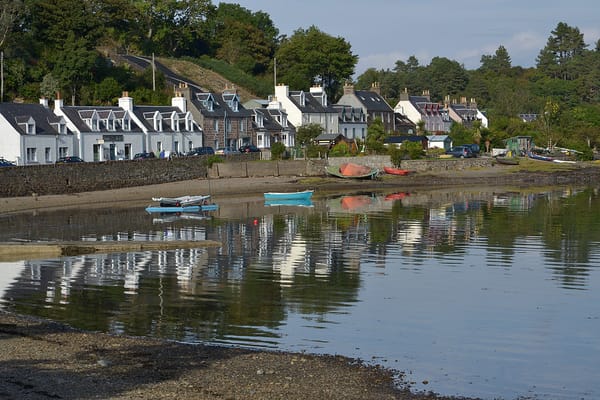
Plockton
A fishing village of white houses on a sheltered bay of Loch Carron. Thanks to the mild climate, cordylines grow here; they look like palm trees. Boats go out to see the seals.
Practical notes
- When to go
- May and September: fewer midges than in high summer. In winter, many sites cut their opening hours.
- Getting there
- International airport in Glasgow. To get back, either drop the car off in Inverness (one-way fee) and take the train, or drive back on the A9. EU travellers need an Electronic Travel Authorisation (ETA).
- Access
- Drive on the left. Single-track roads in Glen Nevis and towards Plockton: pull into the passing places, but never park in them. The A83 sometimes closes after heavy rain: check Traffic Scotland.
- Sleeping in a van
- Campsites at Glencoe, Fort William, Morar and Loch Ness. Near Loch Lomond, from March to September, sleeping outside a campsite requires a permit booked online.
- Worth knowing
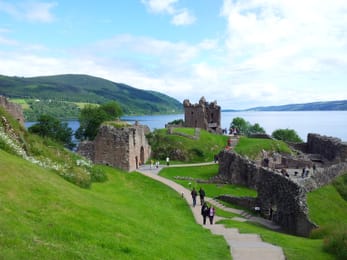
- Urquhart Castle: timed tickets, to book ahead in summer. In 2026, the Jacobite steam train ran from 1 June to 23 October; its 2027 dates have not yet been published.
- Allow
- Six days, or a week to add Oban, the ferry port for Mull, or the Isle of Skye, near Eilean Donan.
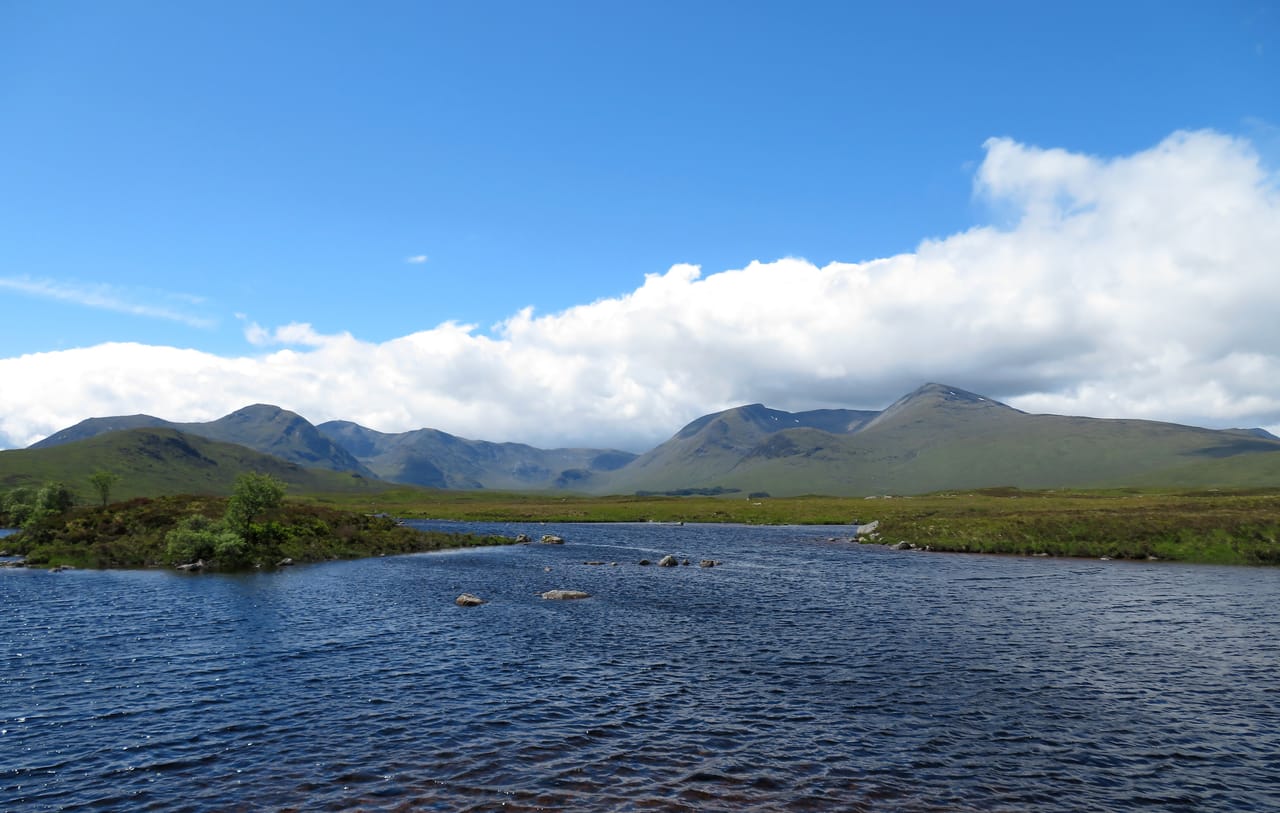
What not to miss
- 1InverarayA small white 18th-century town, below the castle of the Dukes of Argyll.
- 2Steall FallsA 120-metre drop at the head of Glen Nevis, 1.5 km on foot from the last car park.
- 3The Glenfinnan Viaduct21 concrete arches on the Mallaig line: it is the Hogwarts Express bridge.
- 4The beaches of MorarWhite sand facing the islands; Camusdarach was a location for the film Local Hero.
- 5Eilean DonanDestroyed in 1719 and rebuilt in the 20th century, the castle stands on its islet where three lochs meet.
- 6CullodenThe 1746 battlefield and, close by, the Clava Cairns, tombs about 4,000 years old.
The West Highlands in pictures
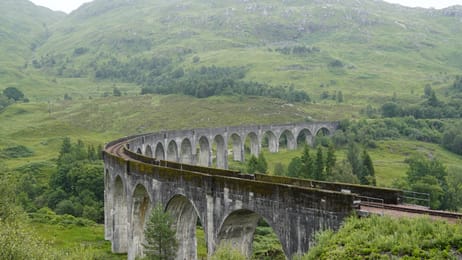
The arches of the Glenfinnan Viaduct, seen from above.
The Highland table
On the coast, you eat seafood: oysters and kippers, smoked herring, from Loch Fyne, and langoustines landed at Mallaig. Cullen skink is a soup of smoked haddock, potatoes and milk.
Haggis, a sheep’s stomach stuffed with offal and oats, is served with neeps and tatties, mashed swede and potatoes. Cranachan mixes cream, raspberries, oats, honey and whisky. You can visit the Ben Nevis distillery in Fort William, and the one in Oban if you pass through.
Glasgow → Inverness


 +19stops
- 1Glasgow Cathedral · Balloch Castle · Rest And Be Thankful · Inveraray Castle
- 2Kilchurn Castle · Lochan na h-Achlaise · Meeting of Three Waters · Loch Achtriochtan
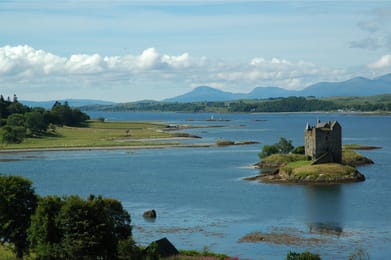
- 3Glencoe · Castle Stalker viewpoint · Glen Nevis Lower Falls
Free, no account needed — start from its places and make it yours.
Also worth reading
Wide open spaces
The Jurassic Coast, from Exmouth to Studland
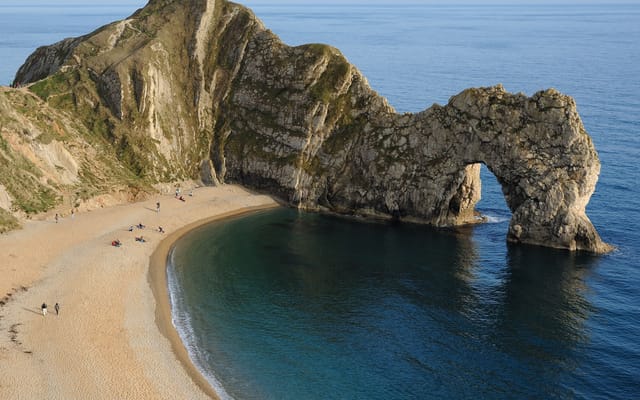
On England’s south coast, red, then golden, then white cliffs show 185 million years of the Earth’s history. This trip follows them over five days, from Exmouth in Devon to Studland in Dorset.
Wide open spaces
The North Coast 500, the great loop round the north of Scotland
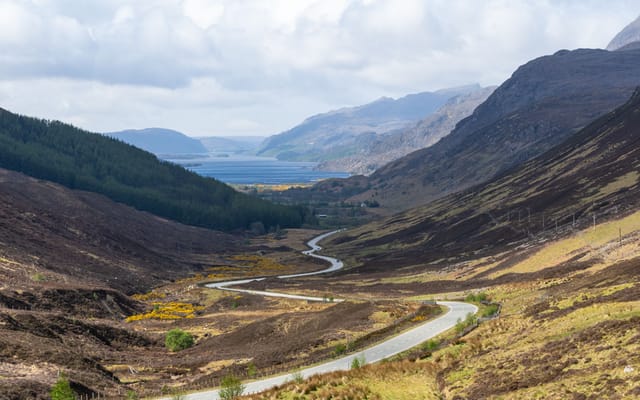
An 830-kilometre loop from Inverness, through the mountains of the west coast, the beaches of the north and the cliffs of Caithness. Nine days on roads that are often single-track, at the pace of the passing places.
Wide open spaces
The Lake District, from Windermere to Ullswater
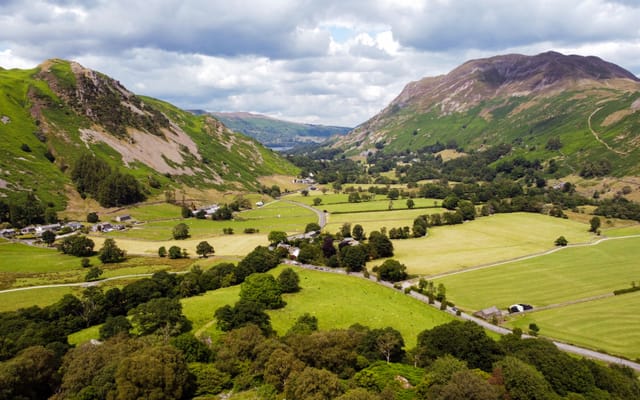
Lakes at the bottom of glacial valleys, single-track passes and villages of grey stone, in the north-west of England. A five-day loop from Kendal, in the country of Wordsworth and Beatrix Potter.
A starting point, a few wishes — ViaLooma builds the trip day by day, map, stops and roadbook included.