The Lake District, from Windermere to Ullswater
Lakes at the bottom of glacial valleys, single-track passes and villages of grey stone, in the north-west of England. A five-day loop from Kendal, in the country of Wordsworth and Beatrix Potter.
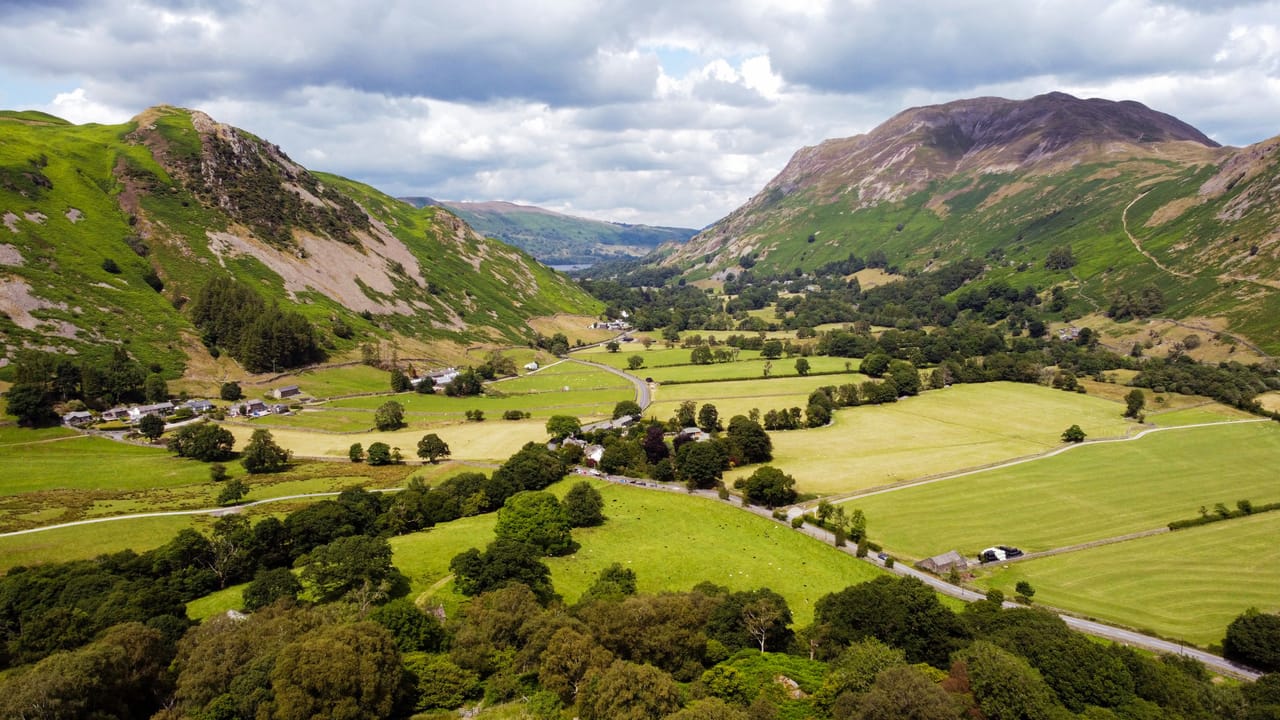
Lakes, fells and pass roads
The Lake District National Park means narrow lakes in the valley floors, bare mountains known here as fells, villages of grey stone and low stone walls everywhere. From Kendal, you soon reach Windermere, the largest lake in England, about 18 kilometres long. Boats run on it all year round.
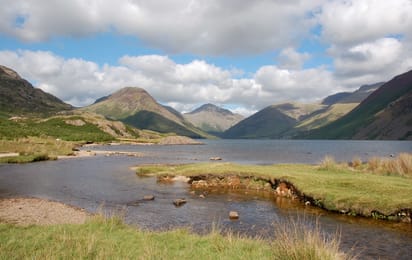
The heart of the trip lies to the west, on single-track roads. After the Wrynose Pass, at 393 metres, the Hardknott Pass drops down to Eskdale with gradients of up to 33%. You drive in first gear. Further on, the road up Wasdale runs beside Wast Water, England’s deepest lake (79 metres), and stops at the foot of Scafell Pike.
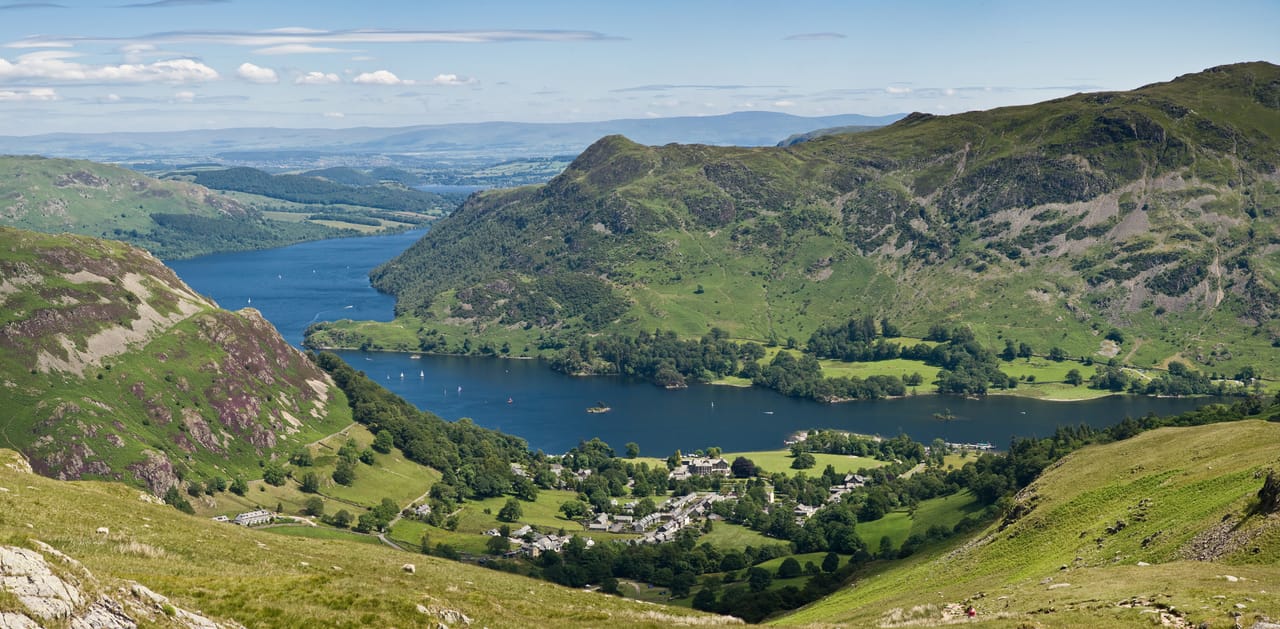
To the north, the Honister Pass links Buttermere with Borrowdale and Keswick. The loop ends with Ullswater, where a boat from 1877 still sails. You head back over the Kirkstone Pass, at 454 metres.
Wordsworth, Beatrix Potter and the National Trust
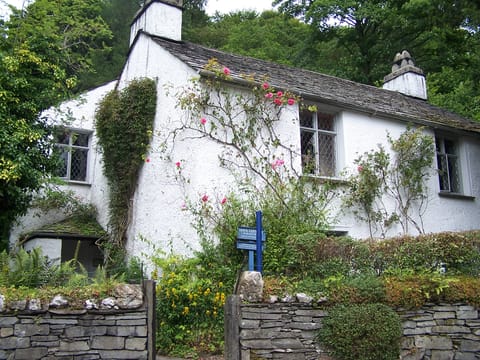
William Wordsworth was born in 1770 in Cockermouth, north-west of the park. From 1799 to 1808 he lived at Dove Cottage, in Grasmere, with his sister Dorothy. On 15 April 1802, Dorothy wrote in her journal of a long belt of daffodils on the shore of Ullswater. William turned it into ‘I Wandered Lonely as a Cloud’, published in 1807 and still his best-known poem. From 1813 until his death in 1850 he lived at Rydal Mount, a few kilometres away. Both houses are open to visitors.
From 1800, Coleridge and then Southey settled in Keswick. Wordsworth was already describing the region as ‘a sort of national property’. In 1895 Hardwicke Rawnsley, a vicar near Keswick, founded the National Trust with Octavia Hill and Robert Hunter.
In 1905 Beatrix Potter bought Hill Top farm, at Near Sawrey, with the money from Peter Rabbit. She bred Herdwick sheep and bought up farms to save them. When she died in 1943, she left the National Trust more than 1,600 hectares and fourteen farms.
Here, it is the landscape itself that is inscribed, not a monument.
A landscape shaped by people
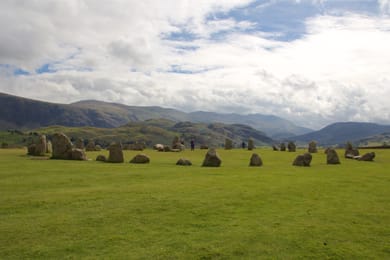
Near Keswick, the Castlerigg circle has some forty stones, raised around 3200 BC by current estimates. The Romans built the fort at Hardknott beside the pass, between AD 120 and 138. The Vikings, who settled in the 10th century, left the Gosforth cross, 4.4 metres high, and many words: fell (mountain), beck (stream), force (waterfall), tarn (small lake).
Above all, it was the farms that shaped today’s landscape: drystone walls, meadows on the valley floors and Herdwick sheep, a local breed that lives on the fells. In 2017 UNESCO inscribed the Lake District on the World Heritage List as a cultural landscape, for this farming, for the artists the region inspired and for its role in the early days of nature conservation. Here, it is the landscape itself that is inscribed, not a monument.
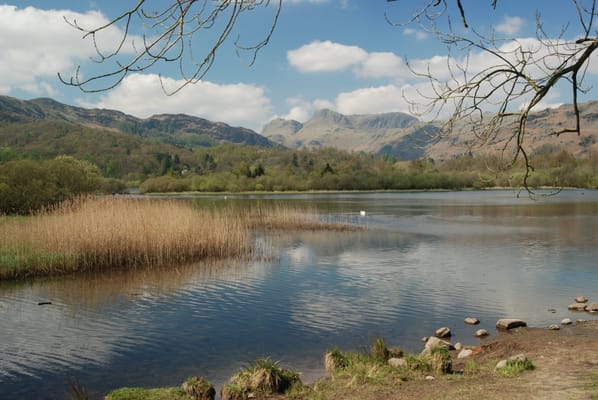
Great Langdale
A glacial valley closed off by the Langdale Pikes, with the small lake of Elterwater at its mouth and climbers’ inns at its head. In the Neolithic, stone axes were cut on its slopes, and they have been found all over Great Britain.
Practical notes
- When to go
- May–June and September. The daffodils flower in March–April. In summer, roads and car parks are packed; in winter, Hardknott and Wrynose can be icy or closed.
- Getting there
- Kendal is at junction 36 of the M6, about an hour and a half from Manchester Airport; the station is at Oxenholme. You drive on the left.
- Access
- Motorhomes, large vans and trailers avoid Hardknott and Wrynose: from Coniston, they reach Wasdale by the A593 and A595, along the coast. Honister climbs at 25%.
- Sleeping in a van
- No wild camping, and many car parks ban overnight stays. Plenty of campsites, including the National Trust’s at Great Langdale and Wasdale.
- Worth knowing
- Hill Top and its small car park must be booked, National Trust members included; the car park does not take vans or motorhomes. On a Sunday in May, the Fred Whitton sportive closes Hardknott and Wrynose.
- Allow
- Five days, one more to climb Scafell Pike (978 metres) from Wasdale Head.
What not to miss
- 1Windermere by boatBoats link Bowness with Ambleside and Lakeside.
- 2Hill TopBeatrix Potter’s farm, which you will recognise in the drawings in her books.
- 3Wasdale HeadAs the local saying goes: England’s highest mountain, deepest lake, smallest church and biggest liar.
- 4Coniston’s BluebirdSince 2024 the Ruskin Museum has shown Donald Campbell’s hydroplane, in which he was killed in 1967.
- 5Ashness BridgeA small stone bridge on the road to Watendlath, with Derwentwater and Skiddaw behind.
- 6Aira ForceA waterfall of about twenty metres in a wooded ravine, above Ullswater.
The Lake District in pictures
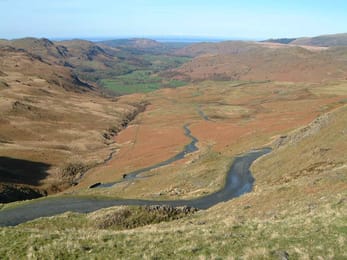
The road over Hardknott Pass, above the Eskdale valley.
Food in the Lake District
This is the cooking of sheep and cattle country. Cumberland sausage, rolled into a coil, has a protected geographical indication, and Herdwick lamb a protected designation of origin. For dessert, sticky toffee pudding, a date sponge covered in toffee sauce, made the village of Cartmel famous.
In Grasmere, a small shop sells Sarah Nelson’s gingerbread, made to a secret recipe from 1854. In Kendal, Kendal Mint Cake, a peppermint sugar bar taken up Everest in 1953, has been made since 1869.
Loop from Kendal


 +17stops
- 1Bowness-on-Windermere · Ambleside · Rydal Mount · Dove Cottage
- 2Hill Top Farm · Hawkshead · Tarn Hows · Coniston
- 3Wrynose Pass · Hardknott Pass · Wast Water · Church of St Olaf
Free, no account needed — start from its places and make it yours.
Also worth reading
Wide open spaces
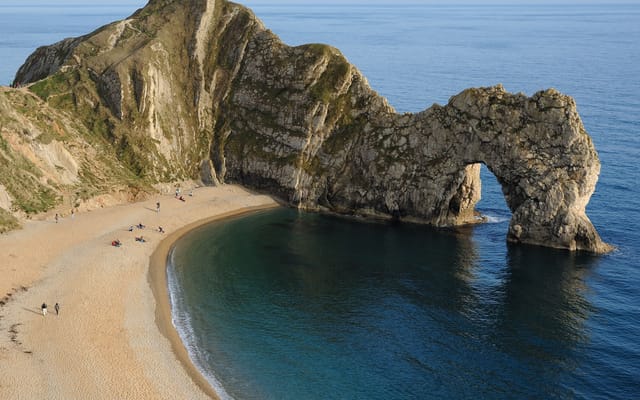
The Jurassic Coast, from Exmouth to Studland
On England’s south coast, red, then golden, then white cliffs show 185 million years of the Earth’s history. This trip follows them over five days, from Exmouth in Devon to Studland in Dorset.
Wide open spaces
The West Highlands, from Glasgow to Inverness
Six days from Glasgow to Inverness on the great road through the west of Scotland. Lochs, Rannoch Moor, Glencoe, the Road to the Isles and castles by the water.
Wide open spaces
The North Coast 500, the great loop round the north of Scotland
An 830-kilometre loop from Inverness, through the mountains of the west coast, the beaches of the north and the cliffs of Caithness. Nine days on roads that are often single-track, at the pace of the passing places.
A starting point, a few wishes — ViaLooma builds the trip day by day, map, stops and roadbook included.