The Jurassic Coast, from Exmouth to Studland
On England’s south coast, red, then golden, then white cliffs show 185 million years of the Earth’s history. This trip follows them over five days, from Exmouth in Devon to Studland in Dorset.
A coast that changes colour
The Jurassic Coast runs for about 154 kilometres, from Exmouth to Studland. As you head east, the cliffs change colour. At Exmouth and Ladram Bay, they are red Triassic sandstone. At Lyme Regis and West Bay, they turn grey, then golden: this is the Jurassic. At the far end, at Old Harry Rocks, comes the white chalk of the Cretaceous. Since 2001, this coast has been England’s only natural World Heritage Site.
You drive on the left, on narrow roads between high hedges. At Beer, the fishing boats are hauled up on the shingle; at Abbotsbury, the houses have thatched roofs. Coming down towards Abbotsbury on the B3157, Chesil Beach and Portland, sitting on the sea, suddenly come into view.
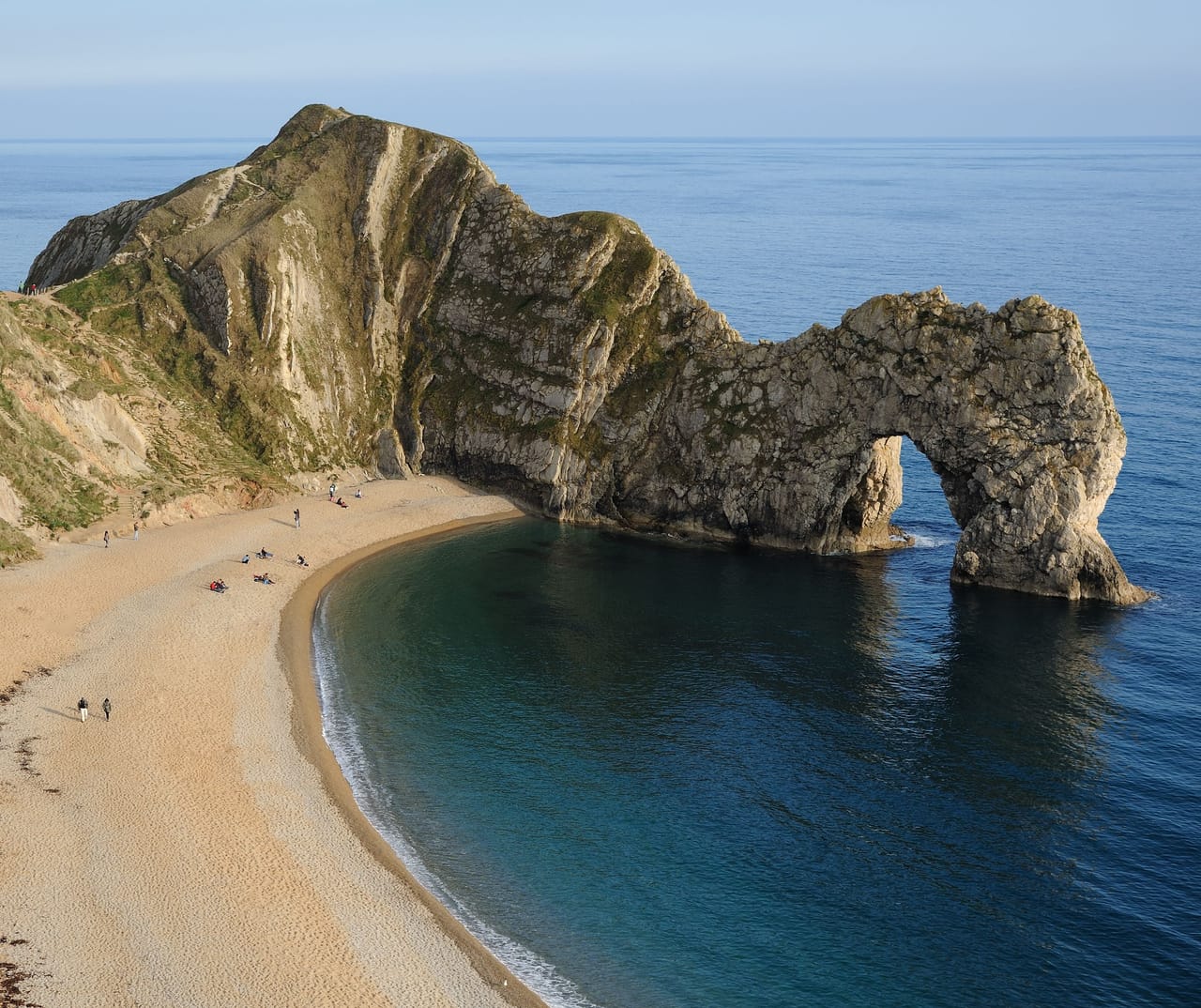
The best moments are spent on foot. From Seatown, it takes forty minutes to climb to the top of Golden Cap (191 metres), the highest point on the south coast of Great Britain. At Lulworth, a steep path leads down to Durdle Door, a limestone arch in the sea.
Lyme Regis and the fossils
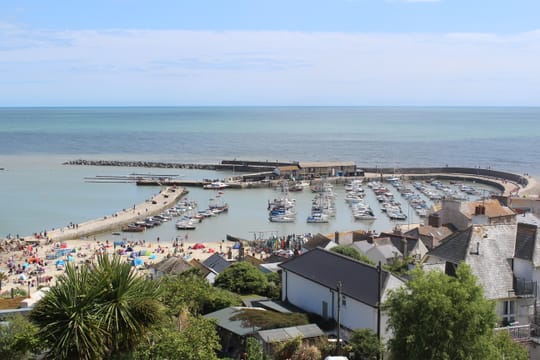
At Lyme Regis, the grey marl cliffs crumble with every storm and release fossils from the early Jurassic. This is where Mary Anning (1799–1847), the daughter of a poor carpenter, lived. In 1811, her brother Joseph found the skull of an ichthyosaur; she uncovered the rest of the skeleton a few months later. In 1823, she found the first almost complete plesiosaur skeleton, then a pterosaur in 1828. Scientists bought her finds. As a woman, she could not join the Geological Society.
The Lyme Regis Museum has stood on the site of the house where she was born since 1902. Since 2022, a statue of Mary Anning has faced the cliffs of Black Ven. At Charmouth, close by, people still pick up ammonites on the beach, on a falling tide, well away from the cliffs, which often collapse.
The Cobb, the harbour’s curved wall, appears in two novels: Jane Austen has Louisa Musgrove fall there in “Persuasion”. John Fowles, who lived in Lyme, set “The French Lieutenant’s Woman” there, a novel filmed in 1981 with Meryl Streep.
As a woman, she could not join the Geological Society.
Chesil Beach and the Isle of Portland
Chesil Beach is a 29-kilometre shingle bank, from West Bay to Portland, that closes off a lagoon, the Fleet. The pebbles grow larger from west to east, from the size of a small pea to about five centimetres. According to tradition, the size of the pebbles told fishermen, at night, where they were landing. On the Fleet, the Abbotsbury Swannery is thought to date back to the Benedictine monks of the 11th century. It is said to be the world’s only colony of nesting swans managed by people.
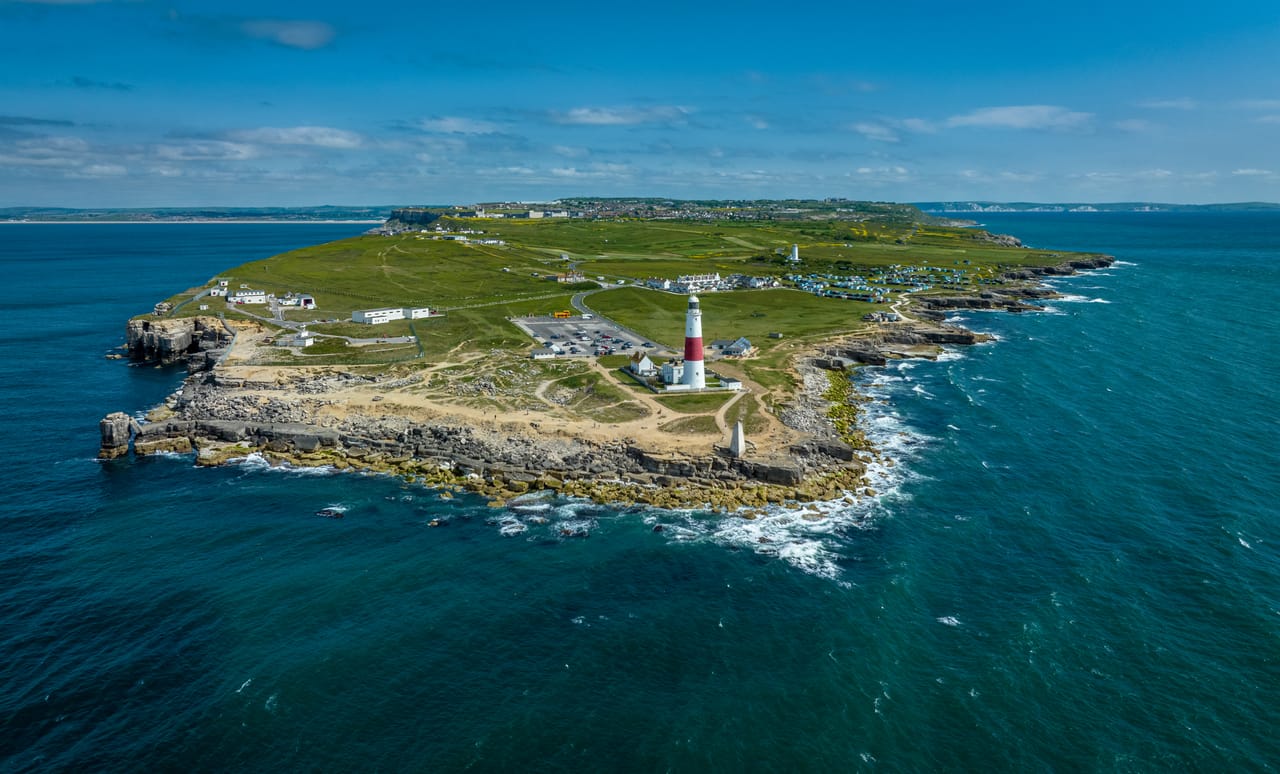
Portland is not really an island: a road links it to the mainland along the shingle bank. Its white stone was used for Christopher Wren’s St Paul’s Cathedral, after the Great Fire of London in 1666, then for the United Nations headquarters in New York. Weymouth, just to the north, became fashionable when George III began bathing there, in 1789.
Maiden Castle
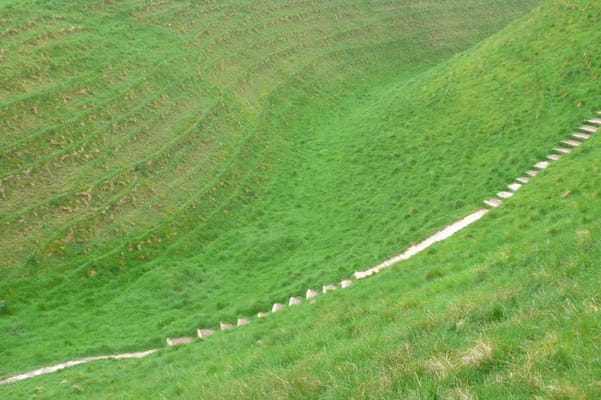
The largest Iron Age hillfort in Britain: 19 hectares of earth ramparts rising in waves, south-west of Dorchester. It was occupied until the Roman conquest. Free access all year round, car park at the foot.
Practical notes
- When to go
- May–June for the long days and the cygnets, or September. In summer, the Durdle Door car parks fill up early. Several sites close in winter.
- Getting there
- Exmouth is half an hour from Exeter (airport, railway station). From Studland, the Sandbanks ferry takes you to Poole and Bournemouth.
- Access
- Driving on the left, single-track roads, difficult for large vans. The direct road from Lulworth to Kimmeridge crosses a firing range and closes on firing days: go via Wareham instead.
- Sleeping in a van
- On campsites. Many coastal car parks ban overnight stays; camping on the beaches, Chesil included, is forbidden.
- Worth knowing
- Firing days are published on gov.uk (“Lulworth firing notice”). The Sandbanks ferry reads number plates and is paid online, with no cash.
- Allow
- Five days, one more for the Swanage steam railway and for Tyneham, a village emptied by the army in 1943.
What not to miss
- 1Ladram BayRed sandstone stacks standing just off the beach.
- 2Golden CapFrom the top, the view stretches from Lyme Regis to Portland.
- 3Durdle Door and Lulworth CoveA limestone arch and an almost round cove, carved out by the sea.
- 4Kimmeridge BayShale ledges at low tide and the fossils of the Etches Collection museum.
- 5Corfe CastleDefended by Lady Mary Bankes in 1643, slighted in 1646; its ruins now tower over the village.
- 6Old Harry RocksChalk stacks, half an hour’s walk from the South Beach car park at Studland.
The Jurassic Coast in pictures
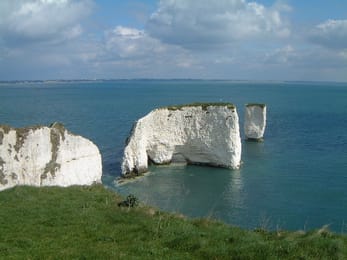
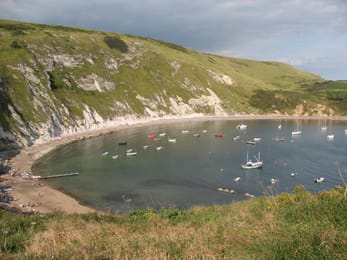
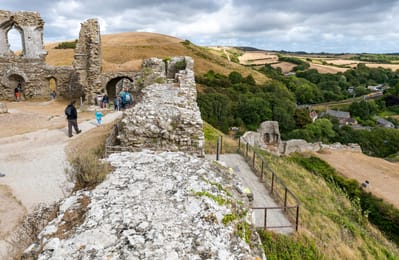
Old Harry Rocks, the chalk stacks off Handfast Point.
Food on the Jurassic Coast
You eat crab and lobster from Beer and Lyme Regis, and fish and chips on the harbour at West Bay. Oysters are farmed in the Fleet. A cream tea brings together scones, clotted cream and jam; in Devon, the cream goes on first.
Dorset has its apple cake and Blue Vinny, a blue cheese. People drink local cider or Palmers beer, brewed in Bridport since 1794 in a thatched brewery.
Exmouth → Studland


 +17stops
- 1Exmouth Beach · Ladram Bay · Jacobs Ladder Beach · Beer Quarry Caves
- 2Lyme Regis Museum · The Cobb Piers And Walls Including North Wall · Charmouth Heritage Coast Centre · Seatown Beach
- 3West Bay · Abbotsbury Swannery · Chesil Beach · Portland Bill
Free, no account needed — start from its places and make it yours.
Also worth reading
Wide open spaces
The West Highlands, from Glasgow to Inverness
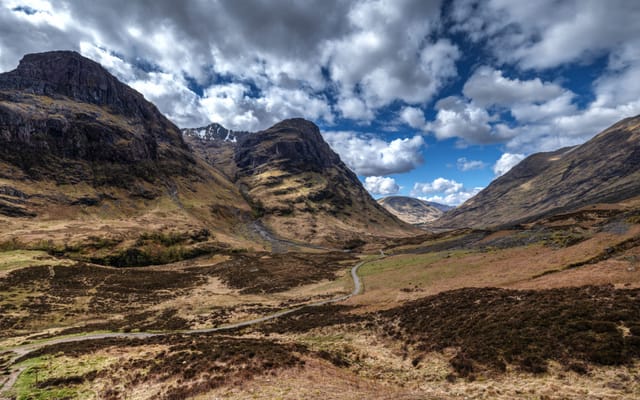
Six days from Glasgow to Inverness on the great road through the west of Scotland. Lochs, Rannoch Moor, Glencoe, the Road to the Isles and castles by the water.
Wide open spaces
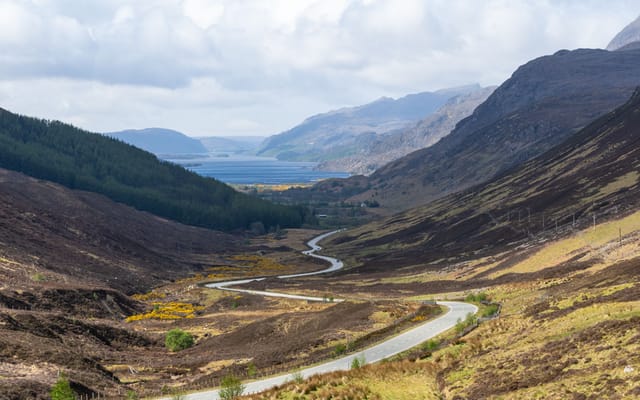
The North Coast 500, the great loop round the north of Scotland
An 830-kilometre loop from Inverness, through the mountains of the west coast, the beaches of the north and the cliffs of Caithness. Nine days on roads that are often single-track, at the pace of the passing places.
Wide open spaces
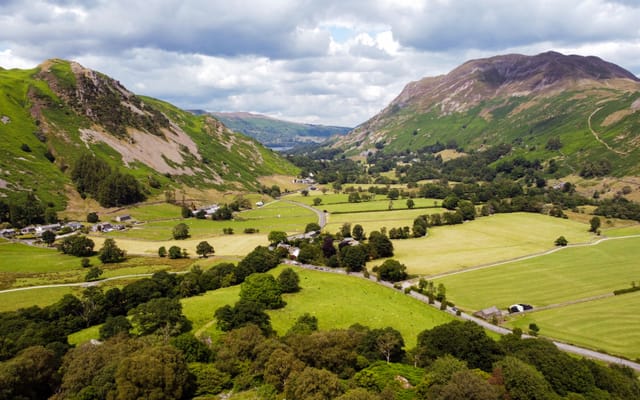
The Lake District, from Windermere to Ullswater
Lakes at the bottom of glacial valleys, single-track passes and villages of grey stone, in the north-west of England. A five-day loop from Kendal, in the country of Wordsworth and Beatrix Potter.
A starting point, a few wishes — ViaLooma builds the trip day by day, map, stops and roadbook included.