Valais, from the passes to the Matterhorn
Six days on the road across Valais, from the Grimsel and Furka passes to the abbey of Saint-Maurice. On the way, the Aletsch Glacier, Zermatt and the Matterhorn, and valleys where the road zigzags up to the dams.
Passes, glaciers and valleys
You enter Valais over its passes. The road climbs between reservoirs and slabs of granite to the Grimsel Pass, at 2,164 metres. It zigzags down to Gletsch. From there, a return drive leads to the Furka Pass, at 2,429 metres, passing close to the Rhône Glacier. James Bond drives his Aston Martin on this road in Goldfinger, in 1964.
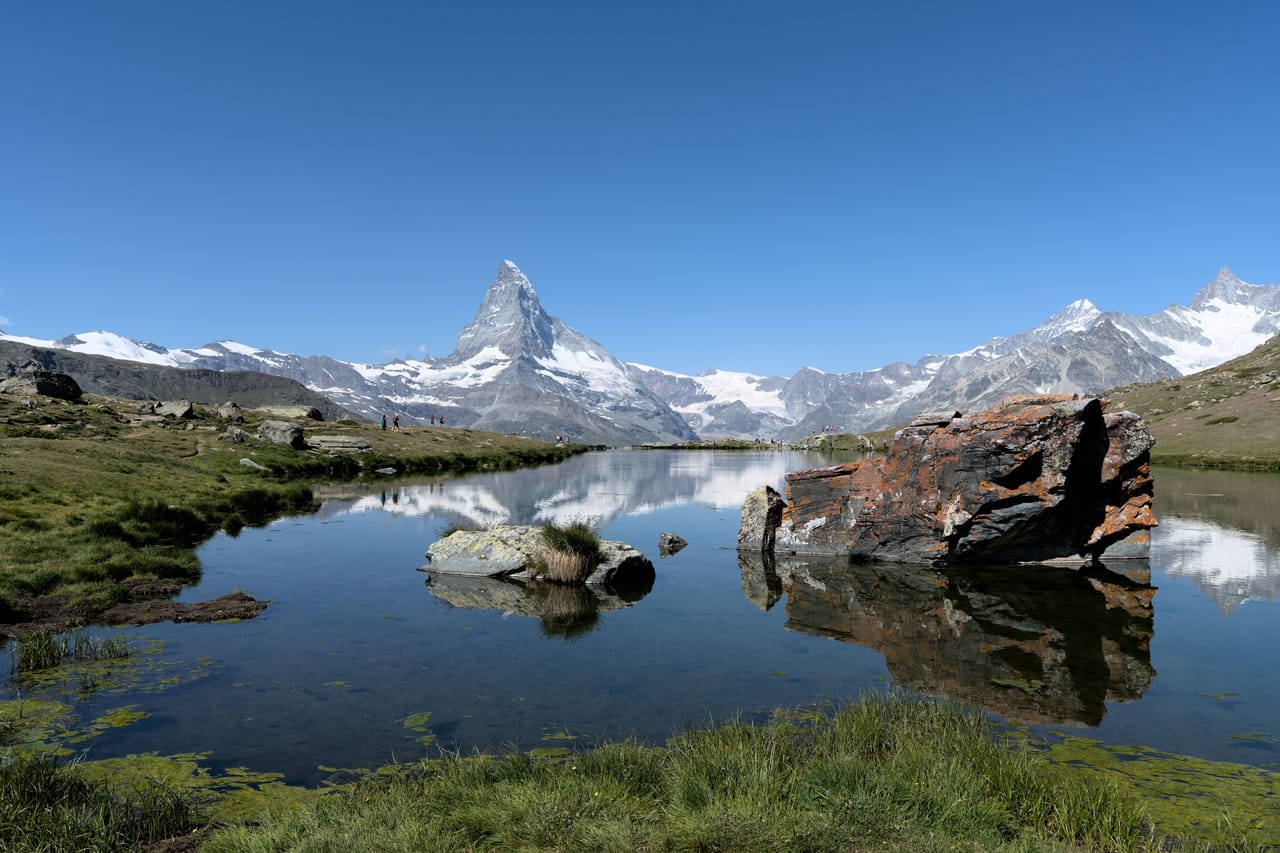
In the Goms, the upper Rhône valley, the wooden houses are blackened by the sun. In Fiesch, lifts take you up towards the Aletsch Glacier. Zermatt is closed to cars: you park in Täsch, from where a shuttle train goes up in 12 minutes. From Zermatt, the Gornergrat railway climbs to 3,089 metres, facing the Matterhorn.
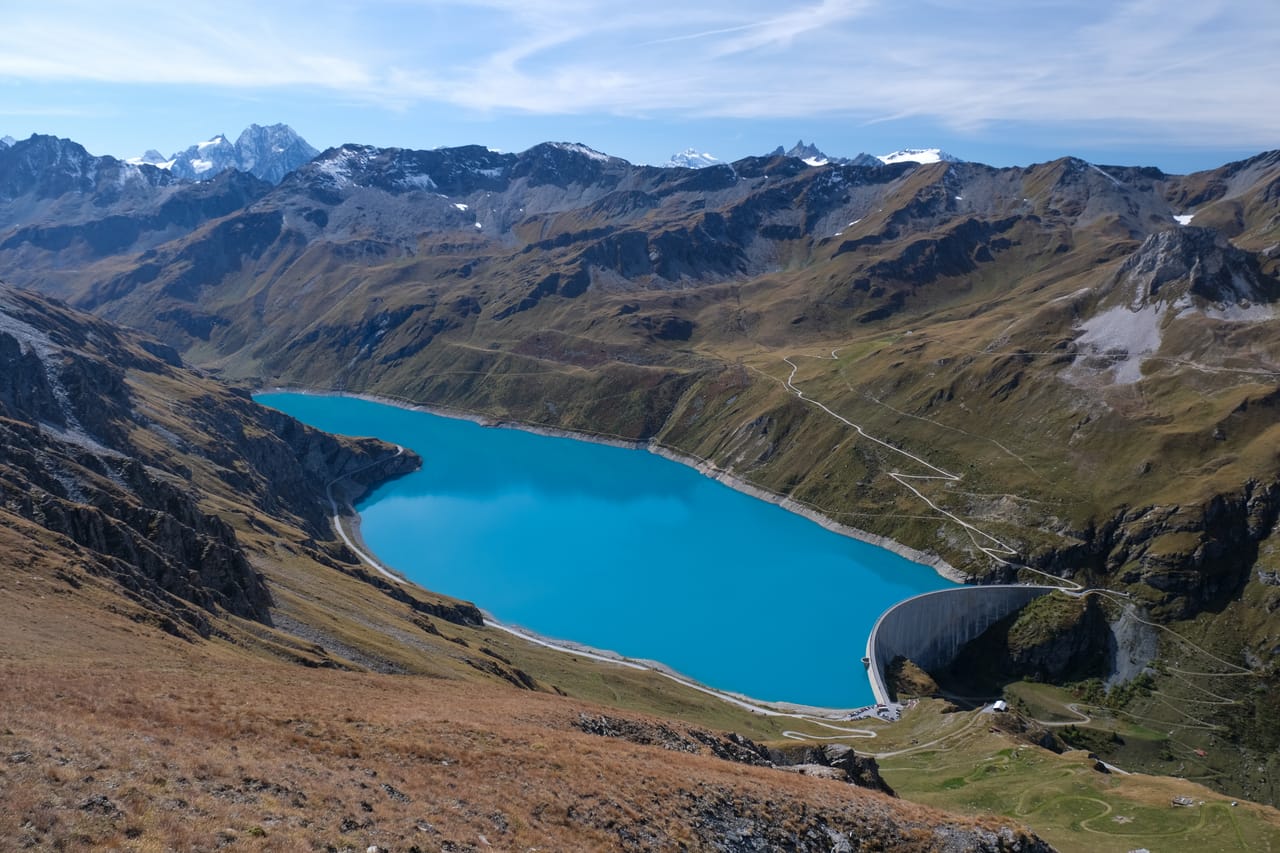
Further west, the valleys are quieter: Saint-Luc, Grimentz and Lac de Moiry in the Val d’Anniviers, Evolène in the Val d’Hérens. People here speak French. The Raspille, a stream between Salgesch and Sierre, separates German-speaking Upper Valais from French-speaking Valais.
Sion, Saint-Maurice and Brig
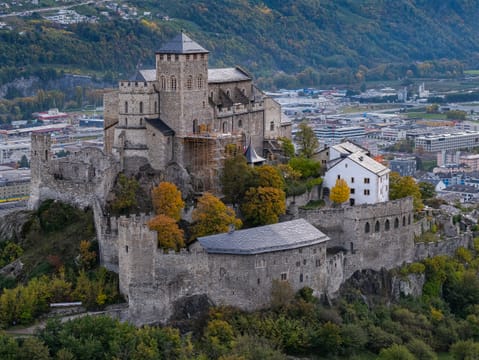
In Sion, two hills face each other above the old town. On one stands the Valère Basilica, built in the 12th and 13th centuries, once home to the canons of the cathedral. Its organ, built around 1435, is described as the oldest playable organ in the world. On the other, Tourbillon Castle was for a long time the residence of the bishops of Sion, who ruled Valais for centuries. A fire left it in ruins in 1788.
In Saint-Maurice, according to tradition, the soldiers of the Theban Legion were martyred at the end of the 3rd century. In 515, the Burgundian prince Sigismund founded an abbey here, lived in without a break ever since: it describes itself as the oldest active monastery in the Western world.
In Brig, the Stockalper Palace was built by a merchant. Kaspar Stockalper (1609–1691) made his fortune from trade over the Simplon and a monopoly on salt. His palace has three towers topped with gilded onion domes. Fallen from favour in 1678, Stockalper went into exile for a few years in Domodossola, on the other side of the Simplon.
Valais has long lived off the water from its glaciers.
Glaciers and dams
The Aletsch Glacier is the largest in the Alps, at the heart of the Jungfrau-Aletsch Unesco site. It has retreated by more than 3 kilometres since 1870. Two centuries ago, the Rhône Glacier reached down to Gletsch; today it stops much higher up. In summer, white sheets cover part of it to slow the melting.
Valais has long lived off the water from its glaciers. The Grande Dixence dam, 285 metres high and completed in 1961, is the tallest gravity dam in the world. Long before the dams, the people of Valais built bisses, channels clinging to the cliffs, to water the vineyards and meadows of one of the driest regions in Switzerland.
Great St Bernard Pass
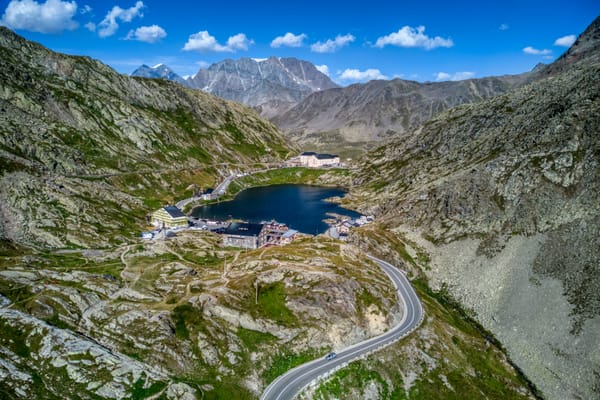
At 2,469 metres, on the Italian border, canons have kept a hospice here since the 11th century, according to tradition. Napoleon crossed in May 1800, and in summer you can see the St Bernard dogs. The pass road is only open from June to October; through the tunnel, you miss the hospice.
Practical notes
- When to go
- From late June to late September. The Grimsel, the Furka and the Moiry road usually close from October to June.
- Getting there
- Interlaken is an hour from Bern. Geneva is just over an hour from Saint-Maurice.
- Access
- Everything is tarmac. The vignette is compulsory (above 3.5 t, the heavy vehicle charge applies). On signposted mountain roads, the PostBus has priority.
- Sleeping in a van
- Campsites in the Goms, in Fiesch, Randa, Täsch and Evolène. Many municipalities ban overnight stays outside campsites and aires.
- Worth knowing
- The Gelmerbahn is booked online. The Furka steam train runs in summer, on certain days only.
- Allow
- Six days, a week with the Great St Bernard or Saas-Fee, in the valley next to Zermatt.
What not to miss
- 1The GelmerbahnAn open-air funicular built for a dam project, with a gradient of 106%.
- 2The Furka steam trainAn old mountain line between Oberwald and Realp, brought back into service by volunteers.
- 3The EggishornFrom Fiesch, two lifts take you almost to the summit, facing the Aletsch Glacier.
- 4The GornergratOn a still day, the Matterhorn is reflected in the Riffelsee.
- 5The Euseigne pyramidsColumns of moraine, each topped with a block of stone.
- 6The Fondation Pierre GianaddaIn Martigny, an art museum built around the remains of a Gallo-Roman temple.
Valais in pictures
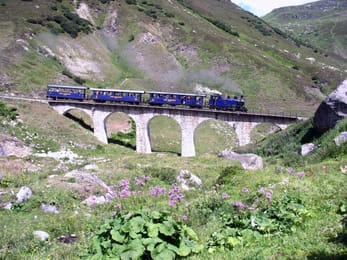
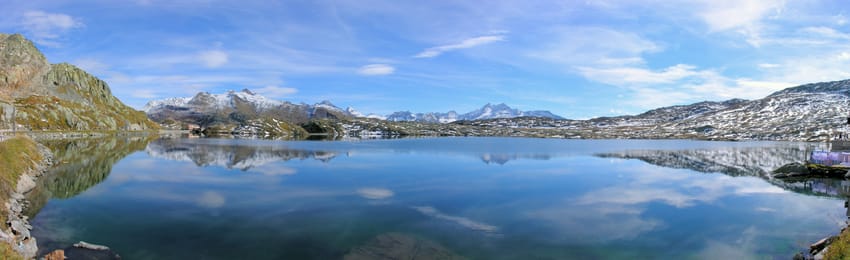
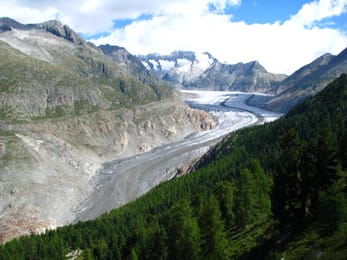
The Furka steam train on the Steinstafel viaduct.
Food and wine in Valais
The dish of Valais is raclette: half a wheel of cheese is heated and the melted part is scraped onto potatoes, with Valais dried meat and rye bread. In the Goms, people bake cholera, a pie of potatoes, leeks, apples and cheese; its name is said to come from a cholera epidemic.
Valais is the largest wine-growing canton in Switzerland. Fendant, made from chasselas, is the everyday white. In Visperterminen, the vines climb to more than 1,100 metres and give heida, an aromatic white. In Grimentz, the burgher community, made up of the village’s old families, keeps the glacier wine in larch barrels that are never emptied: each year, the new wine is added to the old.
Interlaken → Saint-Maurice


 +18stops
- 1Gelmerbahn · Grimselpass · Dampfbahn Furka-Bergstrecke · Furkapass
- 2Goms Bridge · Ernen · Fiesch · Alter und neuer Stockalperpalast
- 3Visperterminen · Bergführermuseum · Randa
Free, no account needed — start from its places and make it yours.
Also worth reading
Wide open spaces
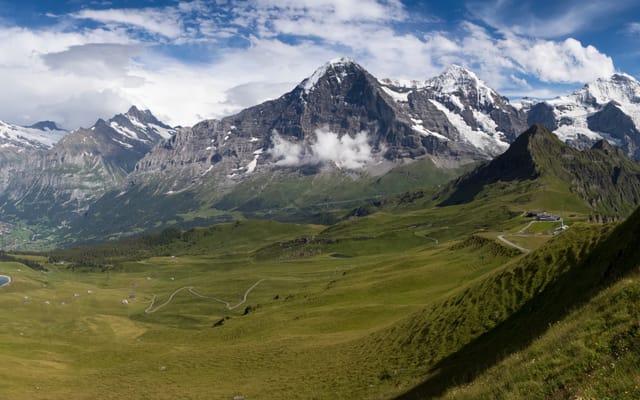
The Bernese Oberland, from Lake Thun and Lake Brienz to the Jungfrau
Two lakes, dozens of waterfalls and, to the south, the Eiger, the Mönch and the Jungfrau. A five-day loop from Bern, through castles, gorges and glacial valleys.
Wide open spaces
The Pacific Northwest, from the Olympic Peninsula to the Cascade volcanoes
Rainforests, a coast of headlands and lighthouses, redwoods and two active volcanoes. A two-week loop from Seattle, by way of the Olympic Peninsula, the Oregon coast and Mount Rainier.
Wide open spaces
Vancouver Island, from Victoria to the beaches of Tofino
An island of giant forests, beaches pounded by the Pacific and small harbours where boats leave to see orcas. Nine days on a loop from Victoria, from Port Renfrew to Tofino and up to Telegraph Cove.
A starting point, a few wishes — ViaLooma builds the trip day by day, map, stops and roadbook included.