Galicia, from the rías to the end of the world
A coast cut into estuaries, lighthouses battered by the Atlantic, canyons planted with vines and Santiago de Compostela in the middle of it all. Eight days on a loop through the Costa da Morte, the Rías Baixas, the Ribeira Sacra and Cathedrals Beach.
A coast of rías and a green interior
You discover Galicia first by its coast: nearly 1,500 kilometres of coastline, cut into rías, old valleys flooded by the sea. The road runs along these rías, from fishing port to beach. South of Santiago, the Rías Baixas are calm estuaries lined with beaches and mussel rafts. At Combarro, the hórreos, granite granaries raised on stilts, stand in a row at the water’s edge, beside the stone crosses, the cruceiros. Further south, Monte Santa Trega towers over the mouth of the Miño, facing Portugal. At the top, you can visit the ruins of a castro, a fortified village from the Iron Age.
Inland, the country is green and rainy, scattered with granite villages. The Sil and the Miño have carved canyons several hundred metres deep here, their slopes covered in terraced vines: this is the Ribeira Sacra. In the Middle Ages, there were a great many monasteries here. This is often given as the reason for the name Ribeira Sacra, the ‘sacred bank’. In Lugo, a Roman wall more than two kilometres long still rings the old town. You can walk all the way round on the wall-walk.
The Costa da Morte, out to Cape Finisterre
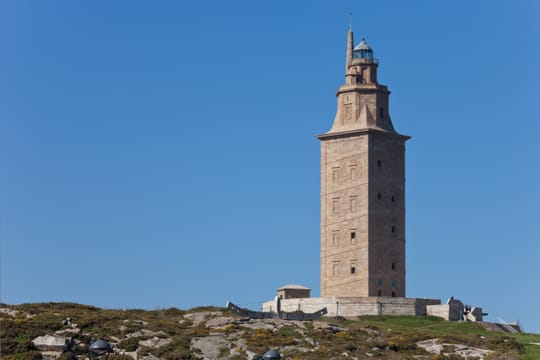
In A Coruña, the Tower of Hercules is the oldest Roman lighthouse still in service. It was built around AD 100, restored at the end of the 18th century, and it still lights the Atlantic. It has been a World Heritage Site since 2009. Legend has it that Hercules himself founded it. West of the city begins the Costa da Morte, the ‘coast of death’, named for its many shipwrecks: cliffs, capes and lighthouses facing the ocean.
To the Romans, Cape Finisterre was the end of the known world. Its name comes from the Latin finis terrae. Today, people come to the lighthouse for the sunset, near the Camino’s kilometre-zero marker.
Further north, at Muxía, the sanctuary of the Virxe da Barca stands on the rocks, facing the waves. According to tradition, the Virgin arrived here in a stone boat to encourage the apostle James. Many pilgrims extend the Camino to Finisterre or to Muxía.
To the Romans, Cape Finisterre was the end of the known world.
Santiago de Compostela
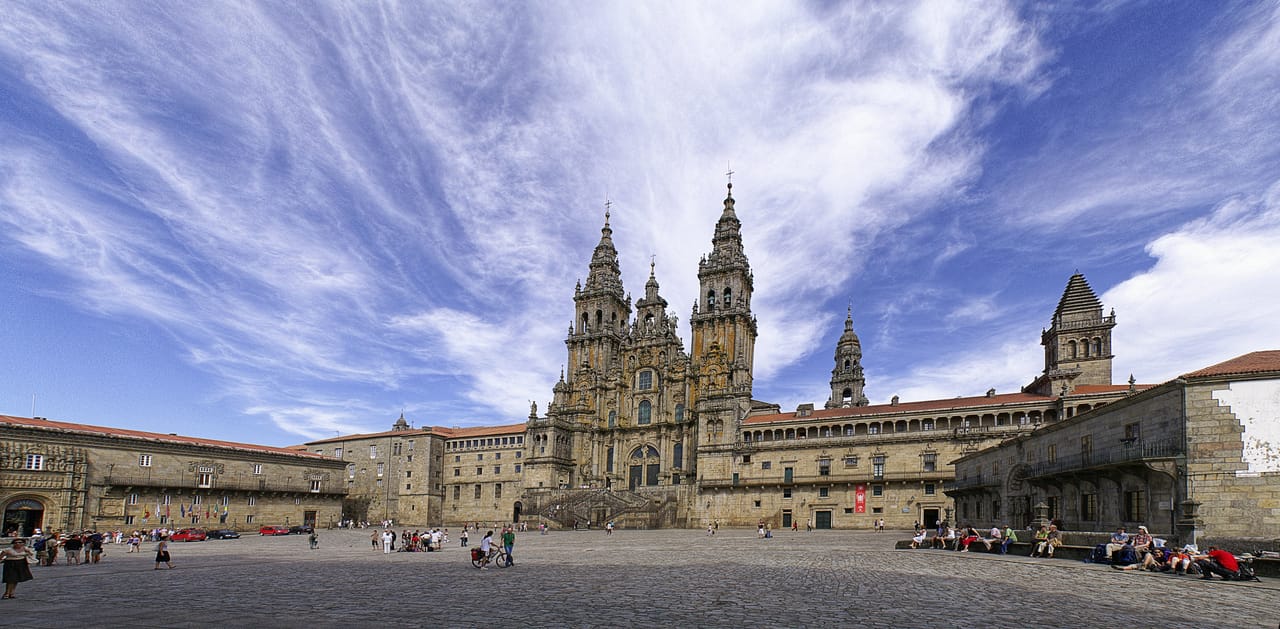
Since the 9th century, people have come from all over Europe to Santiago de Compostela. According to tradition, the apostle James is buried there. Behind its Baroque Obradoiro façade, the cathedral is Romanesque. Every year, hundreds of thousands of pilgrims arrive there, on foot or by bike. The old town has been a World Heritage Site since 1985.
At certain masses, the botafumeiro, a censer weighing more than fifty kilos, swings from one end of the transept to the other, hauled by eight men. Santiago is also the capital of Galicia. The region has its own language, Galician, close to Portuguese, and its own bagpipe, the gaita.
Cíes Islands
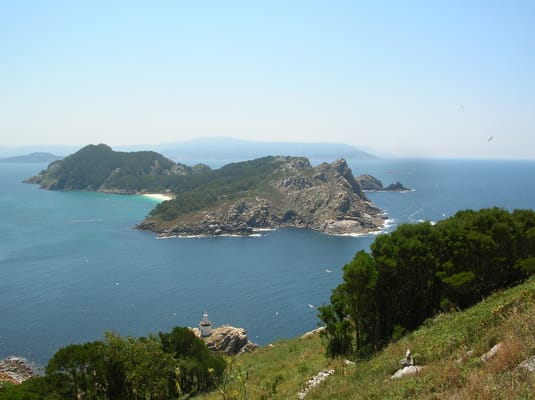
Three car-free islands at the mouth of the Ría de Vigo, two of them joined by a white-sand beach, Rodas. They belong to the Atlantic Islands National Park, and visitor numbers are capped every day.
Practical notes
- When to go
- June to September for the coast; spring and autumn are very green but often wet. It rains in every season.
- Getting there
- Santiago has an airport and is six hours’ drive from Madrid; Vigo and A Coruña have airports too.
- Access
- All tarmac. The coast roads are slow; in the Ribeira Sacra, the viewpoints are linked by narrow roads clinging to the canyon sides.
- Sleeping in a van
- Campsites all along the coast and motorhome aires in many towns. No overnighting in a van in protected natural areas.
- Worth knowing
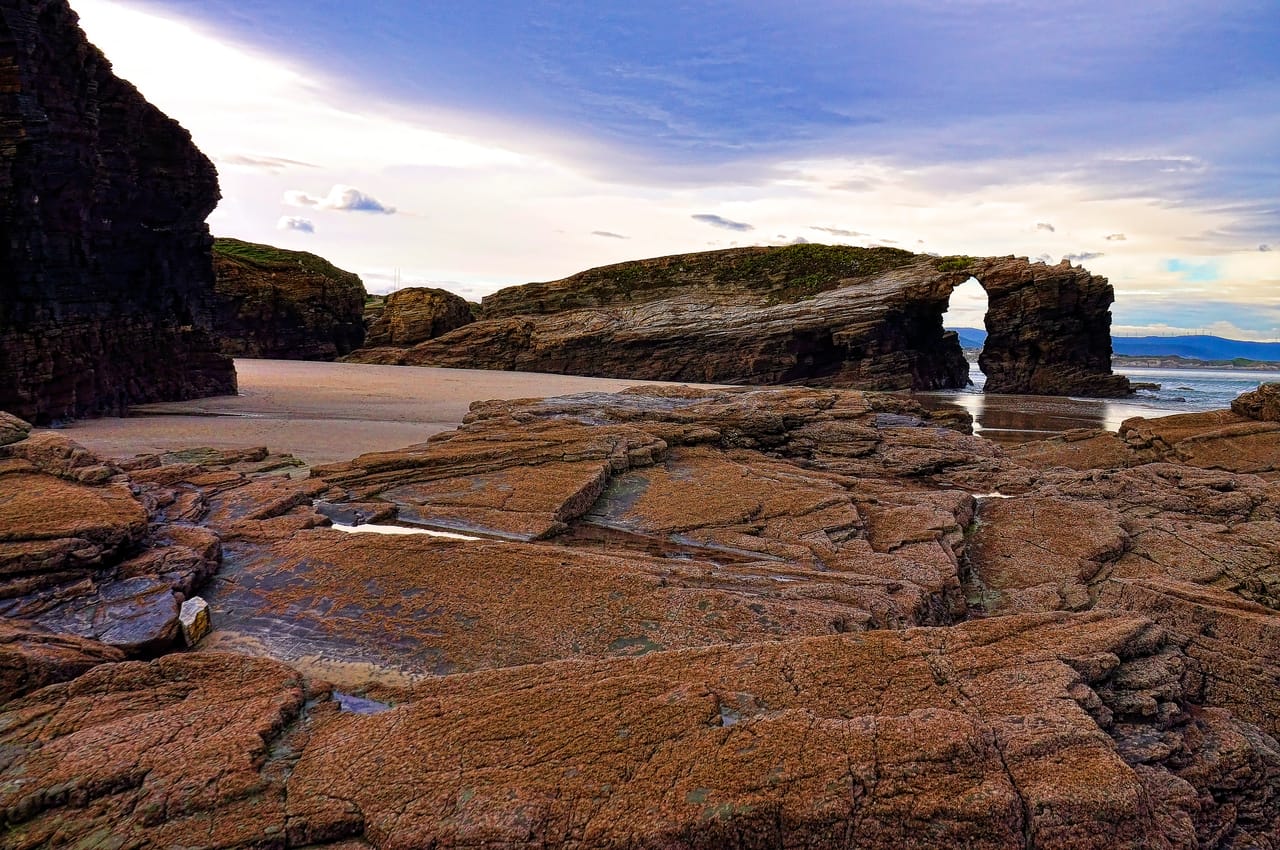
- Cathedrals Beach must be booked online, free of charge, in summer and at Easter; the Cíes Islands need a permit and a boat ticket.
- Allow
- Eight days for the loop, ten to add the Cíes Islands and walk a stretch of the Camino.
What not to miss
- 1The Praza do ObradoiroThe cathedral’s Baroque façade, and the pilgrims arriving.
- 2Cape FinisterreThe lighthouse and the Camino’s kilometre-zero marker, at sunset.
- 3The Ézaro waterfallA river that falls into the sea as a waterfall, at the foot of Monte Pindo.
- 4The hórreos of CombarroGranite granaries on stilts, at the edge of the ría.
- 5The Sil canyonVines clinging to the slopes, best seen from the Balcóns de Madrid viewpoint, high above the river.
- 6Cathedrals BeachSchist arches you can walk through at low tide.
Galicia in pictures
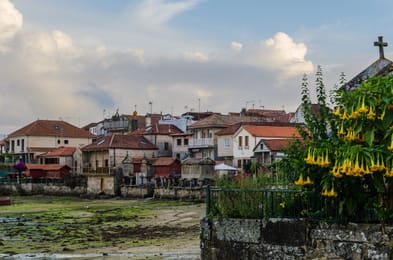
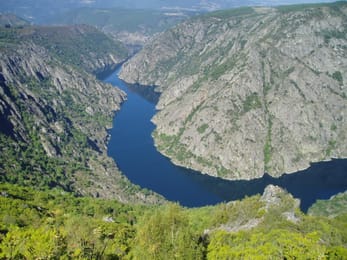
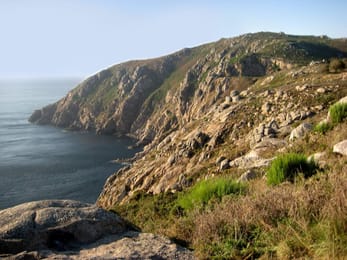
Combarro and its hórreos on the edge of the ría.
The Galician table
Galician cooking is first and foremost a cuisine of the sea. The best-known dish is pulpo a feira: boiled octopus, snipped with scissors and dressed with olive oil and paprika. The rías provide mussels and shellfish. On the Costa da Morte, people prise percebes, goose barnacles, off rocks pounded by the waves.
White albariño wine comes from the Rías Baixas, and Cambados holds a festival in its honour every summer. For dessert, there is tarta de Santiago, an almond cake stamped with the cross of the Order of Santiago. Tetilla cheese is easy to recognise by its shape, like a small breast, hence its name.
Loop from Santiago de Compostela


 +14stops
- 1Catedral Basílica Metropolitana de Santiago de Compostela · Cascada del Ézaro · Cabo Finisterre
- 2Castro de Baroña · Pazo de Fefiñáns
- 3Isla de La Toja · Combarro
Free, no account needed — start from its places and make it yours.
Also worth reading
Coast and islands
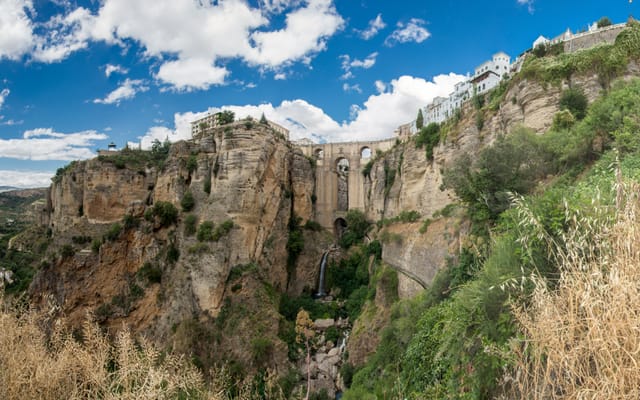
The white villages, Ronda and the Costa de la Luz
Whitewashed villages clinging to the sierras, a town split in two by a ravine, then the Atlantic, its dunes and the wind of Tarifa. Six days on a loop from Jerez, between the mountains of Cádiz and the wildest coast in Andalusia.
Coast and islands
Cantabria, Asturias and the Picos de Europa
Between a coast of cliffs and limestone peaks rising twenty kilometres from the sea lies green Spain: painted caves, stone villages, high lakes and cider poured from a height. A week from Santander to Oviedo.
Coast and islands
The Costa Brava, from Girona to Cadaqués
Coves between the pines, fishing villages turned artists’ refuges, medieval villages inland and, at the very end, Cap de Creus. Six days on a loop from Girona, in the footsteps of Dalí.
A starting point, a few wishes — ViaLooma builds the trip day by day, map, stops and roadbook included.