Cantabria, Asturias and the Picos de Europa
Between a coast of cliffs and limestone peaks rising twenty kilometres from the sea lies green Spain: painted caves, stone villages, high lakes and cider poured from a height. A week from Santander to Oviedo.
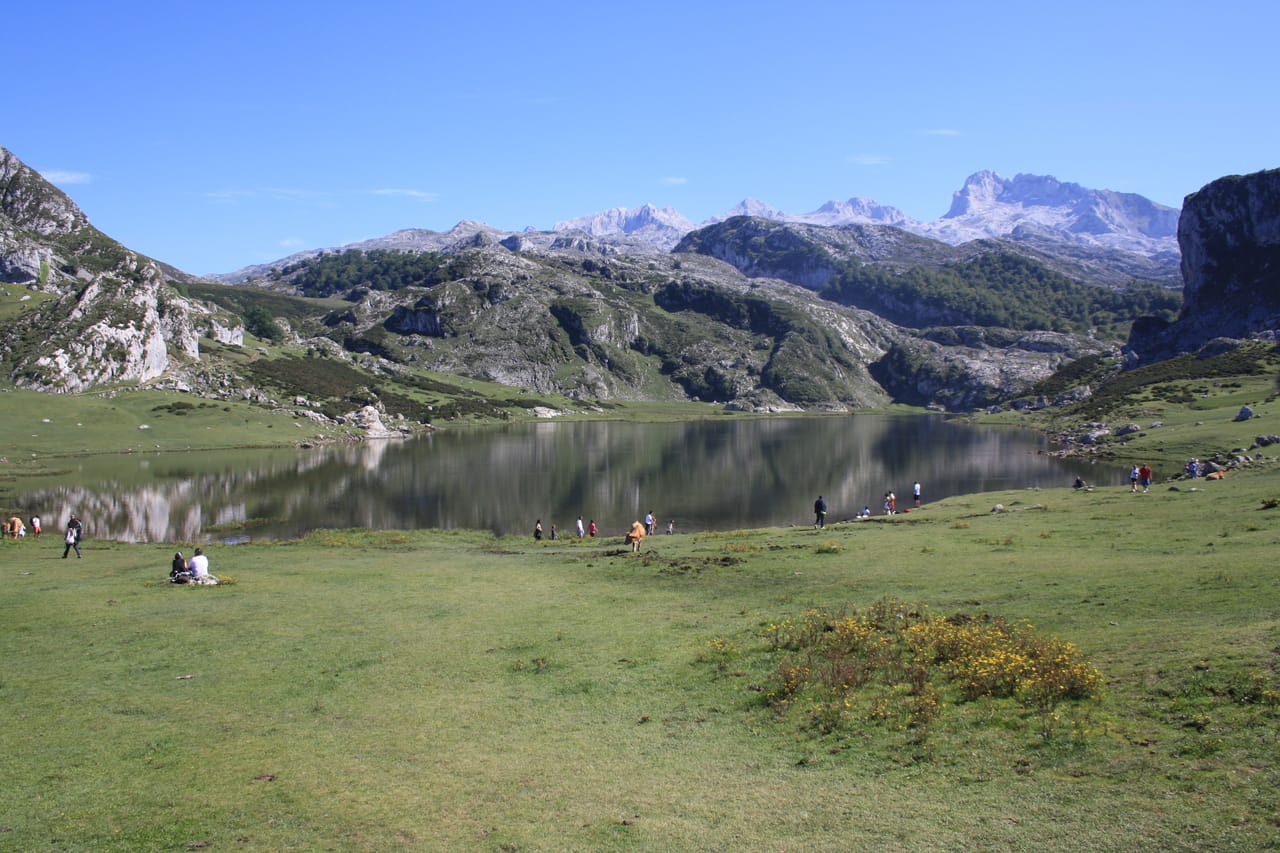
Between the sea and the Picos
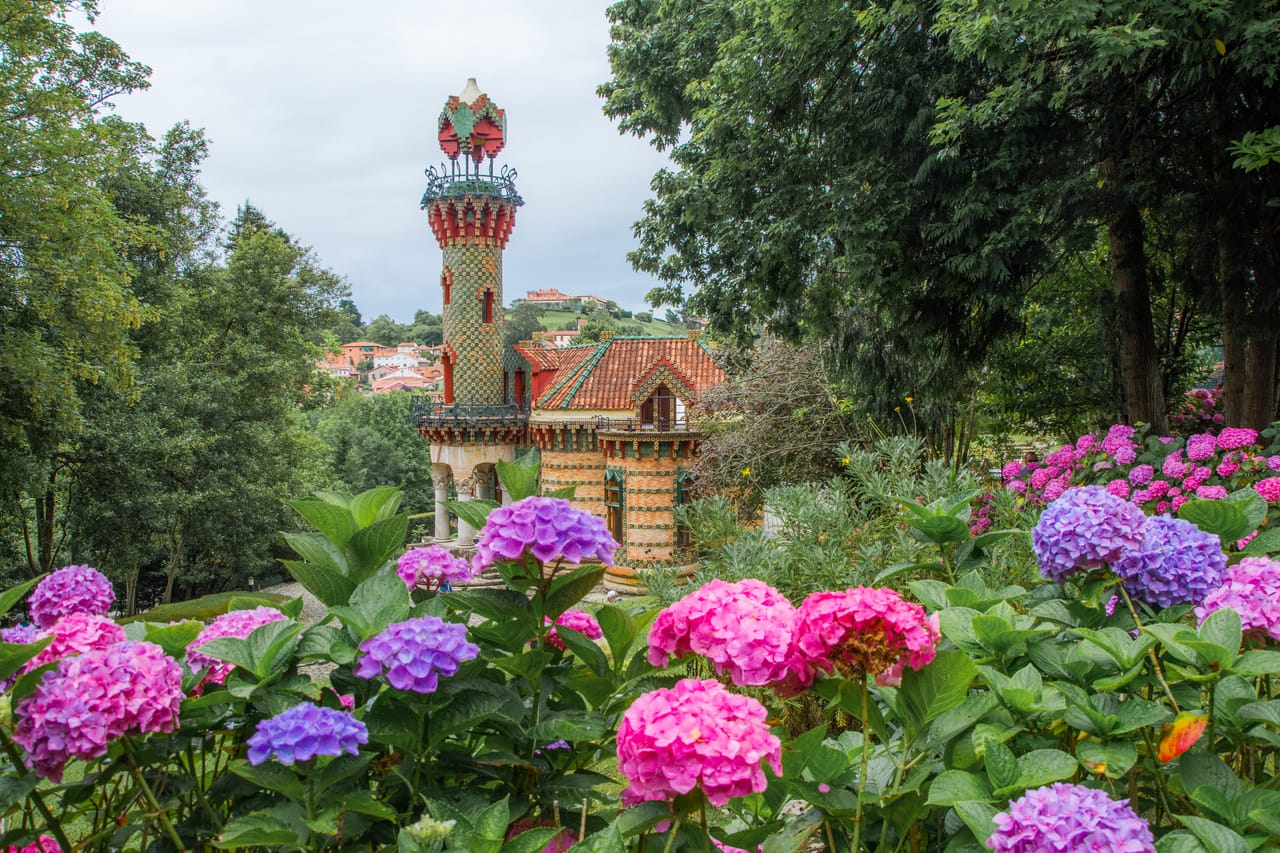
On the Cantabrian coast the Atlantic brings rain, and the landscape turns green: meadows, cows, forests of beech and chestnut. The road runs along cliffs and beaches, then climbs towards the Picos de Europa, some twenty kilometres from the sea. Their peaks reach nearly 2,650 metres. On the coast, in Comillas, the palaces were built by the indianos, emigrants who came home rich from the Americas. In 1883 one of them commissioned the young Gaudí to build a villa of brick and ceramic tiles decorated with sunflowers, El Capricho. It is one of the architect’s rare works outside Catalonia.
After San Vicente de la Barquera, the Desfiladero de La Hermida leads to Potes and the Liébana valley. There, the monastery of Santo Toribio keeps what is said to be the largest fragment of the True Cross. At the head of the valley, the Fuente Dé cable car climbs more than 750 metres of rock face, to a viewpoint at 1,823 metres. Further west, Bulnes gave its name to the Naranjo de Bulnes, the best-known peak in the Picos. The village can only be reached on foot or by funicular.
The Asturian coast, around Llanes, alternates between small beaches and cliffs. At the bufones de Pría, in heavy seas, water shoots up through holes in the cliff. At Ribadesella, the Tito Bustillo cave holds prehistoric paintings. Cudillero stacks its brightly painted houses around its harbour. The trip ends in Oviedo: its 9th-century royal palace, Santa María del Naranco, is a World Heritage Site.
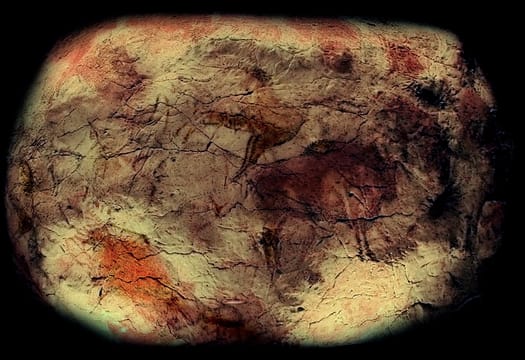
Altamira and Santillana del Mar
In 1879 a little girl, María, looked up inside a cave near Santillana and saw bison painted on the ceiling. Her father, Marcelino Sanz de Sautuola, published the find. For more than twenty years, he was accused of forgery. It was not until the discovery of other painted caves that the paintings of Altamira were recognised. The original cave is closed to the public, apart from a handful of experimental visits. The museum next door shows a faithful replica, the Neocave.
Close by, Santillana del Mar is known as ‘the town of three lies’. Santillana is neither holy, nor flat, nor by the sea. It has kept its cobbled streets, its noble houses with carved coats of arms and its Romanesque collegiate church.
Santillana is neither holy, nor flat, nor by the sea.
Covadonga and the lakes
According to tradition, it was at Covadonga that the Asturian leader Pelayo halted a Muslim army in the early 8th century. Christian Spain dates the start of the Reconquista from here. A chapel is tucked into the cave above a waterfall, facing a basilica of pink stone. Spain’s first national park was created around Covadonga in 1918. It became the Picos de Europa National Park, which spreads across three regions: Asturias, Cantabria and Castile and León.
Above the sanctuary, a narrow road climbs to the lakes of Enol and Ercina, at more than a thousand metres. At Easter, from June to mid-October and on long weekends until early December, it is closed to cars and motorhomes. You then go up by shuttle bus from Cangas de Onís, on dates that the park publishes each year.
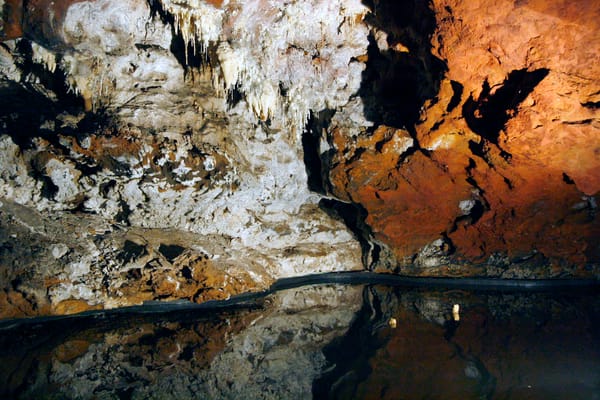
Cueva de El Soplao
A cave found by miners in the early 20th century, famous for its eccentrics — formations that grow in every direction in defiance of gravity. A little mine train takes you into the gallery.
Practical notes
- When to go
- June to September; May and October are green and quiet, but wet. Snow can linger on the heights into spring.
- Getting there
- Airports at Santander and in Asturias; ferries from Portsmouth and Plymouth to Santander. Bilbao is an hour from Santander.
- Access
- Everything is tarmacked, but the mountain roads are narrow. The road to the Covadonga lakes is closed to cars and motorhomes at busy times: shuttle bus only.
- Sleeping in a van
- Plenty of campsites on the coast and around the Picos. Overnight parking is banned in the national park and often in beach car parks.
- Worth knowing
- In summer the queue for the Fuente Dé cable car can top an hour: arrive at opening time. The Bulnes funicular leaves from Poncebos.
- Allow
- A week from Santander to Oviedo, ten days with hikes such as the Cares gorge.
What not to miss
- 1Santillana del MarCobbled streets, houses bearing coats of arms and a Romanesque collegiate church.
- 2The Altamira museumThe replica of the cave, as close as you can get to the painted bison.
- 3El CaprichoThe villa of tiles and sunflowers that Gaudí designed for Comillas.
- 4Fuente DéThe cable car and the viewpoint high above the Liébana valley.
- 5The lakes of CovadongaTwo glacial lakes set in pasture, facing the peaks.
- 6CudilleroA fishing port of brightly painted houses, tiered like an amphitheatre.
Cantabria and Asturias in pictures
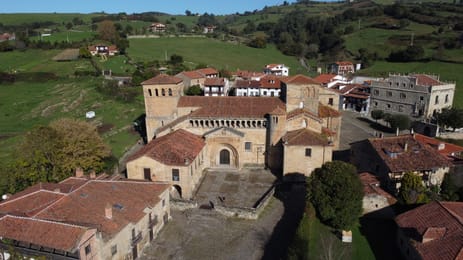
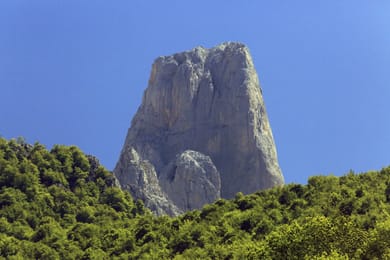
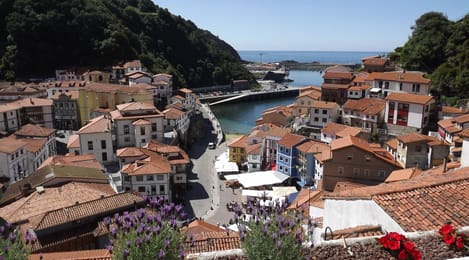
Santillana del Mar and its collegiate church.
The Asturian table
In Asturias, cider is poured from a height: arm raised above the head, glass held low, to froth up a mouthful you drink straight away. You learn the gesture in the sidrerías, the cider houses, where you eat fabada, a stew of white beans, chorizo and black pudding.
The Picos are cheese country too, home to cabrales, a blue cheese ripened in caves. From Cantabria, take home anchovies from Santoña and sobaos, small butter cakes from the Pas valley.
Santander → Oviedo


 +15stops
- 1Palacio de La Magdalena · Museo Nacional y Centro de Investigación de Altamira · Colegiata de Santillana del Mar
- 2El Capricho · Castillo de San Vicente de la Barquera
- 3Desfiladero de La Hermida · Potes · Monasterio de Santo Toribio de Liébana
Free, no account needed — start from its places and make it yours.
Also worth reading
Coast and islands
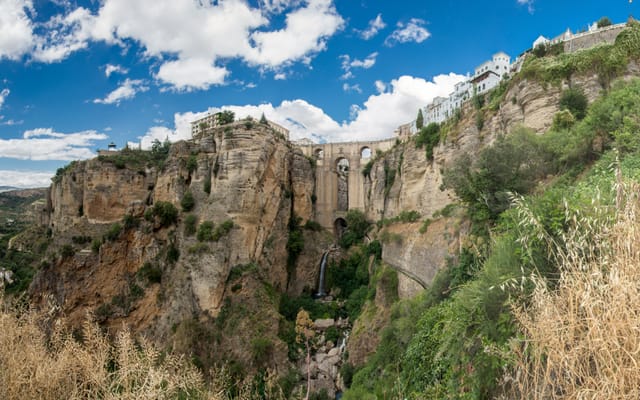
The white villages, Ronda and the Costa de la Luz
Whitewashed villages clinging to the sierras, a town split in two by a ravine, then the Atlantic, its dunes and the wind of Tarifa. Six days on a loop from Jerez, between the mountains of Cádiz and the wildest coast in Andalusia.
Coast and islands
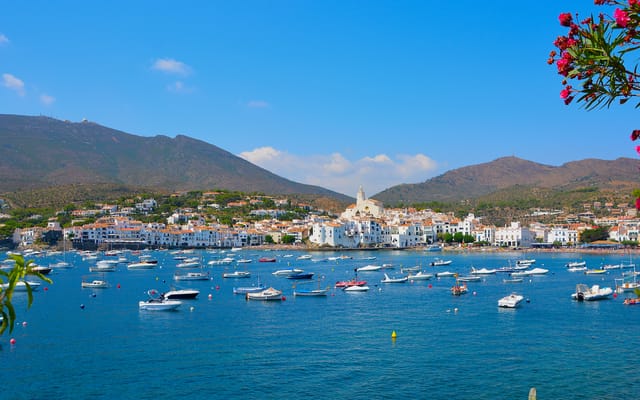
The Costa Brava, from Girona to Cadaqués
Coves between the pines, fishing villages turned artists’ refuges, medieval villages inland and, at the very end, Cap de Creus. Six days on a loop from Girona, in the footsteps of Dalí.
Coast and islands
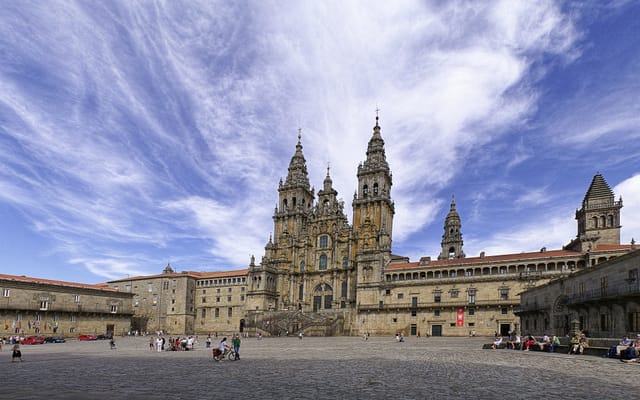
Galicia, from the rías to the end of the world
A coast cut into estuaries, lighthouses battered by the Atlantic, canyons planted with vines and Santiago de Compostela in the middle of it all. Eight days on a loop through the Costa da Morte, the Rías Baixas, the Ribeira Sacra and Cathedrals Beach.
A starting point, a few wishes — ViaLooma builds the trip day by day, map, stops and roadbook included.