The Costa Brava, from Girona to Cadaqués
Coves between the pines, fishing villages turned artists’ refuges, medieval villages inland and, at the very end, Cap de Creus. Six days on a loop from Girona, in the footsteps of Dalí.
From the coves to the villages of the Empordà
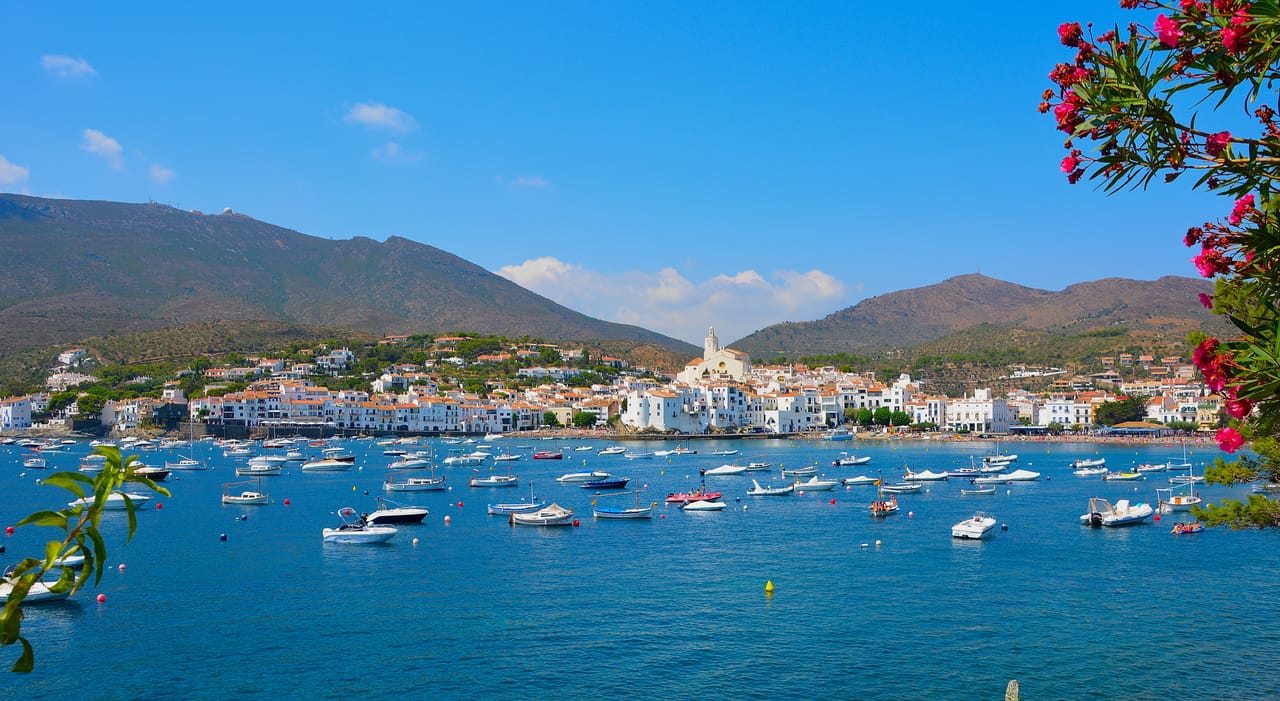
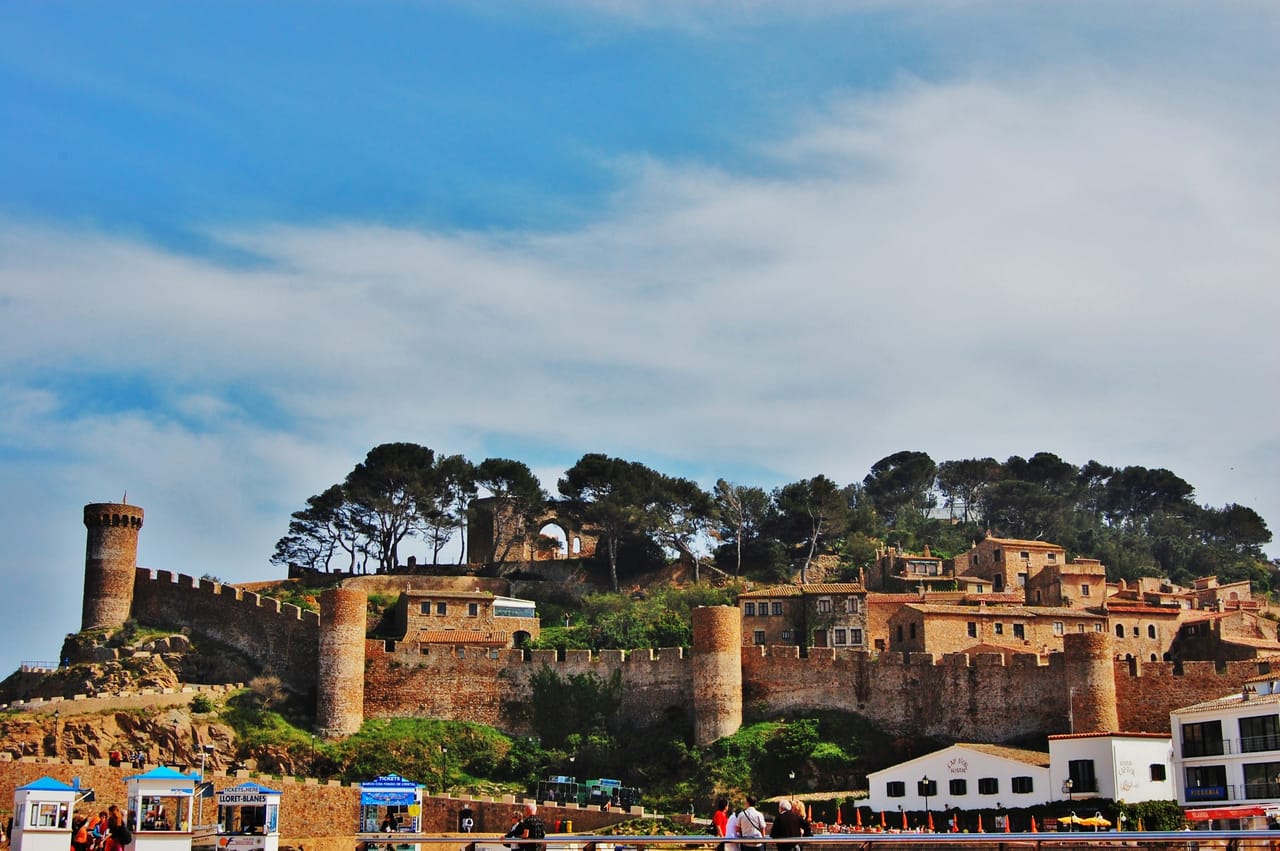
The Costa Brava is a rocky coastline running from Blanes to the French border. Its name means ‘wild coast’ and dates from 1908. The road climbs through the pines, drops down to a cove, then sets off again. The cliffs are red, the coves here are called cales, and the fishing villages have white houses. At Tossa de Mar, a walled town still stands above the beach. Further north, Calella de Palafrugell and Llafranc are two old fishing ports side by side. The camí de ronda, the old customs officers’ path, still links the coves on foot.
At Begur, a ruined castle looks down on the village, and coves follow one another at the foot of its cape, among them Fornells, Aiguablava, Sa Tuna and Sa Riera. Off L’Estartit, the Medes Islands are a protected area where people come to dive. Then the road leaves the sea for the Empordà plain and its stone villages. In the north, it crosses the mountain and drops down to Cadaqués.
The loop starts and ends in Girona. Its coloured houses, lined up above the Onyar, are the city’s calling card. You can walk along its walls. Tradition says you must kiss the backside of the stone lioness, near the church of Sant Feliu, to be sure of coming back.
The Dalí triangle
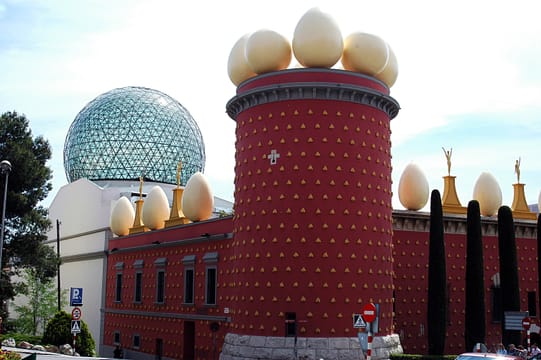
Salvador Dalí was born in Figueres in 1904. Three places in his home region make up what is known as his ‘triangle’. In Figueres, he designed his Theatre-Museum, crowned with giant eggs, and he is buried there. At Portlligat, near Cadaqués, he lived and painted for half a century. Finally, he gave Gala the castle of Púbol, in the Empordà countryside.
For a long time Cadaqués could be reached only by sea or over a mountain road. That isolation preserved the white village, clustered at the foot of the church of Santa Maria. Picasso, Duchamp and García Lorca all passed through. Cadaqués still feels like an artists’ village.
At Cap de Creus, the Pyrenees plunge into the sea. It is the easternmost point of the Iberian Peninsula, and a nature park. The tramontane wind has sculpted the schist here, and Dalí painted these shapes in his pictures. On the neighbouring mountain, the Romanesque monastery of Sant Pere de Rodes looks down over the bay of El Port de la Selva.
At Cap de Creus, the Pyrenees plunge into the sea.
From the Greeks to medieval villages
In the 6th century BC, Greeks from Phocaea, the city that had also founded Marseille, set up the trading post of Empúries. The Romans landed there in 218 BC. Its ruins stretch along the beach at L’Escala. A few kilometres away, Ullastret keeps the walls of an Iberian town.
In Girona, the Call is one of the best-preserved Jewish quarters in Europe. The cathedral has the widest Gothic nave in the world: more than twenty-two metres. You climb up to it by a grand Baroque stairway. Inland, Pals and Peratallada are villages of golden stone with unspoilt lanes. To the north, Besalú announces itself with its fortified Romanesque bridge over the Fluvià.
Púbol Castle
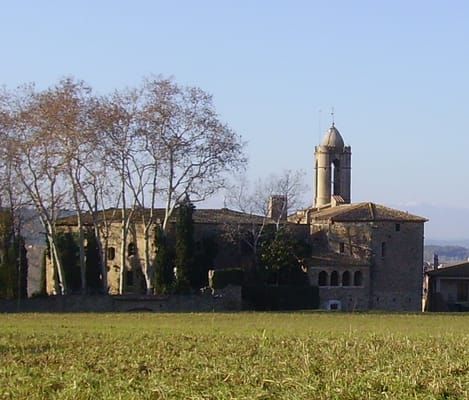
Dalí bought this medieval castle for Gala in 1969. She lived there alone; he came, so the story goes, only by written invitation. Gala is buried there. You can see her dresses, her furniture and, in the garden, sculptures of long-legged elephants.
Practical notes
- When to go
- May, June and September. July and August swamp the beaches and car parks; in winter, the tramontane can blow very hard.
- Getting there
- Girona has an airport; Barcelona is an hour away, the French border forty minutes.
- Access
- All tarmac. In summer, the coves are often reached via pay car parks or shuttle buses; the road to Cadaqués is narrow and winding.
- Sleeping in a van
- Plenty of campsites on the coast. Overnight parking for motorhomes is banned in most coastal municipalities.
- Worth knowing
- The Dalí Theatre-Museum and the house at Portlligat are booked online; Portlligat only takes small groups.
- Allow
- Six days for the loop, a week to walk the camí de ronda as well.
What not to miss
- 1The Vila Vella of TossaA medieval walled town still standing above its beach, a rarity on the Catalan coast.
- 2Calella de PalafrugellWhite arcaded houses at the water’s edge, with the Cap Roig gardens above.
- 3PeratalladaA fortified village ringed by a moat cut into the rock.
- 4The Dalí Theatre-MuseumThe museum Dalí conceived as a work of art in its own right, and his tomb.
- 5CadaquésThe painters’ white village, at the end of its mountain road.
- 6Sant Pere de RodesA Romanesque monastery above the sea, facing Cap de Creus.
The Costa Brava in pictures
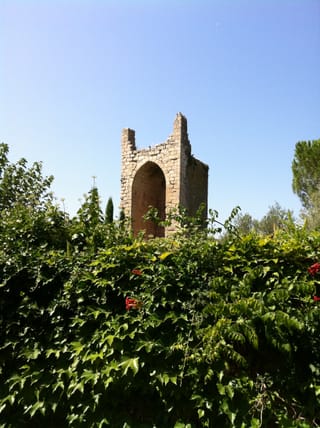
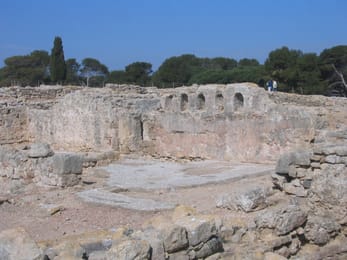
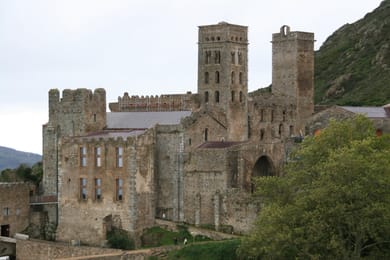
Peratallada and its golden stone.
The Empordà table
Costa Brava cooking marries sea and mountain: this is mar i muntanya, such as chicken with langoustines or meatballs with cuttlefish. L’Escala anchovies are salted and packed into jars by hand, following a tradition several centuries old.
Winter is the season for sea urchins: they have festivals of their own. Suquet, the fishermen’s stew of fish and potatoes, is cooked all along the coast. The Empordà appellation makes reds and a sweet garnatxa, served with dessert.
Loop from Girona


 +11stops
- 1Catedral de Santa María de Gerona · Castillo de Tosa de Mar
- 2Jardín Botánico de Cap Roig · Llafranch · Castell de Begur
- 3Castillo de Pals · Castillo de Peratallada · Ciudad íbera de Ullastret
Free, no account needed — start from its places and make it yours.
Also worth reading
Coast and islands
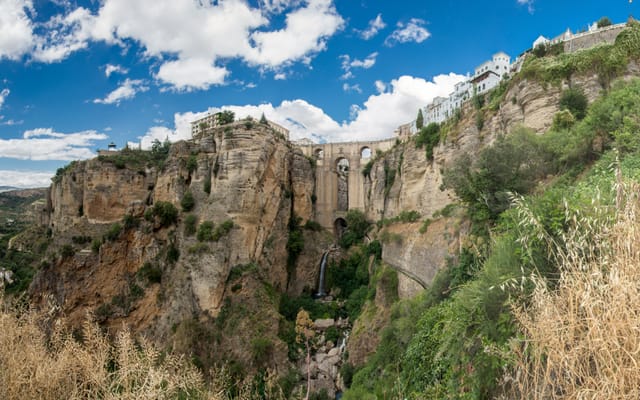
The white villages, Ronda and the Costa de la Luz
Whitewashed villages clinging to the sierras, a town split in two by a ravine, then the Atlantic, its dunes and the wind of Tarifa. Six days on a loop from Jerez, between the mountains of Cádiz and the wildest coast in Andalusia.
Coast and islands
Cantabria, Asturias and the Picos de Europa
Between a coast of cliffs and limestone peaks rising twenty kilometres from the sea lies green Spain: painted caves, stone villages, high lakes and cider poured from a height. A week from Santander to Oviedo.
Coast and islands
Galicia, from the rías to the end of the world
A coast cut into estuaries, lighthouses battered by the Atlantic, canyons planted with vines and Santiago de Compostela in the middle of it all. Eight days on a loop through the Costa da Morte, the Rías Baixas, the Ribeira Sacra and Cathedrals Beach.
A starting point, a few wishes — ViaLooma builds the trip day by day, map, stops and roadbook included.