The cities of Castile, from Toledo to Segovia
A week-long loop from Madrid, on the high plateau of Castile. The trip takes in Toledo, the walls of Ávila, Salamanca, Zamora, the castles of the meseta and the aqueduct of Segovia.
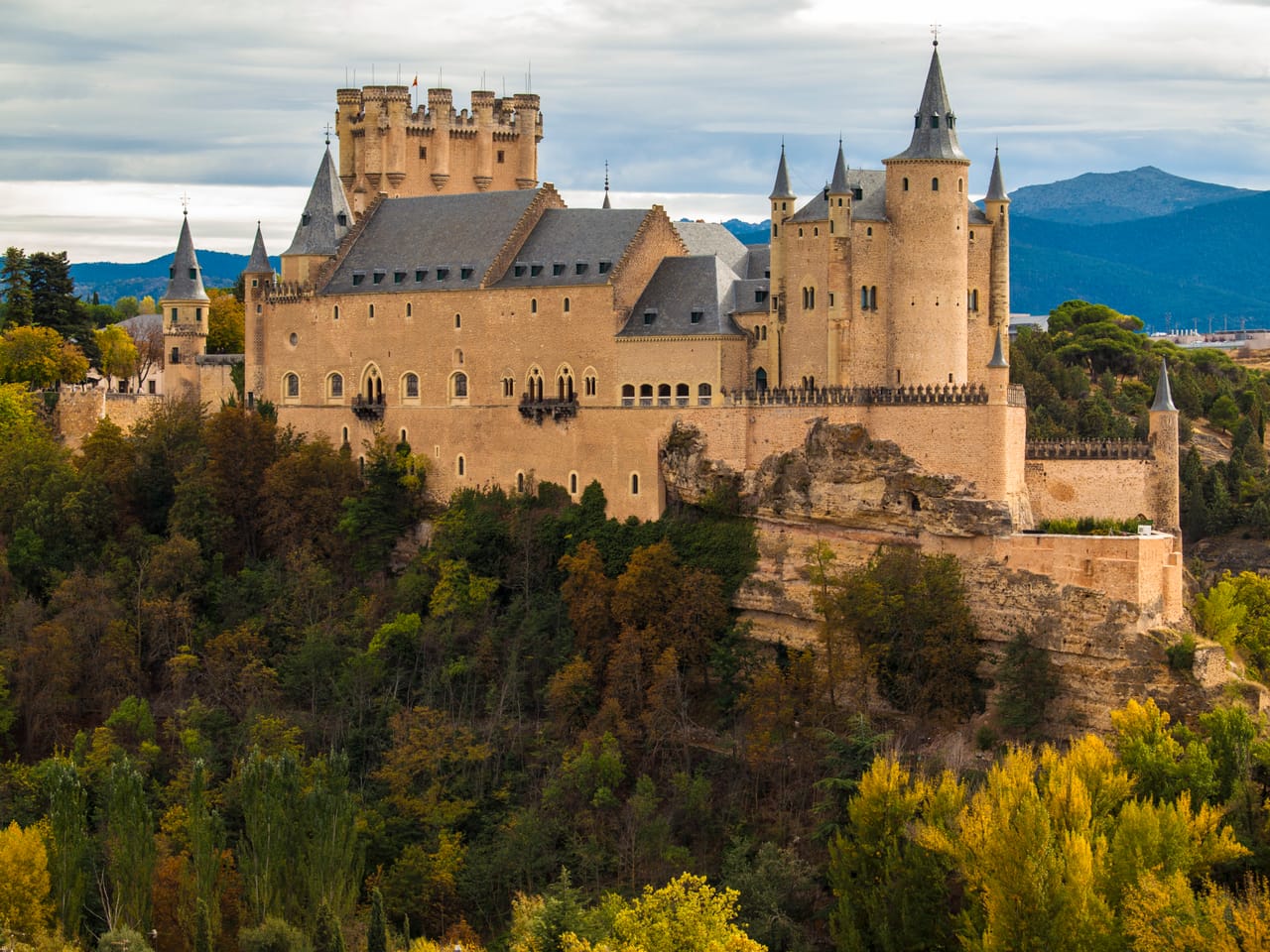
On the Castilian high plateau
The loop starts in Madrid and climbs onto the meseta, a high plateau of wheat and holm oaks, under an immense sky. The roads are straight and fast. The towns are one or two hours apart. You park on the edge, visit on foot, then set off again across the fields.
Toledo opens the trip, on its rock wrapped in a loop of the Tagus. North-west of Madrid, El Escorial, Philip II’s monastery-palace, raises its granite bulk at the foot of the Sierra de Guadarrama. Further on, after Ávila and Salamanca, Zamora, on the banks of the Duero, has more than twenty Romanesque churches: the greatest concentration in Europe, so they say.
The last big town on the loop is Segovia. Its Roman aqueduct crosses the town for more than 800 metres. It rises up to 28 metres high. Its granite blocks have held without mortar for nearly two thousand years. Toledo, Ávila, Salamanca, Segovia and El Escorial are World Heritage Sites.
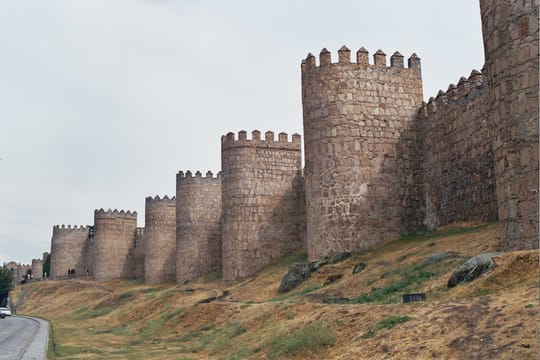
Walls and castles
The walls of Ávila were raised from the late 11th century onwards. They enclose the whole old town for two and a half kilometres, with nearly ninety towers. You can walk a good stretch of them, along the wall walk, above the rooftops. Saint Teresa of Ávila, mystic and reformer of the Carmelite order, was born here in 1515. A convent was built on the house where she was born.
Castile is the historic heart of Spain: Spanish is also called Castilian. Castile takes its name from its castles. In Spanish, a castle is a castillo. During the Reconquista, the region was a shifting frontier between the Christian kingdoms and al-Andalus, and it became covered in fortresses. Between Zamora and Segovia, the road passes two of the finest: La Mota, at Medina del Campo, and Coca, both built of brick.
In Segovia, the Alcázar raises its pointed towers above the meeting of two rivers. It is said to have inspired Disney’s castles. It was in this town that Isabella the Catholic was proclaimed Queen of Castile, in 1474.
Castile takes its name from its castles.
Toledo and Salamanca
Toledo was the capital of the Visigoths, then a great city of al-Andalus, before becoming the chief seat of the kings of Castile. Christians, Muslims and Jews lived side by side here. The city keeps two synagogues, a former mosque and a vast Gothic cathedral. El Greco, who came from Crete by way of Venice and Rome, settled here in 1577 and never left. His Burial of the Count of Orgaz still hangs in the church of Santo Tomé.
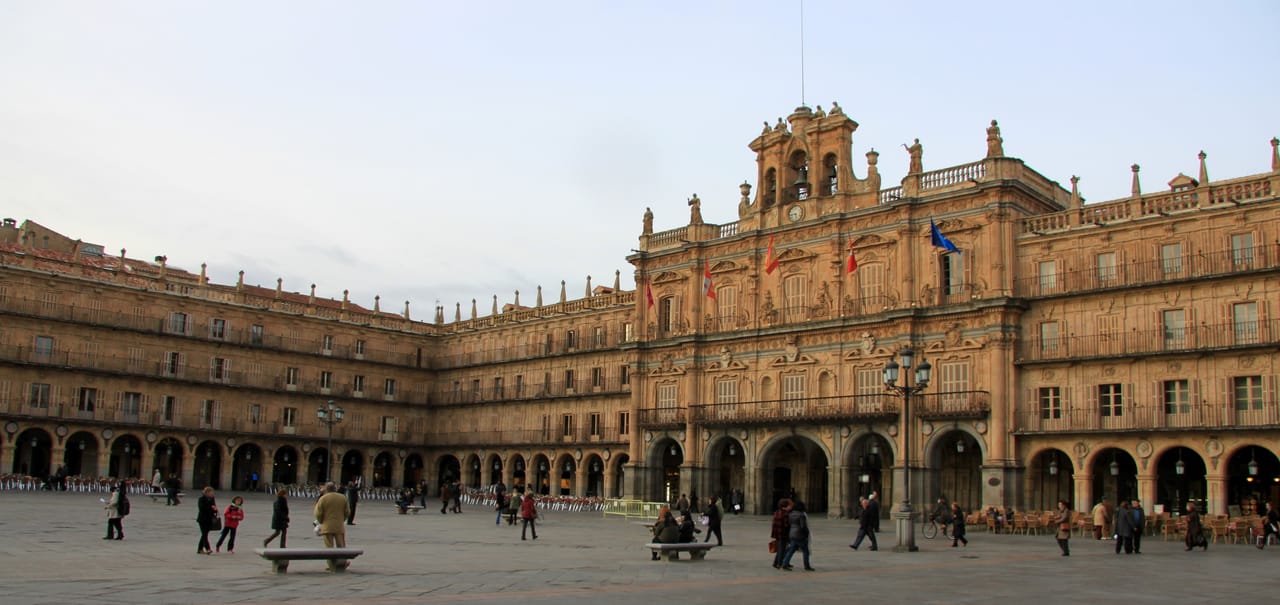
Salamanca has the oldest university in Spain still at work, founded in 1218. The whole old town is built of Villamayor stone, a golden sandstone that turns orange at sunset. On the university’s façade, people hunt for a small frog carved on a skull: finding it is said to bring luck in exams. The Plaza Mayor, completed in the 18th century, is reckoned the most beautiful in Spain.
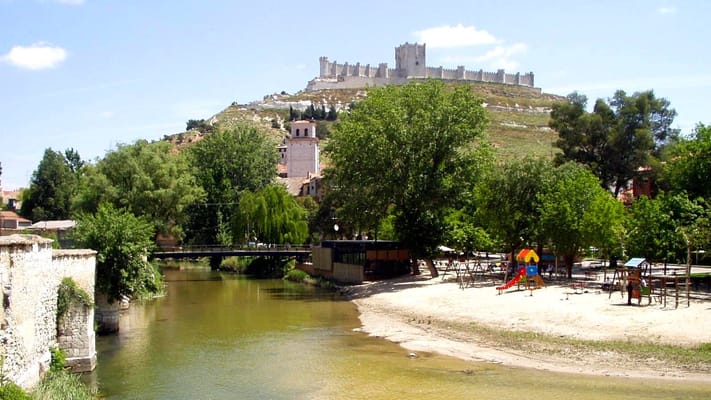
Castillo de Peñafiel
A castle as long and narrow as a ship, set on the ridge above the Duero valley. It houses the provincial wine museum: this is the heart of the Ribera del Duero, one of Spain’s great wine regions.
Practical notes
- When to go
- April to June and September–October. The meseta is scorching in July–August and freezing in winter.
- Getting there
- Start and finish in Madrid, with its international airport. Toledo is an hour away, Segovia an hour and a quarter.
- Access
- All tarmac and quick. The centres of Toledo, Segovia and Salamanca restrict car access: park on the edge.
- Sleeping in a van
- Motorhome aires on the edge of most towns, and campsites near Toledo, Segovia and Salamanca.
- Worth knowing
- Madrid and other cities have low-emission zones: check the access rules; in Madrid, a foreign vehicle must be registered in advance.
- Allow
- A week for the loop, ten days to add Burgos and León. The detour to Cuenca and its hanging houses, two hours east of Madrid, takes an extra day.
What not to miss
- 1Toledo CathedralThe Baroque Transparente and the sacristy, hung with paintings by El Greco.
- 2The walls of ÁvilaThe wall walk above the town, open until sunset in summer.
- 3The Plaza Mayor in SalamancaThe town’s drawing room, lit up at night.
- 4Zamora CathedralA Romanesque dome covered in stone scales, above the Duero.
- 5Coca castleA Mudéjar brick fortress in the middle of the pinewoods.
- 6The aqueduct of SegoviaTwo tiers of granite arches, without a gram of mortar.
The cities of Castile in pictures
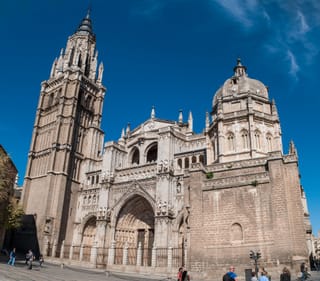
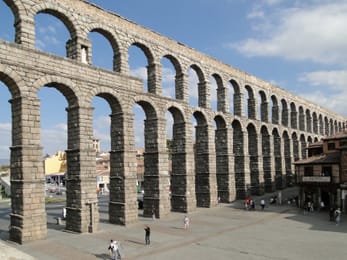
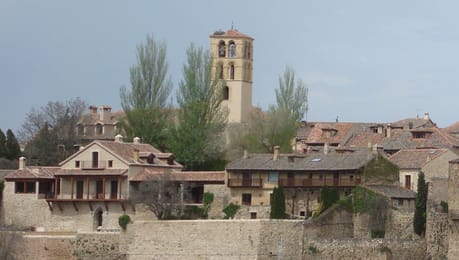
Toledo Cathedral.
The Castilian table
Castile is wood-fired oven country. Here you eat Segovia’s suckling pig, so tender it is carved with the edge of a plate, and roast lamb, lechazo, from Valladolid and Aranda. In winter, you are served Castilian soup, made with garlic and bread, and cocido, a slow-cooked pot of chickpeas and meats.
From Toledo, take home marzipan and manchego, the sheep’s cheese of La Mancha; from Salamanca, Guijuelo ham. For wine, Ribera del Duero and Toro for reds, Rueda for whites.
Loop from Madrid


 +12stops
- 1Catedral de Toledo · Monasterio de San Juan de los Reyes
- 2Real Monasterio de San Lorenzo de El Escorial · Muralla de Ávila
- 3Plaza Mayor de Salamanca · Catedral Nueva de Salamanca · Fachada de la Universidad de Salamanca
Free, no account needed — start from its places and make it yours.
Also worth reading
Coast and islands
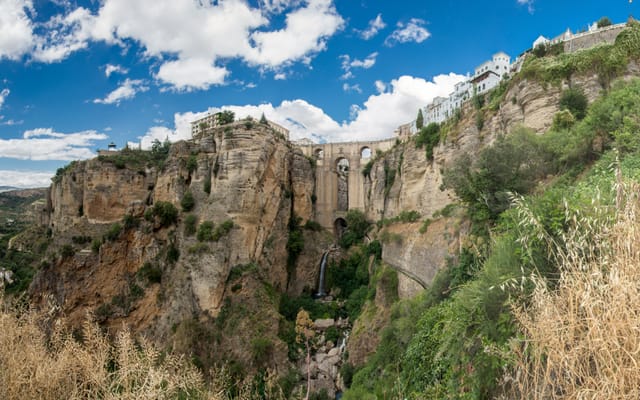
The white villages, Ronda and the Costa de la Luz
Whitewashed villages clinging to the sierras, a town split in two by a ravine, then the Atlantic, its dunes and the wind of Tarifa. Six days on a loop from Jerez, between the mountains of Cádiz and the wildest coast in Andalusia.
Heritage and culture
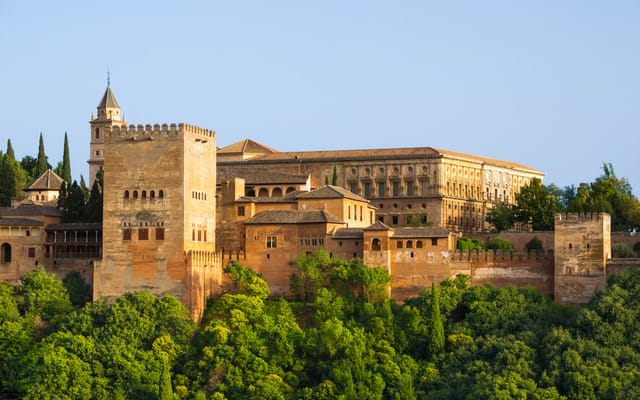
Andalusia, from Seville to Granada
Córdoba of the caliphs, Seville where the gold of the Americas came ashore, Granada of the Nasrids: three cities that were each, in turn, the heart of al-Andalus. A week from one to the next, through the olive groves, the Subbética and the dolmens of Antequera.
Coast and islands
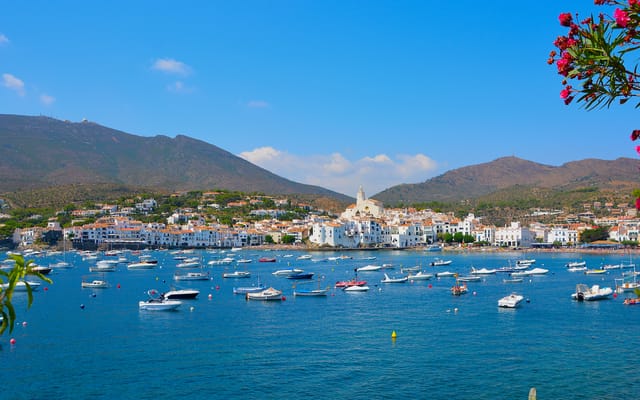
The Costa Brava, from Girona to Cadaqués
Coves between the pines, fishing villages turned artists’ refuges, medieval villages inland and, at the very end, Cap de Creus. Six days on a loop from Girona, in the footsteps of Dalí.
A starting point, a few wishes — ViaLooma builds the trip day by day, map, stops and roadbook included.