Andalusia, from Seville to Granada
Córdoba of the caliphs, Seville where the gold of the Americas came ashore, Granada of the Nasrids: three cities that were each, in turn, the heart of al-Andalus. A week from one to the next, through the olive groves, the Subbética and the dolmens of Antequera.
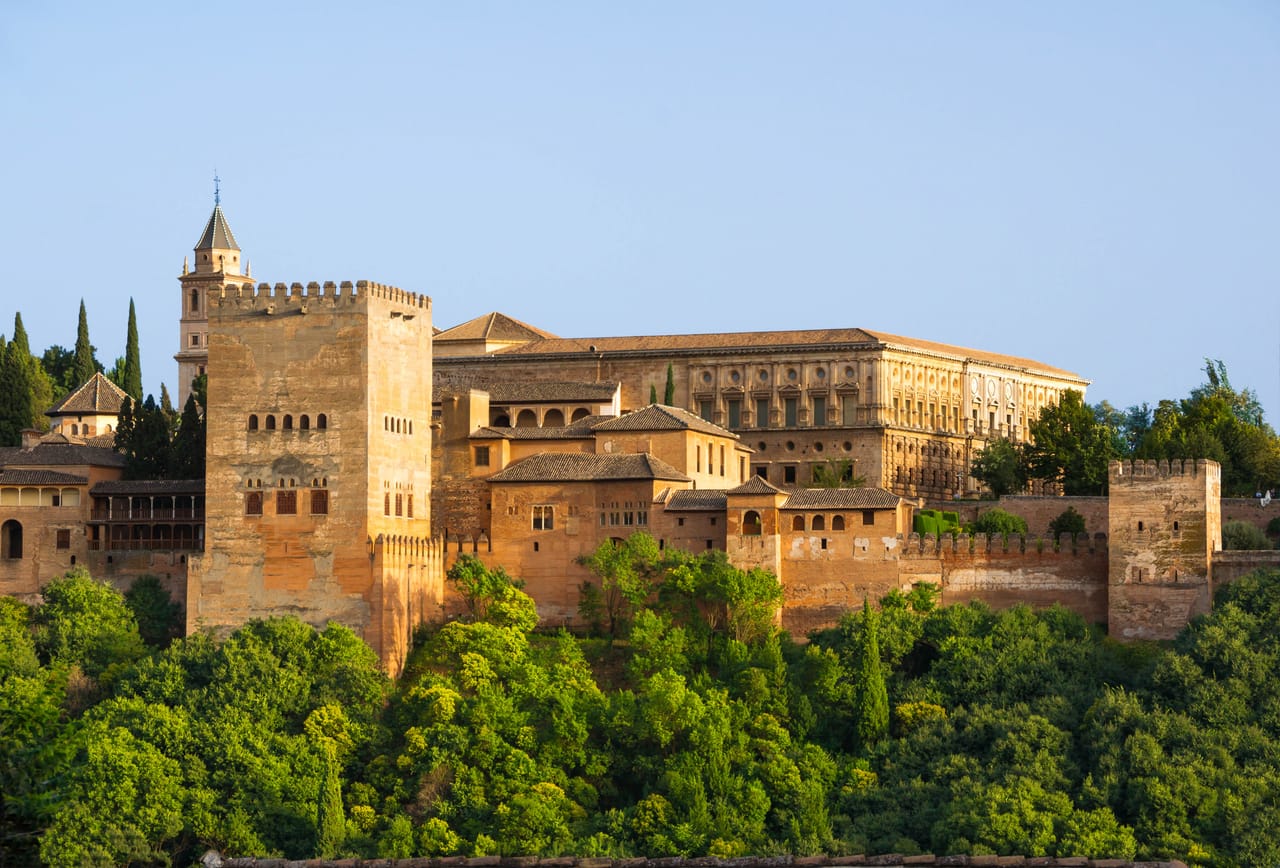
From Seville to Granada, through the olive groves
The trip starts in Seville and ends in Granada, by way of Córdoba. Between the cities, the road crosses hills covered in olive trees. The stages are short. You leave the car at the edge of each centre and explore on foot.
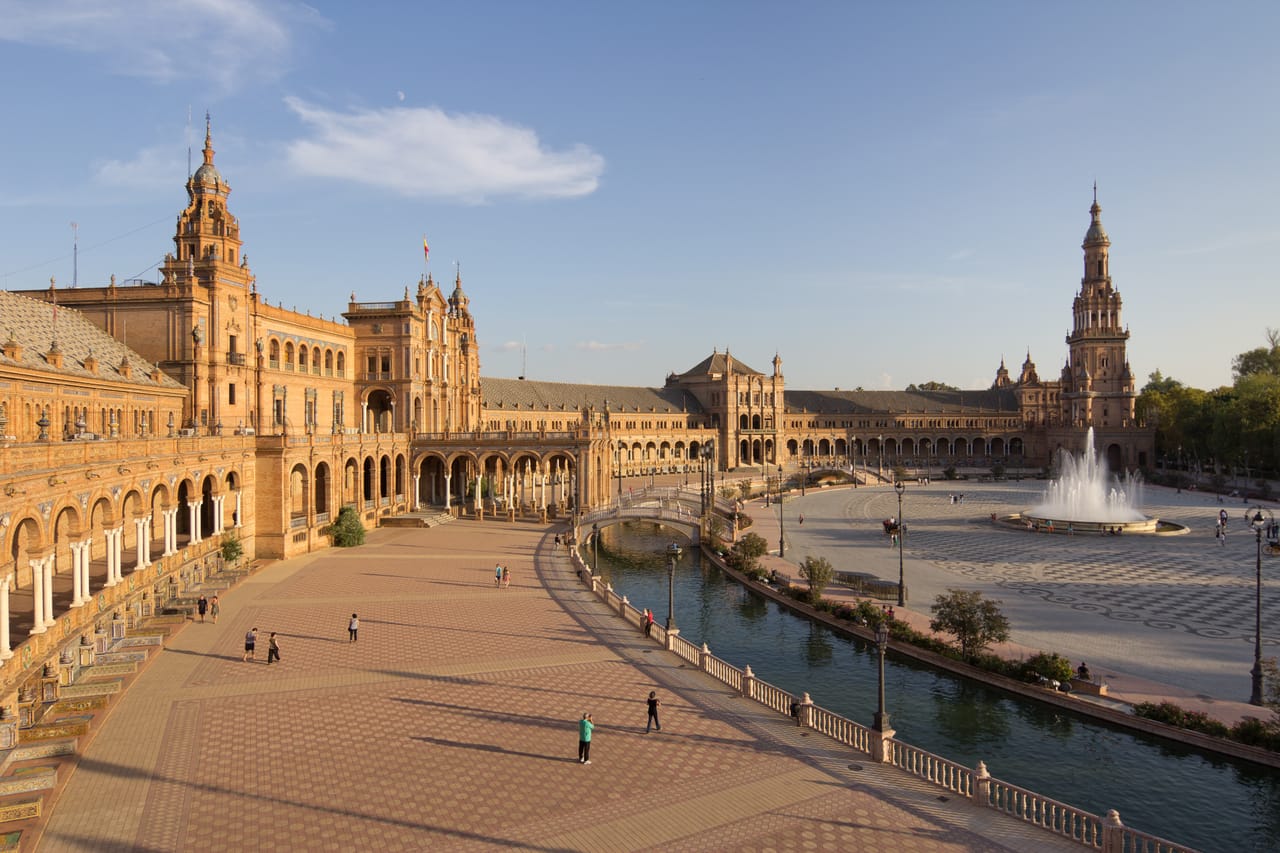
In Seville, the lanes and little squares of the Barrio de Santa Cruz, the old Jewish quarter, spread out between the Alcázar and the cathedral. Further south, the Plaza de España, built for the Ibero-American Exposition of 1929, has a ceramic bench for almost every province. In the evening, across the Guadalquivir, the Triana district has its bars and flamenco venues.
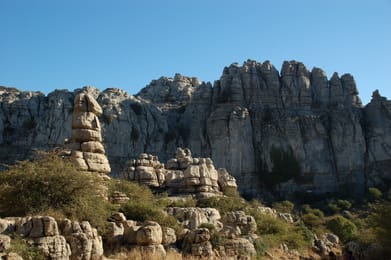
Between Córdoba and Granada, the limestone sierras of the Subbética rise above the olive groves. Zuheros clings to its cliff, beneath a castle. Priego de Córdoba has its Baroque churches and its Fuente del Rey, with 139 spouts. At Antequera, the oldest of the dolmens is nearly six thousand years old. The dolmens have been a World Heritage Site since 2016, together with two nearby natural sites: the Peña de los Enamorados and El Torcal, a labyrinth of limestone rocks.
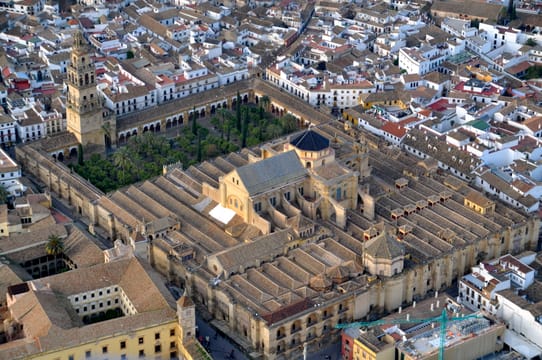
Córdoba, Seville and the legacy of al-Andalus
In 711, Arab and Berber troops crossed the Strait of Gibraltar. For almost eight centuries, part of the peninsula was called al-Andalus, and Andalusia has kept the name. In the 10th century, Córdoba was the capital of a caliphate and one of the largest cities in Europe. Its great mosque, the Mezquita, lines up more than eight hundred columns beneath red and white arches. In 1523, work began on a cathedral in the middle of it. Charles V, it is said, regretted the building work when he saw it.
West of the city, the ruins of Medina Azahara show what the court of the caliph Abd al-Rahman III once was. This palace-city has been a World Heritage Site since 2018.
The Christian kings took Córdoba in 1236, then Seville in 1248. In the 16th century, the gold and silver of the Americas passed through Seville. The city then treated itself to the largest Gothic cathedral in the world. Built on the Almohad mosque, the cathedral kept its minaret, now the Giralda, and the courtyard planted with orange trees. The Real Alcázar is still a residence of the royal family. Its heart dates from the 14th century: Peter I of Castile had it built in the Mudéjar style, by craftsmen from Granada and Toledo.
In the 16th century, the gold and silver of the Americas passed through Seville.
Granada and the Alhambra
Granada was the capital of the last Muslim kingdom in the peninsula. The kingdom fell in January 1492 to the Catholic Monarchs, who are buried in the city’s Royal Chapel. From the Nasrid dynasty, the city has kept the Alhambra, a red citadel on a hill facing the Sierra Nevada. Its palaces have carved stucco and cedarwood ceilings. Entry is capped and tickets must be booked in advance.
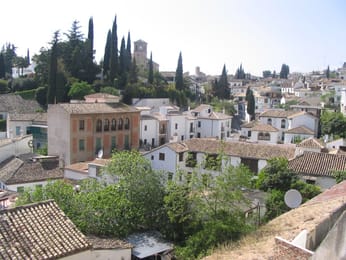
Opposite, on the other hill, the Albaicín, the old Muslim quarter, tumbles in white lanes down to the Darro. At sunset, people climb to the Mirador de San Nicolás, facing the Alhambra. Close by, in the caves of the Sacromonte, you can see the zambra in the evening, the flamenco of Granada’s gitanos.
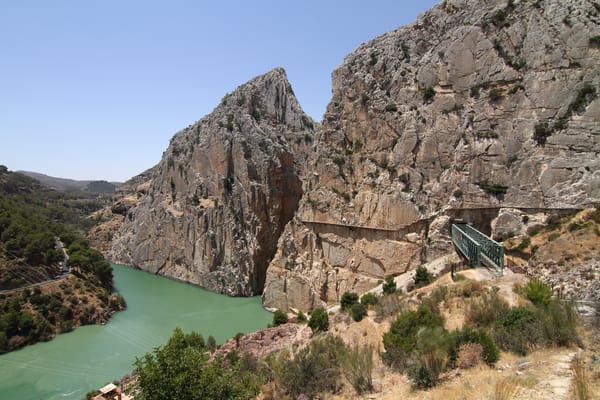
Caminito del Rey
A walkway pinned to the rock face of the Gaitanes gorge, some hundred metres above the river. It was built in the early 20th century to service a hydroelectric plant. Long reputed to be one of the most dangerous paths in the world, it was rebuilt and reopened in 2015. Entry must be booked.
Practical notes
- When to go
- March to May, then October and November. Summer often passes 40 °C in Seville and Córdoba; Holy Week and the April Fair fill Seville.
- Getting there
- Seville has an airport and a high-speed rail station, two and a half hours from Madrid. For the journey home, Granada is an hour and a half from Málaga airport.
- Access
- All tarmac. The historic centres are often closed to cars: use a car park on the edge of each city.
- Sleeping in a van
- Campsites on the outskirts of all three cities and in the Subbética. Overnight parking is rarely tolerated in the centres.
- Worth knowing
- The Alhambra, the Mezquita and Seville’s Alcázar are booked online; for the Alhambra, several weeks ahead in spring.
- Allow
- A week from Seville to Granada, ten days to add the white villages or the Sierra Nevada.
What not to miss
- 1The cathedral and the GiraldaYou reach the top of the old minaret by ramps designed, so they say, to be ridden up on horseback.
- 2The Real AlcázarThe patios and gardens of a Mudéjar palace still in use.
- 3The MezquitaThe forest of columns, and the mihrab, covered in gold-ground mosaics.
- 4Medina AzaharaA caliph’s palace-city, just outside Córdoba.
- 5El Torcal de AntequeraA waymarked path through a jumble of limestone stacked like plates.
- 6The AlhambraThe Nasrid palaces, then the Generalife and its terraced gardens.
Andalusia in pictures
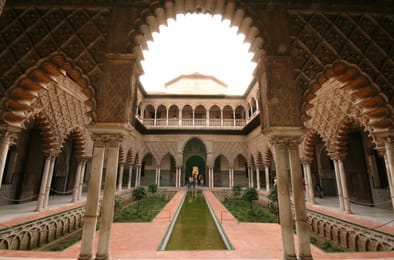
A patio in the Real Alcázar of Seville.
The Andalusian table
In Andalusia, people eat tapas, standing at the counter and moving from one bar to the next. In summer, gazpacho and Córdoba’s thicker salmorejo cool you down; all year round, there is Iberian ham, olives and fried fish, the pescaíto.
The local wine is often white and dry: fino and manzanilla from Jerez and Sanlúcar, or montilla-moriles from south of Córdoba. In Granada, in many bars, every drink comes with a free tapa.
Seville → Granada


 +13stops
- 1Catedral de Santa María de la Sede de Sevilla · Reales Alcázares
- 2Plaza de España · Itálica
- 3Conjunto Arqueológico de Carmona · Madinat Al-Zahra
Free, no account needed — start from its places and make it yours.
Also worth reading
Coast and islands
The white villages, Ronda and the Costa de la Luz
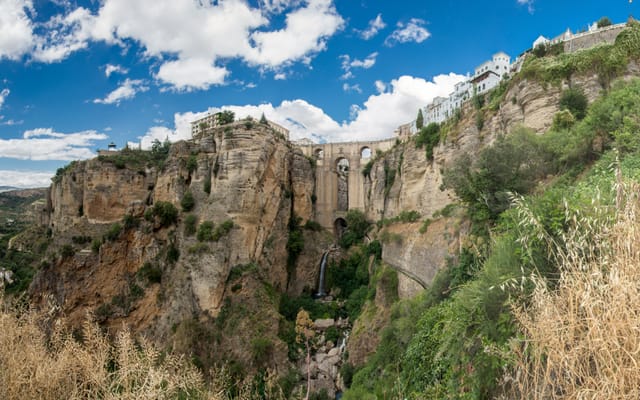
Whitewashed villages clinging to the sierras, a town split in two by a ravine, then the Atlantic, its dunes and the wind of Tarifa. Six days on a loop from Jerez, between the mountains of Cádiz and the wildest coast in Andalusia.
Coast and islands
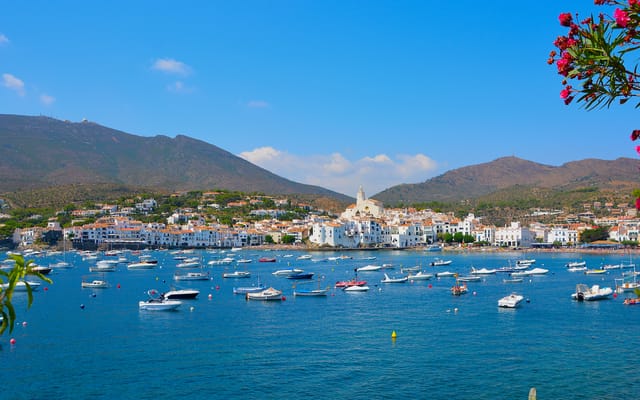
The Costa Brava, from Girona to Cadaqués
Coves between the pines, fishing villages turned artists’ refuges, medieval villages inland and, at the very end, Cap de Creus. Six days on a loop from Girona, in the footsteps of Dalí.
Heritage and culture
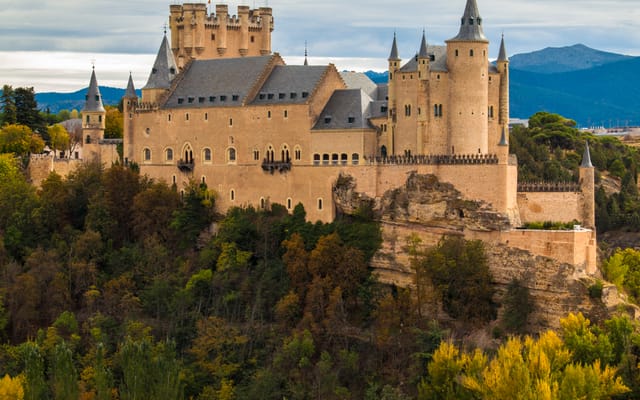
The cities of Castile, from Toledo to Segovia
A week-long loop from Madrid, on the high plateau of Castile. The trip takes in Toledo, the walls of Ávila, Salamanca, Zamora, the castles of the meseta and the aqueduct of Segovia.
A starting point, a few wishes — ViaLooma builds the trip day by day, map, stops and roadbook included.