The Slovenian Karst and its coast, from Postojna to Piran
Vast caves, a castle set in a cliff, white horses, then three small Venetian towns on the Adriatic. A four-day loop from Ljubljana, across the Karst to the sea.
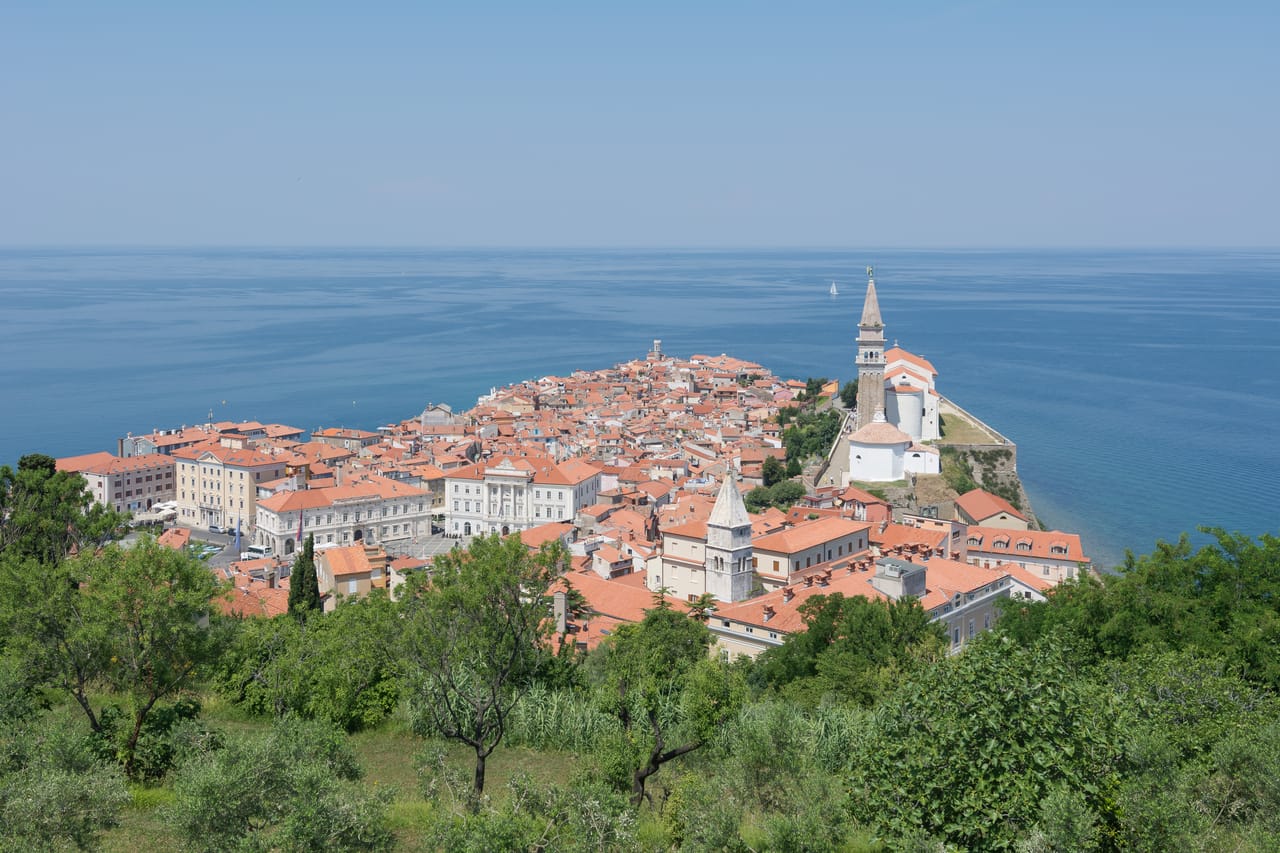
From the Karst caves to the Adriatic ports
This trip crosses south-west Slovenia in less than 400 kilometres. From Ljubljana, you drive through the forests of Notranjska to Lake Cerknica, which is there or not depending on the season. Next come the caves of Postojna and Predjama Castle, built into the mouth of a cave.
Further west, the Karst is a plateau of grey limestone. Its fields are lined with dry-stone walls. The ground is dotted with dolines, round hollows where the red soil is farmed. In Štanjel, a stone village covers a whole hill. In Lipica, the white horses of the stud farm graze under the oaks.
Then the road drops off the plateau by the Črni Kal Viaduct, and the Gulf of Trieste comes into view all at once. Along less than 50 kilometres of coast, you go from Koper to Izola and the cliffs of Strunjan, then on to Piran, at the tip of its peninsula. Past Portorož, the Sečovlje salt pans stretch as far as Croatia.
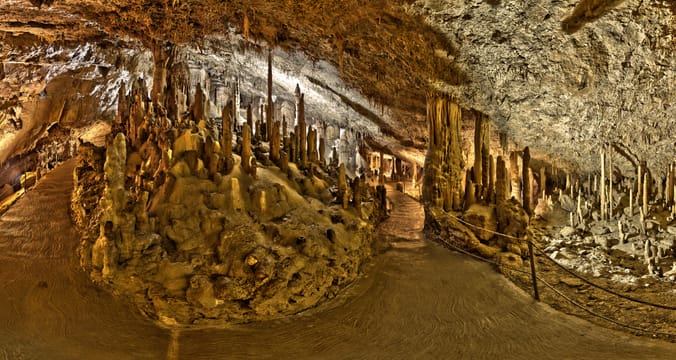
The Karst caves
Geologists all over the world took the word karst, for limestone landscapes hollowed out by water, from the name of this plateau. At Škocjan, the Reka river disappears underground and flows 34 kilometres in the dark before it comes out again in Italy, near Monfalcone. The caves have been on the UNESCO World Heritage List since 1986. The guided tour follows an underground canyon crossed by a footbridge, nearly 50 metres above the water.
Postojna has more than 24 kilometres of passages, about 5 of them open to the public. A small train has run inside since 1872. Here you can see the olm, a blind, colourless amphibian that lives in the cave water. In 2016, the birth of twenty-two baby olms here was followed all over the world.
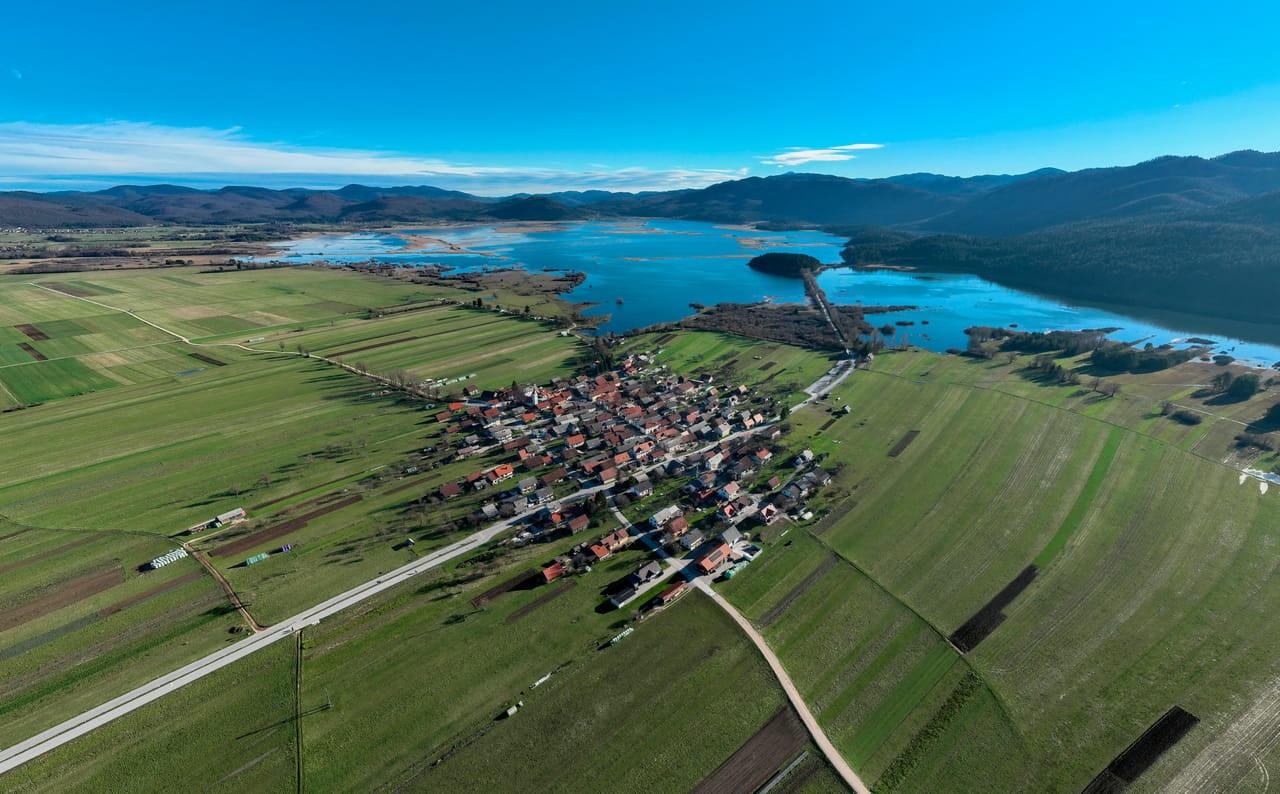
Here, water flows underground as much as on the surface. Lake Cerknica can cover 38 square kilometres, then drain away through its bed, often in summer, leaving meadows in its place. In 1687, the scholar Valvasor described how it works to the Royal Society in London.
Here, water flows underground as much as on the surface.
A Venetian, bilingual coast
Koper, Izola and Piran belonged to the Republic of Venice until 1797. After that they were Austrian, then Italian, then Yugoslav after 1945. Many of the Italian inhabitants then left. A minority stayed, and names and signs are bilingual: Koper/Capodistria, Piran/Pirano.
Piran was built tightly packed on its peninsula. Its main square is named after the violinist Giuseppe Tartini, born here in 1692. The bell tower was modelled on St Mark’s in Venice. To the south, in the Sečovlje salt pans, salt is still harvested by hand in the warm months, on the petola, a thin layer of algae and minerals that keeps it off the mud.
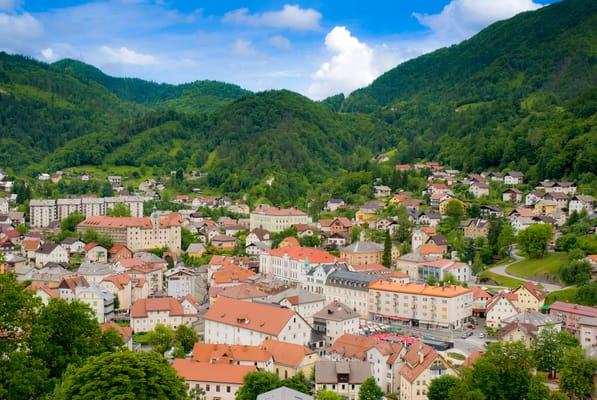
Idrija
From the late 15th century to 1995, Idrija lived off its mercury mine, added to the UNESCO list in 2012 together with Almadén. You can visit St Anthony’s Gallery, one of the oldest surviving mine entrances in Europe.
Practical notes
- When to go
- May–June and September. Lake Cerknica is mostly full from autumn to spring and often dry in summer. In August, the coast is packed.
- Getting there
- Ljubljana is 50 minutes from Postojna on the A1. Trieste, a quarter of an hour from Lipica, also works as a starting point.
- Access
- Everything is tarmac. An electronic vignette is compulsory on motorways and expressways (evinjeta.dars.si); since January 2026, the Škofije–Koper–Izola expressway has been exempt up to 3.5 tonnes. In a strong bora, the Črni Kal Viaduct can close to high-sided vehicles.
- Sleeping in a van
- A campsite near Postojna Cave. On the coast, the motorhome aire is at Portorož marina; the car parks in Piran are not aires.
- Worth knowing
- The caves are visited at set times, booked ahead in summer; it is about ten degrees inside, and photography is banned at Škocjan. Piran’s centre is closed to cars: park at Fornače, then take the shuttle.
- Allow
- Four days for the loop, one more for Idrija or Trieste.
What not to miss
- 1Predjama CastleLegend has it that its lord Erasmus, under siege, threw fresh cherries at his enemies.
- 2The Lipica stud farmFounded in 1580 for the Habsburg court, it breeds Lipizzaners, which are born dark and turn white with age.
- 3ŠtanjelA stone village on its hill, with its castle and lemon-shaped bell tower.
- 4The church at HrastovljeA Romanesque church ringed by a wall, and a Dance of Death painted in 1490.
- 5The Sečovlje salt pansPans and canals, and a salt museum at Fontanigge.
- 6IzolaA former island joined to the coast, with its fishing harbour.
The Slovenian Karst and its coast in pictures
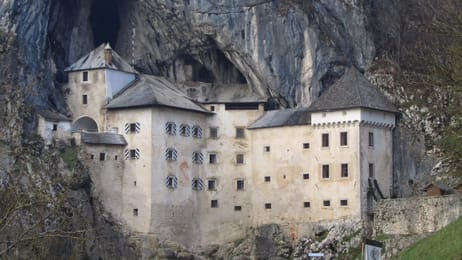
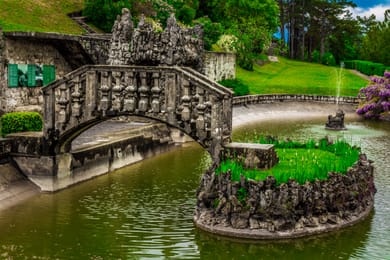
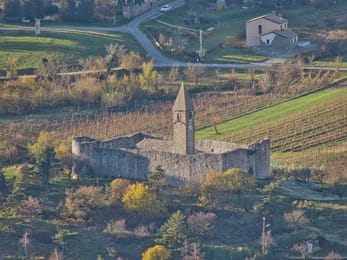
Predjama Castle, built into the mouth of a cave.
The Karst and Istrian table
On the Karst, the cured ham, kraški pršut, is dried by the bora. It comes with teran, a dark red wine from the plateau’s red soil. A few days a year, some farms open osmice, tables where the farm sells its own wine and cured meats.
On the coast, you eat grilled fish with Istrian olive oil. Piran salt is also sold as fleur de sel. In Idrija, try žlikrofi, small dumplings filled with potato.
Loop from Ljubljana


 +9stops
- 1Muzej Cerkniškega jezera · Rakov Škocjan · Postojnska jama
- 2Predjamski grad · Štanjel · Kobilarna Lipica
- 3Škocjanske jame · Cerkev sv. Trojice, Hrastovlje · Koper
Free, no account needed — start from its places and make it yours.
Also worth reading
Wide open spaces
The Julian Alps, from Bled to Kranjska Gora
Two mountain lakes, gorges, waterfalls and the highest road pass in Slovenia. A four-day loop from Ljubljana, at the foot of Triglav.
Wide open spaces
The Pacific Northwest, from the Olympic Peninsula to the Cascade volcanoes
Rainforests, a coast of headlands and lighthouses, redwoods and two active volcanoes. A two-week loop from Seattle, by way of the Olympic Peninsula, the Oregon coast and Mount Rainier.
Wide open spaces
Vancouver Island, from Victoria to the beaches of Tofino
An island of giant forests, beaches pounded by the Pacific and small harbours where boats leave to see orcas. Nine days on a loop from Victoria, from Port Renfrew to Tofino and up to Telegraph Cove.
A starting point, a few wishes — ViaLooma builds the trip day by day, map, stops and roadbook included.