The Julian Alps, from Bled to Kranjska Gora
Two mountain lakes, gorges, waterfalls and the highest road pass in Slovenia. A four-day loop from Ljubljana, at the foot of Triglav.
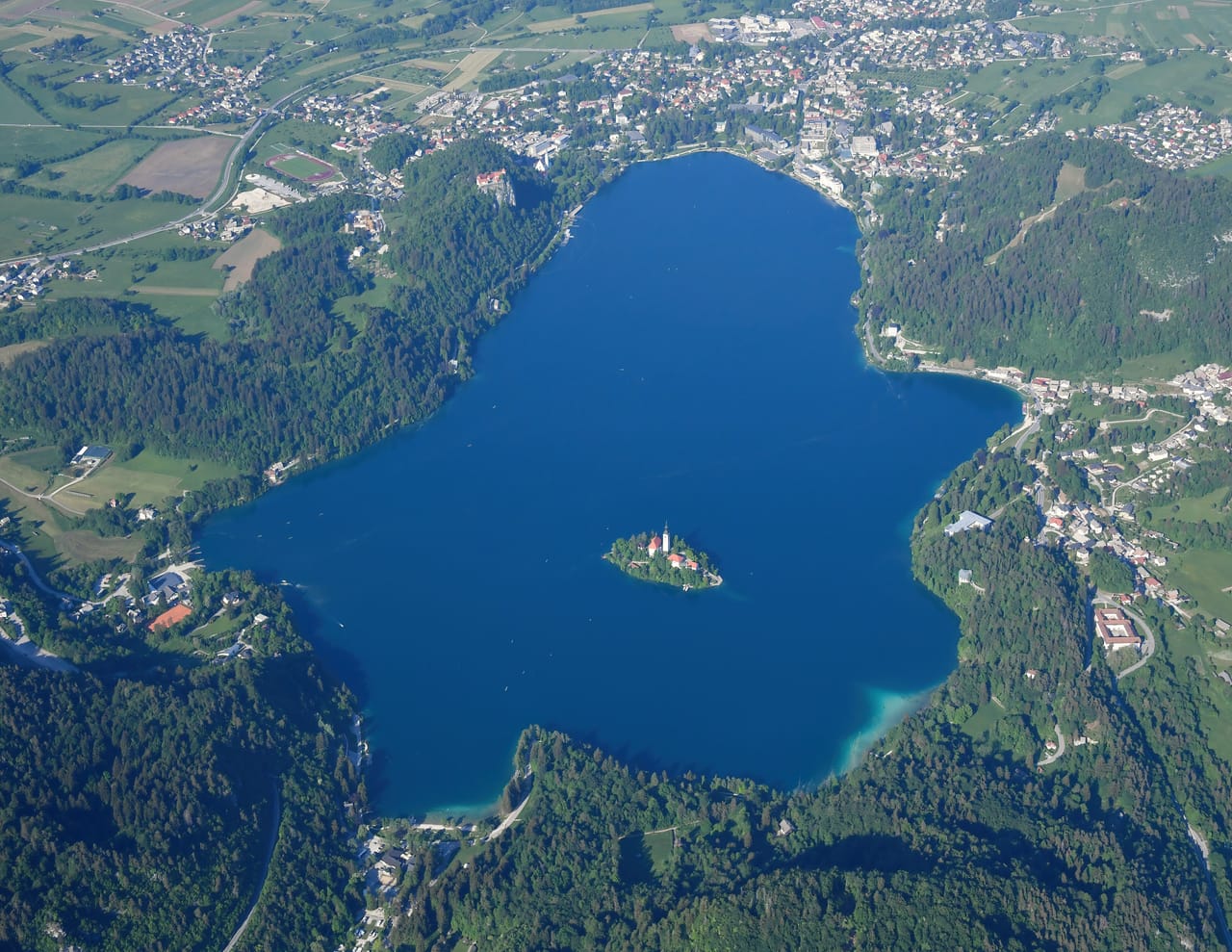
Lakes, gorges and waterfalls at the foot of Triglav
From Ljubljana, the motorway heads up the plain towards the Karawanks range. On a clear day, you can see Triglav to the west, 2,864 metres, the highest peak in the country. In less than an hour, you are in Bled: a green lake, an island with its church, a castle on its cliff. Close by, the Vintgar Gorge is walked on wooden walkways.
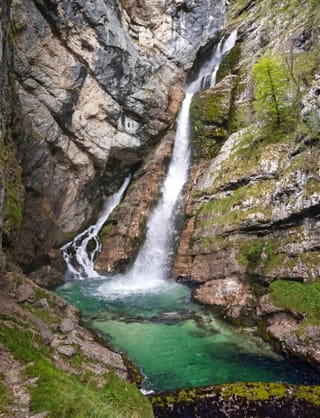
Further on, Lake Bohinj is bigger and quieter, with shores that have stayed largely unbuilt. At its western end, Savica Falls drops 78 metres. If you have the time, a forest road also links Bled to Bohinj across the Pokljuka plateau.
To the north, the Sava valley leads to Kranjska Gora, a ski resort in winter and a hiking base in summer. On the way, near Mojstrana, a path runs behind the Peričnik waterfall. From Kranjska Gora, one road climbs to the Vršič and another runs to Planica, the valley of the ski-flying hills.
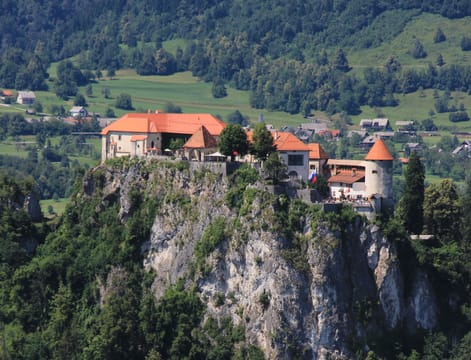
Bled: the lake, the island and the castle
Bled Castle sits on a cliff above the lake. It is the oldest castle in Slovenia mentioned in written records. It appears in 1011, in a deed by King Henry II in favour of the Bishops of Brixen, in what is now South Tyrol. The bishops kept it until 1803. Inside are a Romanesque tower, two courtyards, a painted chapel and a museum. From the terraces, the view takes in the whole lake, the island and the mountains beyond.
In the middle of the lake, Bled Island holds the Church of the Assumption, at the top of a Baroque staircase of 99 steps. By tradition, the groom carries the bride up the steps on their wedding day. Inside the church, you ring a bell and make a wish.
You reach the island by pletna, a flat-bottomed boat that the boatman rows standing up. In 1740, Maria Theresa granted the crossing to 22 families from the lake. The trade is still regulated today.
In 1740, Maria Theresa granted the crossing to 22 families from the lake.
Bohinj, Triglav and their legends
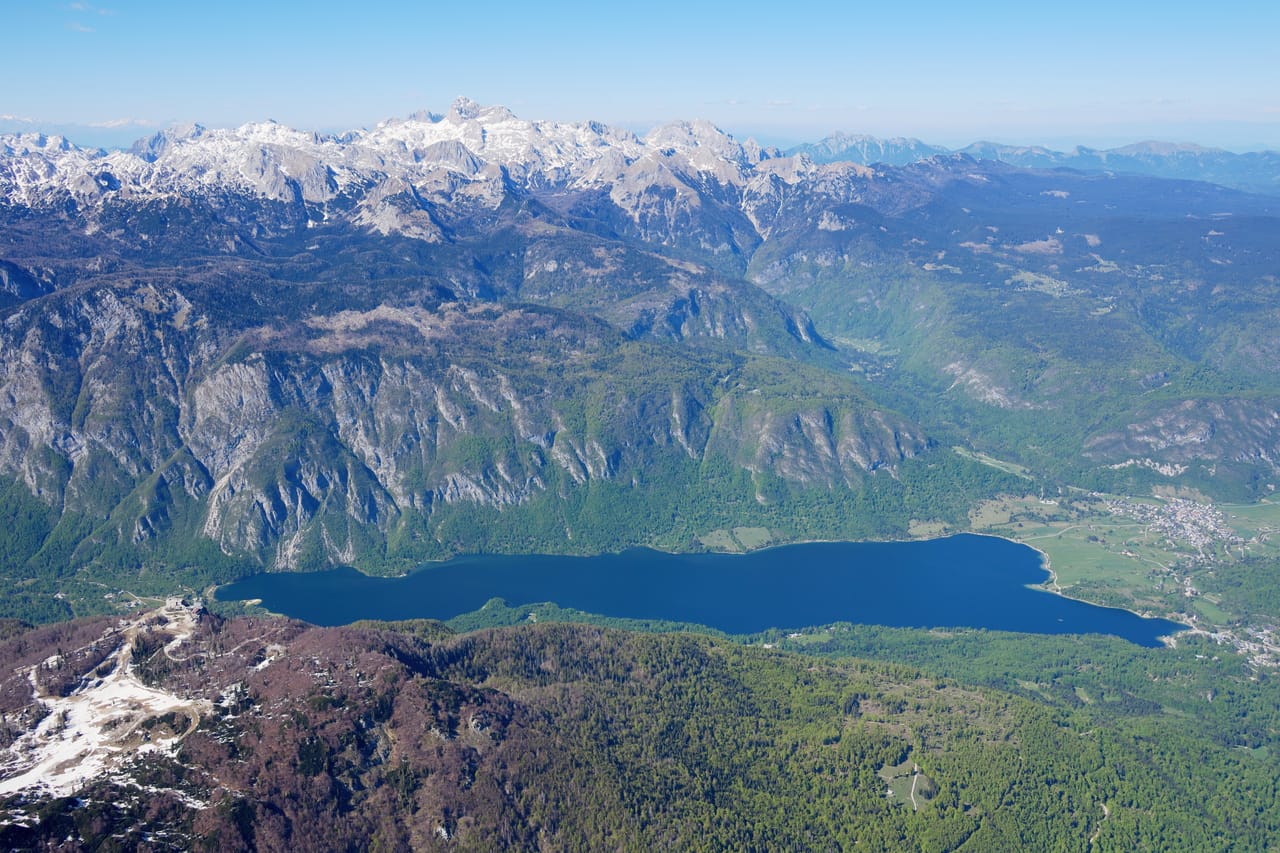
Lake Bohinj is the largest permanent lake in Slovenia: 318 hectares, 45 metres deep. It lies at the heart of Triglav National Park, the country’s only national park. Legend has it that a chamois with golden horns, the Zlatorog, guarded a treasure in these mountains. The German poet Rudolf Baumbach made the story famous; a statue of the Zlatorog stands on the lakeshore.
France Prešeren, Slovenia’s national poet, set “The Baptism on the Savica”, published in 1836, here. In Ribčev Laz, near the Church of St John the Baptist, a statue honours the four men who first reached the summit of Triglav, in 1778.
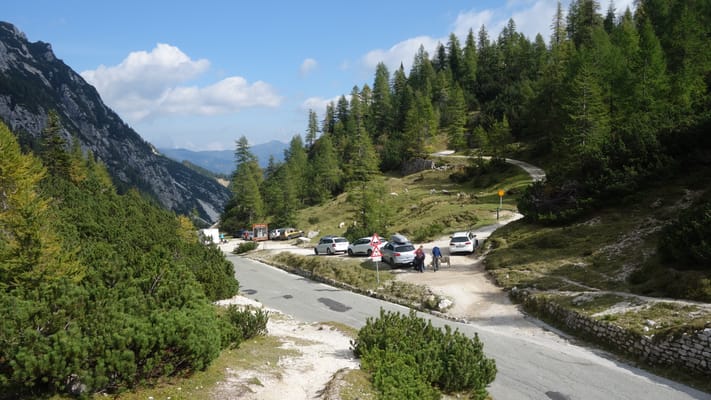
The Vršič Pass
At 1,611 metres, it is the highest road pass in Slovenia, with 50 hairpins from Kranjska Gora to the Soča valley. Russian prisoners of war built the road; a wooden Orthodox chapel remembers those killed by an avalanche in March 1916. A barrier only opens the car park at the top if there are spaces left.
Practical notes
- When to go
- June to September for hiking and swimming; May and October are quieter. In winter, snow usually closes the Vršič.
- Getting there
- Bled is less than an hour from Ljubljana on the A2 motorway, Kranjska Gora just over an hour.
- Access
- Everything is surfaced; the Vršič hairpins are narrow and cobbled on the north side. An electronic vignette is required on motorways: class 2B for most vans.
- Sleeping in a van
- Campsites in Bled, Bohinj and Kranjska Gora. Spending the night outside campsites and designated aires is banned and fined.
- Worth knowing
- The Vintgar Gorge is open from April to the end of October, with limited tickets, best bought online; the walkways are one-way. The Vogel cable car, in Bohinj, is closed until the end of November 2026.
- Allow
- Four days for the loop, one more to drive down the Vršič to the Soča valley.
What not to miss
- 1The Vintgar Gorge1.6 kilometres of gorge carved by the Radovna, open to the public since 1893.
- 2Savica FallsA 78-metre waterfall, about twenty minutes’ walk from the car park.
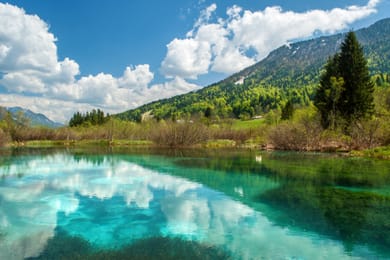
- 3ZelenciThe source of the Sava Dolinka, a small green lake at 5 or 6 °C all year round.
- 4PlanicaThe valley of the giant ski-flying hills, where Sepp Bradl became the first to jump beyond 100 metres, in 1936.
- 5RadovljicaThe Museum of Apiculture, its painted beehive panels, and the gingerbread hearts of Lectar.
- 6Škofja LokaA medieval town whose Passion play, written from 1715 onwards, is the oldest surviving play in Slovene.
The Julian Alps in pictures
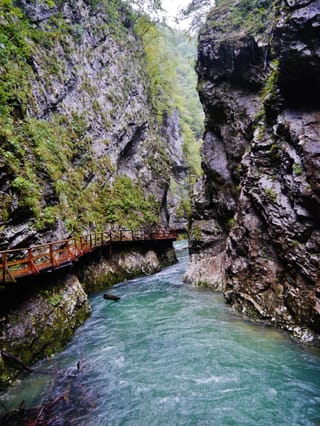
A walkway in the Vintgar Gorge, above the Radovna.
Food in the Julian Alps
In Bled, try the kremšnita, a puff-pastry cake with custard cream and whipped cream. The pastry chef Ištvan Lukačević introduced it in 1953 at the Hotel Park, from a recipe from his native Vojvodina. In the inns, river trout is often on the menu.
Bohinj is a land of mountain cheeses, including mohant, with a very strong taste. Everywhere you will find štruklji, rolls of dough with a filling, often of cottage cheese. To finish, honey: this is the home of the Carniolan honeybee.
Loop from Ljubljana


 +13stops
- 1Ljubljanski grad · Radovljica · Bled · Blejski grad
- 2Blejski vintgar · Pokljuška soteska · Cerkev sv. Janeza Krstnika, Ribčev Laz · Slap Savica
- 3Stara Fužina · Peričnik · Kranjska Gora · Jezero Jasna
Free, no account needed — start from its places and make it yours.
Also worth reading
Wide open spaces
The Slovenian Karst and its coast, from Postojna to Piran
Vast caves, a castle set in a cliff, white horses, then three small Venetian towns on the Adriatic. A four-day loop from Ljubljana, across the Karst to the sea.
Wide open spaces
The Pacific Northwest, from the Olympic Peninsula to the Cascade volcanoes
Rainforests, a coast of headlands and lighthouses, redwoods and two active volcanoes. A two-week loop from Seattle, by way of the Olympic Peninsula, the Oregon coast and Mount Rainier.
Wide open spaces
Vancouver Island, from Victoria to the beaches of Tofino
An island of giant forests, beaches pounded by the Pacific and small harbours where boats leave to see orcas. Nine days on a loop from Victoria, from Port Renfrew to Tofino and up to Telegraph Cove.
A starting point, a few wishes — ViaLooma builds the trip day by day, map, stops and roadbook included.