The Slovak Paradise and Spiš, from castles to ladder gorges
In eastern Slovakia, a four-day loop from Košice crosses the Spiš region, with a huge ruined castle, market towns founded by German settlers and carved Gothic altars. To the south, you explore the gorges of the Slovak Paradise on foot, on ladders.
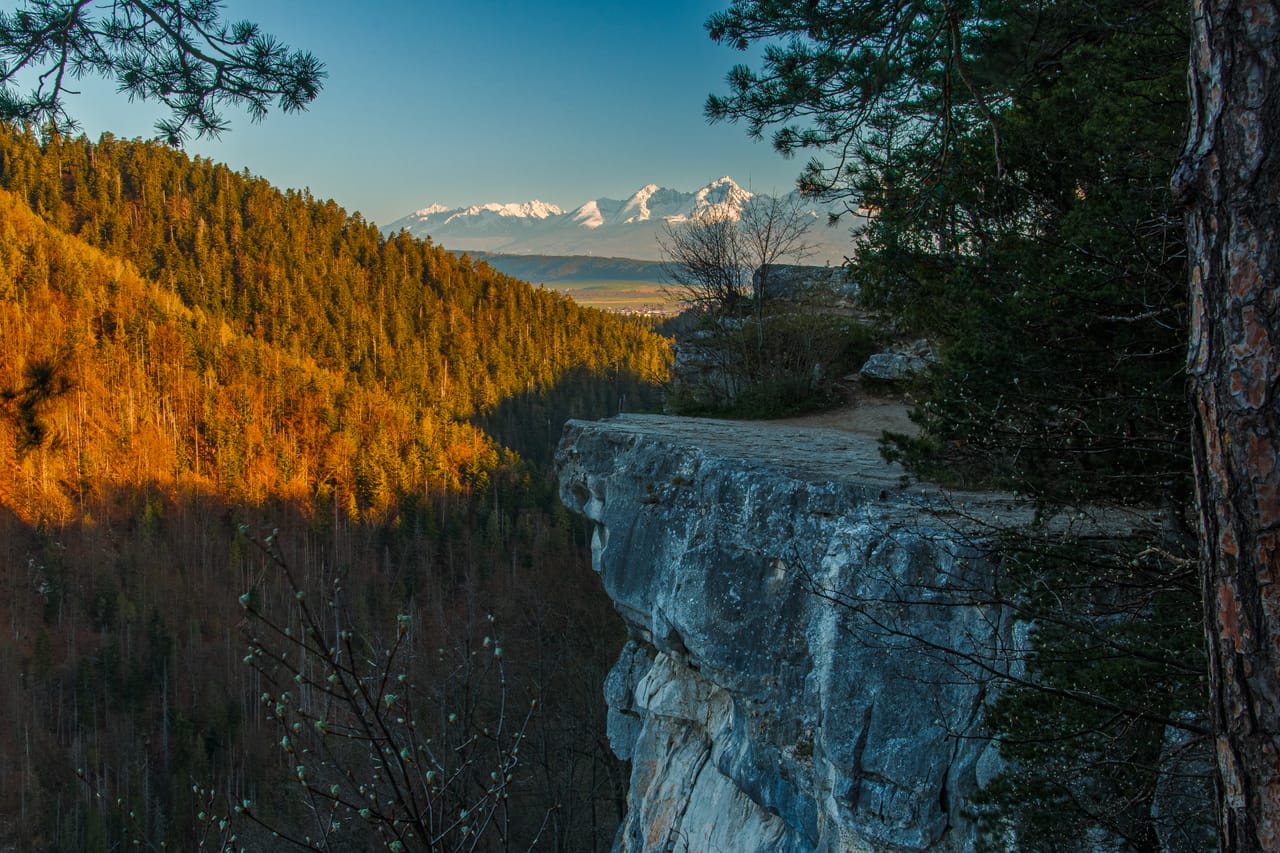
From Košice to the gorges of the Slovak Paradise
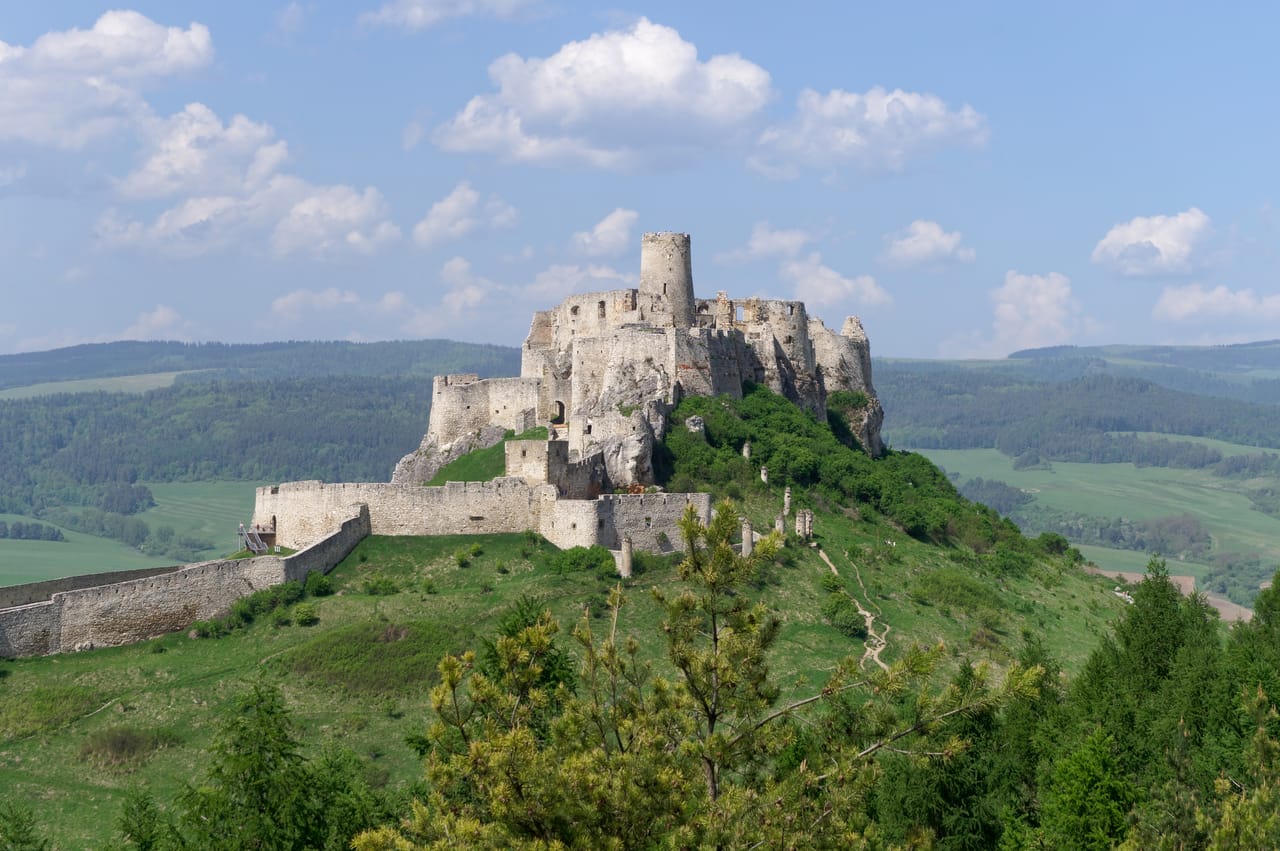
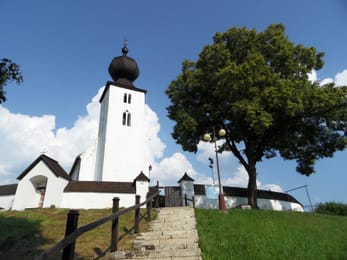
From Košice, the road heads up the Hornád valley, between the river, the railway and old mining villages. Then the valley opens onto the fields of Spiš. First the white bell tower of Žehra comes into view, then Spiš Castle, sitting on its hill. Its ruins cover nearly four hectares. Opposite, Spišská Kapitula keeps its cathedral behind its walls.
Further west, the Spiš plain stretches out at the foot of the High Tatras, which you can see from the road between Levoča and Kežmarok. The towns here are old, each one built around a large square.
To the south, the Slovak Paradise is a wooded limestone plateau cut by narrow gorges. You climb up beside the waterfalls on metal ladders. A mountain road then leads to Dedinky lake and the Dobšiná Ice Cave.
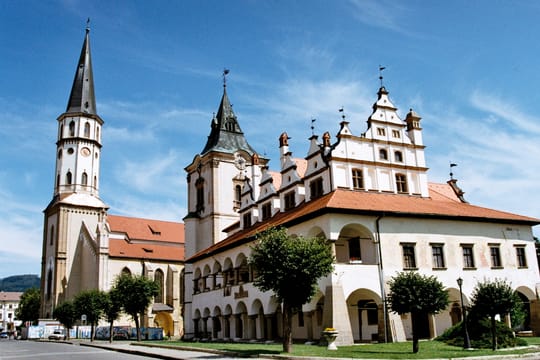
Levoča and the Saxon towns of Spiš
From the 12th century, German settlers, the Spiš Saxons, came to live in the region. They founded market towns with large squares, town halls and Gothic churches. Levoča is the best example: its square is lined with merchants’ houses. In the middle stand an arcaded Renaissance town hall and St James’s Basilica. In front of the town hall, you can still see the “cage of shame”, where people guilty of minor offences were put on show. The town joined the Spiš Unesco site in 2009.
Inside the basilica, the high altar carved by the workshop of Master Paul of Levoča is 18.62 metres tall. Finished in 1517, it is the tallest Gothic wooden altar in the world. The same workshop worked on the altar of St George, dated 1516, in the church of Spišská Sobota. This old market town is now a district of Poprad.
In 1412, King Sigismund pledged sixteen Spiš towns to Poland, including Spišská Sobota and Spišská Nová Ves. They only returned to Hungary in 1772. In the 16th century, many Saxons became Lutherans. In Kežmarok, their church is made of wood and stands outside the town walls, as the 1681 articles of law required for Protestants. This articular church has been on the Unesco list since 2008.
The Slovak Paradise is explored on foot, not by car.
The gorges of the Slovak Paradise and the Dobšiná Ice Cave
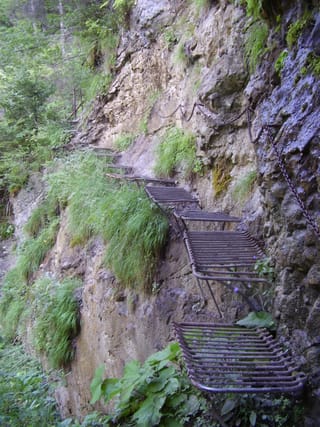
The plateau, cut into gorges by the Hornád and its tributaries, has been a national park since 1988. The Slovak Paradise is explored on foot, not by car. From Hrabušice-Podlesok, the Suchá Belá gorge climbs beside the waterfalls on ladders and footbridges. The ladder gorges are one-way only, uphill. To the north, at Prielom Hornádu, the path follows the river on footholds fixed to the cliff. Near Čingov, the Tomášovský výhľad viewpoint looks down over the valley.
South of the plateau, the Dobšiná Ice Cave was discovered in 1870 by the mining engineer Jenő Ruffinyi. In 1887, it was one of the first caves in Europe with electric lighting. All year round, it holds more than 110,000 cubic metres of ice. The guided tour lasts half an hour. The cave has been on the Unesco list since 2000.
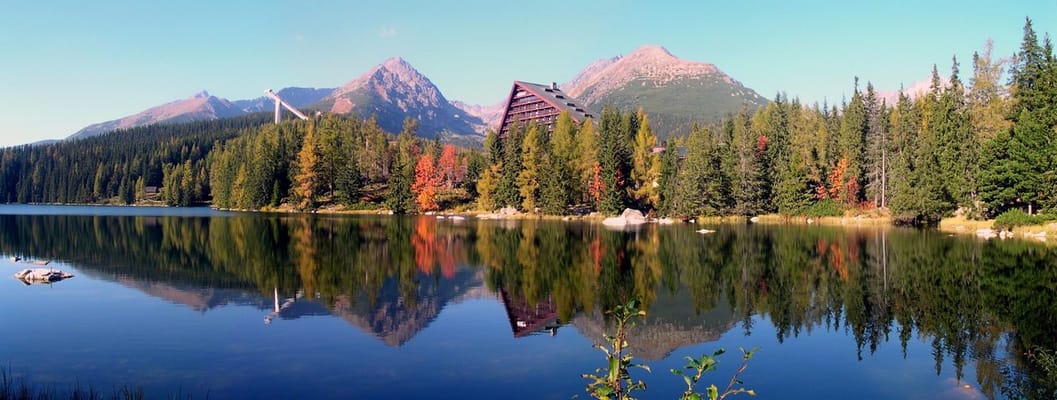
Štrbské pleso
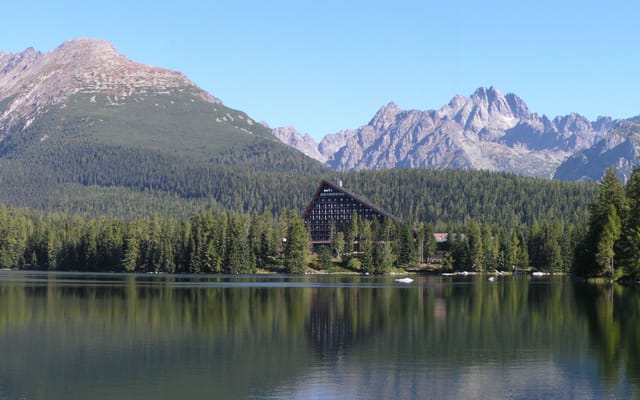
A large glacial lake in the High Tatras, at 1,346 metres, at the foot of granite peaks. A completely different landscape from the Slovak Paradise. You can walk round the lake on an almost flat path.
Practical notes
- When to go
- From mid-May to mid-September, when the Dobšiná cave is open. In winter, the ice makes the ladders dangerous.
- Getting there
- Košice has an international airport. By road, the city is about three hours from Budapest.
- Access
- Everything is tarmacked. The Slovak e-vignette is compulsory on motorways and expressways; above 3.5 tonnes, there is an electronic toll instead.
- Sleeping in a van
- A campsite at Podlesok, on the edge of the park, and another at Čingov. Wild camping is banned in the national park.
- Worth knowing
- Spiš Castle is undergoing works: only the lower and middle courtyards are open, and the castle closes in winter. The Dobšiná cave is closed on Mondays.
- Allow
- Four days for the loop, plus half a day for Štrbské pleso.
What not to miss
- 1St Elisabeth’s CathedralIn Košice, the largest church in Slovakia, with the crypt of Francis II Rákóczi.
- 2Spišská KapitulaA small walled town around St Martin’s Cathedral, facing the castle.
- 3ŽehraThe Church of the Holy Spirit and its frescoes from the 13th to the 15th century.
- 4KežmarokThe wooden articular church and, in the Lutheran church next door, the mausoleum of Imre Thököly.
- 5Spišská Nová VesA long, spindle-shaped square, overlooked by the tallest church tower in Slovakia (87 metres).
- 6Betliar ManorThe Andrássy family’s former hunting lodge, set in a large English-style park.
The Slovak Paradise and Spiš in pictures
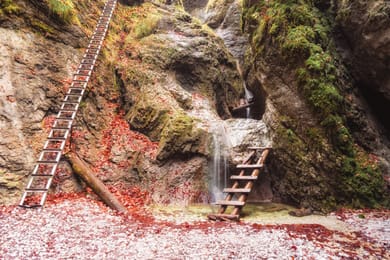
Ladders beside a waterfall, in a gorge of the Slovak Paradise.
The Spiš table
The food is that of the Slovak mountains. The national dish is bryndzové halušky: small potato dumplings with bryndza, a sheep’s cheese, served with bacon bits. People also eat kapustnica, a cabbage soup. After a hike, the chalets at Podlesok and Kláštorisko serve simple meals.
Smoked sheep’s cheeses, such as parenica, are sold at markets. People drink Kofola, a herbal soft drink, and borovička, a juniper brandy. South-east of Košice, Slovakia owns a small part of the Tokaj wine region.
Loop from Košice


 +11stops
- 1Dóm svätej Alžbety · Kostol Ducha Svätého (Žehra) · Spišský hrad · Katedrála svätého Martina (Spišská Kapitula)
- 2Bazilika svätého Jakuba (Levoča) · Kostol Najsvätejšej Trojice · Kežmarský zámok
- 3Kostol svätého Juraja (Spišská Sobota) · Suchá Belá · Tomášovský výhľad
Free, no account needed — start from its places and make it yours.
Also worth reading
Wide open spaces
The High Tatras, from Štrbské Pleso to the Dunajec
The highest range in the Carpathians rises above Poprad, with its glacial lakes, its cable cars and its wooden villages. This trip follows its foot for four days, as far as the rafts of the Dunajec.
Wide open spaces
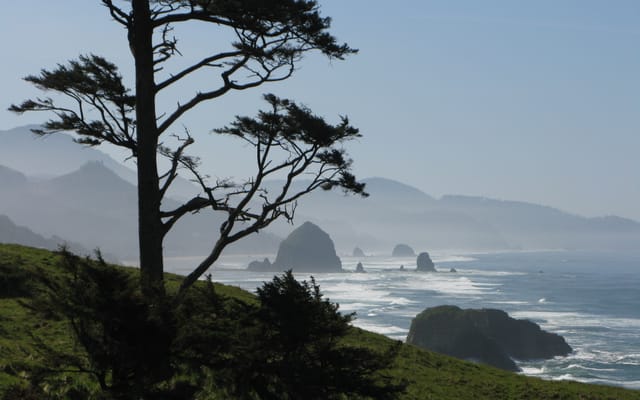
The Pacific Northwest, from the Olympic Peninsula to the Cascade volcanoes
Rainforests, a coast of headlands and lighthouses, redwoods and two active volcanoes. A two-week loop from Seattle, by way of the Olympic Peninsula, the Oregon coast and Mount Rainier.
Wide open spaces
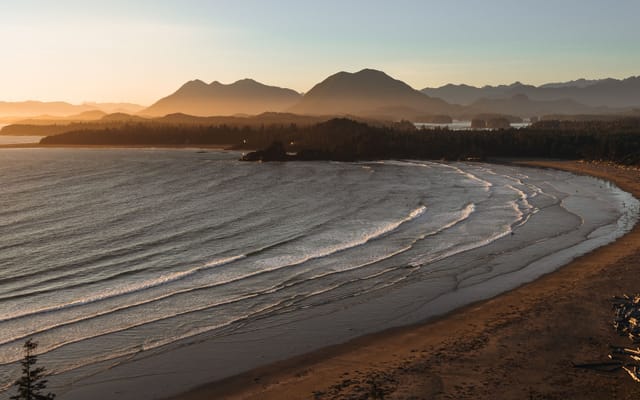
Vancouver Island, from Victoria to the beaches of Tofino
An island of giant forests, beaches pounded by the Pacific and small harbours where boats leave to see orcas. Nine days on a loop from Victoria, from Port Renfrew to Tofino and up to Telegraph Cove.
A starting point, a few wishes — ViaLooma builds the trip day by day, map, stops and roadbook included.