The High Tatras, from Štrbské Pleso to the Dunajec
The highest range in the Carpathians rises above Poprad, with its glacial lakes, its cable cars and its wooden villages. This trip follows its foot for four days, as far as the rafts of the Dunajec.

The road along the foot of the High Tatras
The High Tatras rise suddenly above the Poprad basin. One road, the Cesta slobody, runs along their foot from resort to resort, from Štrbské Pleso to Tatranská Lomnica. You pass Kriváň, then Gerlachovský štít, the highest point in the Carpathians at 2,655 metres, then Lomnický štít.
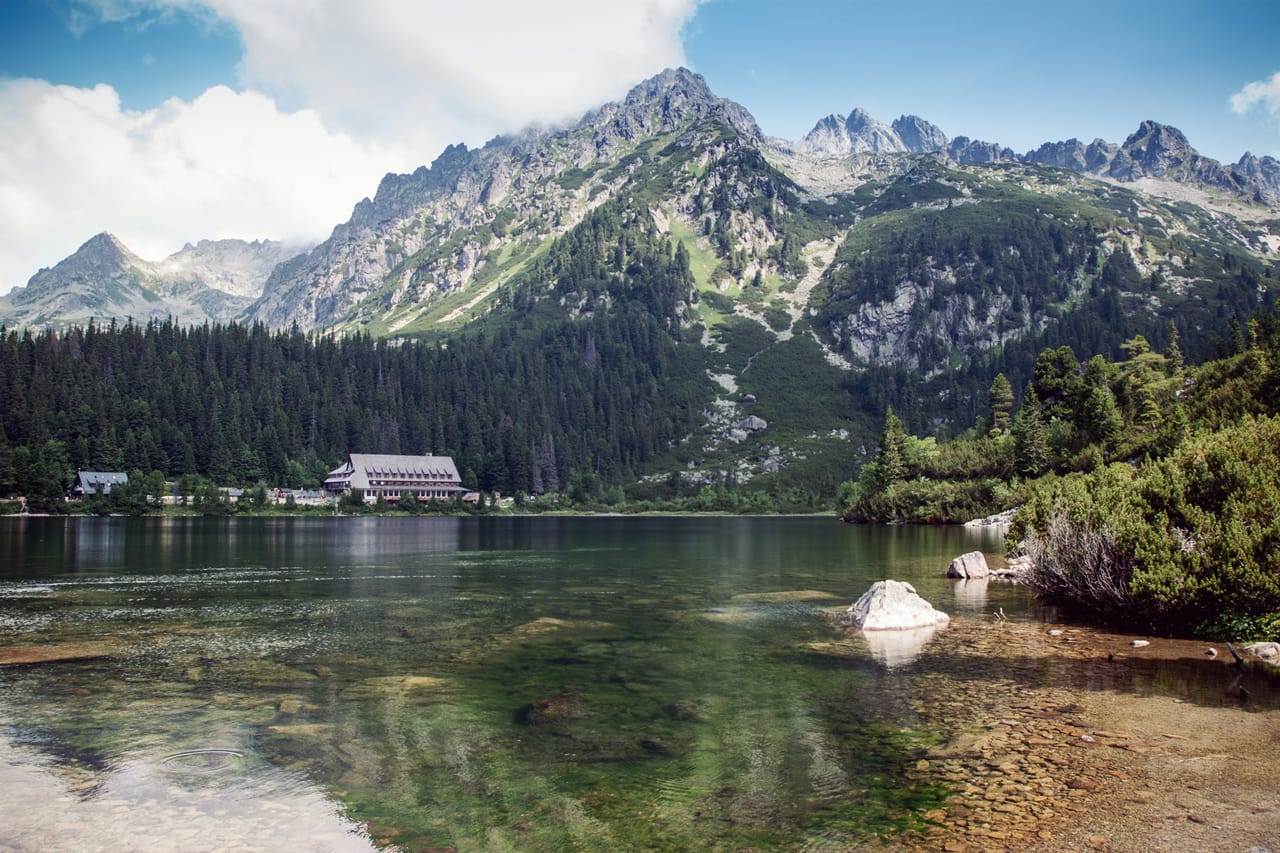
At Štrbské Pleso, the lake lies at 1,346 metres. An easy path leads in about an hour to Popradské pleso, at 1,494 metres, near a symbolic cemetery for those who died in the mountains. In Starý Smokovec, Slovakia’s only funicular has climbed to Hrebienok since 1908. From there, you walk to the Studený potok waterfalls. In Tatranská Lomnica, a cable car goes up to Skalnaté pleso, then a small cabin climbs to the summit of Lomnický štít, at 2,634 metres.
To the north, route 67 leaves the granite for the pale limestone of the Belianske Tatry. Here you can visit Belianska Cave, the only cave in the Slovak Tatras open to the public. Further on, Ždiar stretches out along the road, with its wooden houses. Close by, in Bachledova dolina, a treetop walk faces the whole range.
Kežmarok and the towns of Spiš
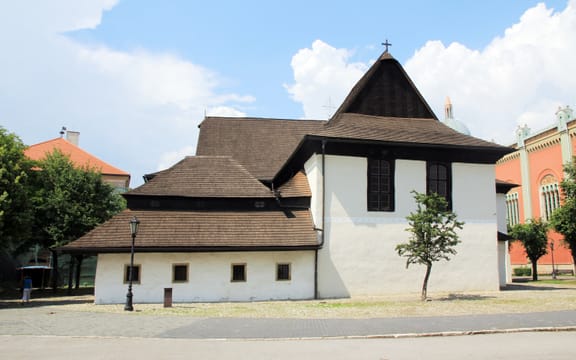
In Kežmarok, the Lutheran Church of the Holy Trinity is built entirely of wood. In 1681, the Diet of Sopron allowed the Protestants of Hungary to build churches, but only in wood and without a bell tower: they are called articular churches. The one in Kežmarok dates from 1717. It was built outside the town walls, in spruce and yew, with wooden pegs and not a single metal nail. It has been a UNESCO World Heritage Site since 2008.
Kežmarok was founded by German settlers, like many towns in Spiš, the region at the foot of the Tatras. Germans remained numerous here until 1945. Its castle belonged to the Thököly family. Imre Thököly, leader of a revolt of the Hungarian nobles against the Habsburgs, was born there in 1657.
In 1412, King Sigismund of Hungary pledged sixteen towns of Spiš to the King of Poland. The sixteen towns stayed under Polish administration for 360 years, until 1772. Among them were Spišská Sobota, now part of Poprad, and Podolínec, on the road to the Dunajec. In Spišská Sobota, the square has kept its old houses, and St George’s Church an altar by Master Paul of Levoča, dated 1516.
The sixteen towns stayed under Polish administration for 360 years, until 1772.
The Gorals, from Ždiar to the Dunajec
The Gorals are the highlanders of the Polish–Slovak border. They have their own dialect, costumes and music. In Slovakia, 34 of their villages are in northern Spiš. Ždiar, first recorded in 1590, is one of them. In January 2025, the Slovak government recognised the Gorals as a national minority.
On the Dunajec, Goral raftsmen in costume steer log rafts through the gorges of the Pieniny, for about ten kilometres along the Polish border. The start is at Červený Kláštor, a former 14th-century Carthusian monastery. According to legend, one of its monks, Brother Cyprian, flew from the summit of the Three Crowns, above the gorges, on a machine he had made himself.
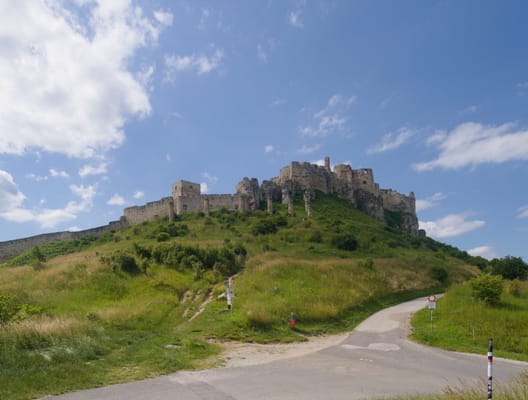
Spiš Castle
Nearly four hectares of ruins on a travertine hill, one of the largest fortified complexes in Slovakia, on the UNESCO list since 1993. You get there via Levoča, on route 18.
Practical notes
- When to go
- Mid-June to October. The trails above the mountain huts are closed from November to mid-June.
- Getting there
- Poprad is on the D1 motorway, about an hour and a half from Košice and three hours from Kraków.
- Access
- The D1 requires an electronic vignette, bought on eznamka.sk. The roads on the loop are free; the car parks in the resorts are not.
- Sleeping in a van
- Sleeping outside campsites is forbidden in the national park. Campsites near Tatranská Lomnica and beside the Dunajec, in Červený Kláštor.
- Worth knowing
- Tickets for Lomnický štít are for a set time and often sell out: book online. In bad weather, you stop at Skalnaté pleso.
- Allow
- Four days for the loop, one more for a hike to Zelené pleso or for Spiš Castle.
What not to miss
- 1Popradské plesoA lake below a granite cirque, an hour’s easy walk from Štrbské Pleso.
- 2Lomnický štítThe cable car climbs to 2,634 metres, where a weather station is staffed all year round.
- 3The Studený potok waterfallsA string of falls in the forest, on foot from Hrebienok.
- 4Belianska CaveA guided tour underground, in a cave lit by electricity since 1896.
- 5The Dunajec by raftA slow trip down through the gorges of the Pieniny.
- 6Strážky ManorA Renaissance manor house where the Slovak National Gallery shows the work of the painter Ladislav Mednyánszky.
The High Tatras in pictures
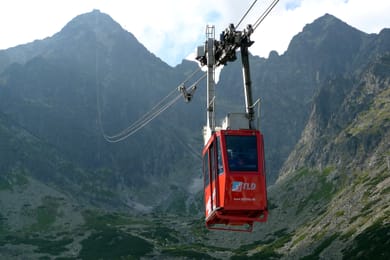
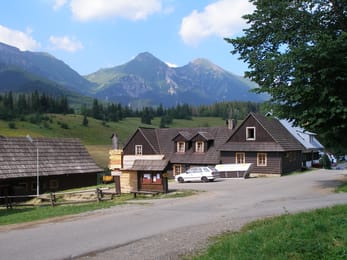
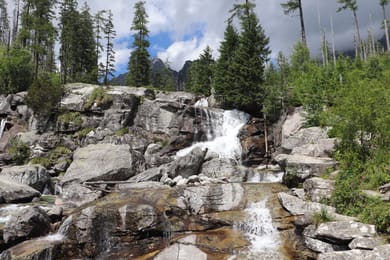
The red cabin of the Lomnický štít cable car, above a rocky cirque.
Food in the Tatras
The national dish is served everywhere: bryndzové halušky, small potato dumplings with sheep’s cheese and bits of bacon. Shepherds also make smoked cheeses: oštiepok, pressed in wooden moulds, and korbáčiky, which are braided.
In a mountain hut, you warm up with a cabbage soup, kapustnica, or with Tatranský čaj, a herbal liqueur drunk from a small glass.
Loop from Poprad


 +8stops
- 1Kostol svätého Juraja (Spišská Sobota) · Štrbské pleso
- 2Vysoké Tatry · Tatranská Lomnica
- 3Kežmarský zámok · Kostol Najsvätejšej Trojice · Belianska jaskyňa · Ždiar
Free, no account needed — start from its places and make it yours.
Also worth reading
Wide open spaces
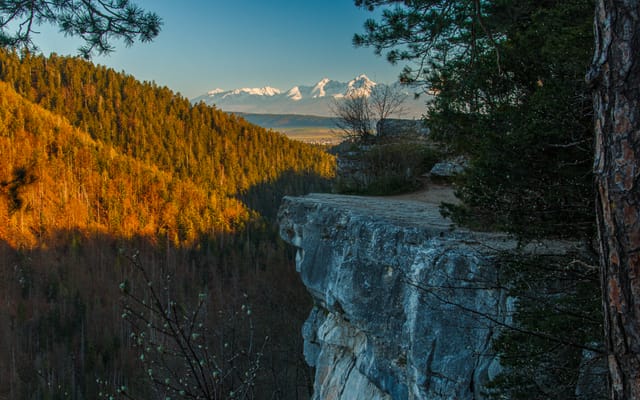
The Slovak Paradise and Spiš, from castles to ladder gorges
In eastern Slovakia, a four-day loop from Košice crosses the Spiš region, with a huge ruined castle, market towns founded by German settlers and carved Gothic altars. To the south, you explore the gorges of the Slovak Paradise on foot, on ladders.
Wide open spaces
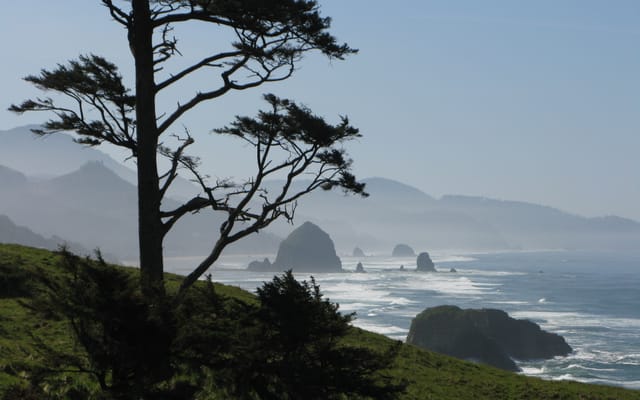
The Pacific Northwest, from the Olympic Peninsula to the Cascade volcanoes
Rainforests, a coast of headlands and lighthouses, redwoods and two active volcanoes. A two-week loop from Seattle, by way of the Olympic Peninsula, the Oregon coast and Mount Rainier.
Wide open spaces
Vancouver Island, from Victoria to the beaches of Tofino
An island of giant forests, beaches pounded by the Pacific and small harbours where boats leave to see orcas. Nine days on a loop from Victoria, from Port Renfrew to Tofino and up to Telegraph Cove.
A starting point, a few wishes — ViaLooma builds the trip day by day, map, stops and roadbook included.