The Douro Valley, wine country carved out of the schist
Upstream from Porto, the Douro flows between slopes of schist that generations of winegrowers have shaped into terraces. Six days on a loop, from the port lodges of Gaia to the far reaches of the Douro Superior, by way of Lamego, Pinhão and the viewpoints.
The valley’s roads
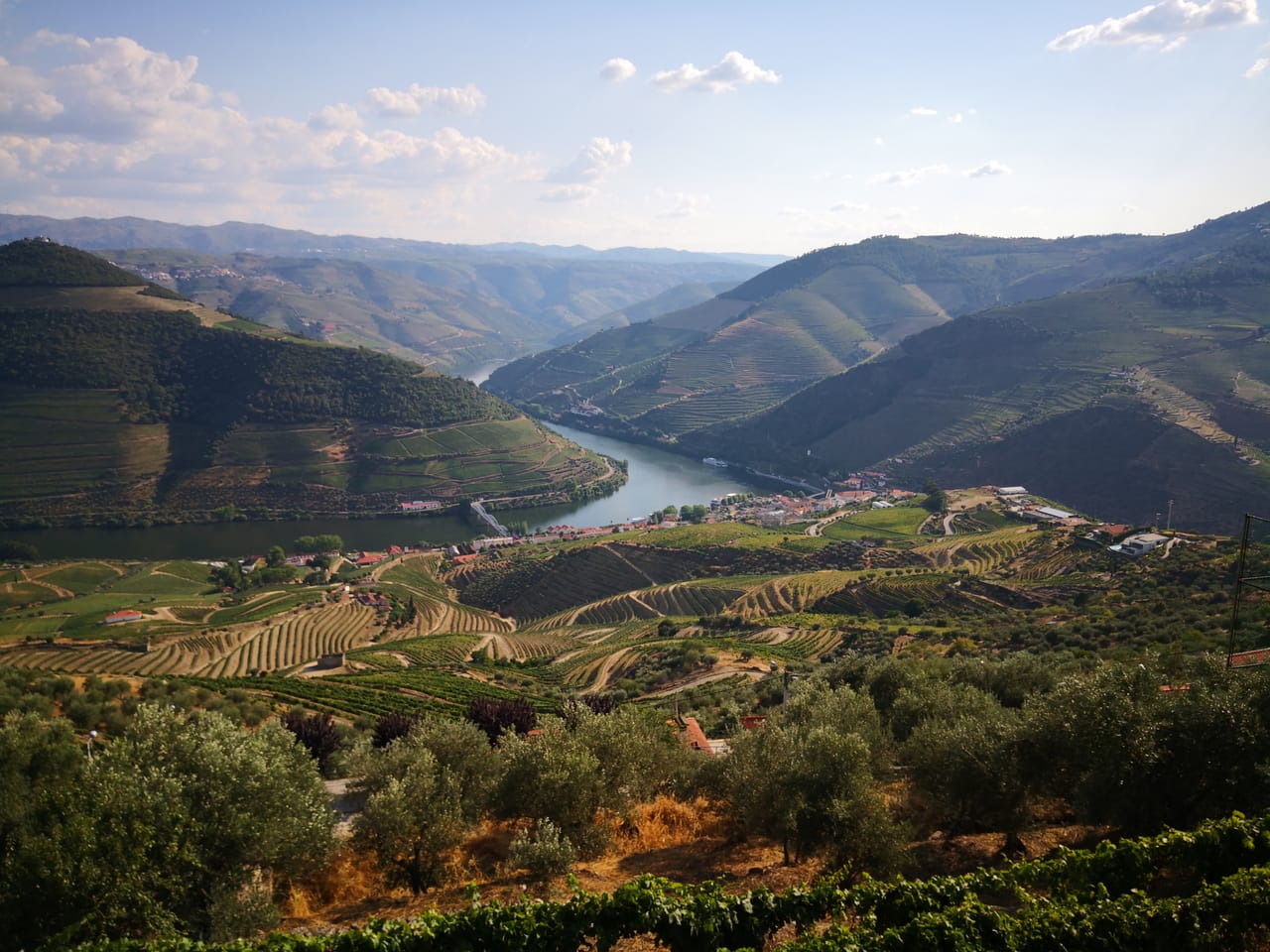
An hour from Porto, beyond the Serra do Marão, the landscape changes. The hills close in, rain grows scarce, and the slopes of the Douro carry vine terraces. From Régua to Pinhão, the N222 follows the water, bend after bend, between the quintas, the wine estates. From the quay at Pinhão, boats and rabelos take an hour-long trip among the terraces.
Above, steep little roads climb to the viewpoints. Miguel Torga loved the viewpoint at São Leonardo de Galafura. In his diary, the poet calls the valley ‘a geological poem’.
To the east, the valley grows hotter and drier: this is the Douro Superior, all the way to the border. Where the Côa joins the Douro, a museum presents its Palaeolithic engravings. They are visited by 4x4 with a park guide. At Penascosa, in the evening, a low-angled lamp makes them appear on the rock.
Port, from the valley to Gaia’s lodges
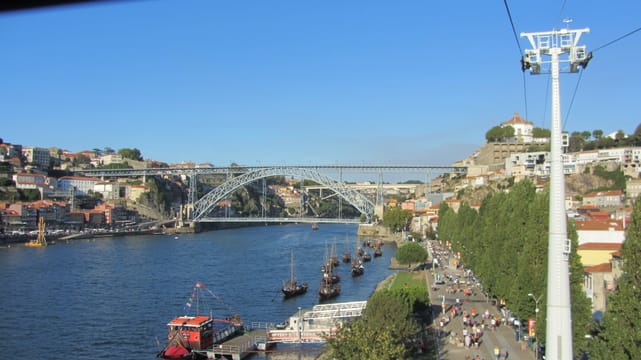
Port began as an English affair. The Methuen Treaty of 1703 granted Portuguese wines a preferential tariff in England. So that it could withstand the crossing, grape brandy was added to the wine. Gradually, it came to be poured in during fermentation, halting it and keeping the wine’s sugar. For centuries, the wine came down the river aboard rabelos, flat-bottomed boats steered by a long oar. Much of it still ages in Vila Nova de Gaia, across the river from Porto, in lodges that often bear English names.
Until 1986, port could only be exported from Gaia. The cable car glides over the roofs of the lodges, at the foot of the Dom Luís I Bridge. This iron arch, opened in 1886, was designed by Théophile Seyrig, Eiffel’s former partner.
The success of port drew fraud. In 1756 Pombal, the king’s minister, set up a company to control the trade. From 1758 to 1761 the vineyard was marked out by 335 granite stones engraved ‘Feitoria’. The Douro is often held to be the world’s first demarcated and regulated wine region. In Régua, the Museu do Douro occupies the company’s former headquarters.
There is nothing natural about this landscape: it was built, wall by wall.
The schist terraces
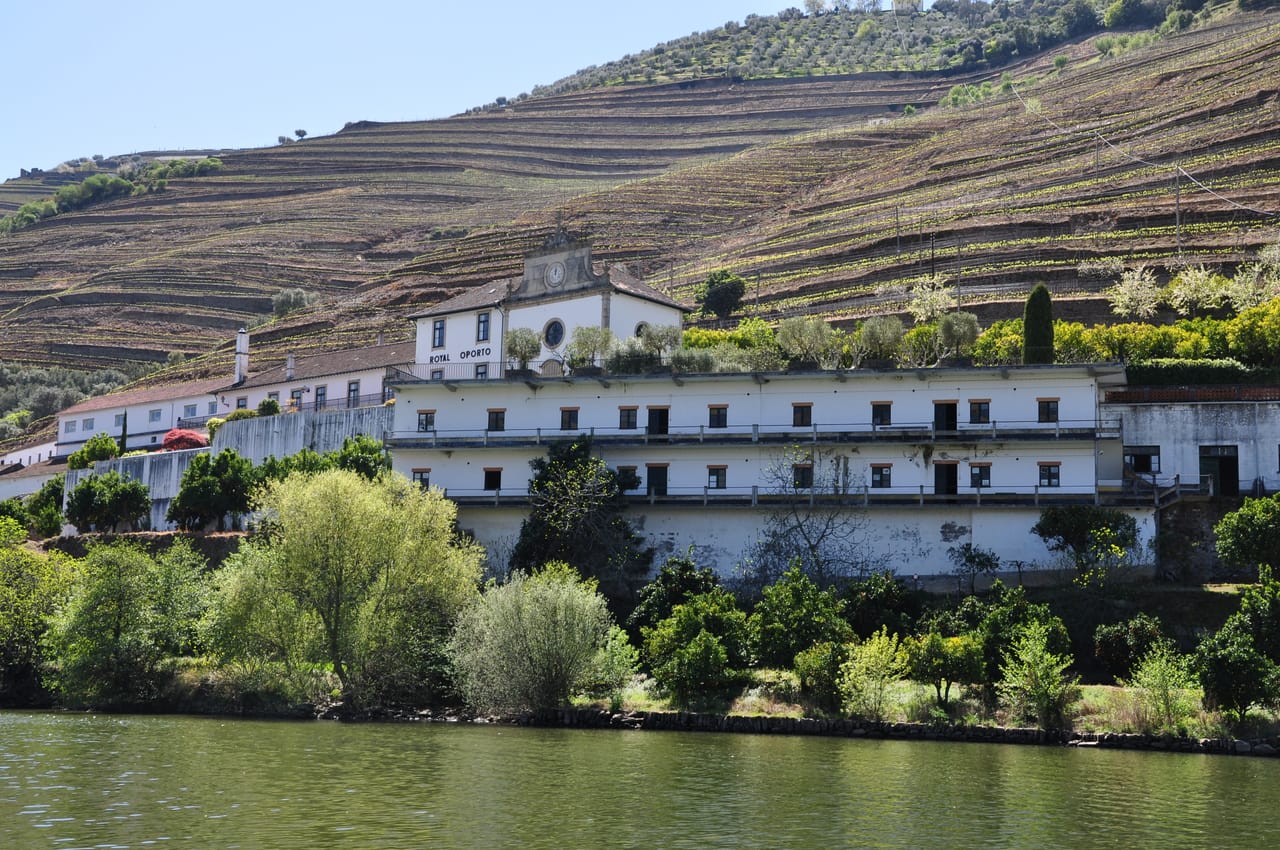
There is nothing natural about this landscape: it was built, wall by wall. The schist was broken up and socalcos raised — narrow terraces held up by dry-stone walls. Phylloxera, which arrived in 1863, ruined many of them. These dead terraces, the mortórios, now carry olive or almond trees. Since the 1970s, bulldozers have also carved out terraces of bare earth. Unesco listed the Alto Douro Wine Region in 2001.
For a long time, the rapids of the Cachão da Valeira barred the river to boats. They were blasted away between 1780 and 1792, and the vines spread upstream. Even so, in 1861 a shipwreck there cost the life of Baron Forrester, the river’s cartographer. Dona Antónia Ferreira, known as ‘Ferreirinha’, survived: her skirts kept her afloat, it is said. In 1877 she bought the land of Vale Meão, near Pocinho. In 1952 these vines produced the first Barca Velha, a great Douro red.
Penedono Castle
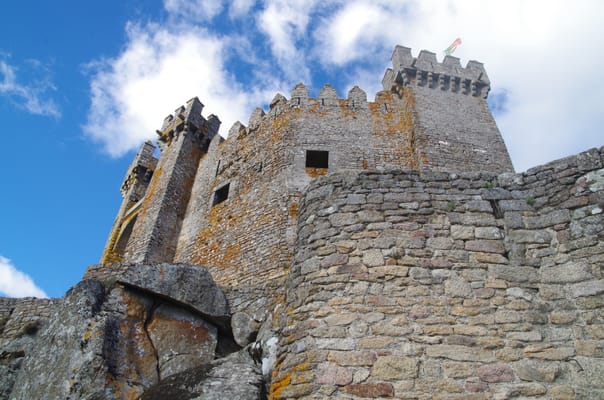
A small castle bristling with battlements, perched on a jumble of granite boulders. Tradition has the Magriço born here, one of the Twelve of England sung by Camões in The Lusiads.
Practical notes
- When to go
- May–June, then mid-September to October. The harvest livens up the quintas in September; summer is scorching.
- Getting there
- Airport at Porto. Régua an hour and a quarter away by road, Foz Côa about two and a half hours. Tolls as far as Amarante; from the airport, the A41 has an electronic toll.
- Access
- Tarmac everywhere except the last few metres at Numão, Galafura and Castelo Melhor castle. The N222 is winding, and the climbs to the viewpoints are narrow and steep. At Ucanha, cross the bridge on foot.
- Sleeping in a van
- Campsites and dedicated aires. In Natura 2000 zones and protected areas, the Côa valley among them, overnight stays in a motorhome are banned outside authorised sites.
- Worth knowing
- Booking advised for the Côa engravings; the night visit leaves from Castelo Melhor. The museum is closed on Mondays from November to March.
- Allow
- Six days on a loop from Porto; three for Régua, Lamego and Pinhão.
What not to miss
- 1São Bento stationSome twenty thousand azulejos by Jorge Colaço tell the story of Portugal.
- 2São Leonardo de GalafuraTorga’s viewpoint, high above Régua, at sunset.
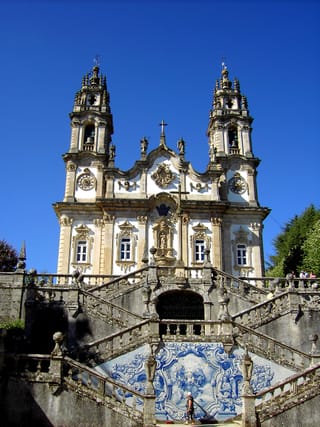
- 3Lamego’s RemédiosA Baroque stairway of 686 steps climbs to the sanctuary.
- 4The bridge at UcanhaA tower guards the bridge where the abbey of Salzedas once levied a toll.
- 5Pinhão stationIts azulejo panels from the 1930s show the grape harvest and the rabelos.
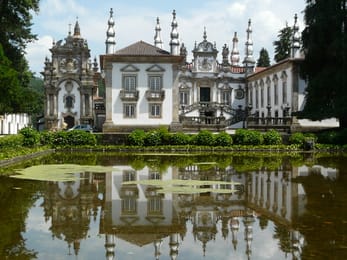
- 6Mateus PalaceIts façade adorns the Mateus Rosé label, a wine that was never produced there.
The Douro Valley in pictures
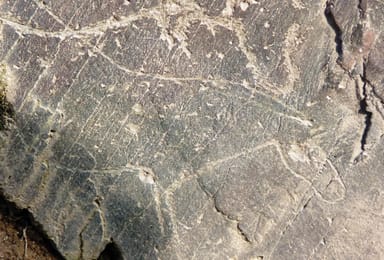
At Penascosa, an animal incised in outline into the schist during the Palaeolithic.
The Douro’s table
Port is tasted in the quintas and in Gaia’s lodges; as an aperitif, white port is drunk topped up with tonic. The valley also makes great dry reds, Lamego its sparkling espumante, and Favaios, up on the plateau, its moscatel and its bread.
Cabrito, kid roasted in the oven with its rice, is the dish of feast days. Lamego keeps its presunto, a cured ham, and its bôla, a bread filled with cured meats. In Porto, the francesinha — a sandwich smothered in melted cheese and sauce — sets you up for the day.
Loop from Porto


 +18stops
- 1Estação Ferroviária de Porto — São Bento · Sé do Porto · Ponte de D. Luís · Teleférico de Vila Nova de Gaia
- 2Ponte de São Gonçalo · Museu do Douro · Miradouro de São Leonardo de Galafura
- 3Capela de São Pedro de Balsemão · Torre de Ucanha · Mosteiro de São João de Tarouca · Santuário de Nossa Senhora dos Remédios
Free, no account needed — start from its places and make it yours.
Also worth reading
Wide open spaces
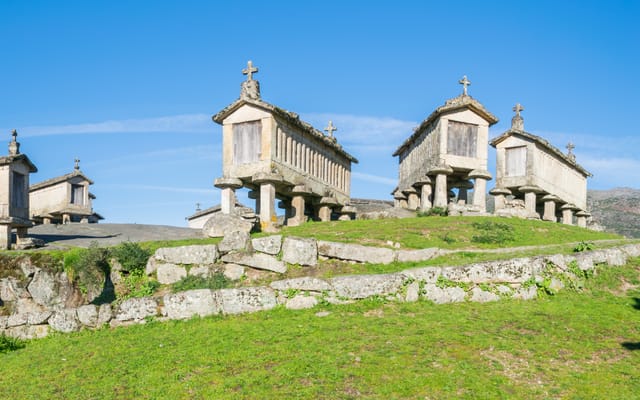
The Minho and Peneda-Gerês, from Portugal’s cradle to its granite granaries
In northern Portugal, facing Galicia, the Minho is a land of granite, rain and maize, and it was here that the kingdom was born. Six days on a loop from Braga, through Peneda-Gerês park, its mountain villages and the border river down to the Atlantic.
Wide open spaces
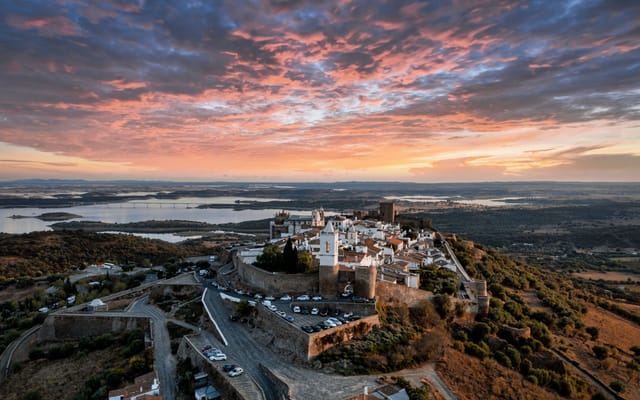
Inland Alentejo, from Évora to the ramparts of Marvão
South of the Tagus, inland Alentejo is a region of cork-oak plains, white villages on their hilltops and fortresses facing Spain. A six-day loop from Évora, by way of the Guadiana, Lake Alqueva and the ridge of Marvão.
Coast and islands
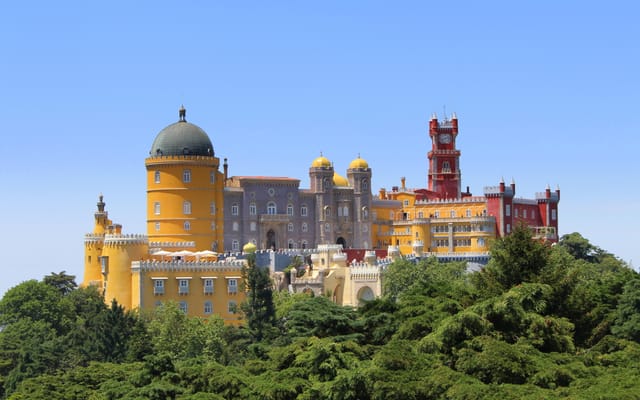
Lisbon to Porto, by way of Sintra, Nazaré and Coimbra
Between the country’s two great cities lies almost the whole of Portugal’s history: the palaces of Sintra, the royal abbeys, the wave at Nazaré, the old university of Coimbra. A week heading north, from Belém, where the caravels set sail, to Porto, which gave the country its name.
A starting point, a few wishes — ViaLooma builds the trip day by day, map, stops and roadbook included.