Lisbon to Porto, by way of Sintra, Nazaré and Coimbra
Between the country’s two great cities lies almost the whole of Portugal’s history: the palaces of Sintra, the royal abbeys, the wave at Nazaré, the old university of Coimbra. A week heading north, from Belém, where the caravels set sail, to Porto, which gave the country its name.
The road from Lisbon to Porto
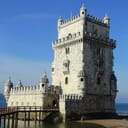
The trip sets off from Lisbon and heads north, never straying far from the Atlantic. The stages are short: rarely more than an hour’s drive between two towns. You start at Belém, on the banks of the Tagus. The Jerónimos Monastery, begun in 1501, was paid for by a tax on spices. Vasco da Gama lies here, and Camões has his tomb. Downstream, Belém Tower, completed around 1520, guarded the entrance to the port. The ropes and armillary spheres carved on both monuments are typical of the Manueline style, named after King Manuel I.
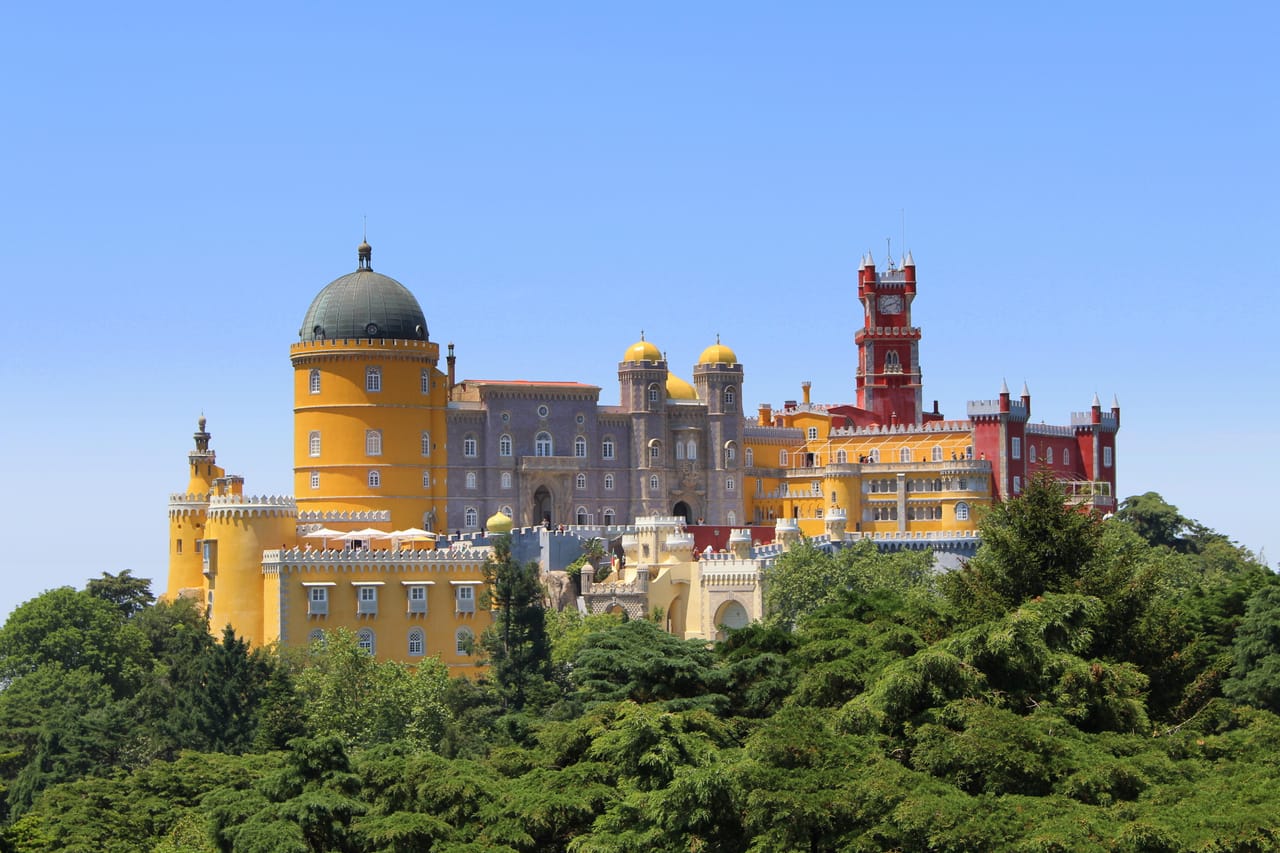
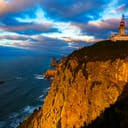
Half an hour away, the road climbs into the forest of the Serra de Sintra, a small range of hills. The Pena Palace, yellow and red, stands above the trees, facing the Moorish Castle. The king consort Ferdinand II had it built from 1842, on a ruined monastery. Further down, the Quinta da Regaleira hides a well where a spiral staircase winds down nine levels. At the end of the range, Cabo da Roca is the westernmost point of mainland Europe.
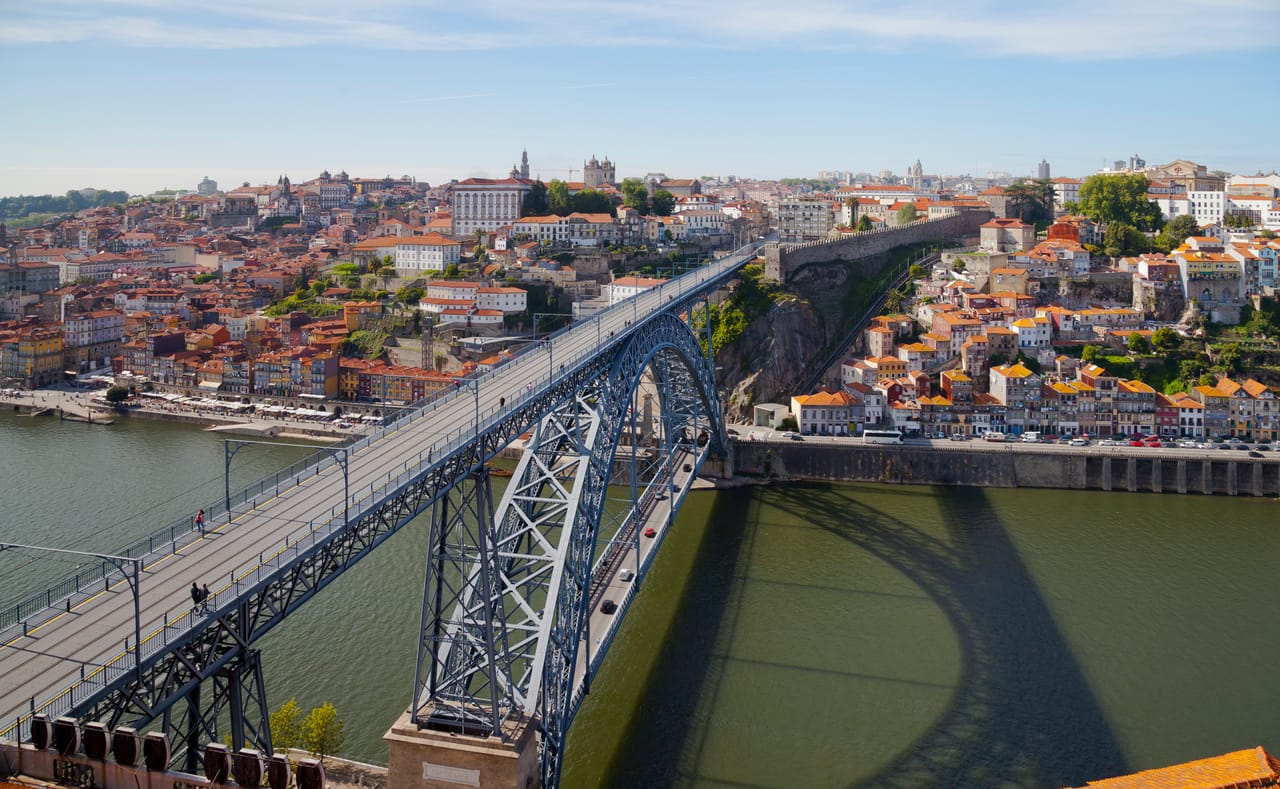
Further north, Óbidos is a white town inside its ramparts. At the end of the road, Porto steps down in tiers to the Douro.
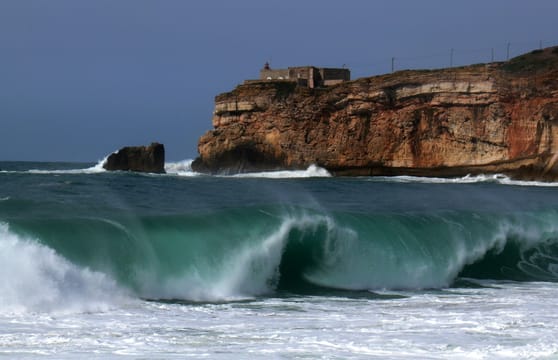
Nazaré and its giant waves
Off Nazaré, a submarine canyon some 230 kilometres long and up to 5,000 metres deep funnels the winter swell onto Praia do Norte. In 2020 the German surfer Sebastian Steudtner surfed a 26.21-metre wave here, a record ratified by Guinness World Records. On days of big swell, people watch the surfers from the fort of São Miguel Arcanjo, at the end of the headland.
The top of the town, the Sítio, is built on the edge of the cliff. According to legend, one foggy morning in 1182, the Virgin stopped the knight Fuas Roupinho’s horse on the brink of the drop. A small chapel marks the spot.
The first thing the lovers see on the Day of Resurrection, it is said, will be each other.
Alcobaça, Batalha and Coimbra
At Alcobaça, the Cistercian abbey founded in 1153 holds the tombs of Pedro I and Inês de Castro. Inês was a Galician noblewoman whom Pedro loved. Pedro’s father, King Afonso IV, had her murdered in 1355. Their tombs face each other in the transept. The first thing the lovers see on the Day of Resurrection, it is said, will be each other.
Twenty kilometres away, the Batalha Monastery fulfils the vow João I made before his victory over the Castilians at Aljubarrota, in 1385. The king lies here with Philippa of Lancaster and their son, Henry the Navigator. Further north, Coimbra was the capital of the kingdom until 1255. Its university occupies the old royal palace.
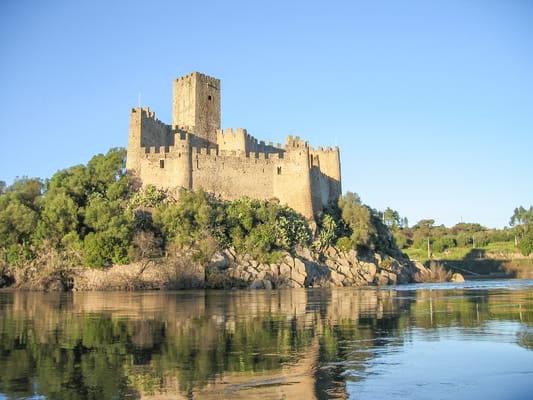
Almourol Castle
A Templar fortress on a granite islet in the middle of the Tagus, reached by boat. Gualdim Pais, the Master of the Portuguese Templars who founded Tomar, had it rebuilt; an inscription bears the date 1171. Crossings depend on the season and the level of the river.
Practical notes
- When to go
- April to June, then September–October. Giant waves at Nazaré from October to March. Fátima overflows with pilgrims on 12–13 May and 12–13 October.
- Getting there
- Lisbon and Porto each have an international airport, three hours apart on the A1 motorway.
- Access
- Óbidos, Coimbra’s upper town and central Porto are explored on foot. In Sintra, the centre is for residents only and the road up to Pena is closed to cars: take bus 434 from the station or the Lourel car park.
- Sleeping in a van
- In Natura 2000 and protected areas and on the regulated coastline, as at Sintra and around Aveiro, overnight stays are only allowed on an aire or at a campsite. Elsewhere, 48 hours per municipality for a vehicle registered as a motorhome, unless local rules say otherwise.
- Worth knowing
- Timed tickets for Pena, Belém Tower and the university library in Coimbra. Jerónimos and the tower close on Mondays, Mafra on Tuesdays. Electronic tolls on the A29.
- Allow
- A week; ten days if you add the Douro Valley.
What not to miss
- 1ÓbidosThe wall-walk of a walled town that so many queens of Portugal received as a wedding gift.
- 2Mafra PalaceA palace-convent paid for with Brazilian gold, its library guarded by bats.
- 3The Convent of ChristIn Tomar, the seat of the order that succeeded the Templars, built around their round church.
- 4ConímbrigaThe mosaics of a Roman town that passed its name on to Coimbra.
- 5Costa NovaStriped houses, once fishermen’s stores, between the Aveiro lagoon and the ocean.
- 6São Bento stationSome 20,000 azulejos by Jorge Colaço tell the country’s history.
Lisbon to Porto in pictures
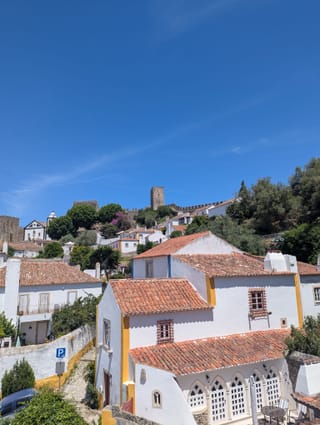
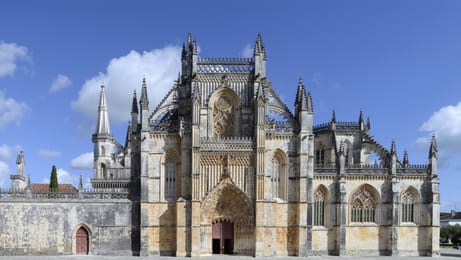
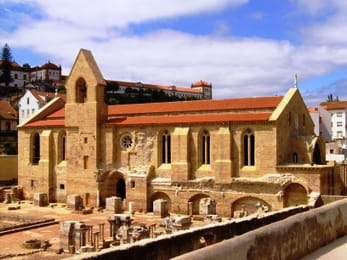
Óbidos: white houses, tiled roofs and, above them, a castle tower.
The Portuguese table
The trip begins with pastéis de Belém, baked in the neighbourhood since 1837, according to the bakery, to a recipe credited to the monks of Jerónimos. All over the country the convents left sweets made with egg yolks, right up to the ovos moles of Aveiro. In Óbidos, ginjinha, a sour-cherry liqueur, is drunk from a chocolate cup.
On the coast, grilled fish and caldeirada; around Mealhada, leitão, the roast suckling pig of the Bairrada. In Porto, people eat tripe: the townsfolk are said to have given their meat to the fleet that sailed for Ceuta in 1415, keeping only the tripe, hence their nickname, tripeiros. Port, meanwhile, ages across the river, in Gaia.
Lisbon → Porto
 +24stops
- 1Mosteiro dos Jerónimos · Torre de Belém · Boca do Inferno · Cabo da Roca
- 2Palácio Nacional da Pena · Castelo dos Mouros · Palácio Nacional de Sintra · Quinta da Regaleira
- 3Azenhas do Mar · Ericeira · Palácio Nacional de Mafra · Castelo de Óbidos
Free, no account needed — start from its places and make it yours.
Also worth reading
Wide open spaces
The Algarve, from golden cliffs to the Costa Vicentina
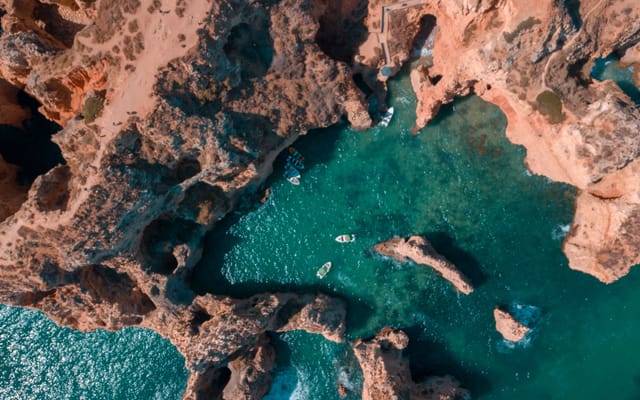
The lagoon of the Ria Formosa, the golden limestone cliffs of Benagil and Lagos, then Cape St Vincent, which the ancients held to be the end of the inhabited world. A week’s loop from Faro, by way of the wild coast running north towards the Alentejo, and the Serra de Monchique.
Wide open spaces
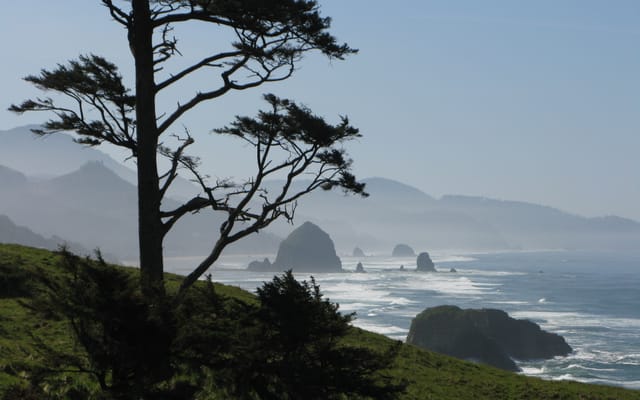
The Pacific Northwest, from the Olympic Peninsula to the Cascade volcanoes
Rainforests, a coast of headlands and lighthouses, redwoods and two active volcanoes. A two-week loop from Seattle, by way of the Olympic Peninsula, the Oregon coast and Mount Rainier.
Wide open spaces
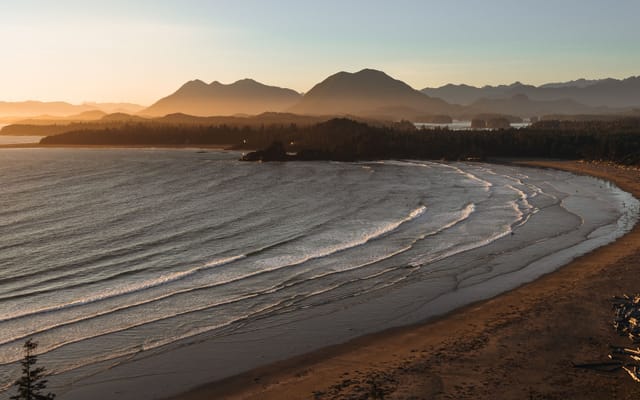
Vancouver Island, from Victoria to the beaches of Tofino
An island of giant forests, beaches pounded by the Pacific and small harbours where boats leave to see orcas. Nine days on a loop from Victoria, from Port Renfrew to Tofino and up to Telegraph Cove.
A starting point, a few wishes — ViaLooma builds the trip day by day, map, stops and roadbook included.