The Minho and Peneda-Gerês, from Portugal’s cradle to its granite granaries
In northern Portugal, facing Galicia, the Minho is a land of granite, rain and maize, and it was here that the kingdom was born. Six days on a loop from Braga, through Peneda-Gerês park, its mountain villages and the border river down to the Atlantic.
Between the Gerês mountains and the Minho river
North-west Portugal is green because it rains: around three metres of water a year on the summits of the Gerês. The houses are built of granite, and the vines climb on trellises above the maize. The loop starts in Braga and soon leaves the towns behind for the mountains.
In Peneda-Gerês park, the roads are narrow and full of bends. Cows and garranos, half-wild horses, wander freely along them. You stop by a reservoir, at a stone bridge or in a shepherds’ village.
From the village of Castro Laboreiro, the road drops down to the Minho, the river that separates Portugal from Galicia and gives the region its name. You follow it from Monção to Caminha, past the ramparts of Valença, to the Atlantic. Viana do Castelo and Ponte de Lima then lead back to Braga.
Guimarães and Braga, where Portugal began
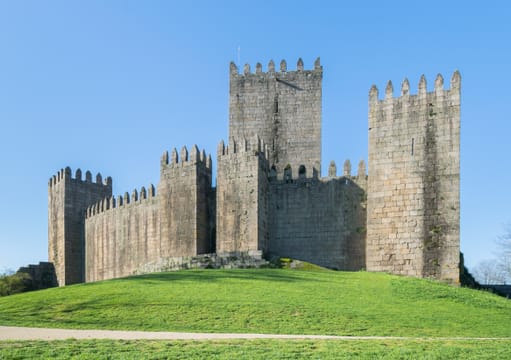
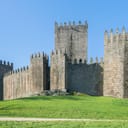
On a stretch of the old town wall of Guimarães, an inscription makes the claim: ‘Aqui nasceu Portugal’, Portugal was born here. On 24 June 1128, close by, Afonso Henriques defeated the troops of his own mother, Teresa, at the Battle of São Mamede. In 1139 he became the first king of Portugal. Guimarães Castle, above the Palace of the Dukes of Braganza, was founded in the 10th century.
Twenty minutes from Guimarães, the Citânia de Briteiros lays out the low round walls of more than a hundred and fifty Iron Age houses.
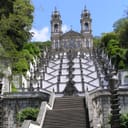
Braga, founded by the Romans as Bracara Augusta, is the city of archbishops. Its cathedral, consecrated in 1089, is older than the kingdom itself. A saying sums the city up: Lisbon plays, Porto works, Braga prays. To the east, Bom Jesus do Monte, a World Heritage Site since 2019, climbs its hill by a zigzagging Baroque staircase. Its funicular of 1882 runs on a water counterweight: it is the oldest of its kind still in service in the world.
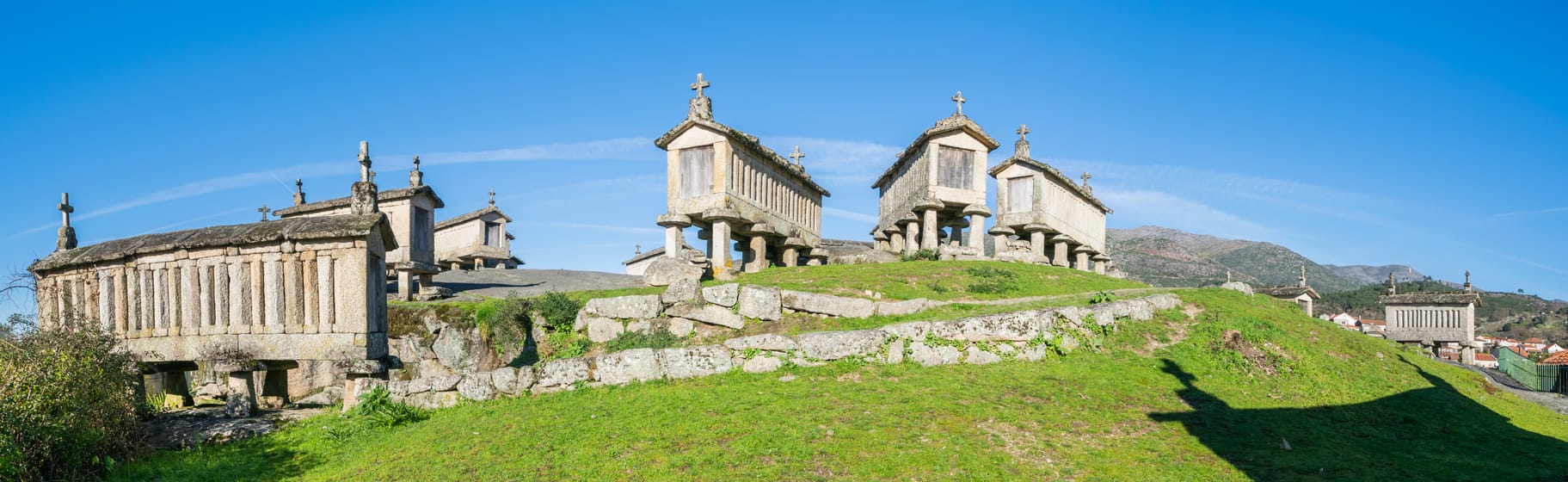
Here, granite does every job, even guarding the maize.
The country’s only national park
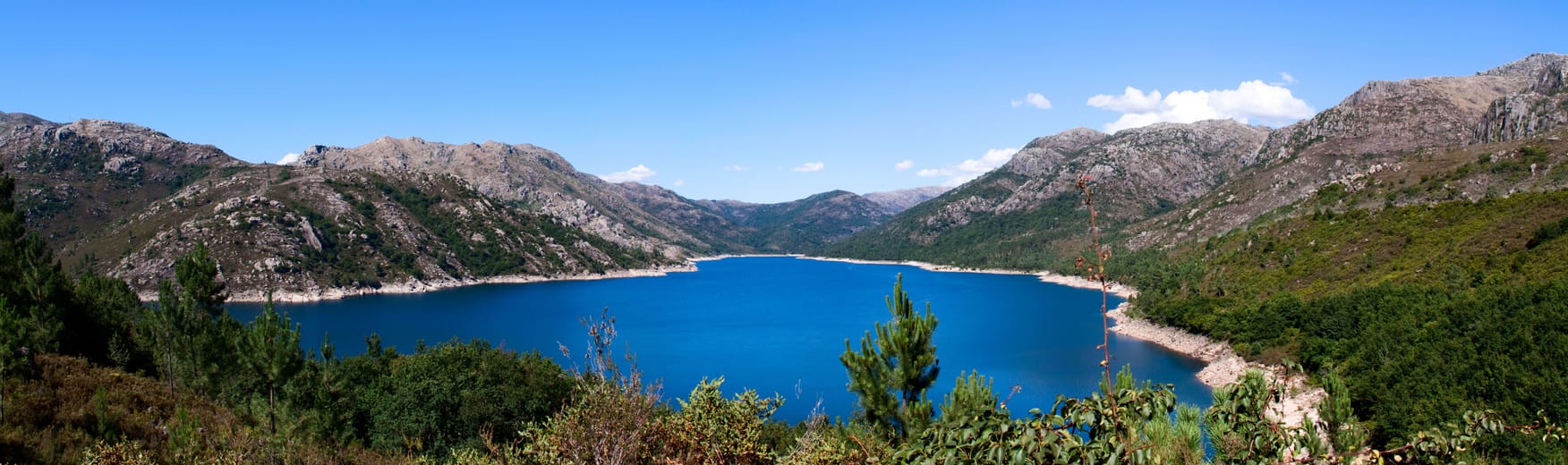
Created in 1971, Peneda-Gerês National Park and the Serra do Xurés, in Galicia, together form a cross-border biosphere reserve. In the Mata da Albergaria, an old oak wood, you can still find the milestones of the Geira, the Roman road from Braga to Astorga. In the early 1970s, the Vilarinho das Furnas dam drowned a village where everything was decided in common. In dry years, its walls rise above the water again.
In the villages, the espigueiros, stone granaries on stilts topped with a cross, protect the maize from damp and rodents. At Soajo, twenty-four crowd onto a single slab of rock; at Lindoso, some sixty stand in rows below the castle. Here, granite does every job, even guarding the maize. At Sistelo, nicknamed ‘Portugal’s little Tibet’, the terraces became in 2018 the first rural landscape to be listed as a national monument.
Castro de Santa Trega
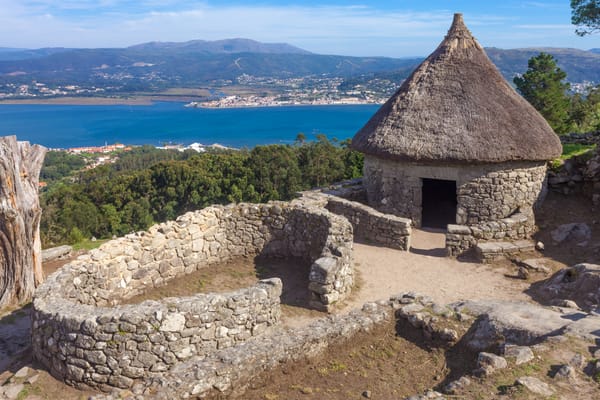
On the hill that closes off the Minho estuary on the Galician side, a fortified village inhabited at the turn of the Common Era, two of whose round houses have been given back a thatched roof. The museum and the view over Caminha and the Atlantic are worth the hairpin bends; there is an entry fee.
Practical notes
- When to go
- May–June and September. Winter is very wet, summer very busy.
- Getting there
- Braga is three quarters of an hour from Porto airport.
- Access
- Almost everything is tarmac (gravel towards the Arado waterfall), but the mountain roads are narrow and livestock wander freely across them. The loop makes a detour through Galicia.
- Sleeping in a van
- Inside the park, as in every protected area, motorhomes may neither camp nor stay overnight outside authorised sites. Campsites at Campo do Gerês, near Caldas do Gerês and at Lamas de Mouro.
- Worth knowing
- In summer there is a charge to drive into the Mata da Albergaria: park at the entrance, at Leonte or at Portela do Homem, and continue on foot.
- Allow
- Six days for the loop, a week to do more walking in the Gerês.
What not to miss
- 1The Ponte da MisarelaA stone arch over the Rabagão which, legend has it, the Devil built.
- 2Pitões das JúniasA village of the Barroso at more than 1,000 metres and, within walking distance, a ruined Cistercian monastery.
- 3The Peneda sanctuaryA staircase of chapels at the foot of a vast wall of granite.
- 4The fortress of ValençaBastioned ramparts above the Minho, facing the Galician town of Tui.
- 5Viana do CasteloThe basilica of Santa Luzia and, on the quayside, the Gil Eannes, hospital ship to the cod-fishing fleet, built here in 1955.
- 6The bridge at Ponte de LimaRoman legionaries, it is said, dared not cross the Lima, which they took for the Lethe, the river of forgetfulness.
The Minho and Peneda-Gerês in pictures
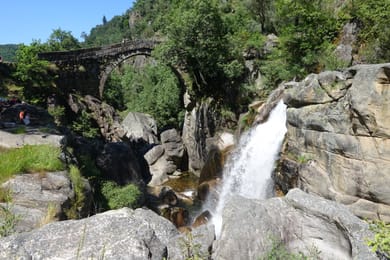
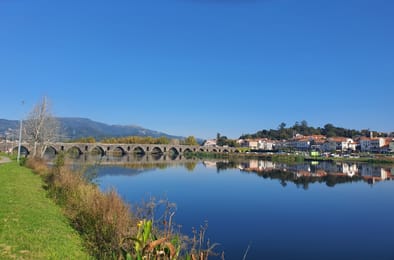
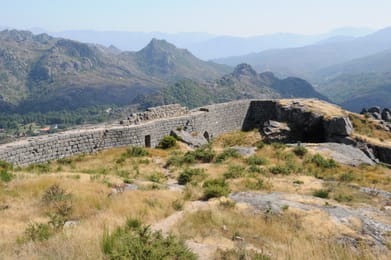
The Ponte da Misarela and its waterfall, among the granite boulders of the Rabagão.
The Minho’s table
The Minho’s wine is vinho verde, a young wine, lively and fresh. At Monção and Melgaço it is made from Alvarinho, the region’s most celebrated grape.
First comes caldo verde, a kale soup. Then come rojões, fried pork, or the arroz de sarrabulho of Ponte de Lima, a rice cooked with pig’s blood. When the lamprey swims up the river, it is cooked with rice. In Braga, the pudim Abade de Priscos combines port with pork fat.
Loop from Braga
 +19stops
- 1Sé de Braga · Castelo de Guimarães · Citânia de Briteiros · Santuário do Bom Jesus do Monte
- 2São Bento da Porta Aberta · Barragem de Vilarinho das Furnas · Miradouro da Pedra Bela · Cascata do Arado
- 3Ponte da Mizarela · Pitões das Junias
Free, no account needed — start from its places and make it yours.
Also worth reading
Wide open spaces
Inland Alentejo, from Évora to the ramparts of Marvão
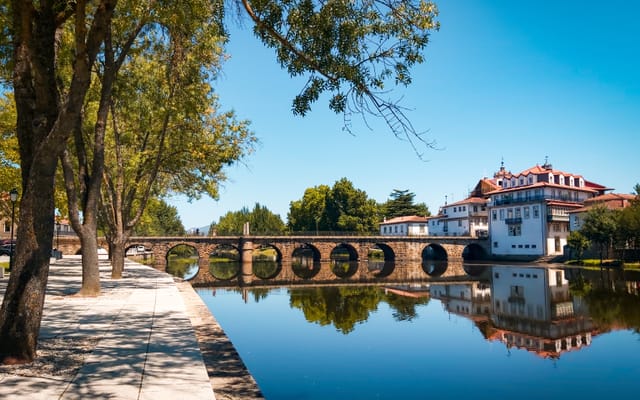
South of the Tagus, inland Alentejo is a region of cork-oak plains, white villages on their hilltops and fortresses facing Spain. A six-day loop from Évora, by way of the Guadiana, Lake Alqueva and the ridge of Marvão.
Wide open spaces
The Algarve, from golden cliffs to the Costa Vicentina
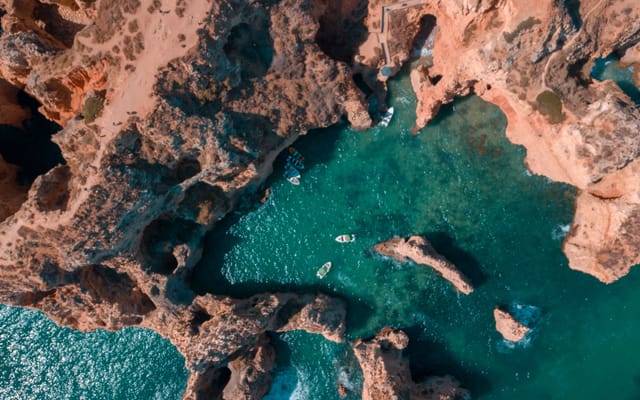
The lagoon of the Ria Formosa, the golden limestone cliffs of Benagil and Lagos, then Cape St Vincent, which the ancients held to be the end of the inhabited world. A week’s loop from Faro, by way of the wild coast running north towards the Alentejo, and the Serra de Monchique.
Wide open spaces
The Estrada Nacional 2, Portugal from top to bottom
From Chaves, a stone’s throw from Galicia, to Faro, on the edge of the Ria Formosa, a single road crosses the whole of Portugal through its interior. Eight days of vines, pine woods and cork oaks — provided you leave the motorway to those in a hurry.
A starting point, a few wishes — ViaLooma builds the trip day by day, map, stops and roadbook included.