The Algarve, from golden cliffs to the Costa Vicentina
The lagoon of the Ria Formosa, the golden limestone cliffs of Benagil and Lagos, then Cape St Vincent, which the ancients held to be the end of the inhabited world. A week’s loop from Faro, by way of the wild coast running north towards the Alentejo, and the Serra de Monchique.
From the lagoon to the wild coast
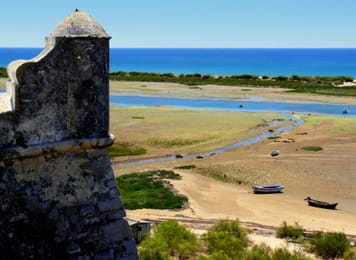
The Algarve is three coasts in a week on the road. In the east, the Ria Formosa, a nature park since 1987, is a lagoon some sixty kilometres long, sheltered behind its barrier islands. At Quinta de Marim, the park’s headquarters, a trail leads to a tide mill. Olhão, with its brick market halls, is the lagoon’s main fishing port. In 1808, seventeen of its fishermen crossed the Atlantic in a caique. They were going to tell the Prince Regent, then in Rio, that the Algarve had driven out the French.
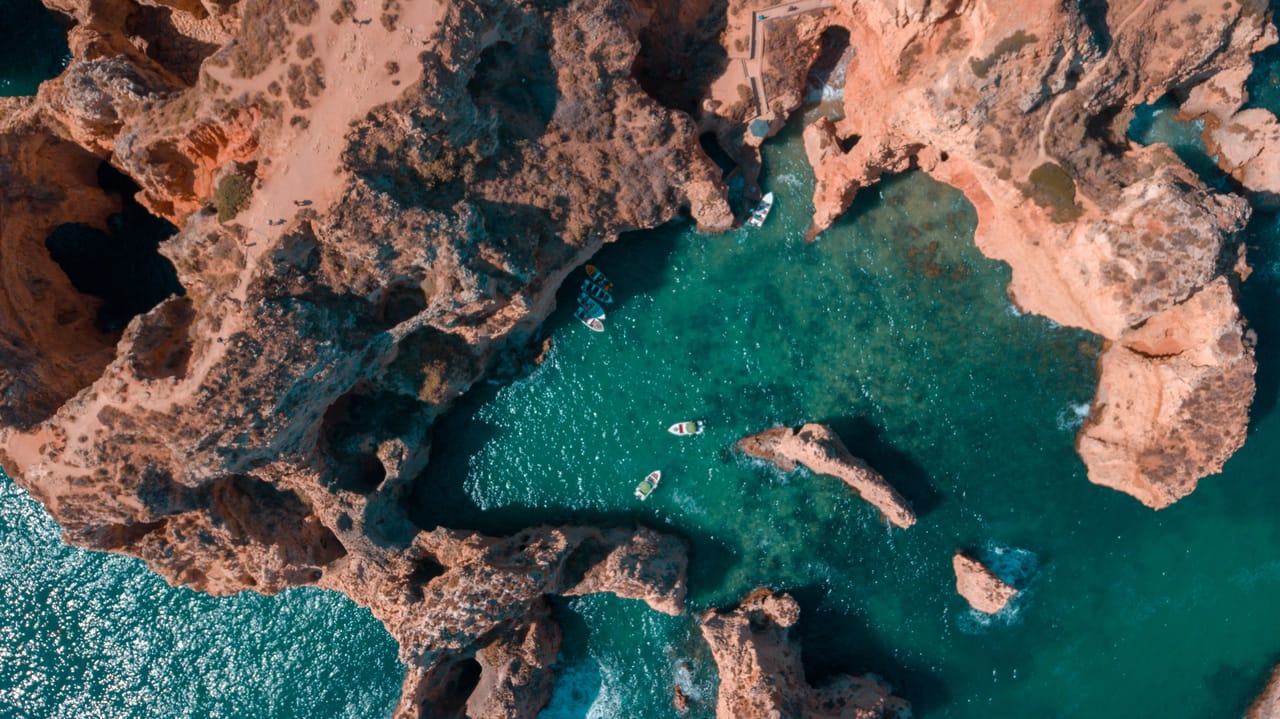
In the centre, the road follows the cliffs. East of Albufeira, Falésia lines up walls of red, ochre and white sand, gullied beneath the pines. Further west, the sea has carved the limestone into arches, stacks and algares — caves whose roofs have fallen in. The one at Benagil is a round chamber open to the sky; you go in by boat or on a guided kayak trip.
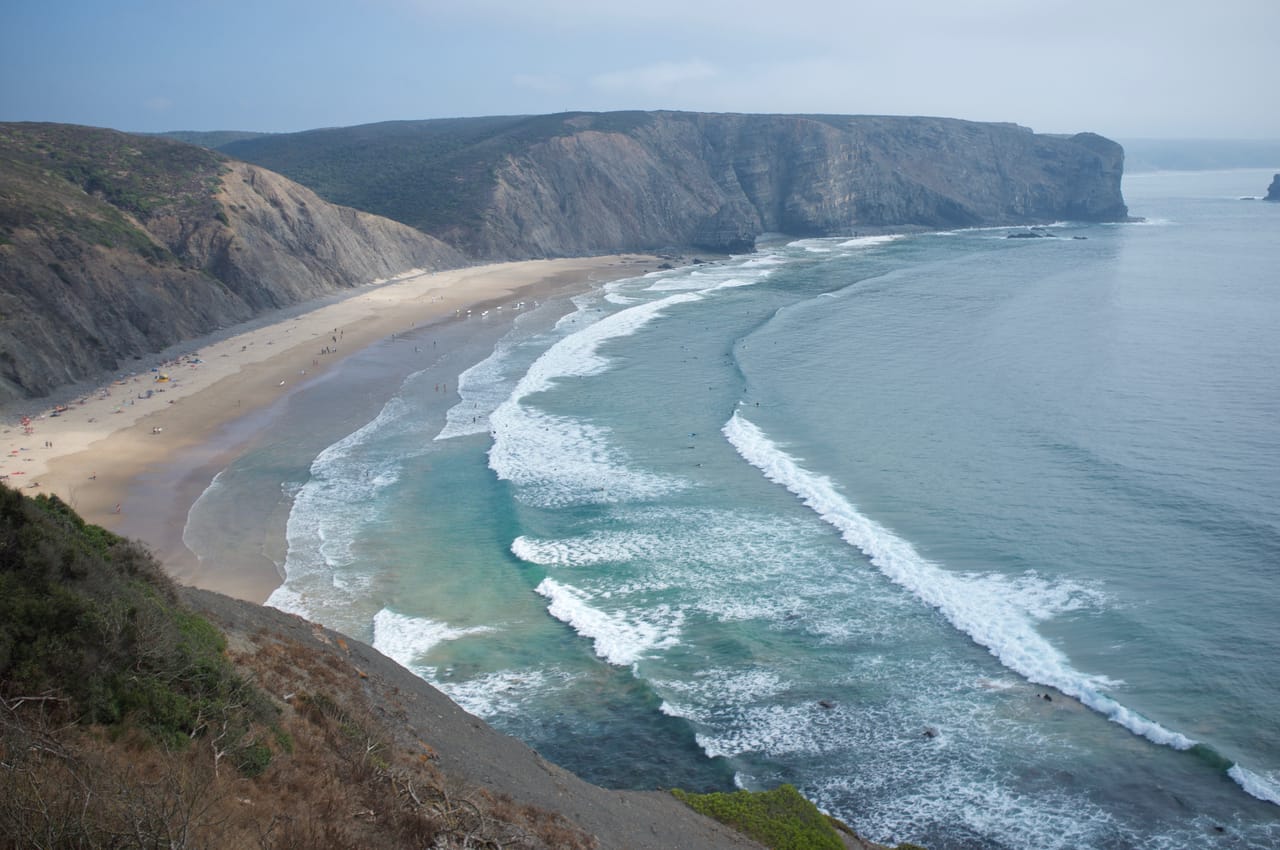
At Cape St Vincent, the coast turns north. From Burgau, before the cape, to Sines, a nature park protects more than a hundred kilometres of cliffs and beaches, often at the end of dirt tracks. The trails of the Rota Vicentina follow this coast. At Odeceixe, the River Seixe divides the Algarve from the Alentejo; at Cabo Sardão, storks nest on the cliffs. On the way back, the road crosses the Serra de Monchique and its strawberry trees.
Silves and the Moorish Algarve
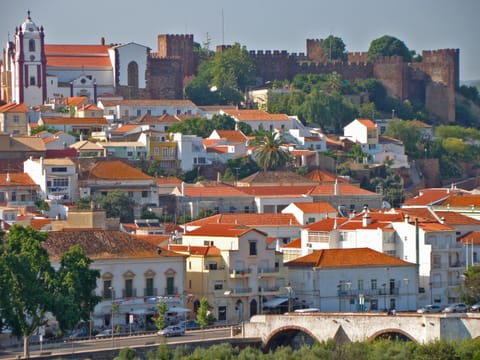
To the Arab geographers, the Algarve was al-Gharb, ‘the West’ of al-Andalus. Its capital was Silves — Xelb in Arabic — above the River Arade. The poet-prince al-Mutamid lived here before he came to rule Seville. In 1189, King Sancho I took the town with crusaders from northern Europe. The Almohads won it back two years later. The red sandstone ramparts of the castle still tower over Silves.
The Portuguese Reconquista came to a close in 1249, when Afonso III took Faro. He then styled himself King ‘of Portugal and the Algarve’. The title became ‘of the Algarves’ in 1471; the kings bore it until 1910. In Faro, behind the Arco da Vila, the walled Vila Adentro stands on the site of Roman Ossonoba.
On the west coast, at Arrifana, a ribat, a fortified monastery, was identified in 2001. It was founded around 1130 by the Sufi master Ibn Qasi.
For the ancients, the world ended here.
Lagos, Sagres and the end of the world
Lagos was the town of the Discoveries. Gil Eanes, who rounded Cape Bojador in 1434, was born here. In August 1444, 235 African captives were sold in the town. The building presented as the first slave market of modern Europe now houses a museum of the slave trade.
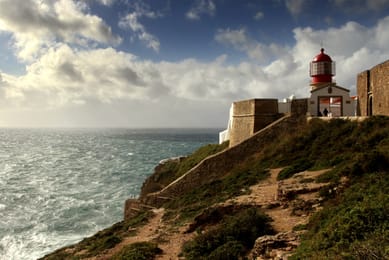
In the south-west, the bare plateaus of Sagres and Cape St Vincent thrust out into the ocean. To the Greek geographer Strabo, this was the westernmost point of the inhabited world. For the ancients, the world ended here. According to legend, ravens escorted the relics of St Vincent all the way to Lisbon. Lisbon’s coat of arms still bears a ship and two ravens.
Alcoutim Castle
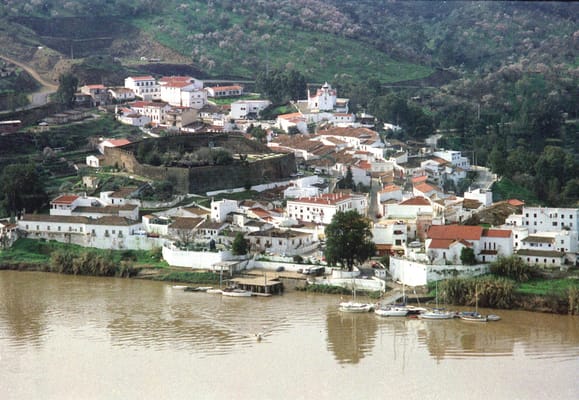
Here the border is a river: across the Guadiana, Alcoutim and its castle face the Spanish village of Sanlúcar de Guadiana. Portugal and Castile signed their peace of 1371 here. A zip wire crosses the river from Spain: you put your watch back an hour.
Practical notes
- When to go
- April to June, then September–October. Summer is packed in the south; in the west, the water stays cold.
- Getting there
- Airport at Faro. Lisbon just under three hours away on the A2, Seville two.
- Access
- The A22 has been toll-free since January 2025. At Benagil and Arrifana the car parks are small: park at the top and walk down. At Ponta da Piedade, the lighthouse car park fills up fast.
- Sleeping in a van
- On the coast and in protected areas, Natura 2000 zones included, motorhomes may spend the night only on an aire or a campsite. Elsewhere, 48 hours per municipality at most, unless local rules say otherwise.
- Worth knowing
- Inside the Benagil cave, no going ashore and no swimming: you enter by boat or by kayak with a licensed guide.
- Allow
- A week for the loop; ten days if you add the islands of the Ria Formosa and the Guadiana.
What not to miss
- 1The bell tower of Faro CathedralThe old town at its feet, and the whole lagoon.
- 2Praia do BarrilOn Tavira Island, a graveyard of rusting anchors, a relic of the tuna fishery.
- 3The Seven Hanging ValleysNearly six kilometres of cliffs, from Marinha to Vale Centeanes.
- 4Ponta da PiedadeLimestone stacks and caves at the foot of a lighthouse, near Lagos.
- 5Cape St VincentA lighthouse closed to visitors, whose beam carries 32 nautical miles, and sunset over the Atlantic.
- 6FóiaThe highest point in the Algarve, at 902 metres; a rock, foyaite, takes its name from this peak.
The Algarve in pictures
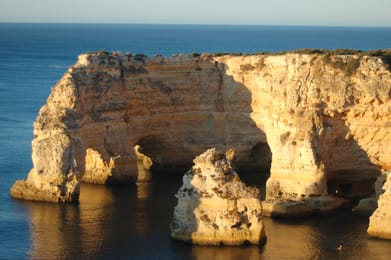
The arches and sea stack of Praia da Marinha in low, raking light.
The Algarve’s table
Here, people cook in the cataplana, a copper pan that closes like a shell over clams or fish. Portimão grills its sardines, Santa Luzia calls itself the octopus capital, and Vila do Bispo cooks percebes, goose barnacles gathered at the foot of the cliffs.
The Aljezur sweet potato has its own geographical indication and an autumn festival. Monchique distils medronho, a spirit made from strawberry-tree fruit. In Lagos, try the Dom Rodrigo: egg threads (yolks cooked into strands in syrup) and almond, in a twist of coloured foil.
Loop from Faro
 +23stops
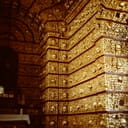
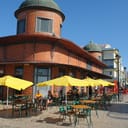
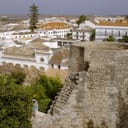
- 1Sé de Faro · Capela dos Ossos · Mercado · Castelo de Tavira
- 2Cacela Velha · Ruínas de Estoi · Praia da Falésia · Praia da Marinha
- 3Praia de Benagil · Algar Seco · Ferragudo · Ponta da Piedade
Free, no account needed — start from its places and make it yours.
Also worth reading
Wide open spaces
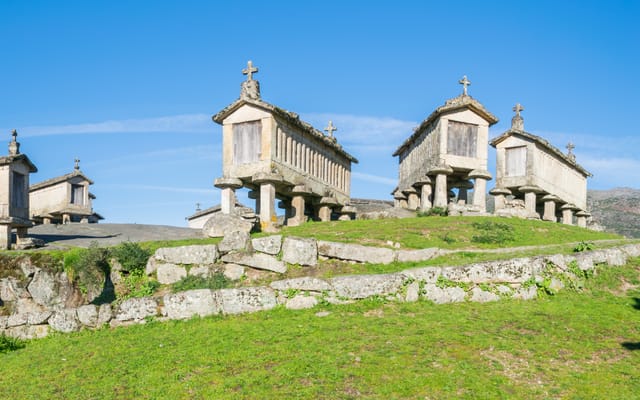
The Minho and Peneda-Gerês, from Portugal’s cradle to its granite granaries
In northern Portugal, facing Galicia, the Minho is a land of granite, rain and maize, and it was here that the kingdom was born. Six days on a loop from Braga, through Peneda-Gerês park, its mountain villages and the border river down to the Atlantic.
Wide open spaces
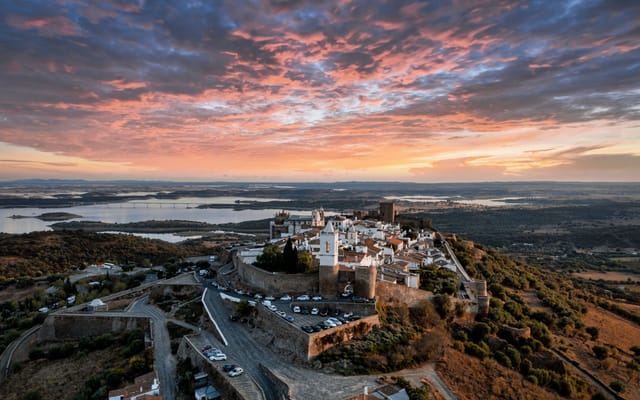
Inland Alentejo, from Évora to the ramparts of Marvão
South of the Tagus, inland Alentejo is a region of cork-oak plains, white villages on their hilltops and fortresses facing Spain. A six-day loop from Évora, by way of the Guadiana, Lake Alqueva and the ridge of Marvão.
Wide open spaces
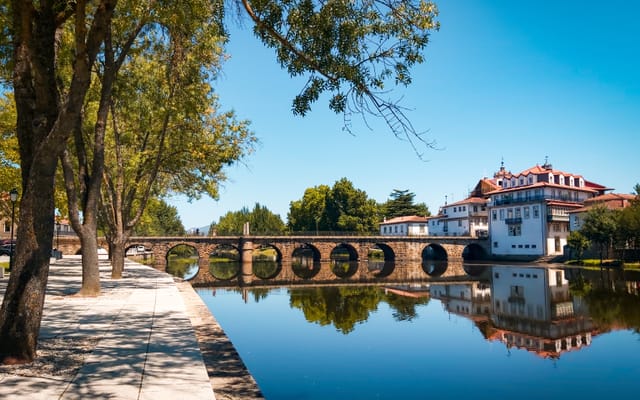
The Estrada Nacional 2, Portugal from top to bottom
From Chaves, a stone’s throw from Galicia, to Faro, on the edge of the Ria Formosa, a single road crosses the whole of Portugal through its interior. Eight days of vines, pine woods and cork oaks — provided you leave the motorway to those in a hurry.
A starting point, a few wishes — ViaLooma builds the trip day by day, map, stops and roadbook included.