The Estrada Nacional 2, Portugal from top to bottom
From Chaves, a stone’s throw from Galicia, to Faro, on the edge of the Ria Formosa, a single road crosses the whole of Portugal through its interior. Eight days of vines, pine woods and cork oaks — provided you leave the motorway to those in a hurry.
From Chaves to Faro through the interior
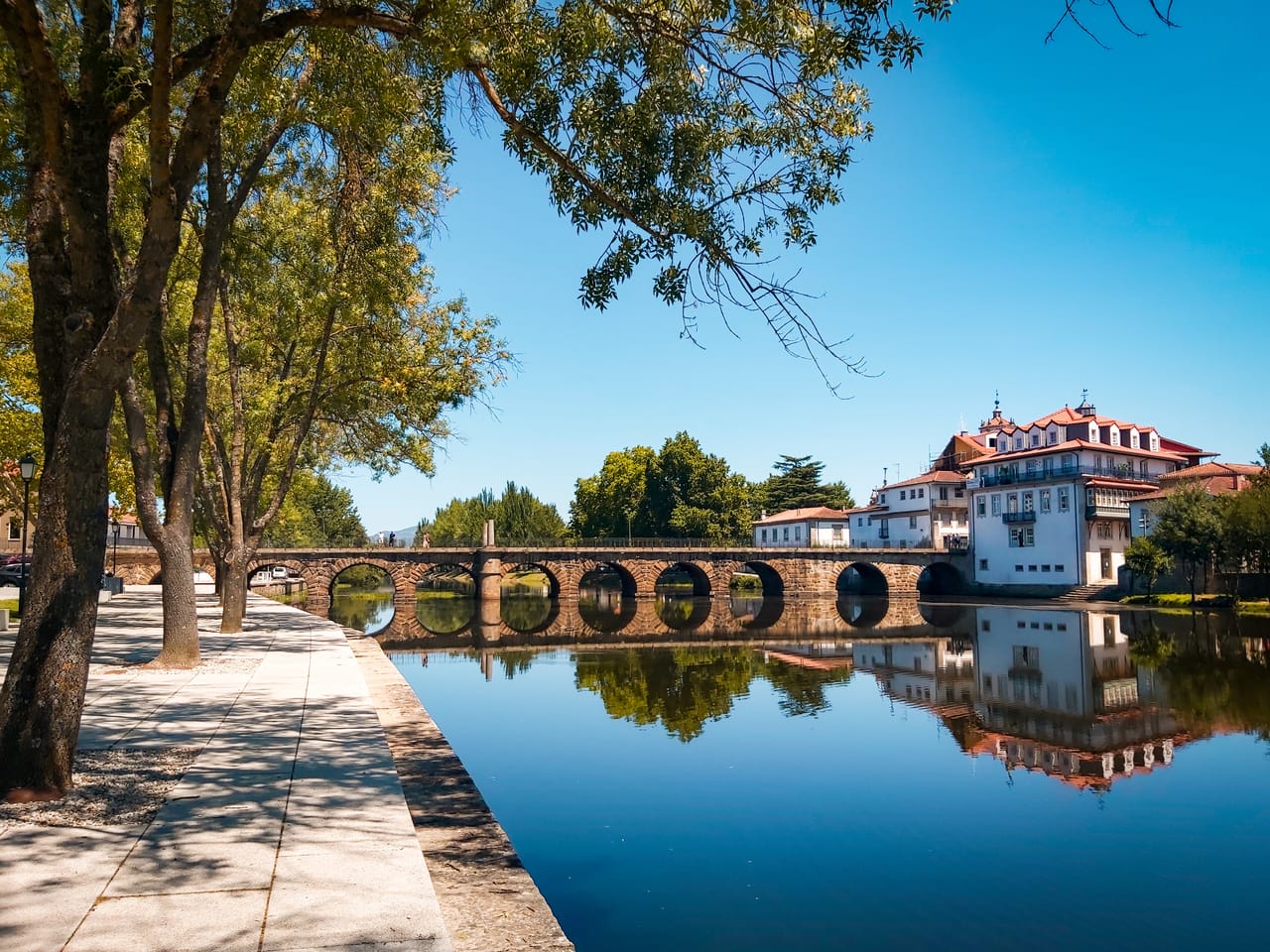
The N2 sets out from Chaves, a few kilometres from Galicia, and ends in Faro, facing the lagoon. In between lie 739 kilometres and eleven of the country’s eighteen districts: it is Portugal’s longest national road. It links up the regions of the interior. A motorway often shadows it, so follow the signs for the EN2.
The landscape changes every day. In the north lie the vineyards of the Douro. In the centre, the Pinhal Interior lines up pines, eucalyptus and schist villages; the fire of June 2017 hit it hard around Pedrógão Grande. Since 1954, the N2 has crossed the Zêzere there at the Cabril dam; this section is closed in 2026. At Vila de Rei, a marker shows the halfway point of the N2, near the geodesic centre of mainland Portugal, on the Picoto da Melriça.
Chaves, at kilometre zero, was the Romans’ Aquae Flaviae, a town of hot springs. Its bridge over the Tâmega, completed under Trajan, still bears two inscribed columns. Further south, the Vidago Palace, commissioned by King Carlos I, opened on 6 October 1910, the day after the Republic was proclaimed. The road dates from the 1945 national road plan. Downgraded section by section, it was revived in 2016 by the municipalities along its route. Travellers get a passport stamped at each stop.
The north, from the Douro to Viseu
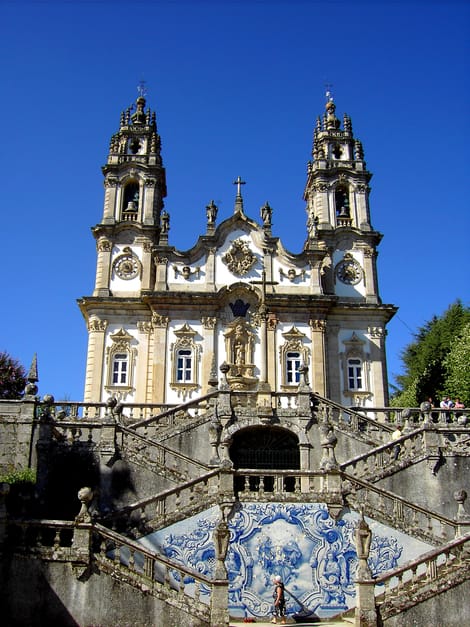
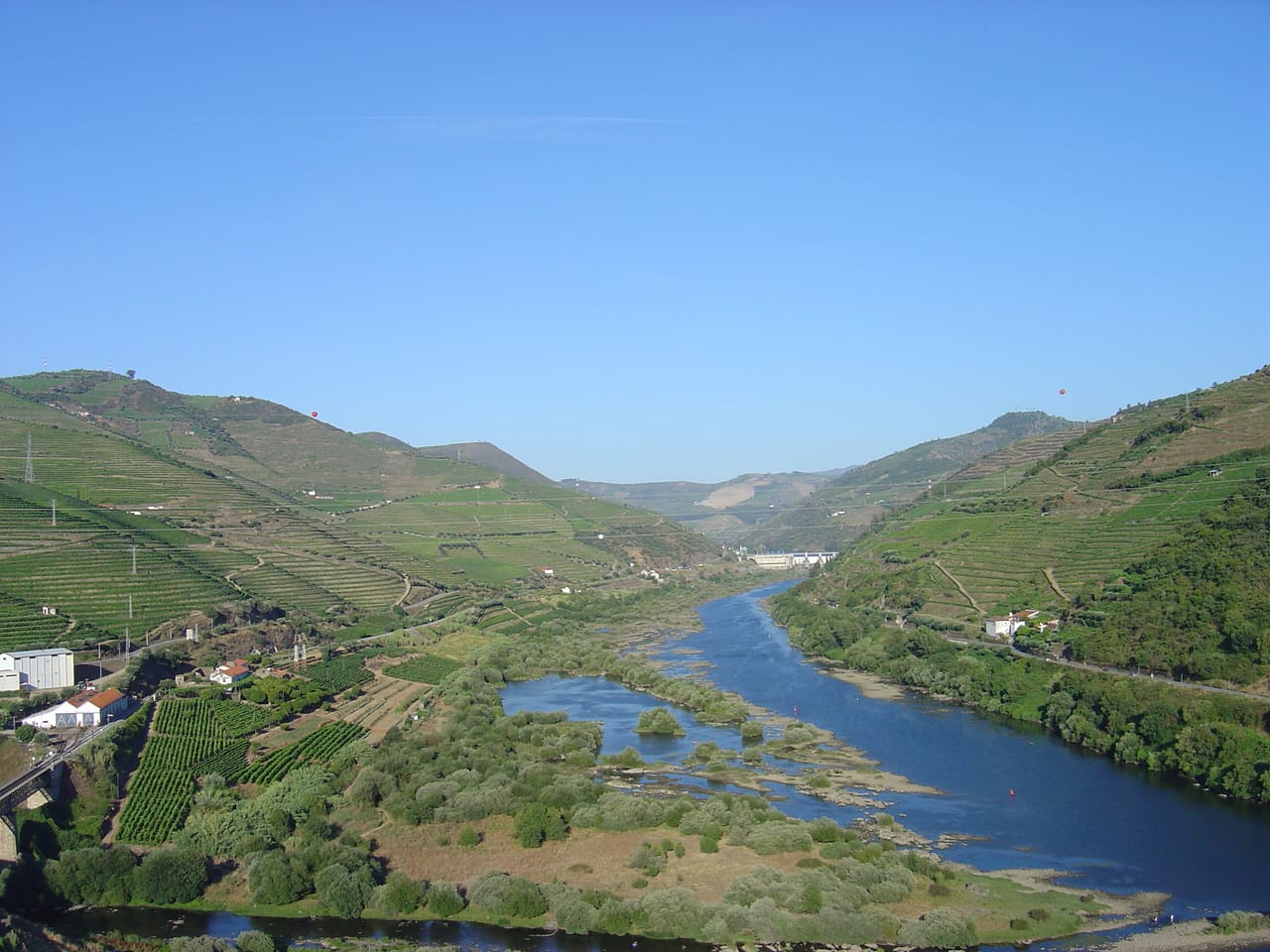
Beyond Vila Real, the road drops down into the terraced vineyards of the Douro. The region was demarcated in 1756, on the initiative of the Marquis of Pombal: it is one of the oldest regulated wine regions in the world. South of the river, Lamego rises towards the Remédios sanctuary up a Baroque stairway of 686 steps, with fountains and azulejos. Every 8 September, pilgrims climb it.
In Viseu, the cathedral shares its square with the museum of Grão Vasco, a great 16th-century Portuguese painter.
To the south, Salazar was born at Santa Comba Dão. Some twenty kilometres away, the house of Aristides de Sousa Mendes has been a museum since 2024. As consul in Bordeaux, he issued thousands of visas in June 1940 against Lisbon’s orders.
At Alcáçovas in 1479, Portugal and Castile divided the Atlantic between them, fifteen years before the Treaty of Tordesillas.
The Alentejo, then the Algarve
Beyond the Tagus begins the montado, an airy woodland of cork oaks and holm oaks. The Escoural cave is the only decorated Palaeolithic cave known in Portugal. Uncovered in 1963 by quarry blasting, it can be visited by booking only. At Alcáçovas in 1479, Portugal and Castile divided the Atlantic between them, fifteen years before the Treaty of Tordesillas.
Castro Verde lays claim to the Battle of Ourique, fought in 1139; according to tradition, it marks the birth of the kingdom. Next come the Serra do Caldeirão and its strawberry trees, then Faro. You finish there on foot, through the Arco da Vila to the cathedral.
Almourol Castle
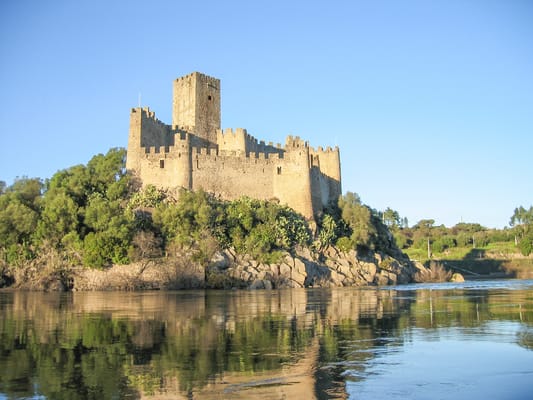
A Templar castle set on a granite islet in the middle of the Tagus; an inscription over its gate dates it to 1171 and credits it to the Templar master Gualdim Pais. A boat takes you across in a few minutes, except when the river runs too high.
Practical notes
- When to go
- April to June, then September–October. Summer is scorching in the Alentejo and brings a high risk of wildfires in the centre.
- Getting there
- Chaves is two hours from Porto; Faro, with its airport, less than three hours from Lisbon.
- Access
- Tarmac throughout, but satnavs favour the motorway: follow the EN2 signs. Diversions: the IP3 at Penacova, the IC8 at Cabril, the EM 1202 or a detour via Loulé at km 710.
- Sleeping in a van
- Overnight parking allowed for up to 48 hours per municipality in a vehicle registered as a motorhome, unless local rules say otherwise; banned in Natura 2000 zones, protected areas and on the coastal strip, the Ria Formosa included. Campsites in most towns.
- Worth knowing
- As of mid-October 2026, the N2 is still closed in three places. Two date from the storms of winter 2025–2026: south of Penacova, and between the Cabril dam and Pedrógão Pequeno. The third, at km 710 before São Brás de Alportel, dates from a subsidence in 2025. Reopenings are expected between late 2026 and 2027: check before you set off.
- Allow
- Eight days; ten to linger in the Douro or push on to Évora.
What not to miss
- 1Mateus PalaceThe Baroque palace that appears on the Mateus Rosé label, on the edge of Vila Real.
- 2The Galafura viewpointThe terraced Douro seen from above, from the promontory Miguel Torga loved.
- 3The Remédios stairway686 steps, landings lined with azulejos and a view over the whole of Lamego.
- 4The Picoto da MelriçaThe geodesic centre of mainland Portugal, above the pine woods of Vila de Rei.
- 5The ruins of MilreuA Roman villa with fish mosaics, whose temple became a church, at Estoi.
- 6Faro’s Vila AdentroThe walled old town, its cathedral and its storks’ nests, at the end of the N2.
The Estrada Nacional 2 in pictures
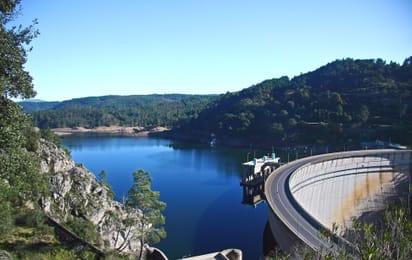
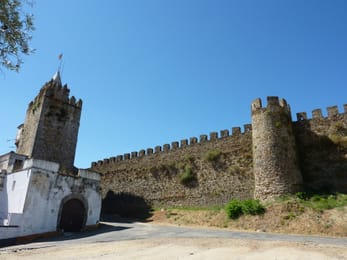
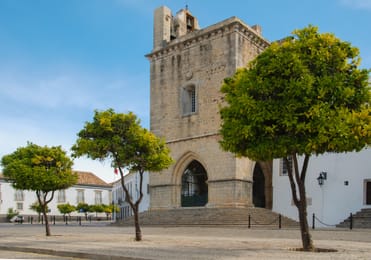
The concrete arch of the Cabril dam before its blue lake, between the wooded slopes of the Zêzere.
The N2’s table
At the start, Chaves has its pastel, a delicate puff-pastry turnover filled with minced meat, protected by a geographical indication. Lamego has its bôla, a bread stuffed with ham and charcuterie, and its sparkling wines. Around Viseu, people drink the reds of the Dão.
In the Alentejo, bread makes the meal: migas, açorda with garlic and coriander. The black pork here is fattened on the acorns of the montado. In the Caldeirão, people distil medronho, a strawberry-tree brandy. In Faro, people eat clams and oysters from the Ria Formosa.
Chaves → Faro

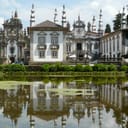 +28stops
- 1Ponte de Trajano · Termas de Vidago · Termas de Pedras Salgadas · Palácio de Mateus
- 2Miradouro de São Leonardo de Galafura · Museu do Douro · Quinta da Pacheca · Santuário de Nossa Senhora dos Remédios
- 3Sé de Lamego · Igreja de Nossa Senhora da Conceição · Cava de Viriato · Sé de Viseu
Free, no account needed — start from its places and make it yours.
Also worth reading
Wide open spaces
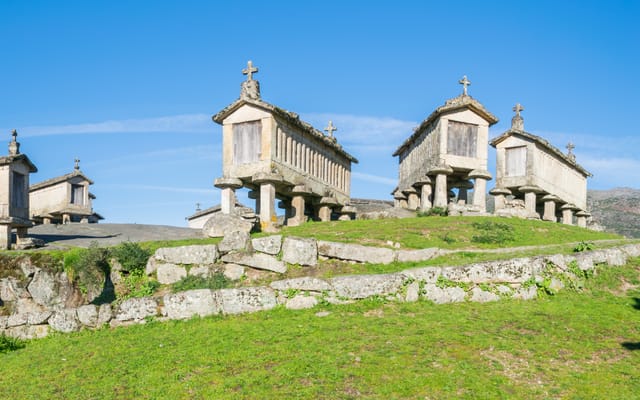
The Minho and Peneda-Gerês, from Portugal’s cradle to its granite granaries
In northern Portugal, facing Galicia, the Minho is a land of granite, rain and maize, and it was here that the kingdom was born. Six days on a loop from Braga, through Peneda-Gerês park, its mountain villages and the border river down to the Atlantic.
Wide open spaces
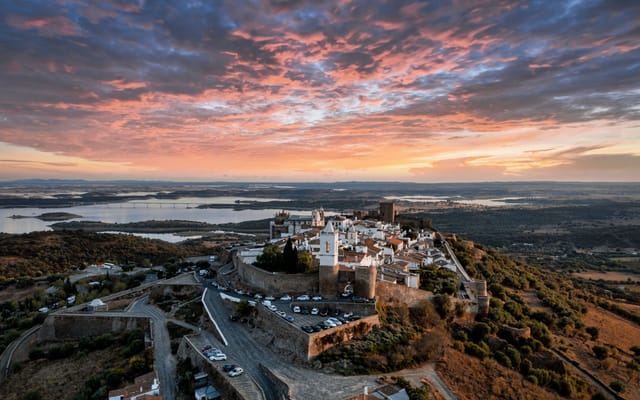
Inland Alentejo, from Évora to the ramparts of Marvão
South of the Tagus, inland Alentejo is a region of cork-oak plains, white villages on their hilltops and fortresses facing Spain. A six-day loop from Évora, by way of the Guadiana, Lake Alqueva and the ridge of Marvão.
Wide open spaces
The Algarve, from golden cliffs to the Costa Vicentina
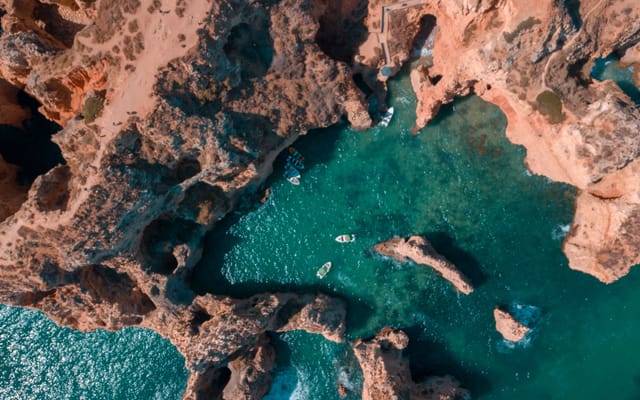
The lagoon of the Ria Formosa, the golden limestone cliffs of Benagil and Lagos, then Cape St Vincent, which the ancients held to be the end of the inhabited world. A week’s loop from Faro, by way of the wild coast running north towards the Alentejo, and the Serra de Monchique.
A starting point, a few wishes — ViaLooma builds the trip day by day, map, stops and roadbook included.