The Bieszczady, from wooden churches to the połoniny
In south-eastern Poland, on the borders with Slovakia and Ukraine, the Bieszczady are mountains of forest and high pasture, with few villages. A five-day circuit from Rzeszów, by way of Sanok, Lake Solina and the Great Bieszczady Loop.
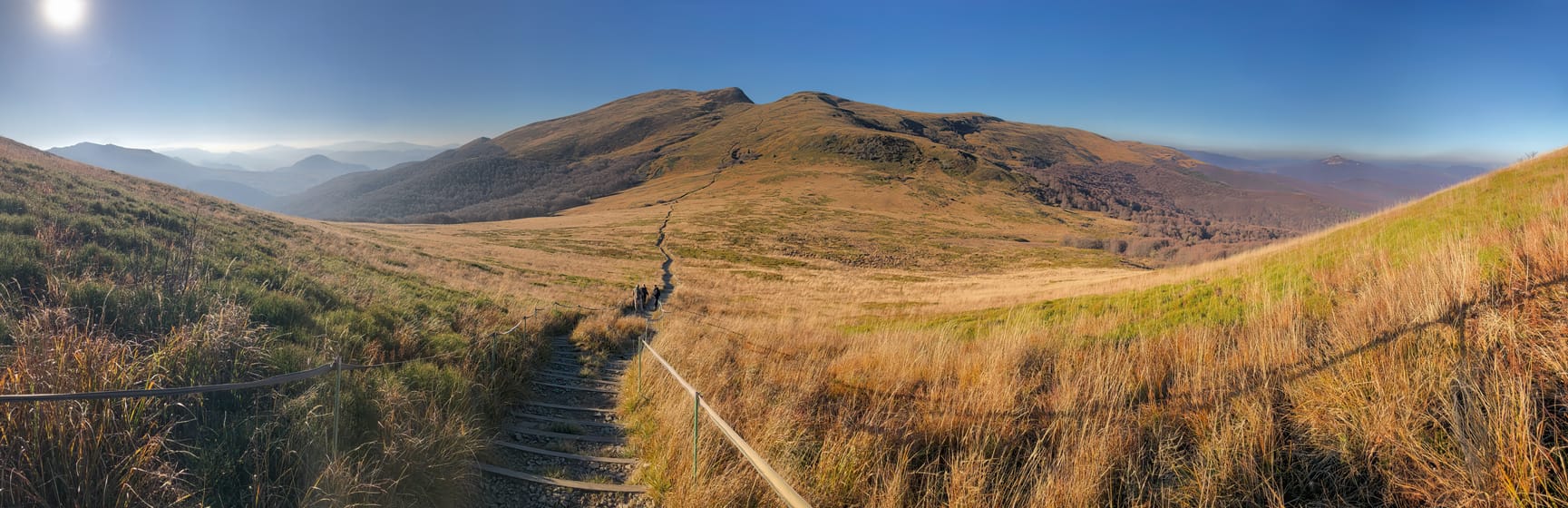
The Great Bieszczady Loop
You get around the range on the Great Bieszczady Loop, about 140 kilometres of narrow roads linking Lesko, Ustrzyki Dolne, Ustrzyki Górne, Wetlina and Cisna. After Lutowiska, the villages grow further apart. Forest covers almost everything, and the road climbs to the Wyżna Pass, at 872 metres, facing the high pastures.
These high pastures are called połoniny. They are ridges covered in tall grass, above the forest, which turn russet from September. October brings the golden autumn of the beech woods. From the Wyżna Pass, a yellow-marked trail climbs in an hour and a quarter to the Połonina Wetlińska and its refuge, the Chatka Puchatka, at 1,228 metres.
To the north, Lake Solina is the largest reservoir in Poland by volume. You walk along the top of the dam, then carry on to Polańczyk, the sailing harbour. At Majdan, near Cisna, a small narrow-gauge forest railway runs from May to October, with open carriages.
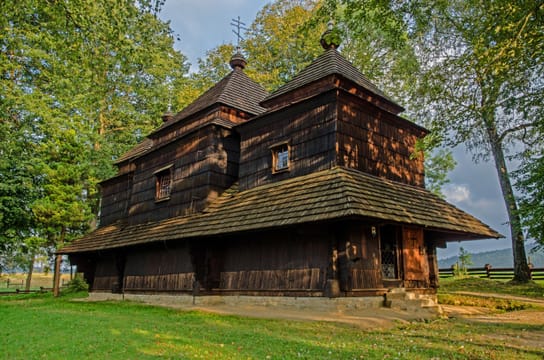
The wooden churches and the vanished villages
The Bieszczady were home to Ruthenian highlanders, the Boykos in the east and the Lemkos in the west, Greek Catholic or Orthodox. Some of their wooden churches are still standing. The one at Smolnik, completed in 1791, overlooks the San valley. Its three pyramid roofs, one over each part, are typical of the Boyko style. It is one of three churches in this style preserved in Poland. It is one of the sixteen wooden churches of the Carpathians, eight in Poland and eight in Ukraine, added to the Unesco list in 2013.
The people, though, were driven out. From 1944 to 1946, some of them were deported to Soviet Ukraine. In 1947, Operation Vistula scattered those who remained across northern and western Poland. In 1951, a land swap with the USSR gave Poland the area around Ustrzyki Dolne and Smolnik. Its people were deported to the USSR in their turn. The church at Smolnik, abandoned, was used as a storehouse. It was handed over to the Catholic Church in 1974.
What remains are cemeteries, orchards gone back to forest and signs marking villages that have vanished. In Polish, ‘going off to the Bieszczady’ still means dropping everything. At Turzańsk, in the Osława valley, the Lemko church of 1801–1803, with its onion domes, is also on the Unesco list. It has been Orthodox since 1963 and is still in use.
In Polish, ‘going off to the Bieszczady’ still means dropping everything.
Bieszczady National Park
Bieszczady National Park protects the highest part of the range on the Polish side. Its highest point, Tarnica, reaches 1,346 metres; you climb it on foot from Wołosate, near Ustrzyki Górne. The park’s beech woods are part of the primeval beech forests of the Carpathians on the Unesco list.
Brown bears, wolves and lynx live in these forests. European bison have been reintroduced; you can see them in an enclosure at Muczne, near Smolnik. Since 2013, the area has also been a dark-sky park.
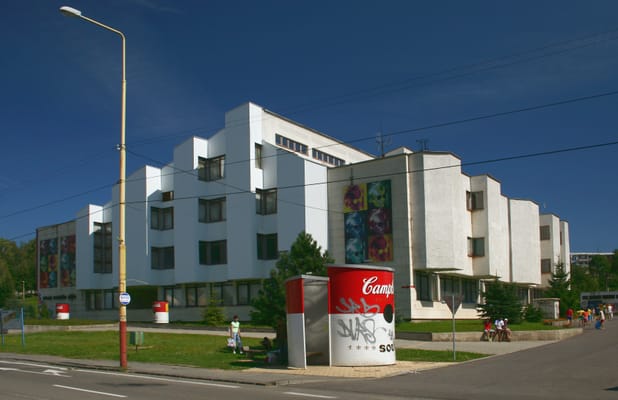
Andy Warhol Museum of Modern Art
Just across the Slovak border, this museum, founded in 1991, shows original works by Andy Warhol. Warhol’s parents came from Miková, a Ruthenian village close by. The museum reopened in September 2026, after about three years of renovation.
Practical notes
- When to go
- Late September to mid-October for the golden autumn. July and August are the busiest season, especially at Lake Solina.
- Getting there
- Rzeszów has an international airport. Sanok is about 80 kilometres to the south.
- Access
- Everything is tarmac. Roads 896 and 897 are narrow and winding. Few petrol stations beyond Lesko and Ustrzyki Dolne: fill up beforehand. Dipped headlights are compulsory during the day.
- Sleeping in a van
- Campsites in the villages: Polańczyk, Wetlina, Cisna, Ustrzyki Górne. Wild camping is banned in the national park.
- Worth knowing
- An entry ticket is required on the park’s trails, online or at the ticket booths. Paid car parks at the Wyżna Pass, Wołosate and Ustrzyki Górne. There are bears: leave no food outside.
- Allow
- Five days from Rzeszów, coming back through the Osława valley. One more day to climb Tarnica.
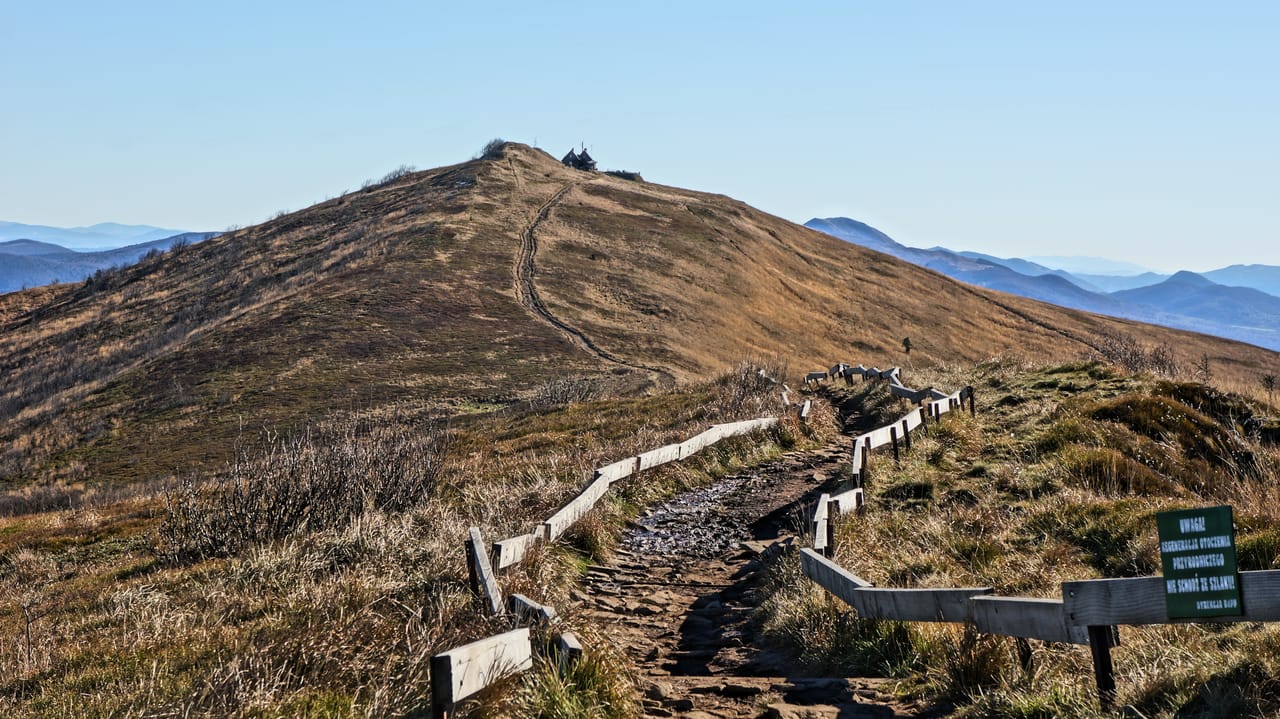
What not to miss
- 1The Sanok skansenAn open-air museum of more than a hundred wooden houses, churches and mills, spread over 38 hectares.
- 2Sanok castleIts museum holds icons from the Carpathians and the largest collection of work by the painter Zdzisław Beksiński, who was born in Sanok.
- 3The Lesko synagogueA fortified 17th-century synagogue, now a gallery, next to an old Jewish cemetery.
- 4The Solina damA walk along the top of a dam 82 metres high, between the lake and the San valley.
- 5The Połonina WetlińskaAn hour and a quarter’s climb from the Wyżna Pass, then a walk along the ridge.
- 6KomańczaThe wooden convent where Cardinal Wyszyński was interned in 1955–1956; his room is open to visitors.
The Bieszczady in pictures
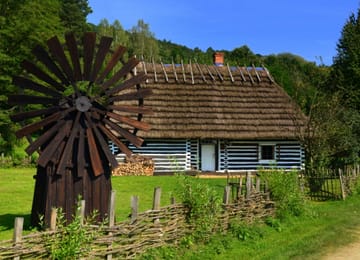
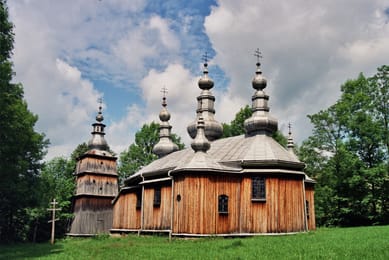
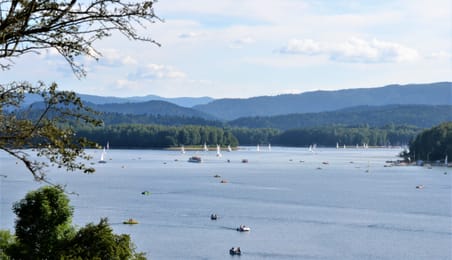
A whitewashed thatched cottage and a windmill at the Sanok skansen.
The Bieszczady table
Bieszczady cooking is mountain cooking. People eat proziaki, soda flatbreads baked on the top of the stove, and fuczki, sauerkraut pancakes. Pierogi ruskie, filled with potato and curd cheese, are everywhere.
In autumn, the inns of Wetlina and Cisna serve dishes made with forest mushrooms. You also find trout and forest honey, sold by the roadside.
Loop from Rzeszów


 +12stops
- 1Muzeum Budownictwa Ludowego w Sanoku · Muzeum Historyczne w Sanoku
- 2Klasztor Karmelitów bosych w Zagórzu · Synagoga w Lesku · Solina · Polańczyk
- 3Muzeum Przyrodnicze Bieszczadzkiego Parku Narodowego w Ustrzykach Dolnych · Cerkiew św. Michała Archanioła w Smolniku · Ustrzyki Górne
Free, no account needed — start from its places and make it yours.
Also worth reading
Wide open spaces
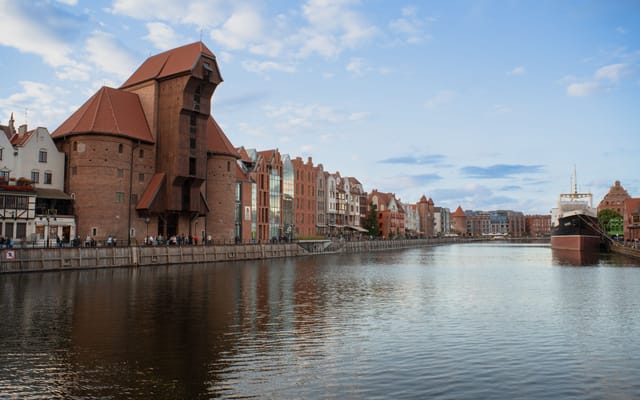
Gdańsk and the Baltic coast, from Malbork to the Łeba dunes
A red-brick city on the Motława, white sand beaches and a pine-covered peninsula 35 kilometres long. A six-day loop from Gdańsk, from Malbork Castle to the Łeba dunes.
Wide open spaces
Masuria, the land of a thousand lakes
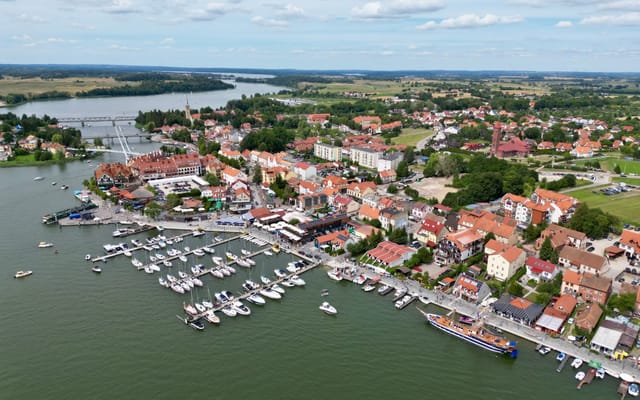
In north-eastern Poland, Masuria has more than 2,000 lakes, linked by rivers and canals, in the middle of the forests. This trip goes round the region in six days from Olsztyn, from the Elbląg Canal to the Great Lakes, by way of the brick castles of Warmia.
Wide open spaces
The Pacific Northwest, from the Olympic Peninsula to the Cascade volcanoes
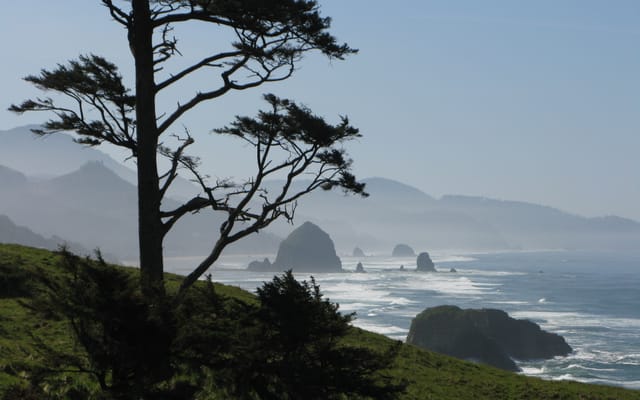
Rainforests, a coast of headlands and lighthouses, redwoods and two active volcanoes. A two-week loop from Seattle, by way of the Olympic Peninsula, the Oregon coast and Mount Rainier.
A starting point, a few wishes — ViaLooma builds the trip day by day, map, stops and roadbook included.