Masuria, the land of a thousand lakes
In north-eastern Poland, Masuria has more than 2,000 lakes, linked by rivers and canals, in the middle of the forests. This trip goes round the region in six days from Olsztyn, from the Elbląg Canal to the Great Lakes, by way of the brick castles of Warmia.
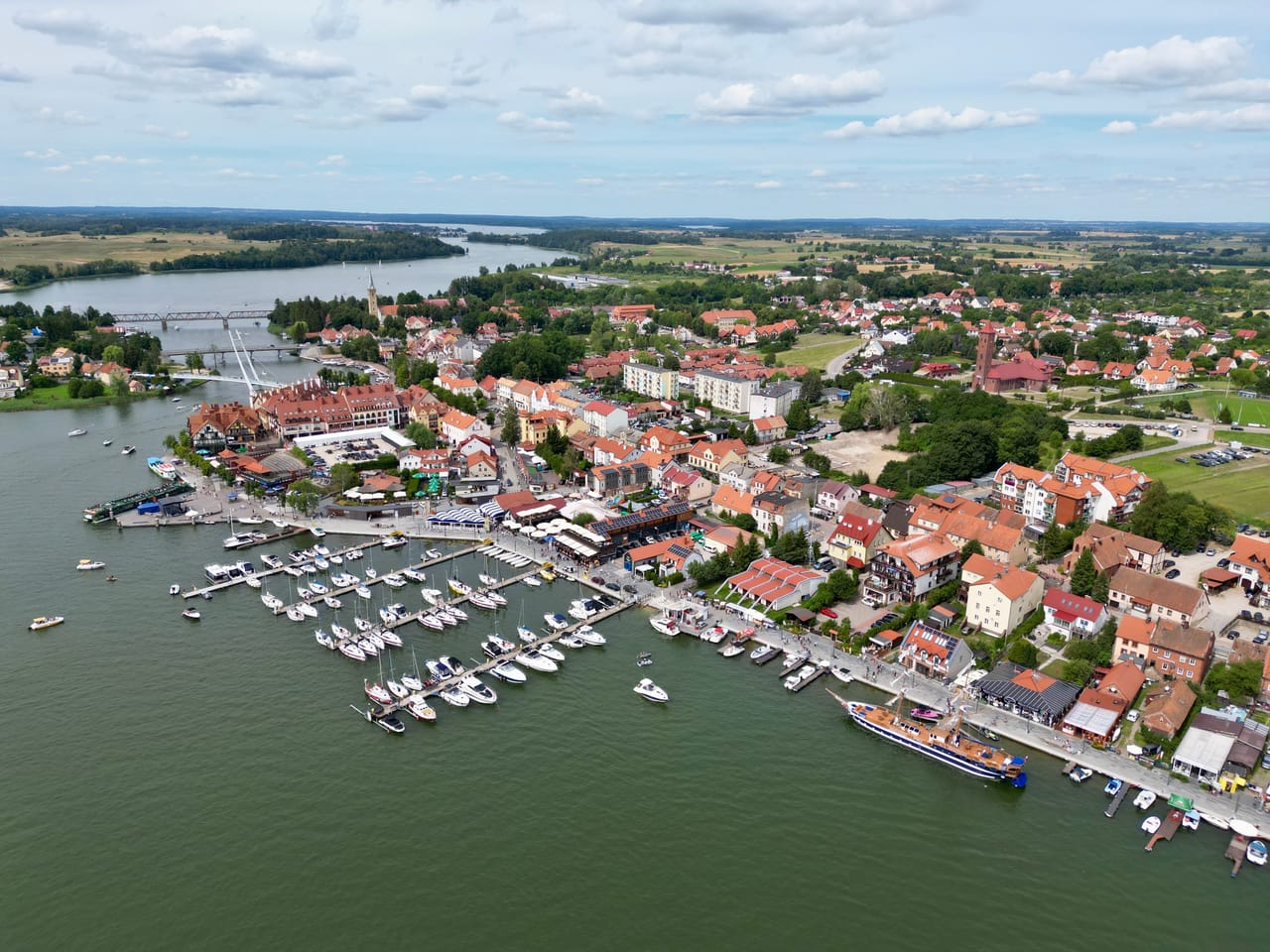
The land of a thousand lakes
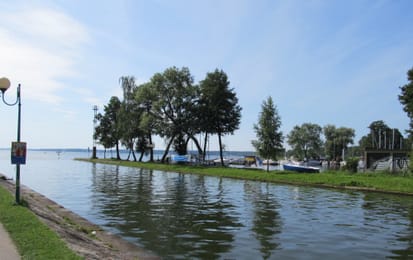
Masuria has more than 2,000 lakes, carved out by glaciers. There is one behind every hill, between the fields, the pine forests and the red-brick villages. The small roads run under long avenues of trees. Storks nest on the poles.
In the centre, the Great Lakes follow one another, linked by canals, from Giżycko to Mikołajki, the sailing port. They run from Lake Mamry, in the north, to Lake Śniardwy, the largest in Poland. In Giżycko, a swing bridge from 1898 is turned by hand to let the boats through. To the south, the road crosses the Pisz Forest to Ruciane-Nida.
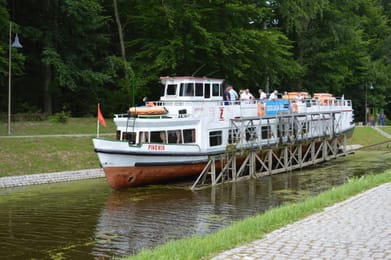
The most surprising moment comes on the Elbląg Canal. At the Buczyniec inclined plane, boats leave the water and cross the hill on carriages pulled by a cable, along rails. A large water wheel does all the work.
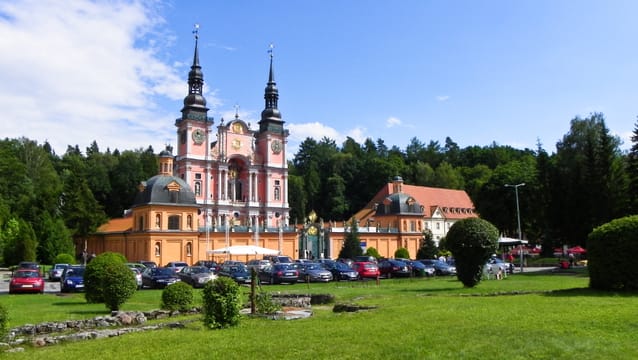
The Warmia of the prince-bishops
On the loop, Warmia long lived apart. From 1466 to 1772, this small principality of the bishops came under the Polish crown. In 1525, neighbouring Prussia became Protestant, but Warmia did not. At Święta Lipka, a baroque sanctuary stands in the middle of the fields. According to legend, a statue of the Virgin had been placed in a lime tree. The organ sets small figures moving when it is played.
The bishops and their chapter left brick castles: Lidzbark Warmiński, their residence, Reszel and Olsztyn. Copernicus ran Olsztyn castle. A canon at Frombork, he wrote there the book that puts the Sun at the centre of the universe, and he is buried there. His grave, found in the cathedral, was confirmed by DNA.
Around Warmia, the land belonged to the Teutonic Order, which built Ryn castle. The Order was defeated at Grunwald, in 1410, by the Poles and the Lithuanians. The battlefield is less than an hour from Olsztyn. In 1525, the last Grand Master turned the Order’s lands into a Protestant duchy: Prussia.
In 1525, neighbouring Prussia became Protestant, but Warmia did not.
East Prussia and the war
Until 1945, the whole region was part of German East Prussia. In the Gierłoż forest, near Kętrzyn, Hitler set up his headquarters, the Wolfsschanze, the ‘Wolf’s Lair’. He spent more than 800 days there between 1941 and 1944. On 20 July 1944, Colonel von Stauffenberg’s bomb went off there without killing him. The Germans blew up the bunkers in January 1945.
Sztynort, half an hour away, is also linked to the plot. The owner of the palace, Heinrich von Lehndorff, had taken part in it; he was hanged in Berlin on 4 September 1944. After the war, most of the German inhabitants had to leave, replaced by Poles who often came from the East.
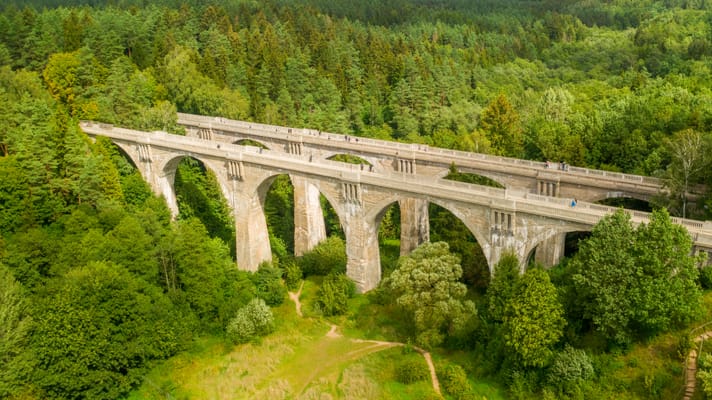
The Stańczyki bridges
Two twin railway viaducts, 180 metres long and 36.5 metres high, in the middle of the Romincka Forest. The railway line was taken up in 1945; the site is private and there is an entrance fee.
Practical notes
- When to go
- June to September; July and August are very busy. The Elbląg Canal runs from late April to early October, sometimes with partial cruises only.
- Getting there
- Olsztyn is about three hours from Warsaw and two and a half hours from Gdańsk. Olsztyn-Mazury airport at Szymany, less than an hour away.
- Access
- Everything is tarmac. The small roads are narrow, sometimes cobbled and lined with trees. The swing bridge at Giżycko has a 2.5-tonne limit: above that, you take the main road.
- Sleeping in a van
- Plenty of lakeside campsites, most of them open from May to September. In the forests, you may only park in authorised car parks.
- Worth knowing
- Dipped headlights on day and night. Motorhomes over 3.5 tonnes pay the e-TOLL electronic toll on the main roads. The Elbląg Canal is closed for the winter until 23 April 2027.
- Allow
- Six days for the loop, one more for a cruise on the lakes or the detour to Stańczyki.
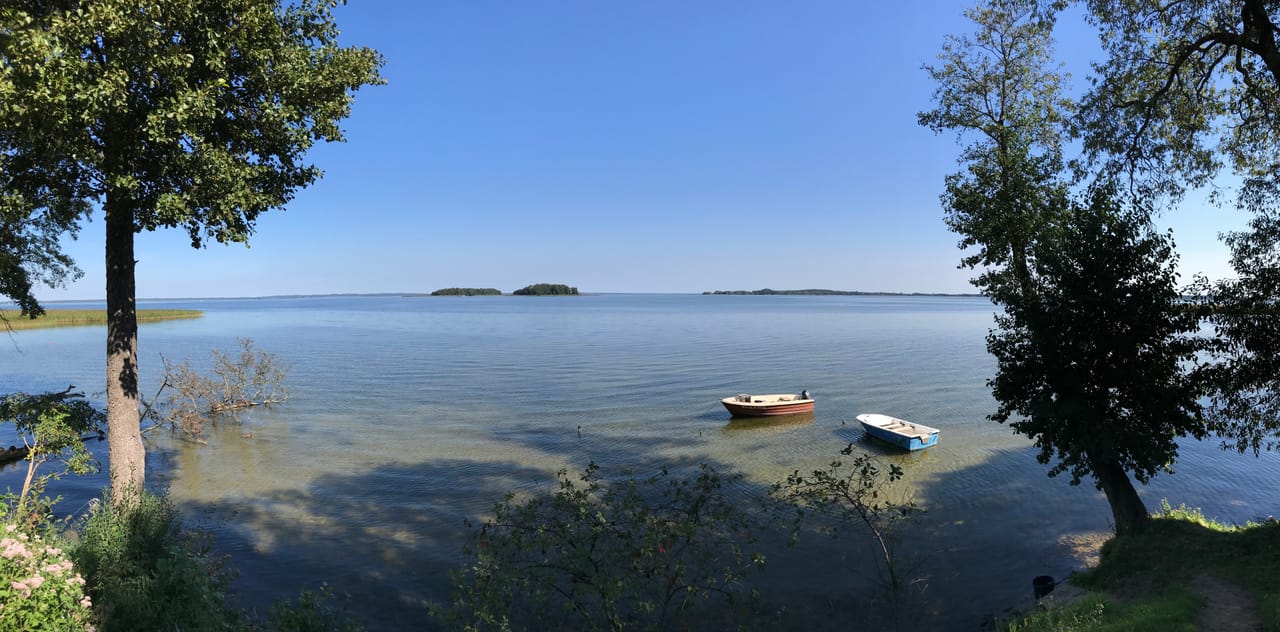
What not to miss
- 1The Buczyniec inclined planeThe museum and the engine room, with the water wheel that pulls the boats.
- 2Frombork hillThe fortified cathedral where Copernicus lies, above the Vistula Lagoon.
- 3Boyen FortressA 19th-century Prussian fort on the isthmus between two lakes, in Giżycko.
- 4The Łuknajno reserveA shallow lake that is home to up to 2,000 swans, a Unesco biosphere reserve since 1976.
- 5PranieThe forester’s lodge where the poet Gałczyński spent his summers, on the shore of Lake Nidzkie.
- 6The Krutynia and WojnowoA slow river under the trees, to float down in a punt from Krutyń; close by, Wojnowo has a monastery of Russian Old Believers.
Masuria in pictures
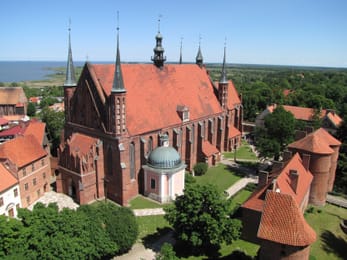
Frombork cathedral on its hill, above the Vistula Lagoon.
The Masurian table
With so many lakes, fish comes first: zander, pike, eel and sielawa, a small whitefish often eaten smoked. You also find dishes from the neighbouring Suwałki region, such as kartacze, large potato dumplings stuffed with meat.
Masurian sękacz is a cake baked on a spit, layer after layer, which grows a coat of spikes. It is on the list of traditional Polish products, as is the lime-blossom honey of the Borki Forest.
Loop from Olsztyn


 +17stops
- 1Izba Historii Kanału Elbląskiego · Katedra św. Mikołaja w Elblągu · Bazylika Archikatedralna Wniebowzięcia Najświętszej Maryi Panny i św. Andrzeja we Fromborku
- 2Zamek biskupów warmińskich w Lidzbarku Warmińskim · Zamek w Reszlu · Święta Lipka
- 3Wilczy Szaniec · Pałac w Sztynorcie · Kościół Świętych Piotra i Pawła w Węgorzewie
Free, no account needed — start from its places and make it yours.
Also worth reading
Wide open spaces
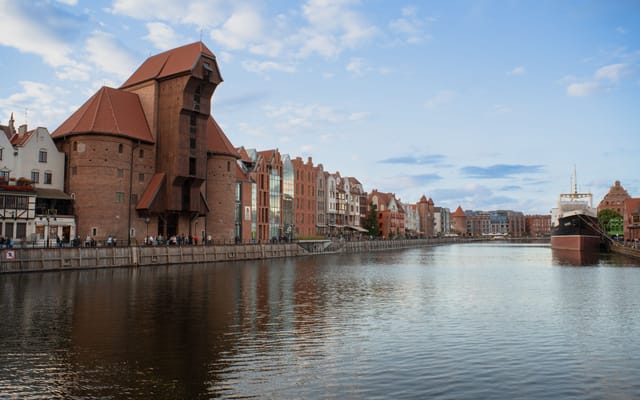
Gdańsk and the Baltic coast, from Malbork to the Łeba dunes
A red-brick city on the Motława, white sand beaches and a pine-covered peninsula 35 kilometres long. A six-day loop from Gdańsk, from Malbork Castle to the Łeba dunes.
Wide open spaces
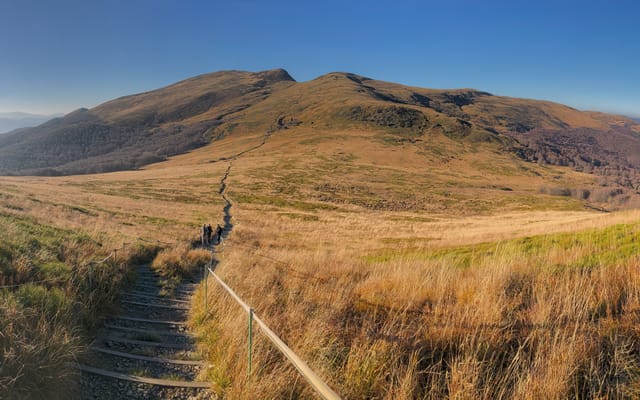
The Bieszczady, from wooden churches to the połoniny
In south-eastern Poland, on the borders with Slovakia and Ukraine, the Bieszczady are mountains of forest and high pasture, with few villages. A five-day circuit from Rzeszów, by way of Sanok, Lake Solina and the Great Bieszczady Loop.
Wide open spaces
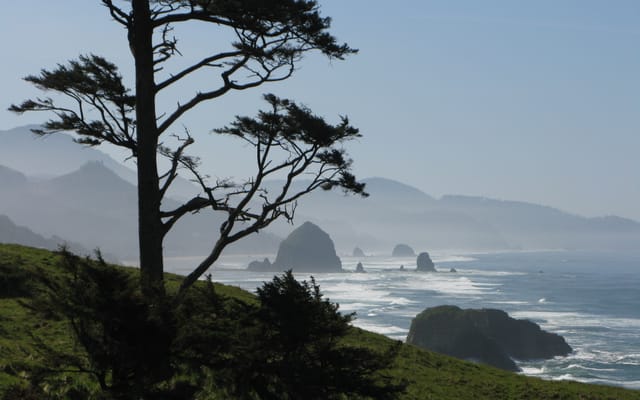
The Pacific Northwest, from the Olympic Peninsula to the Cascade volcanoes
Rainforests, a coast of headlands and lighthouses, redwoods and two active volcanoes. A two-week loop from Seattle, by way of the Olympic Peninsula, the Oregon coast and Mount Rainier.
A starting point, a few wishes — ViaLooma builds the trip day by day, map, stops and roadbook included.