Gdańsk and the Baltic coast, from Malbork to the Łeba dunes
A red-brick city on the Motława, white sand beaches and a pine-covered peninsula 35 kilometres long. A six-day loop from Gdańsk, from Malbork Castle to the Łeba dunes.
From Gdańsk to the Łeba dunes
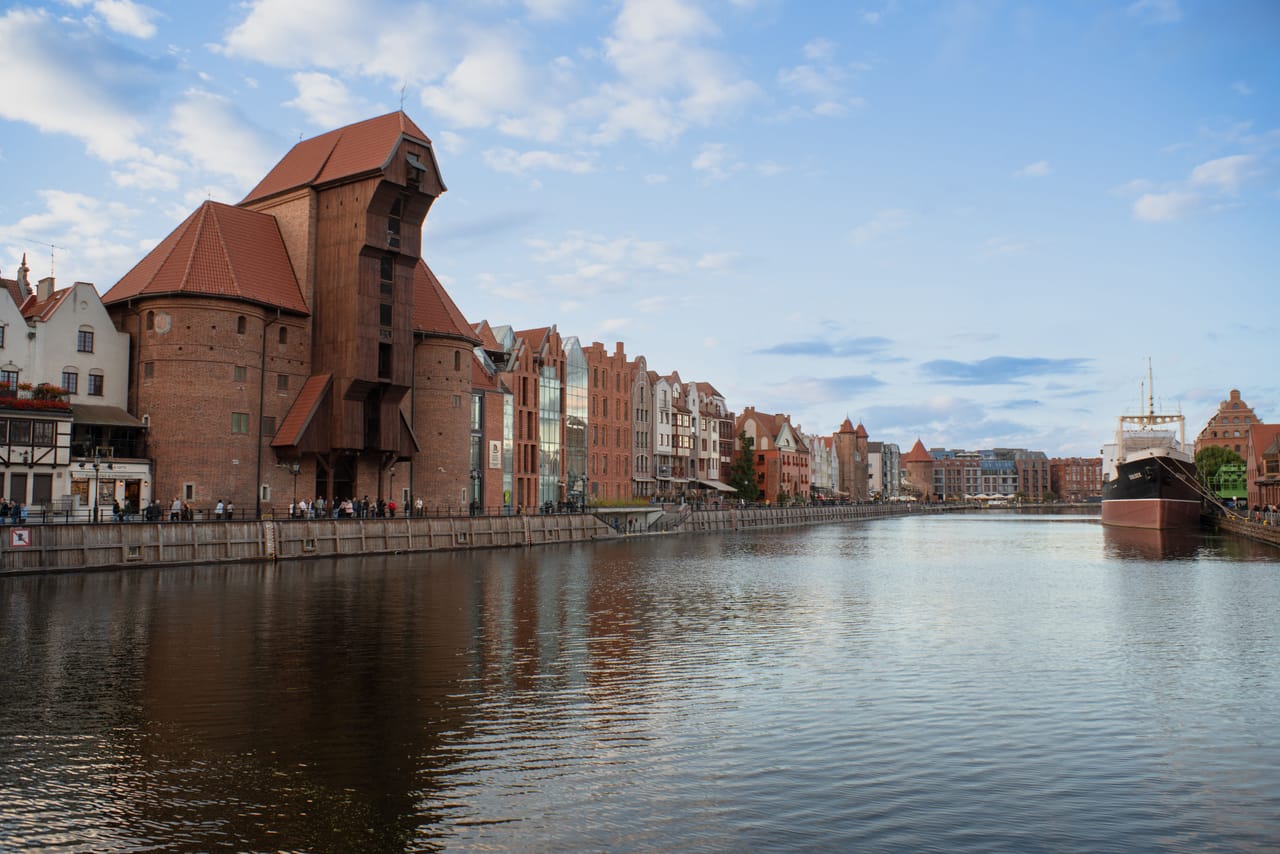
The journey starts in Gdańsk and follows the coast, from the Vistula Lagoon to Łeba. The old town is best seen on foot: the Długi Targ, a long square lined with merchants’ houses, then the quays of the Motława. Here stands the Żuraw crane, completed in 1444, the largest port crane in medieval Europe. Almost the whole district was rebuilt after 1945.
To the north, Sopot is a seaside resort with a wooden pier. Then a single road runs the length of the Hel Peninsula, a strip of sand and pines 35 kilometres long. In places, you can see the bay on one side and the open sea on the other. You pass through Jurata, a smart resort between the wars, before reaching Hel.
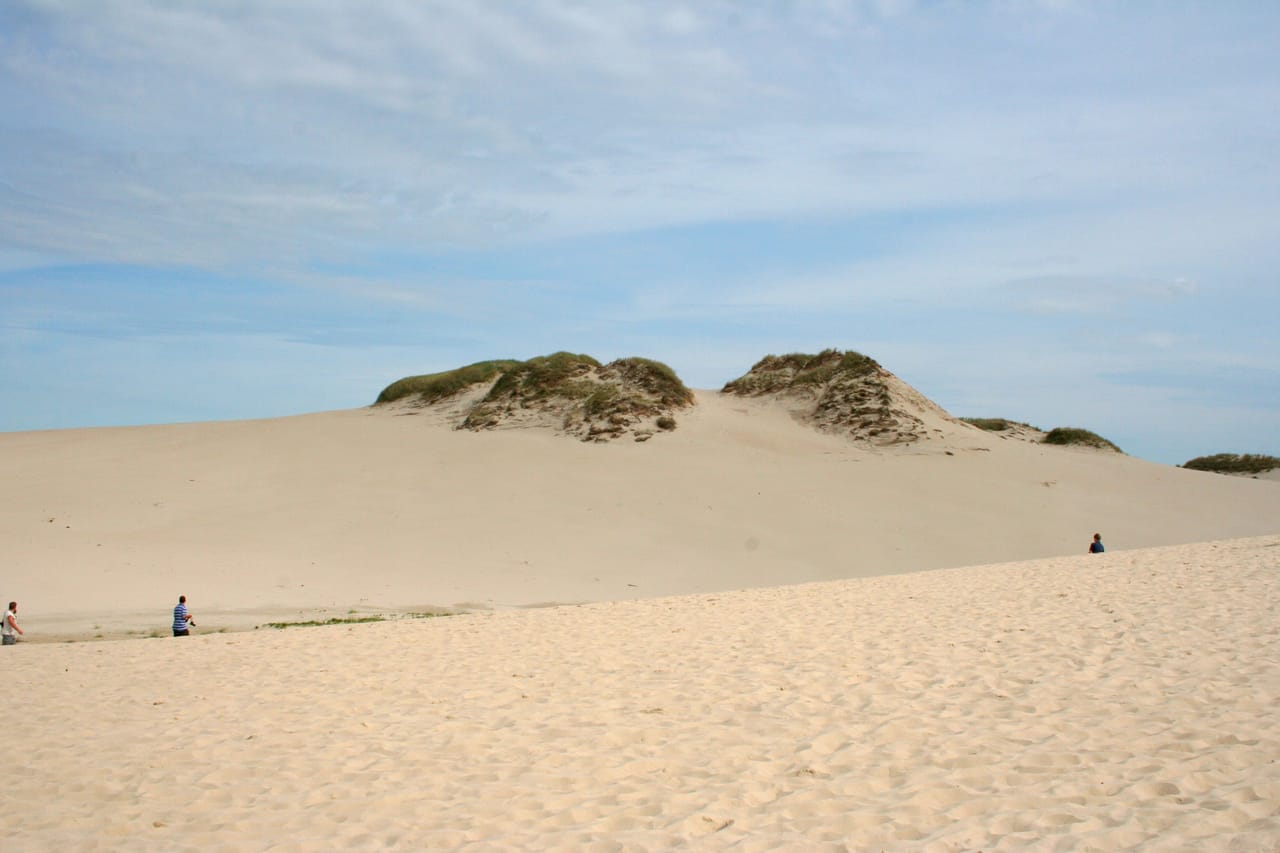
Further west, the road goes from lighthouse to lighthouse as far as Łeba. You leave the car at Rąbka and continue on foot, by bike or by electric shuttle to shifting dunes more than 30 metres high, which move a few metres a year. The way back crosses Kashubia, with its lakes and wooded hills. The western coast, from Kołobrzeg to Wolin, is another trip.
Malbork and the Teutonic Order
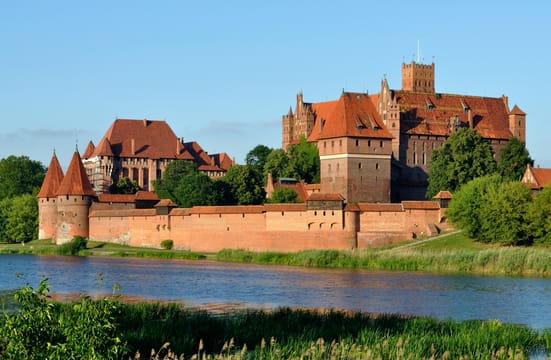
South of Gdańsk, Malbork is the largest castle in the world by surface area. The Teutonic Order, a German order of knight-monks, moved its Grand Master here in 1309. Unpaid mercenaries of the Order sold the castle to the King of Poland in 1457. Half destroyed in 1945, it was rebuilt and added to the Unesco World Heritage List in 1997. A visit takes about three hours; in summer, it is best to buy tickets online.
Like Malbork, the castles and towns that the Order built in the region are of red brick. It founded Elbląg in 1237. South-east of the town, on the Elbląg Canal, boats cross the hills on carriages that run on rails.
In Frombork, the cathedral looks out over the Vistula Lagoon. Nicolaus Copernicus was a canon there and wrote his book on the movement of the Earth around the Sun. His remains, identified by DNA in 2008, were buried there again in 2010.
Westerplatte, it is said, is where the Second World War began.
Gdańsk, from 1939 to Solidarność
On 1 September 1939, the German battleship Schleswig-Holstein opened fire on Westerplatte, a Polish military depot at the entrance to the harbour. Westerplatte, it is said, is where the Second World War began. The garrison held out for seven days. In the city, the Museum of the Second World War, opened in 2017, tells the story of the fighting and the lives of civilians. At Sztutowo, around 65,000 people died in the Stutthof camp, opened as early as 2 September 1939.
In August 1980, the workers of the Lenin Shipyard went on strike, with Lech Wałęsa among them. They won the right to form a free trade union, Solidarność. In front of Gate No. 2 of the shipyard, three steel crosses remember the workers killed in 1970. Next door, the European Solidarity Centre tells the story of the movement up to the end of communism in 1989.
Kashubian Ethnographic Park in Wdzydze
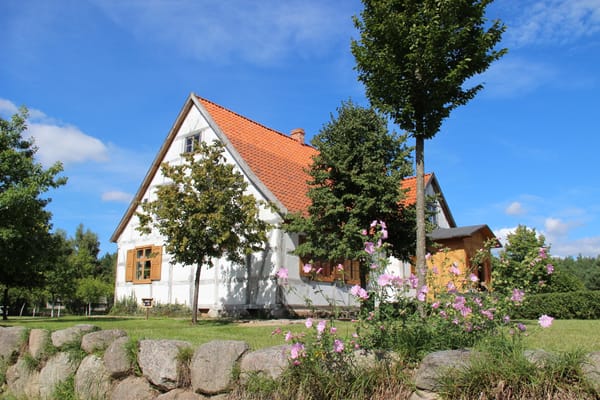
The oldest open-air museum in Poland, founded in 1906. Kashubian wooden farmhouses, manor houses, mills and churches have been rebuilt here on the shores of the Wdzydze lakes.
Practical notes
- When to go
- May to September. July and August bring the crowds; June and September are quieter.
- Getting there
- Airport at Gdańsk. By road, Gdańsk is about four hours from Warsaw.
- Access
- Everything is tarmac. Gdańsk’s old town is largely pedestrianised: park the van outside it. The only road to Hel gets jammed in summer and at weekends.
- Sleeping in a van
- Campsites on the Hel Peninsula, at Łeba and by the Kashubian lakes. Wild camping is banned in Słowiński National Park.
- Worth knowing
- No vignette, but the A1 between Gdańsk and Toruń is a toll road; e-TOLL above 3.5 tonnes. The Museum of the Second World War is closed on Mondays. Building work is under way at Westerplatte: part of the site is closed and only the visitor centre car park is open.
- Allow
- Six days for the loop, one more for the Elbląg Canal.
What not to miss
- 1St Mary’s BasilicaOne of the largest brick churches in the world; its tower rises above the rooftops.
- 2The Oliwa organAn 18th-century organ with moving angels, played during short concerts.
- 3Sopot pierThe longest wooden pier in Europe, running 458 metres out into the bay.
- 4The Dar PomorzaA three-masted ship from 1909, the “White Frigate”, moored in Gdynia.
- 5The Hel FokariumGrey seals cared for by the University of Gdańsk’s marine station.
- 6Kartuzy and SzymbarkA church with a coffin-shaped roof, then a house built upside down.
Gdańsk and the Baltic coast in pictures
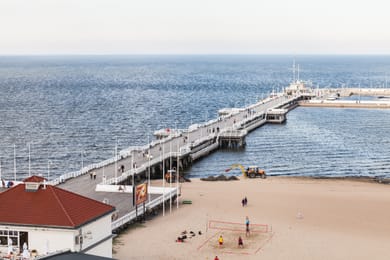
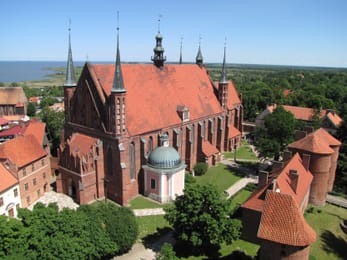
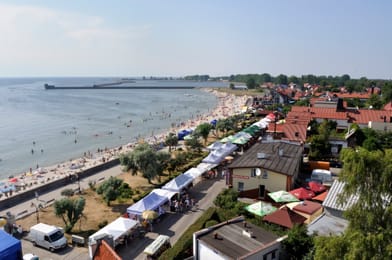
The wooden pier at Sopot, reaching out into the Bay of Gdańsk.
The Baltic table
On the coast, people eat smoked fish: herring, flounder or sprats, sold at the smokehouses of Hel and Łeba. In Kashubia, the cooking is based on the potato and on goose.
In Gdańsk, try Goldwasser, a herbal liqueur with flakes of gold floating in it, created in the city at the end of the 16th century. On Mariacka Street, shops sell Baltic amber.
Loop from Gdansk


 +17stops
- 1Długi Targ · Bazylika konkatedralna Wniebowzięcia Najświętszej Maryi Panny w Gdańsku · Brama Żuraw · Europejskie Centrum Solidarności
- 2Zamek w Malborku · Brama Targowa w Elblągu · Bazylika Archikatedralna Wniebowzięcia Najświętszej Maryi Panny i św. Andrzeja we Fromborku
- 3Stutthof · Muzeum II Wojny Światowej w Gdańsku · Pomnik Obrońców Wybrzeża
Free, no account needed — start from its places and make it yours.
Also worth reading
Wide open spaces
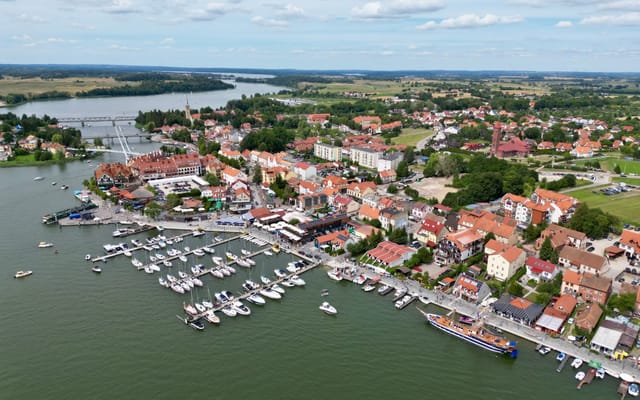
Masuria, the land of a thousand lakes
In north-eastern Poland, Masuria has more than 2,000 lakes, linked by rivers and canals, in the middle of the forests. This trip goes round the region in six days from Olsztyn, from the Elbląg Canal to the Great Lakes, by way of the brick castles of Warmia.
Wide open spaces
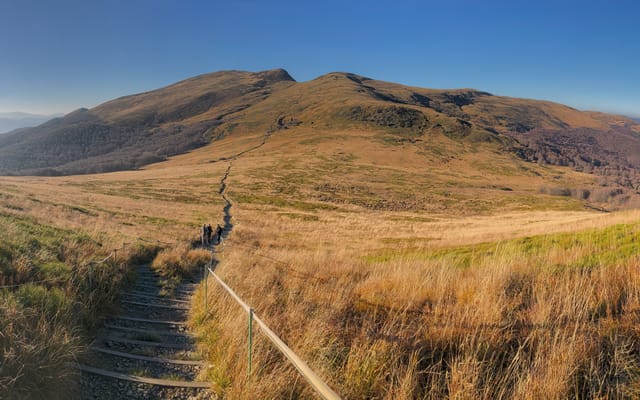
The Bieszczady, from wooden churches to the połoniny
In south-eastern Poland, on the borders with Slovakia and Ukraine, the Bieszczady are mountains of forest and high pasture, with few villages. A five-day circuit from Rzeszów, by way of Sanok, Lake Solina and the Great Bieszczady Loop.
Wide open spaces
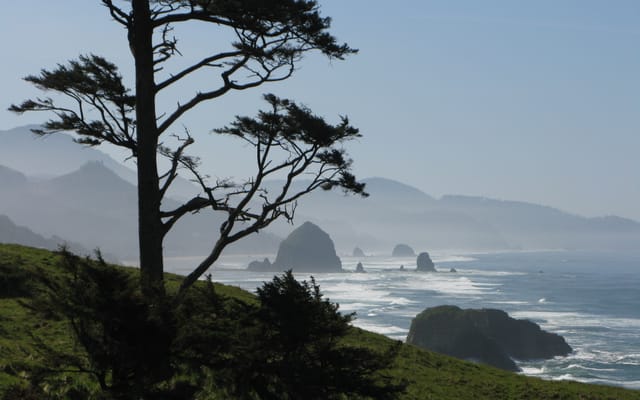
The Pacific Northwest, from the Olympic Peninsula to the Cascade volcanoes
Rainforests, a coast of headlands and lighthouses, redwoods and two active volcanoes. A two-week loop from Seattle, by way of the Olympic Peninsula, the Oregon coast and Mount Rainier.
A starting point, a few wishes — ViaLooma builds the trip day by day, map, stops and roadbook included.