Zeeland, from Middelburg to the Delta dykes
Zeeland is the province of islands and dykes, in the south-west of the Netherlands. This five-day loop from Middelburg follows the coast, crosses the dams of the Delta Works and passes under the Scheldt to Sluis.
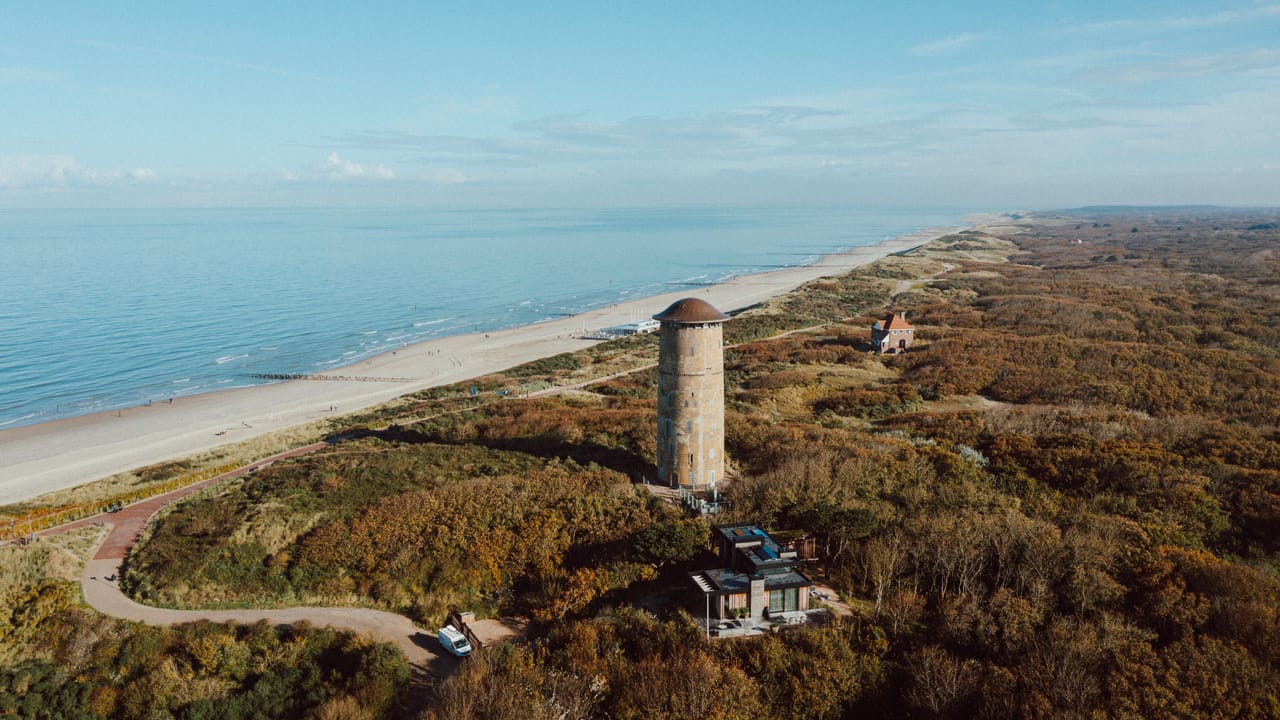
From island to island, along the dykes
Zeeland is flat land, made of islands joined by dykes. You drive between ruler-straight polders, at the foot of dykes taller than the rooftops. The N57 runs over the dams of the Delta Works, between the North Sea and the inland waters. At the Brouwersdam, kitesurfers set off from the beach.
On the island of Walcheren, the coast alternates between dunes and beaches, from Zoutelande to Domburg. At Westkapelle, it is a dyke that holds back the sea. Further east, Veere and Zierikzee have kept their old harbours and their gabled houses. The Zeeland Bridge, 5 kilometres long, crosses the Eastern Scheldt.
In the south, the Westerschelde Tunnel runs under the estuary for 6.6 kilometres. On the other side, Zeelandic Flanders borders Belgium. Sluis and Hulst have kept their ramparts, Aardenburg is the oldest town in the province, and the dunes of Cadzand lead all the way to the Zwin.
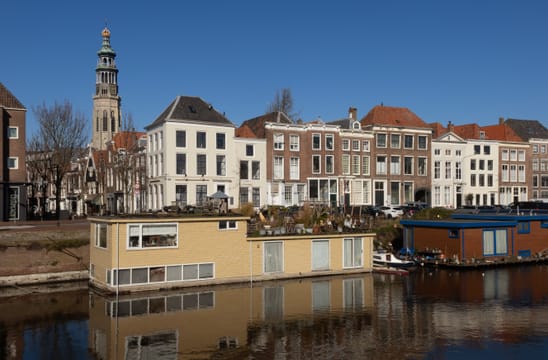
Middelburg, the East India Company town
In the 17th century, Middelburg was home to the Zeeland chamber of the Dutch East India Company, the VOC. It was the largest after Amsterdam’s: it put up a fifth of the capital and sent four of the seventeen directors. The old town huddles around the abbey, founded in 1127 by canons from Antwerp. Its tower, the Lange Jan, can be seen from far across the plain. Today the abbey houses the provincial government and the Zeeuws Museum.
On the Markt, the Gothic town hall was built between 1452 and 1520 by the Keldermans, a family of architects from Mechelen. On 17 May 1940, a fire destroyed much of the old centre; of the town hall, only the walls were left. Restored, it reopened in 1950.
Near Vlissingen, Fort Rammekens, built in 1547, guarded the entrance to the channel leading to Middelburg. The VOC ships waited near the fort for a fair wind. It is the oldest sea fort still standing in Western Europe.
The VOC ships waited near the fort for a fair wind.
The 1953 storm and the Delta Works
On the night of 31 January to 1 February 1953, a storm and a spring tide broke through the dykes. The water killed 1,836 people in the Netherlands, nearly half of them in Zeeland. At Ouwerkerk, the last breach was closed in November with four Phoenix caissons, built for the artificial harbours of the Normandy landings. Today they house the flood museum, the Watersnoodmuseum.
The Delta Works then dammed the sea inlets. For the Eastern Scheldt, a solid dam was planned. Fishermen and environmentalists opposed it, and an open barrier was chosen instead, opened by Queen Beatrix on 4 October 1986: 62 gates, lowered only in heavy weather. The tide still flows in, and with it the salt water that the mussels and oysters live on. The American Society of Civil Engineers lists these works, along with those on the Zuiderzee, among the seven wonders of the modern world.
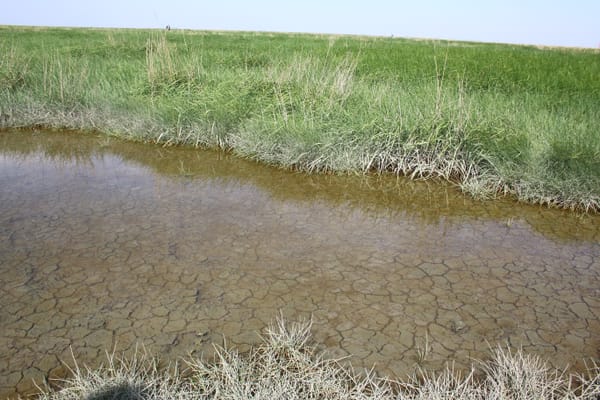
Verdronken Land van Saeftinghe
A land almost swallowed by the sea in 1570, then flooded on purpose in 1584, during the war against Spain. Today it is a salt marsh of 3,580 hectares. The heart of the marsh can only be visited on a guided tour, depending on the tide, from the visitor centre at Emmadorp; its edges are open to all.
Practical notes
- When to go
- May to September: summer for the beaches, May, June and September for quieter roads.
- Getting there
- Middelburg is about an hour and a quarter from Rotterdam and Antwerp, and four and a half hours from Paris.
- Access
- Everything is tarmac. The Westerschelde Tunnel has been free since 30 December 2024 for vehicles under 3 metres high. Above that, lorries and buses still pay; for a taller motorhome, it is best to check first. The Vlissingen–Breskens ferry takes only foot passengers and bikes.
- Sleeping in a van
- Wild camping is banned in the Netherlands, and many beach car parks are closed to motorhomes at night. Plenty of campsites from Cadzand to Renesse.
- Worth knowing
- The dykes and the Zeeland Bridge are very exposed to the wind. In Veere, Zierikzee and Sluis, park outside the centre; Sluis is packed on Sundays.
- Allow
- Five days for the loop, one more for Saeftinghe and the beaches.
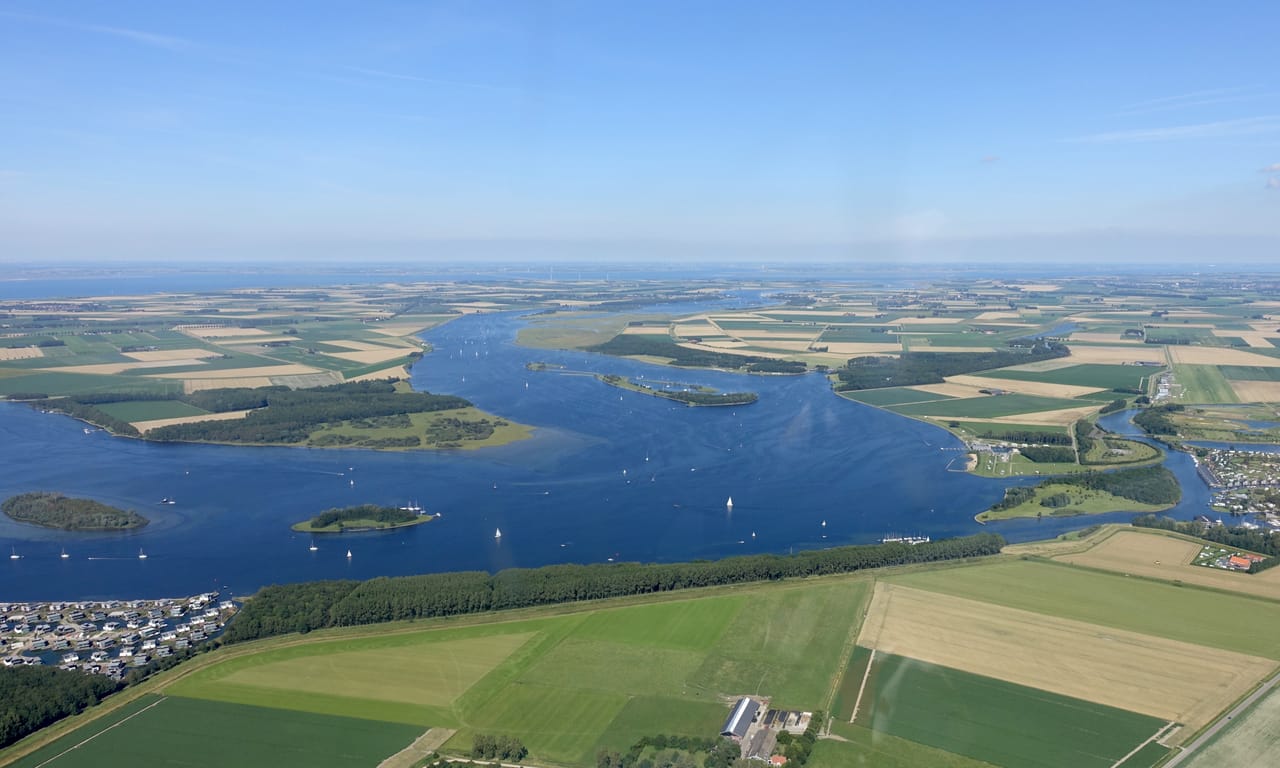
What not to miss
- 1VeereThe port where Scottish merchants had to land from 1541 to 1799, with its gabled houses and its great church.
- 2ZierikzeeAn old harbour guarded by two gates, and the Dikke Toren, left unfinished at 62 metres.
- 3Westkapelle HoogThe tower of a 15th-century church, turned into a lighthouse; the church burned down in 1831.
- 4DomburgThe third-oldest seaside resort in the country, where Mondrian painted the dunes.
- 5Neeltje JansIn the middle of the barrier, the Deltapark explains the Delta Works.
- 6SluisRamparts and the only belfry in the Netherlands, rebuilt after the war.
Zeeland in pictures
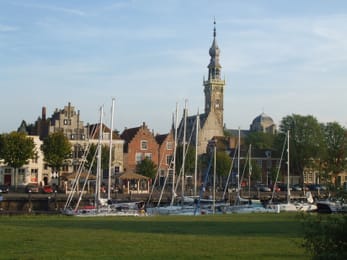
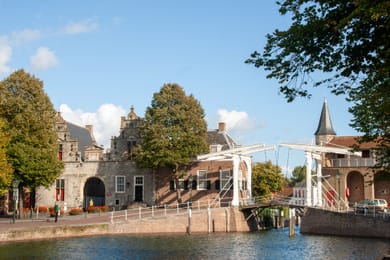
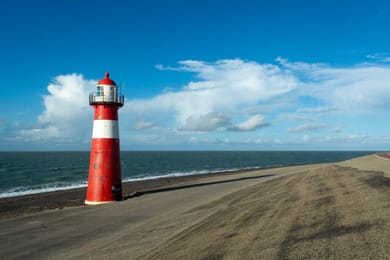
Veere from the water, its gabled houses and the tower of the town hall.
The Zeeland table
Yerseke has lived off mussels since the 15th century and off oysters since around 1870. The oyster beds stretch out at the foot of the dyke, and the village is home to the only mussel auction in the Netherlands. The mussel festival, Mosseldag, takes place on the third Saturday of August.
Samphire grows on the edge of the salt marshes and is served with fish. With your coffee, have a Zeeuwse bolus, a bun rolled into a spiral in brown sugar. It is said to come from the Sephardic Jewish bakers who settled in Middelburg in the 17th century.
Loop from Middelburg


 +17stops
- 1Stadhuis van Middelburg · Abdij van Middelburg · Fort Rammekens · Gevangentoren
- 2Zoutelande · Westkapelle Hoog · Domburg · Veere
- 3Oosterscheldekering · Renesse · Brouwersdam · Zierikzee
Free, no account needed — start from its places and make it yours.
Also worth reading
Wide open spaces
The Pacific Northwest, from the Olympic Peninsula to the Cascade volcanoes
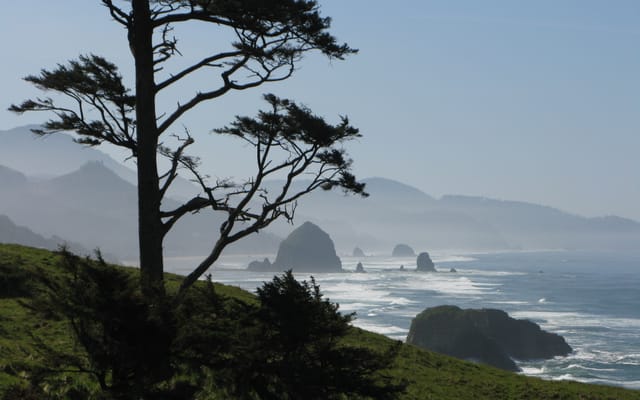
Rainforests, a coast of headlands and lighthouses, redwoods and two active volcanoes. A two-week loop from Seattle, by way of the Olympic Peninsula, the Oregon coast and Mount Rainier.
Wide open spaces
Vancouver Island, from Victoria to the beaches of Tofino
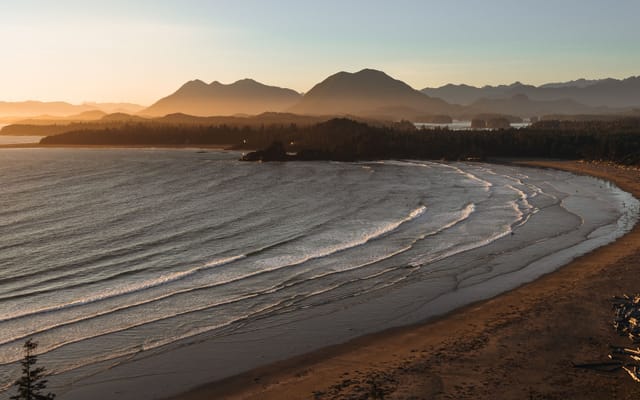
An island of giant forests, beaches pounded by the Pacific and small harbours where boats leave to see orcas. Nine days on a loop from Victoria, from Port Renfrew to Tofino and up to Telegraph Cove.
Wide open spaces
The Great Ocean Road, from Melbourne to Port Fairy
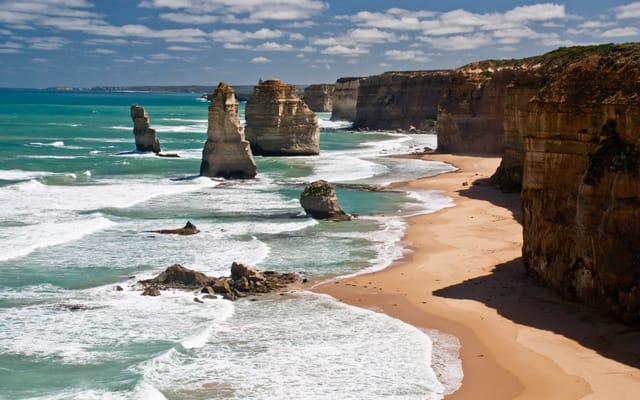
A road cut into the cliffs of southern Australia, between surf beaches, rainforest and limestone stacks. Five days from Melbourne to Port Fairy, sleeping by the sea.
A starting point, a few wishes — ViaLooma builds the trip day by day, map, stops and roadbook included.