Sicily, from golden mosaics to Greek temples
Greeks, Carthaginians, Arabs and Normans all coveted this island, and each left their mark: Doric temples, golden mosaics, Baroque towns rebuilt after an earthquake. Eleven days on a loop from Palermo, by way of Etna, Syracuse and the salt pans of the west.
Round the island
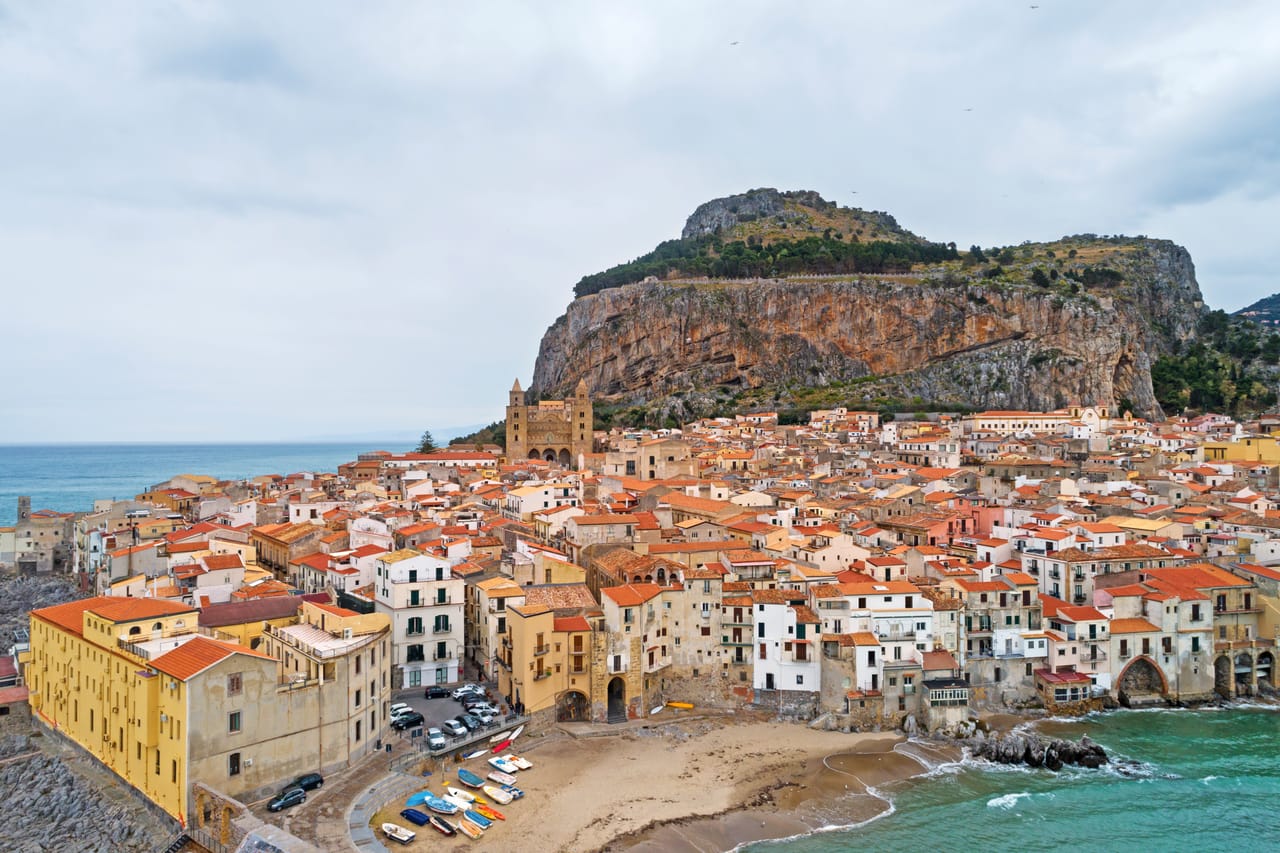
The loop starts in Palermo and mostly keeps to the coast. It passes Etna and Syracuse, then comes back along the south and the west. At Cefalù, the old town and its Norman cathedral are squeezed between the Rocca crag and the beach. In an hour’s drive, you go from a Greek temple to a Norman church or a Baroque town.
In Palermo, the Normans, who arrived in Sicily in 1061, blended Byzantine, Arab and Latin art. In the Norman Palace, the Palatine Chapel sets Byzantine mosaics beneath a wooden ceiling painted in the Islamic tradition. Above the city, Monreale Cathedral, built in the 1170s, is covered with more than 6,000 square metres of gold mosaics. Together with Cefalù Cathedral and other monuments in Palermo, they have been listed as a World Heritage Site since 2015.
After Taormina, a road climbs Etna to the Rifugio Sapienza, at around 1,900 metres, at the foot of the Silvestri craters, born in 1892. The volcano rises above 3,300 metres; every eruption changes its height. Sicilians call it ’a Muntagna, the Mountain. Etna has been a World Heritage Site since 2013.
The Val di Noto, rebuilt in Baroque
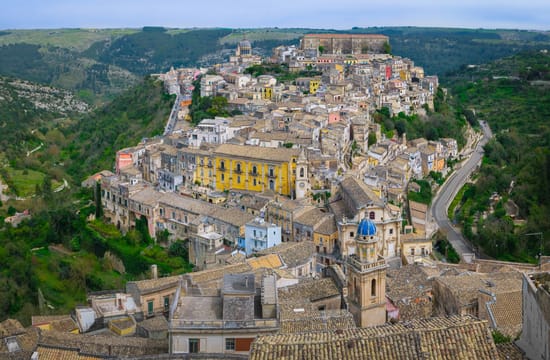
In January 1693 an earthquake destroyed the south-east of the island. The towns were rebuilt in the style of the day, Baroque: honey-coloured limestone façades, balconies propped on carved masks. Noto was rebuilt on a new site. Ragusa split in two: Ibla, the old town on its spur, was rebuilt where it stood, and a new town grew up on higher ground. Eight towns in this area have been on the World Heritage list since 2002.
Catania is one of the eight. In 1669, lava from Etna surrounded its castle. After the 1693 earthquake, the city was rebuilt in lava stone.
In Caltagirone, since the 1950s, the 142 steps of the Scalinata have been faced with majolica, a painted ceramic.
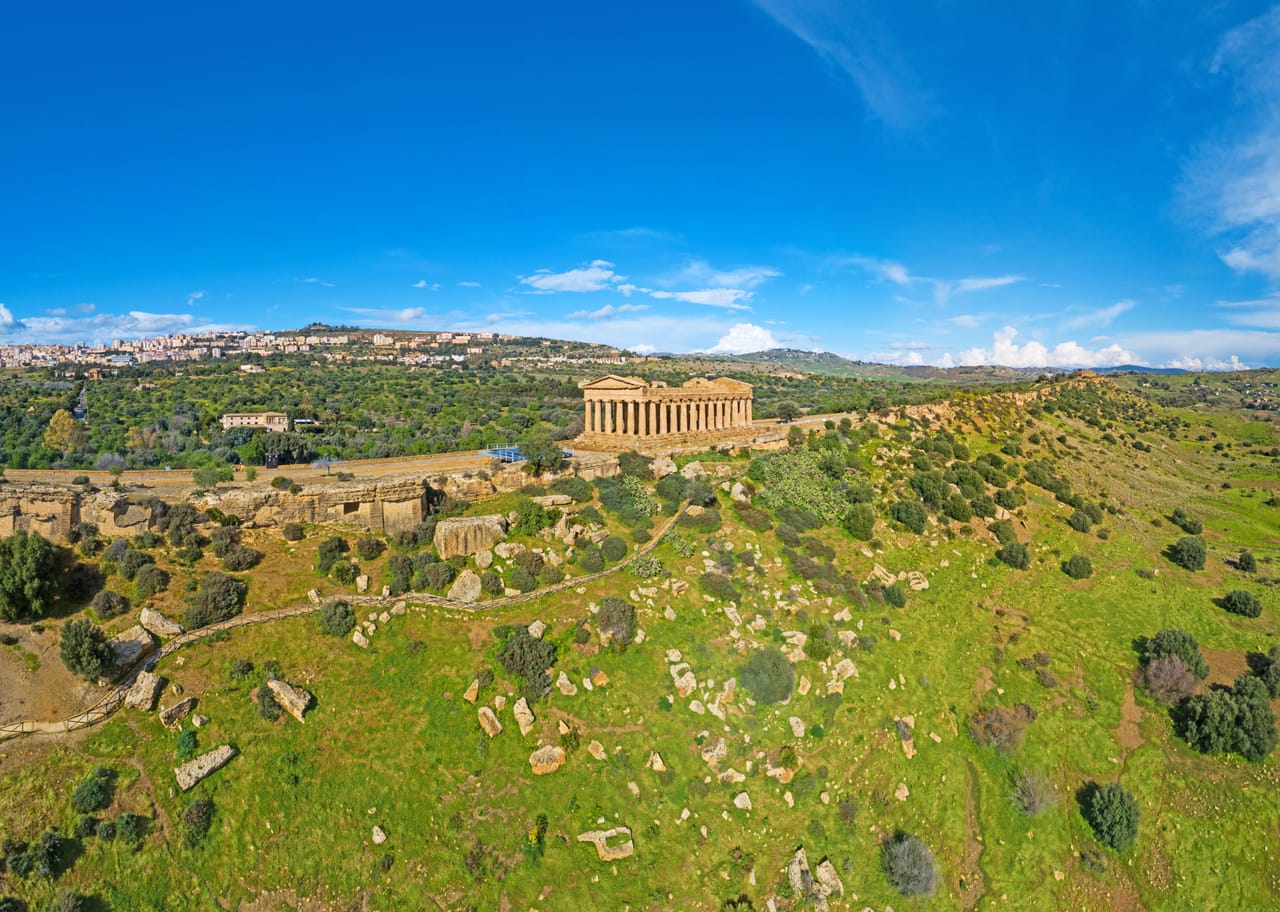
The Temple of Concordia is still standing because it was turned into a church.
The Greek cities
The Greeks were founding cities in Sicily from the 8th century BC, facing the Phoenician trading posts in the west. Founded around 733 BC by settlers from Corinth, Syracuse stood up to Athens. In 413 BC the Athenian army was defeated, and its prisoners were shut up in the city’s stone quarries, the latomie. Caravaggio is said to have named one of them the Ear of Dionysius: the tyrant, so the story goes, later listened in on his captives there. On the island of Ortigia, the cathedral is built into a temple of Athena.
The poet Pindar called Agrigento the most beautiful city of mortals. Its temples stand in a line along a ridge, south of the modern town. The Temple of Concordia is still standing because it was turned into a church. Selinunte, destroyed by Carthage in 409 BC, still has its ruined temples facing the sea. At Segesta, a city of the Elymians, a Doric temple was, it seems, never given a roof.
Cretto di Burri
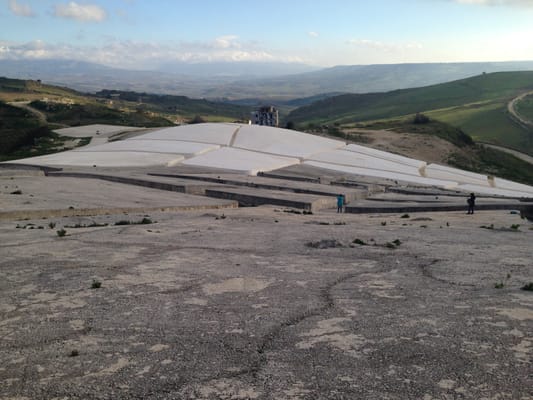
The 1968 earthquake destroyed Gibellina, which was rebuilt elsewhere. Over the ruins, Alberto Burri poured a huge sheet of white concrete. Its fissures follow the old streets, and you can walk through them. The new town, an open-air museum, is Italy’s Capital of Contemporary Art for 2026.
Practical notes
- When to go
- April to June, then September and October. Summer is scorching inland and packed on the coast.
- Getting there
- There is no bridge: fly to Palermo, take a ferry from Genoa, Livorno, Civitavecchia, Naples or Salerno, or cross the Strait of Messina from Villa San Giovanni. The trip starts in Palermo, crossing not included.
- Access
- Everything is tarmac. The roads on Etna can close during an eruption.
- Sleeping in a van
- Campsites on the coast and on Etna. At Taormina and Ragusa Ibla, leave the van outside the centre; at Erice, the cable car from Trapani, closed in November and from January to March, spares you the hairpin road.
- Worth knowing
- Most historic centres are ZTLs, limited-traffic zones watched by cameras: park at the edge.
- Allow
- Eleven days to go round the island, two weeks with Favignana or the Aeolian Islands.
What not to miss
- 1The theatre at TaorminaAn ancient theatre with Etna and the sea as its backdrop; below, the islet of Isola Bella.
- 2The Villa Romana del CasaleSome 3,500 square metres of 4th-century mosaics, among them the women athletes in bikinis.
- 3The Scala dei TurchiA stepped cliff of white marl, open for twenty-minute visits, booked and ticketed in advance.
- 4The salt pans of TrapaniWindmills and mounds of salt; in the Stagnone lagoon, the Phoenician island of Motya, reached by boat.
- 5EriceA medieval hill town perched at 750 metres, often wrapped in mist.
- 6The Zingaro reserveSeven kilometres of coast without a road, to be explored on foot from Scopello.
Sicily in pictures
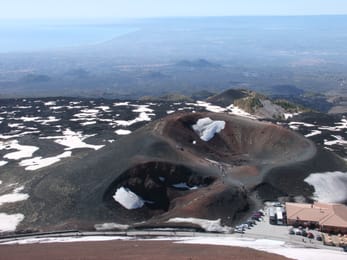
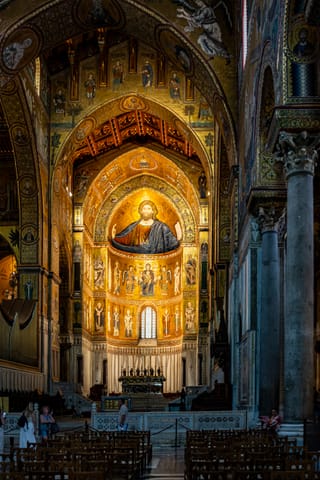
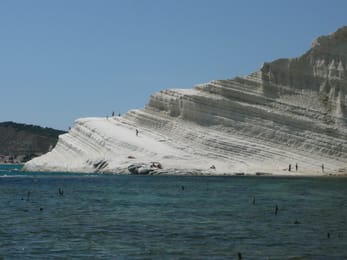
The Silvestri craters on the southern slope of Etna; below them, the Rifugio Sapienza and the plain of Catania.
The Sicilian table
In Palermo, people eat in the street: chickpea panelle, pane ca’ meusa with veal spleen, and the arancina, which turns masculine — arancino — in Catania. In the east, in summer, breakfast is a granita with a brioche. In Modica, chocolate is worked cold and crunches between the teeth.
The Arabs brought sugar cane and citrus fruit, and perhaps the name of the cassata. Trapani serves fish couscous, and Marsala its wine, which the English merchant John Woodhouse made famous from 1773.
Loop from Palermo


 +28stops
- 1Cattedrale di Palermo · Palazzo dei Normanni · Ballarò · Chiesa della Martorana
- 2Duomo di Monreale · Villa Palagonia · Solunto · Duomo di Cefalù
- 3Teatro Greco di Tindari · Teatro antico di Taormina
Free, no account needed — start from its places and make it yours.
Also worth reading
Wide open spaces
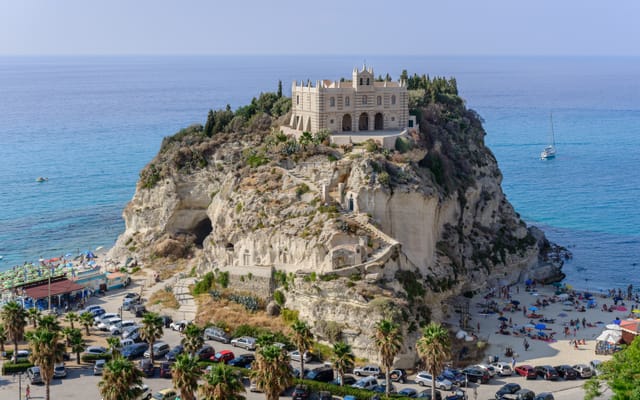
Calabria, from the Costa degli Dei to the forests of the Sila
The toe of the boot, caught between two seas with barely a plain to its name: from the cliffs of Tropea to Scilla’s rock, from the temples of Magna Graecia to the pines of the Sila. A week-long loop from Lamezia Terme, first along the coast, then up into the mountains.
Coast and islands
The Amalfi Coast, from Vesuvius to Ravello
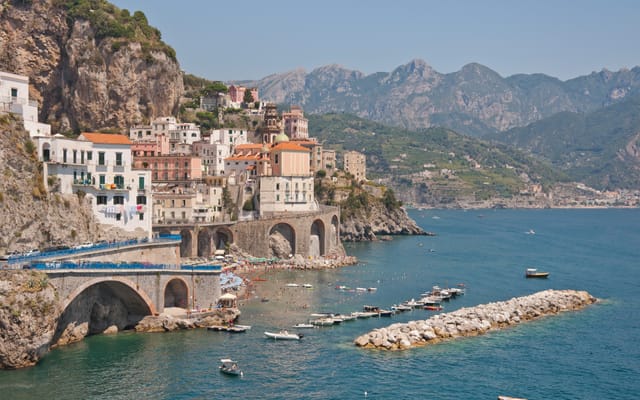
Vesuvius and the towns it buried in AD 79, then the Amalfi Coast, its terraced villages and its lemon trees above the sea. Five days on a loop from Naples, from Pompeii to Ravello.
Coast and islands
The Cinque Terre and the Riviera di Levante, from Genoa to the Gulf of Poets
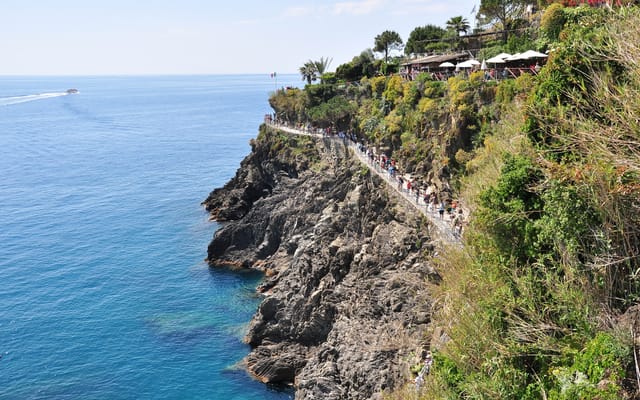
East of Genoa, the mountains fall into the sea and the coast becomes a string of headlands, tiny harbours and terraced vineyards. Five days from Genoa to Lerici, by way of Portofino, the five villages of the Cinque Terre and the Gulf of Poets.
A starting point, a few wishes — ViaLooma builds the trip day by day, map, stops and roadbook included.