The Cinque Terre and the Riviera di Levante, from Genoa to the Gulf of Poets
East of Genoa, the mountains fall into the sea and the coast becomes a string of headlands, tiny harbours and terraced vineyards. Five days from Genoa to Lerici, by way of Portofino, the five villages of the Cinque Terre and the Gulf of Poets.
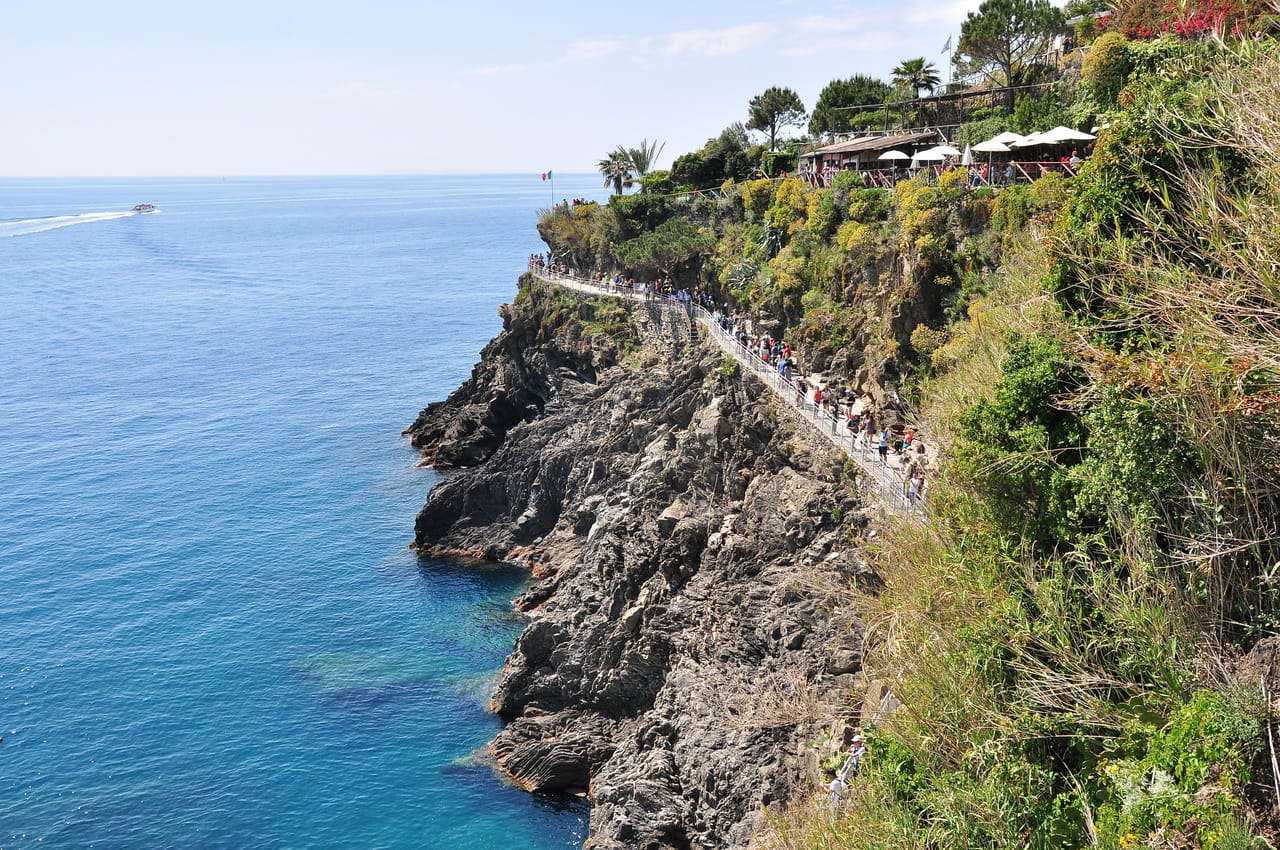
The coast from Genoa to Lerici
The road along the Riviera di Levante runs high on the cliffs, then drops down to small harbours with painted houses. Camogli, Portofino, Sestri Levante, then the five villages of the Cinque Terre follow one another along the coast.
The trip starts in Genoa. The Porto Antico, redesigned by Renzo Piano in 1992, can be explored on foot. On the harbour stands the Lanterna, a lighthouse 77 metres tall. The Rolli palaces, including those on Via Garibaldi, are on Unesco’s World Heritage list. The republic drew lots to choose which one would lodge each of its distinguished guests.
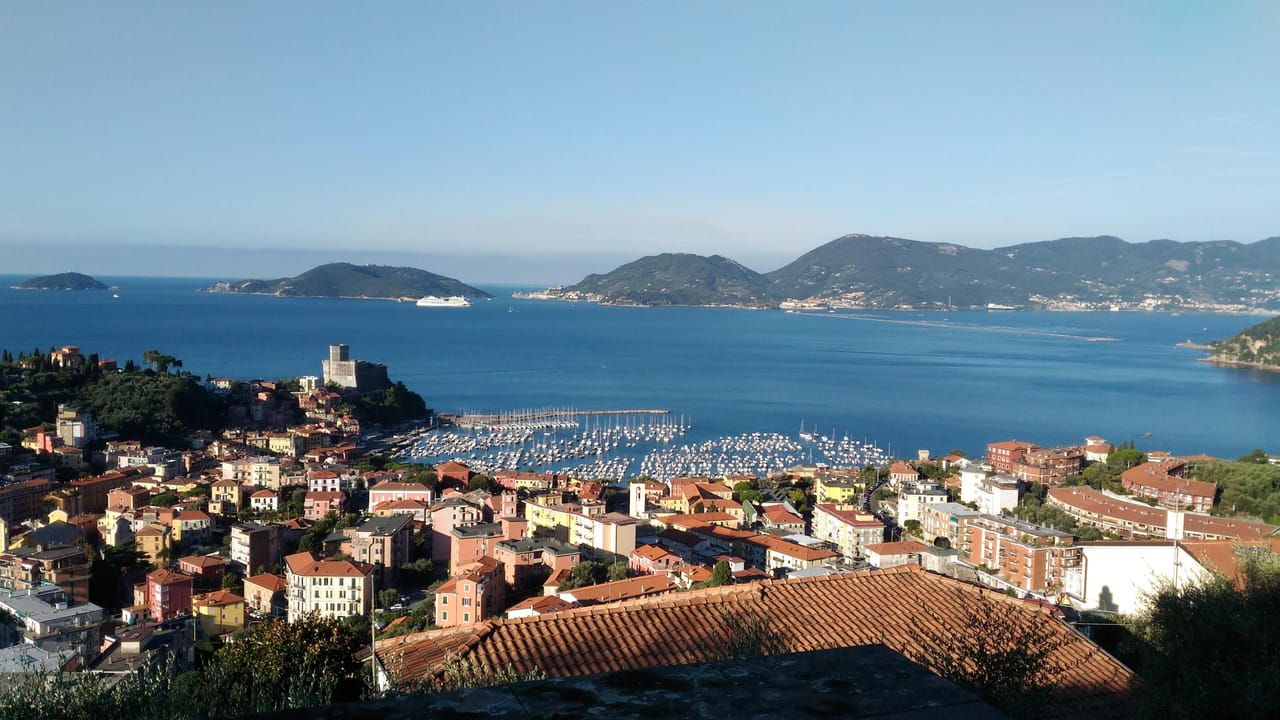
At the end of the road, the Gulf of Poets opens out between Portovenere and Lerici. The writer Sem Benelli gave it this name in 1910. Shelley had settled in Lerici; he drowned in July 1822 while sailing back from Livorno. At the western tip of the gulf, Portovenere has its church of San Pietro, with black-and-white bands.
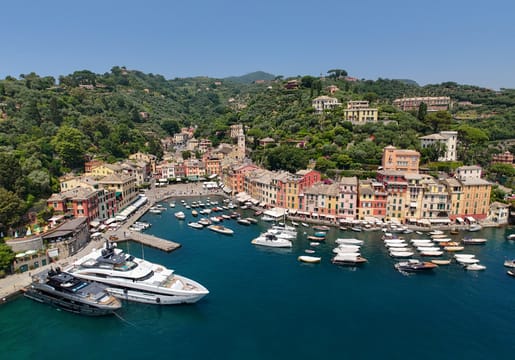
Portofino and its headland
Portofino still lived off its fishing when the British discovered it in the 19th century. In 1867 the British consul Montague Yeats-Brown bought the fortress above the harbour. It has been known ever since as the Castello Brown. In 1958 Fred Buscaglione sang ‘Love in Portofino’; Johnny Dorelli, then Dalida, made it a hit. The village has stayed small: a few narrow streets packed around the harbour.
On the other side of the headland, Camogli, ‘the town of a thousand white sailing ships’, lines up its tall, colour-washed façades above the harbour. Between Camogli and Portofino, the abbey of San Fruttuoso can only be reached on foot or by boat.
By car, you arrive along the ridge road, and finish on foot.
The Cinque Terre, a terraced cliff
From Monterosso to Riomaggiore, the locals cut the slope into terraces, held up by dry-stone walls, for vines and olive trees. Unesco listed this landscape in 1997. Corniglia is the only one of the five that does not touch the sea: it sits on a headland, 377 steps up from its station. The poet Montale spent his summers in Monterosso. His collection ‘Cuttlefish Bones’ grew out of these landscapes.
The railway, opened in 1874, ended the villages’ isolation. The road did not reach Riomaggiore until the 1960s. Even today, locals take the train from one village to the next, in tunnels under the mountain. By car, you arrive along the ridge road, and finish on foot. These slopes remain fragile: in October 2011, a flood buried Vernazza and Monterosso in mud.
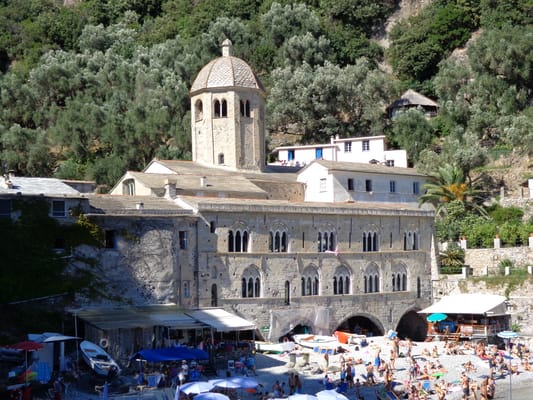
San Fruttuoso Abbey
A Benedictine abbey at the back of a cove with no road: you come by sea, or on foot along the headland path. Seven members of the Doria family lie beneath the cloister. In the bay, 17 metres down, the Christ of the Abyss, a bronze statue, has stood on the seabed since 1954.
Practical notes
- When to go
- April to June, then September and October. Summer swamps the villages; in autumn, weather alerts sometimes close the paths.
- Getting there
- Genoa has an airport and is about two hours from Milan or Turin. At the far end of the trip, La Spezia, near Lerici, has a railway station and car-hire firms.
- Access
- Historic centres are often ZTLs, limited-traffic zones watched by cameras: park at the edge. In the Cinque Terre, the ridge road is narrow and slow.
- Sleeping in a van
- In Genoa, the Porto Antico car parks turn motorhomes away; the Rio Park at Riomaggiore has a 1.95-metre height limit. The La Zorza car park, between Riomaggiore and Manarola, takes motorhomes by day. For the night, sleep at the campsites in Levanto, then reach the villages by train.
- Worth knowing
- A Cinque Terre Card is compulsory on the coastal path. The Via dell’Amore must be booked and is walked in one direction only. As of late October 2026, the Manarola–Corniglia section remains closed; Corniglia–Vernazza–Monterosso is open. Check the state of the paths with the National Park before you set off.
- Allow
- Five days from Genoa to Lerici, six with a day’s walking.
What not to miss
- 1Via GaribaldiIn Genoa, a dozen Rolli palaces on a single street, the Palazzo Rosso among them.
- 2BoccadasseA fishing hamlet of colourful houses in the east of Genoa, for the sunset.
- 3Camogli’s fish festivalOn the second Sunday in May, fish is fried in a giant pan down on the harbour.
- 4The Bay of SilenceIn Sestri Levante, a small cove lined with houses, a stone’s throw from the centre.
- 5VernazzaA square on the harbour, beneath the round tower of the Doria castle.
- 6The Via dell’AmoreA path about a kilometre long, cut into the cliff, from Riomaggiore to Manarola, reopened in 2024.
The Riviera di Levante in pictures
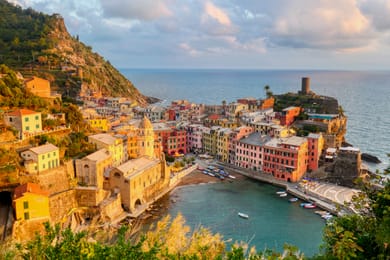
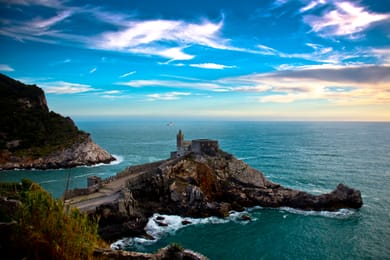
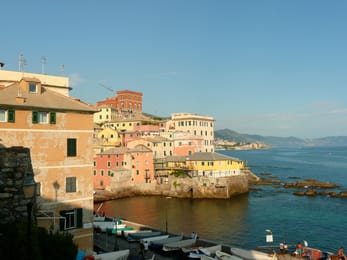
Vernazza in golden light: the harbour, the church of Santa Margherita and the tower of the Doria castle.
The Ligurian table
Liguria cooks with little. Pesto is pounded in a mortar with Genoese basil, pine nuts, garlic, cheese and olive oil; it coats the trofie pasta. Focaccia is eaten from breakfast onwards; the one from Recco, filled with fresh cheese, has PGI status. Farinata, a chickpea flatbread, is sold by the slice.
From the sea come the anchovies of Monterosso, preserved in salt. From the vines comes sciacchetrà, the sweet wine of the Cinque Terre, made from grapes left to dry after the harvest.
Genoa → Lerici


 +14stops
- 1Acquario di Genova · Palazzo Rosso · Cattedrale di San Lorenzo · Boccadasse
- 2Camogli · Portofino · Santa Margherita Ligure
- 3Sestri Levante · Levanto · Monterosso al Mare
Free, no account needed — start from its places and make it yours.
Also worth reading
Wide open spaces
Calabria, from the Costa degli Dei to the forests of the Sila
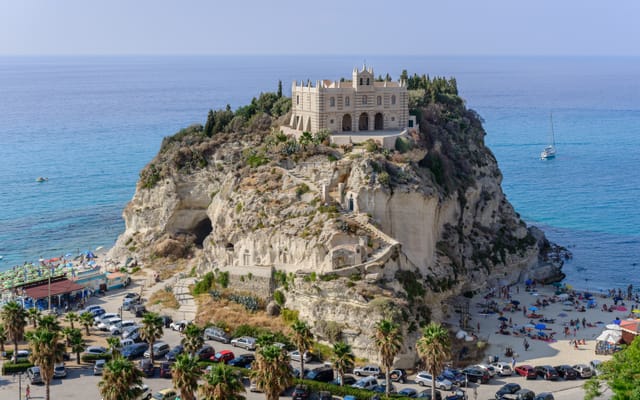
The toe of the boot, caught between two seas with barely a plain to its name: from the cliffs of Tropea to Scilla’s rock, from the temples of Magna Graecia to the pines of the Sila. A week-long loop from Lamezia Terme, first along the coast, then up into the mountains.
Coast and islands
The Amalfi Coast, from Vesuvius to Ravello
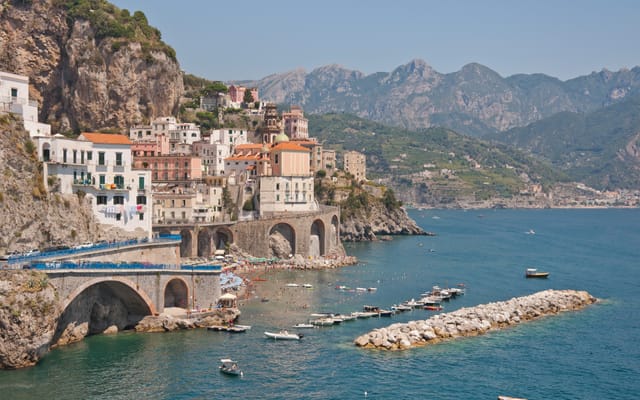
Vesuvius and the towns it buried in AD 79, then the Amalfi Coast, its terraced villages and its lemon trees above the sea. Five days on a loop from Naples, from Pompeii to Ravello.
Coast and islands
Sicily, from golden mosaics to Greek temples
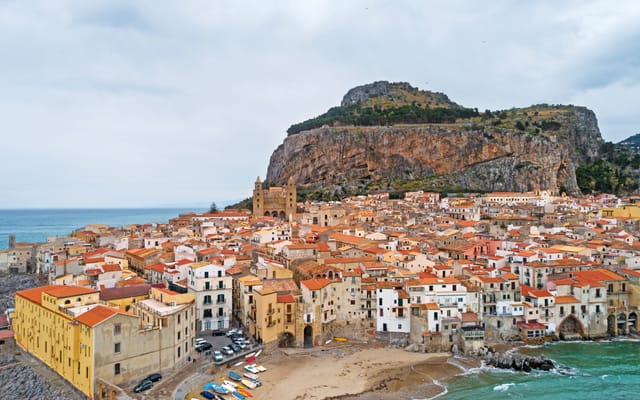
Greeks, Carthaginians, Arabs and Normans all coveted this island, and each left their mark: Doric temples, golden mosaics, Baroque towns rebuilt after an earthquake. Eleven days on a loop from Palermo, by way of Etna, Syracuse and the salt pans of the west.
A starting point, a few wishes — ViaLooma builds the trip day by day, map, stops and roadbook included.