Calabria, from the Costa degli Dei to the forests of the Sila
The toe of the boot, caught between two seas with barely a plain to its name: from the cliffs of Tropea to Scilla’s rock, from the temples of Magna Graecia to the pines of the Sila. A week-long loop from Lamezia Terme, first along the coast, then up into the mountains.
From the sea to the mountains
In Calabria, the road keeps switching between the sea and the mountains. The region is a narrow peninsula between the Tyrrhenian and the Ionian Seas, and plains cover less than a tenth of it. The loop first follows the west coast, runs along the Strait of Messina facing Sicily, reaches the Ionian coast, then climbs up to the forests of the Sila.
At the start, the Costa degli Dei strings together fifty-five kilometres of sand and coves between Pizzo and Nicotera. In Pizzo, the Aragonese castle bears the name of Joachim Murat, Napoleon’s brother-in-law and former King of Naples. Murat landed at Pizzo on 8 October 1815 to win back his kingdom; arrested the same day, he was shot at the castle five days later.
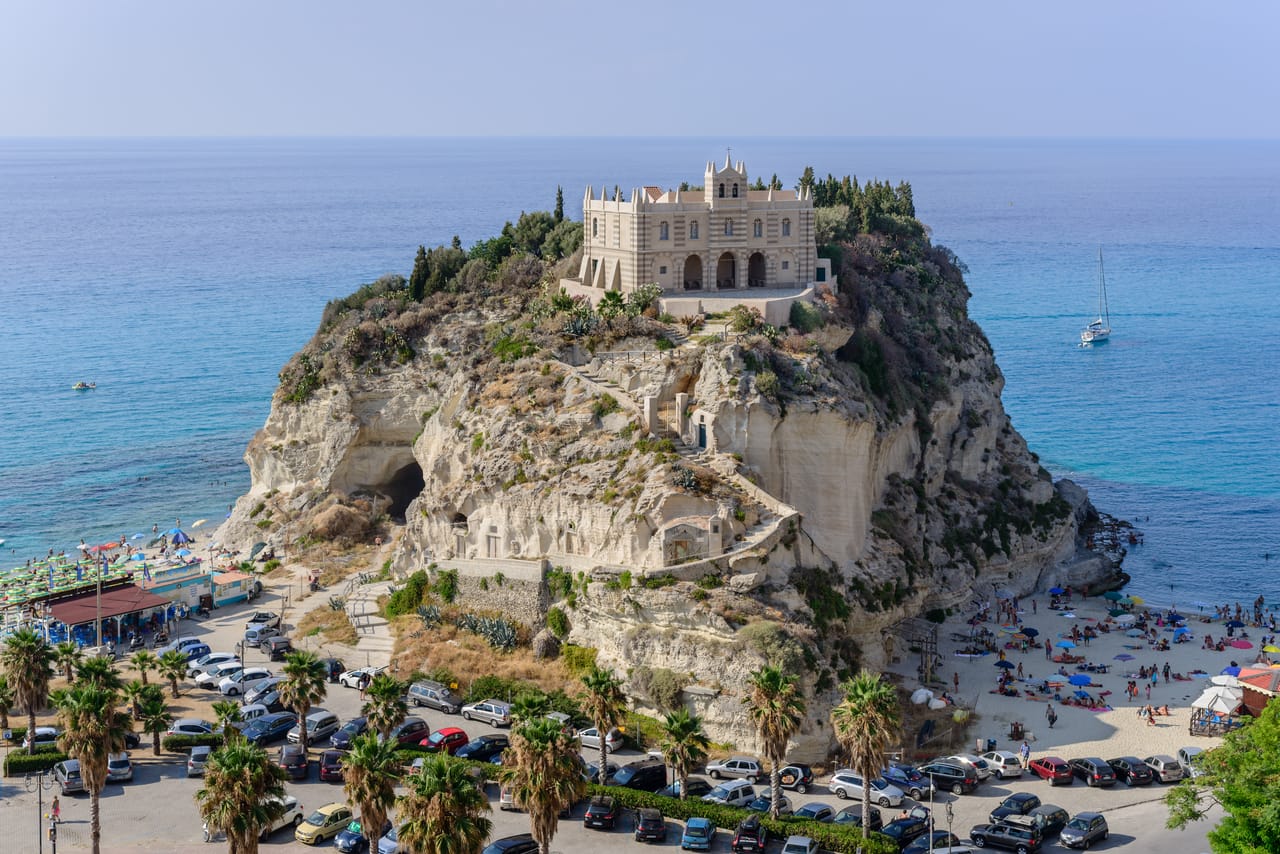
Further south, Tropea is built on the edge of a cliff; legend has it that Hercules founded it. Below the town, the sanctuary of Santa Maria dell’Isola stands on a rock that was once an island. From Capo Vaticano, on clear days, you can see the Aeolian Islands, led by Stromboli.
Scilla and Magna Graecia
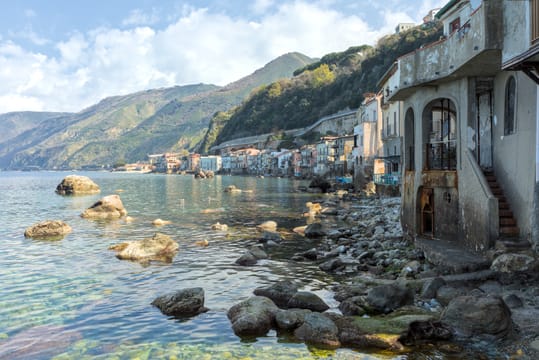
In Book XII of the Odyssey, Odysseus must pass between two monsters: Scylla, hidden in her rock, and Charybdis, the whirlpool on the opposite shore. The Strait of Messina has kept its currents, and Scilla its rock, topped by the Castello Ruffo. At the foot of the castle, the houses of Chianalea, the fishermen’s quarter, are built right at the water’s edge. Swordfish are still hunted here by harpoon: a lookout up the mast, the harpooner out at the end of a long gangway.
The whole Ionian coast was once Greek. On 16 August 1972, off Riace, an amateur diver spotted a dark arm poking out of the sand. It belonged to one of two Greek bronze warriors from the 5th century BC that had remained on the seabed. The Riace bronzes now stand in the museum at Reggio Calabria, behind a climate-controlled airlock.
At Locri, tradition holds that Zaleucus drew up the first written law code of the Greek world. At Kaulon, the foundations of a Doric temple stand at the water’s edge. The language outlasted the temples. Around Bova, in the Aspromonte, a few villages still speak Grecanico.
The language outlasted the temples.
From Gerace to the Sila
To escape raids from the sea, the people of Locri gradually withdrew to a rock inland: it would become Gerace. Further north, the Cattolica of Stilo is a small Byzantine church with five domes. It is a reminder that Calabria long prayed in Greek. St Bruno, founder of the Grande Chartreuse, died in 1101 in the Serre, the neighbouring mountains.
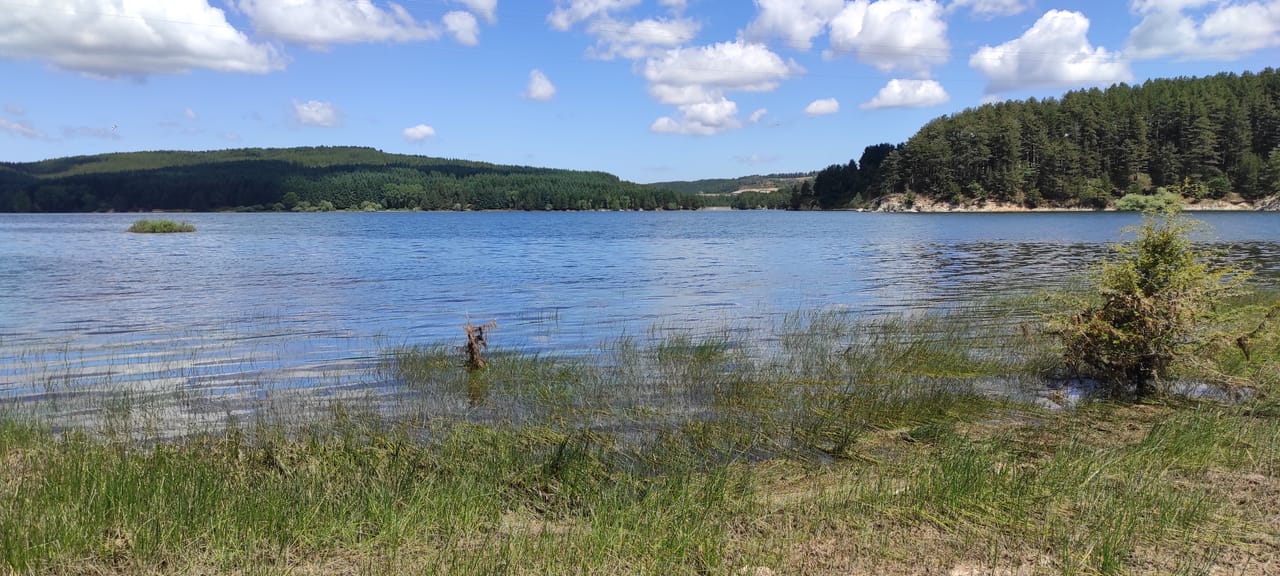
In the centre of the region, the Sila — the Romans’ Silva Brutia — is a high plateau of laricio pines, beeches and reservoirs. The abbot Joachim of Fiore, whom Dante placed in Paradise, founded his monastery here at the end of the 12th century.
Capo Colonna
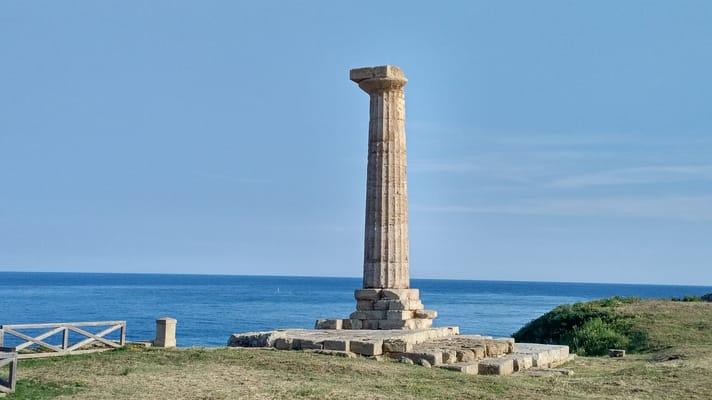
On this headland battered by the Ionian Sea, the Temple of Hera Lacinia ranged six Doric columns across its front and fourteen down each side; just one still stands. According to Livy, Hannibal dedicated an altar here inscribed with an account of his campaigns, in Punic and in Greek.
Practical notes
- When to go
- May and June, then September and October. In August the coast is packed; the Sila stays cool.
- Getting there
- Airport at Lamezia Terme. Naples is nearly four hours away, on the A3 then the A2, toll-free from Salerno.
- Access
- Everything is tarmac. Historic centres are often ZTLs, limited-traffic zones watched by cameras: park outside them. The SS106 along the Ionian coast is slow.
- Sleeping in a van
- Campsites and motorhome aires (aree di sosta) on both coasts, fewer in the Sila. Narrow roads up to Gerace, Stilo and Pentedattilo.
- Worth knowing
- The Reggio museum is closed on Mondays. The Giganti della Sila reserve has been closed until further notice since July 2026, after two trees came down; the nearby Casino Mollo is still open.
- Allow
- A week for the loop, eight days with an extra night in Tropea.
What not to miss
- 1The Chiesetta di PiedigrottaA church carved into the tuff beside the beach at Pizzo, peopled with statues hewn from the rock.
- 2Reggio’s LungomareA seafront promenade facing Sicily and Etna, said to be ‘the most beautiful kilometre in Italy’.
- 3PentedattiloAn almost deserted village at the foot of a hand-shaped rock. Legend sees it as the bloodied hand of a murderous baron.
- 4Le CastellaThe Aragonese fortress on its islet, and the statue of Uluç Ali, a local boy who rose to be grand admiral of the Ottoman fleet.
- 5Santa SeverinaA castle of Norman origin on its spur, and the only Byzantine baptistery in Calabria to survive almost intact.
- 6Cosenza CathedralThe funerary monument of Isabella of Aragon, Queen of France, who died in Calabria in 1271 on her way back from the crusade to Tunis.
Calabria in pictures
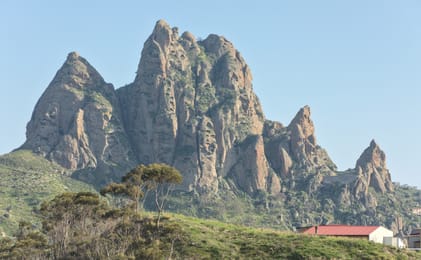
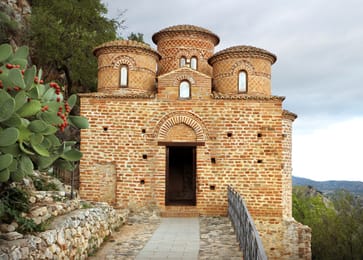
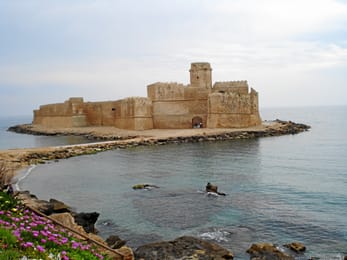
The five-fingered rock of Pentedattilo.
The Calabrian table
Calabria cooks with chilli. It goes into the ’nduja of Spilinga, a smoked pork sausage so soft you spread it on bread. Tropea’s red onion is eaten raw, and in Pizzo the tartufo, a hazelnut ice cream with a chocolate centre, was born in the 1950s.
Along the Strait, swordfish is eaten in a panino. The province of Reggio grows around 80% of the world’s bergamot, the citrus that scents eau de Cologne. In the Sila, it is caciocavallo cheese and autumn porcini; the red wine comes from Cirò, on the Ionian coast.
Loop from Lamezia Terme


 +21stops
- 1Chiesetta di Piedigrotta · Castello Murat · Grotte Zungri · Tropea
- 2Santuario di Santa Maria dell'Isola · Faro di Capo Vaticano · Monte Sant'Elia · Chianalea di Scilla
- 3Castello Ruffo · Museo archeologico nazionale di Reggio Calabria · Lungomare Falcomatà · Pentedattilo
Free, no account needed — start from its places and make it yours.
Also worth reading
Wide open spaces
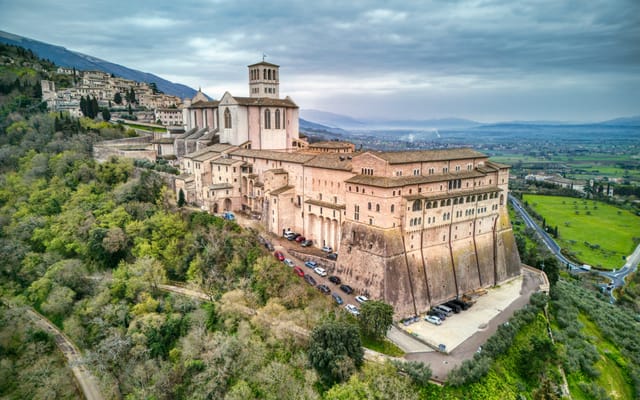
Umbria, from Assisi to the Piano Grande
Umbria has no sea and no border. It is a region of hilltop towns, saints and mountains in the middle of Italy. This trip covers it in a week from Perugia, from Assisi to the Piano Grande and on to Orvieto.
Wide open spaces
The Pacific Northwest, from the Olympic Peninsula to the Cascade volcanoes
Rainforests, a coast of headlands and lighthouses, redwoods and two active volcanoes. A two-week loop from Seattle, by way of the Olympic Peninsula, the Oregon coast and Mount Rainier.
Wide open spaces
Vancouver Island, from Victoria to the beaches of Tofino
An island of giant forests, beaches pounded by the Pacific and small harbours where boats leave to see orcas. Nine days on a loop from Victoria, from Port Renfrew to Tofino and up to Telegraph Cove.
A starting point, a few wishes — ViaLooma builds the trip day by day, map, stops and roadbook included.