Crete, from Knossos to Balos
Greece’s largest island mixes Minoan palaces, Venetian harbours, gorges and pink-sand beaches. This nine-day trip starts in Heraklion and ends in Chania, by way of Lasithi, the south coast and the far west.
From the plateaus to the Libyan Sea
A single main road runs along the north coast; almost everywhere else, the roads wind. You climb to the Lasithi plateau, an enclosed plain at 840 metres, where around 10,000 white-sailed windmills once pumped water for the fields. Then the road drops towards the Libyan Sea, crosses the olive groves of the Messara and reaches Matala, where caves are cut into the cliff.
Further west, the road to Sfakia plunges in hairpin bends along the Imbros Gorge, facing the sea. At the bottom, Frangokastello, a square Venetian castle, sits on a beach.
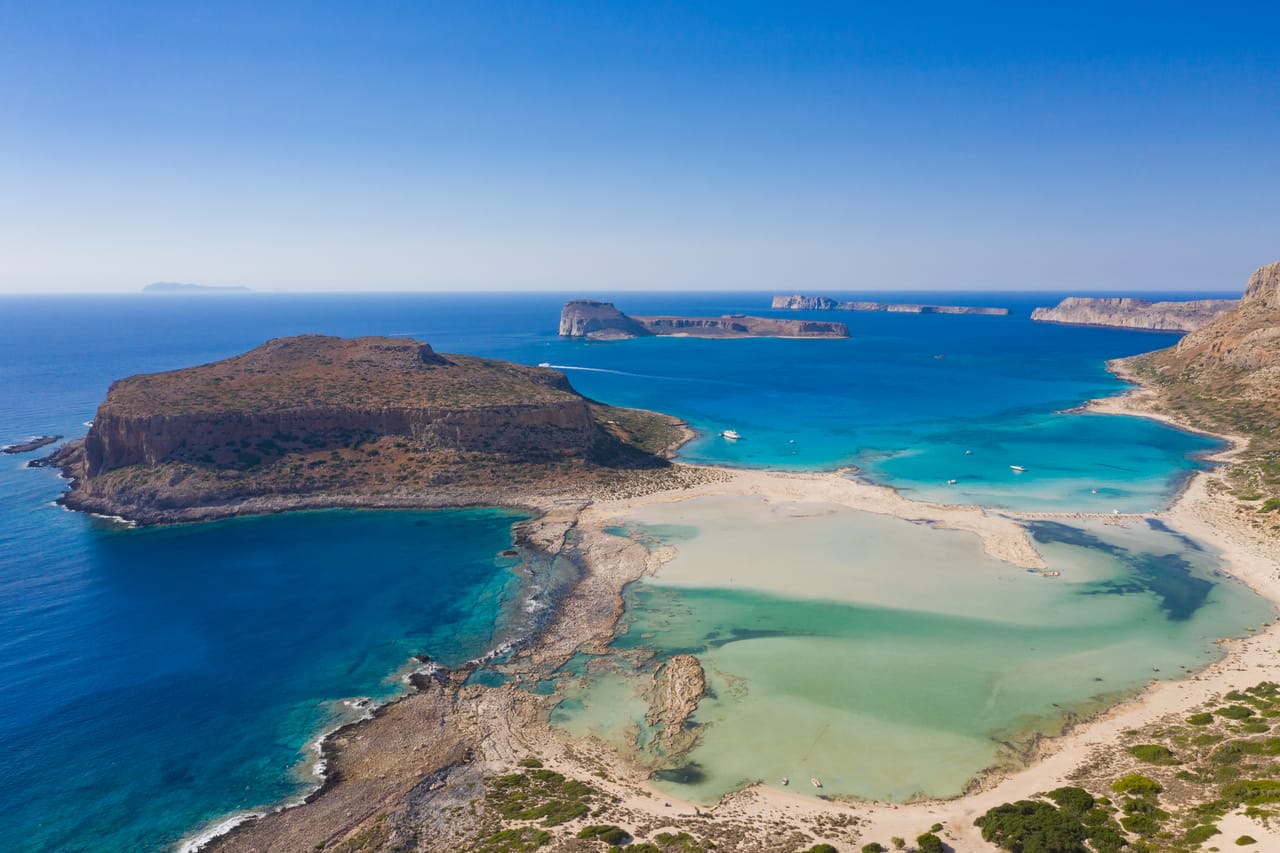
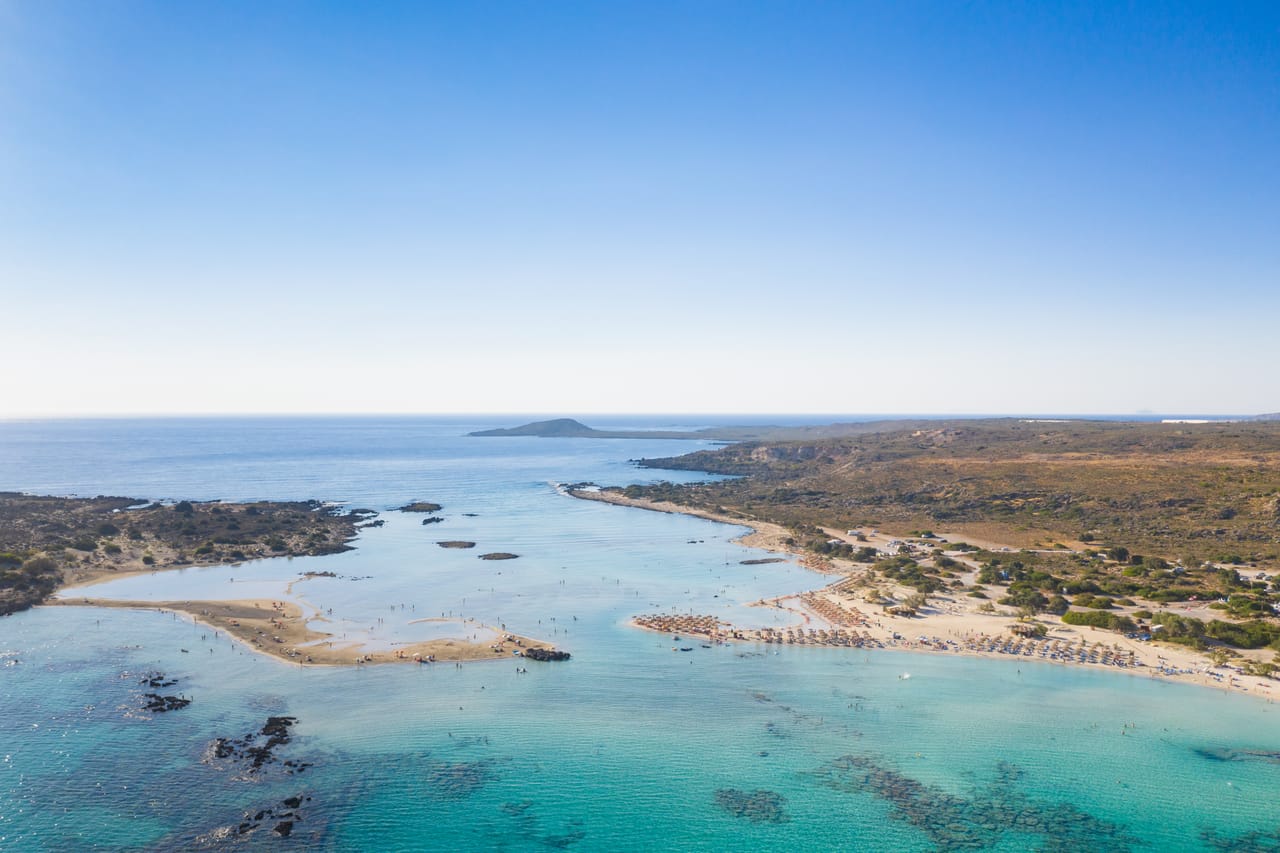
The west is the Crete of beaches. A dirt track leads to a spot above the Balos lagoon, and you walk down to it. At Falasarna, the ancient harbour is on dry land, several metres above the sea, probably lifted by the earthquake of AD 365. At Elafonisi, the sand is pink in places and you reach the islet by wading through the water.
The Minoan palaces
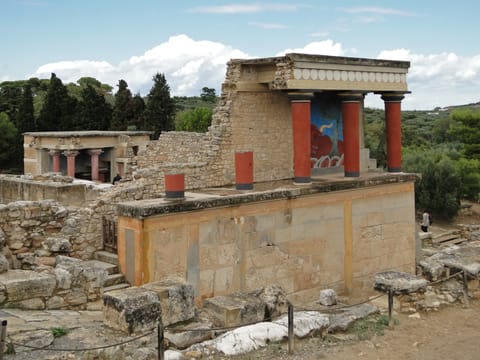
The Minoans ruled Crete in the Bronze Age, long before Classical Greece. Their palaces were homes, storehouses and places of worship all at once. The largest, Knossos, is 5 kilometres from Heraklion. The English archaeologist Arthur Evans excavated it from 1900 and rebuilt parts of it in concrete, with red columns and copies of frescoes. That reconstruction is still debated. In 2025, six Minoan sites, including Knossos, Phaistos and Malia, were added to the UNESCO World Heritage List.
At Malia, by the sea, the palace has not been rebuilt. Phaistos stands on a hill, facing Mount Ida. In 1908 the Italian Luigi Pernier found the Phaistos Disc there, covered in signs pressed in with stamps. Nobody has ever been able to decipher it. It is on display in the Heraklion museum, with the frescoes of Knossos.
According to tradition, Zeus was hidden as a child in a Cretan cave to escape his father Cronus: the cave of Dikti, above Lasithi, or the one on Mount Ida. King Minos is said to have shut the Minotaur away in a labyrinth built by Daedalus.
Venice held Crete for more than four centuries.
From the Venetians to union with Greece
Venice held Crete for more than four centuries. It left the Koules in Heraklion, the Fortezza in Rethymno and the harbour of Chania. The Ottomans landed in 1645 and took Chania. Candia, today’s Heraklion, only fell in 1669, after a siege of more than twenty years. The Mosque of the Janissaries in Chania was built just after the conquest.
The Cretans rose up several times. In November 1866, at Arkadi Monastery, the besieged blew up the powder store rather than surrender. The tragedy moved Europe; Victor Hugo spoke up for the Cretans. Crete joined Greece in 1913.
Preveli
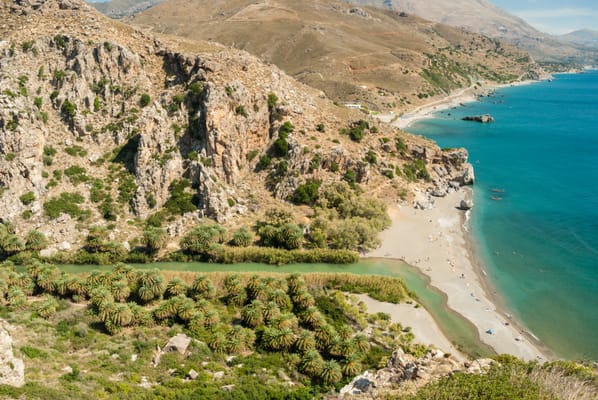
Through the Kourtaliotiko Gorge, you reach a river lined with palm trees that flows into the Libyan Sea. In 1941, the nearby monastery hid Allied soldiers, who were later taken off by submarine.
Practical notes
- When to go
- Late May–June and September–October. In July and August, it is very hot and strong winds blow on the north coast.
- Getting there
- Airports at Heraklion and Chania, ferries from Piraeus. Dropping the car off at the other airport often costs extra.
- Access
- Everything is tarmac except the Balos track, which hire contracts often exclude. There are roadworks in places on the northern expressway. Mountain roads are narrow and slow.
- Sleeping in a van
- Wild camping is banned in Greece, motorhomes included. Few campsites in the west.
- Worth knowing
- Visit Knossos at opening time. Park outside the old towns. Samaria is only open from May to about the end of October, and closes in bad weather: check the day before.
- Allow
- Nine days. One more to hike through Samaria, one or two for the far east.
What not to miss
- 1The Heraklion Archaeological MuseumThe frescoes of Knossos and the Phaistos Disc.
- 2SpinalongaA Venetian fortress on an islet, a leper colony from 1904 to 1957, reached by boat from Elounda or Plaka.
- 3GortynA law code from the 5th century BC, carved with every other line running from right to left.
- 4MatalaCaves in the cliff, Roman tombs and later a hippie refuge.
- 5The Samaria GorgeSixteen kilometres down to the sea, or a partial descent from Xyloskalo.
- 6The Balos lagoonTurquoise water between two capes, to see from above before you walk down.
Crete in pictures
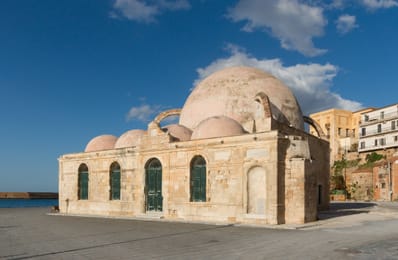
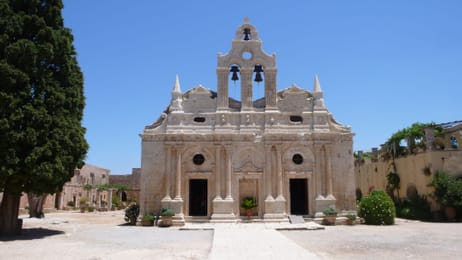
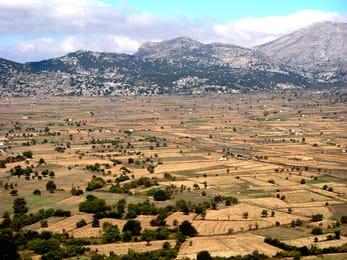
The Mosque of the Janissaries and its domes, on the Venetian harbour of Chania.
The Cretan table
Cretan cooking is built on olive oil, vegetables and wild greens. Dakos is a barley rusk topped with grated tomato and mizithra, a fresh cheese. In the mountains, antikristo lamb cooks on spits set around the fire.
At the end of a meal, you are often offered tsikoudia, the grape-marc spirit also called raki. The olive tree of Vouves, west of Chania, is at least 2,000 years old; its branches were used to weave wreaths for the 2004 Athens Olympic Games.
Heraklion → Chania


 +24stops
- 1Αρχαιολογικό Μουσείο Ηρακλείου · Ανάκτορο της Κνωσού · Αρχαιολογικός Χώρος Μαλίων · Οροπεδίο Λασιθίου
- 2Δικταίο Άντρο · Λίμνη Βουλισμένη · Ελούντα Λασιθίου · Κάστρο της Ιεράπετρας
- 3Γόρτυνα · Φαιστός · Μάταλα Ηρακλείου
Free, no account needed — start from its places and make it yours.
Also worth reading
Wide open spaces
Epirus, from Zagori to the Bay of Parga
Stone villages above the Vikos Gorge, arched bridges, the Pindus, then the Ionian Sea. A six-day loop from Ioannina, in north-west Greece.
Wide open spaces
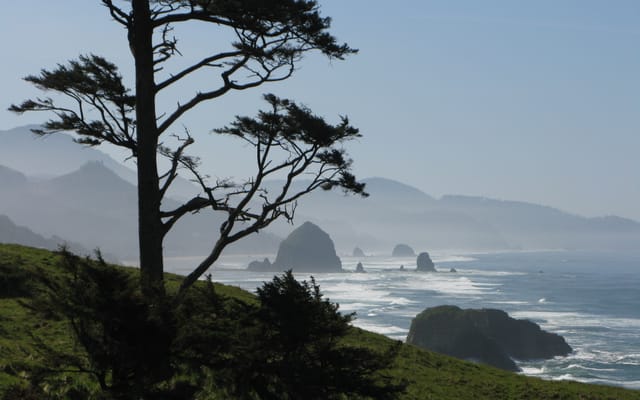
The Pacific Northwest, from the Olympic Peninsula to the Cascade volcanoes
Rainforests, a coast of headlands and lighthouses, redwoods and two active volcanoes. A two-week loop from Seattle, by way of the Olympic Peninsula, the Oregon coast and Mount Rainier.
Wide open spaces
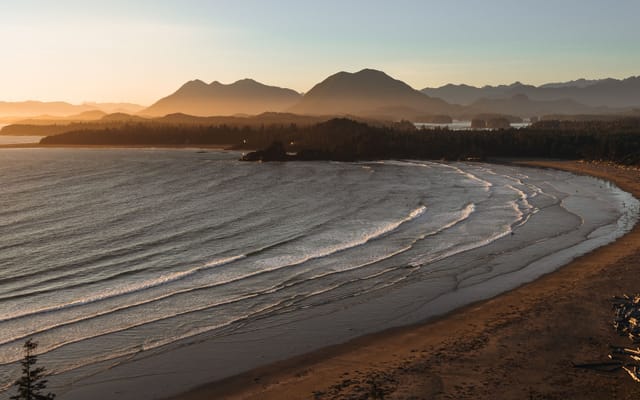
Vancouver Island, from Victoria to the beaches of Tofino
An island of giant forests, beaches pounded by the Pacific and small harbours where boats leave to see orcas. Nine days on a loop from Victoria, from Port Renfrew to Tofino and up to Telegraph Cove.
A starting point, a few wishes — ViaLooma builds the trip day by day, map, stops and roadbook included.