Epirus, from Zagori to the Bay of Parga
Stone villages above the Vikos Gorge, arched bridges, the Pindus, then the Ionian Sea. A six-day loop from Ioannina, in north-west Greece.
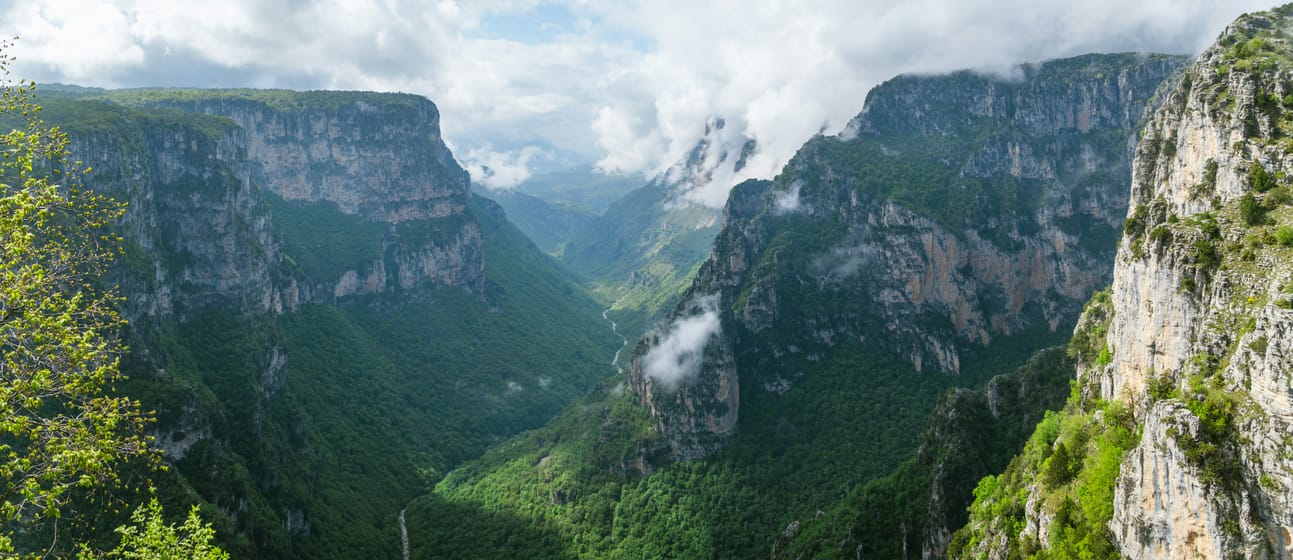
Zagori, the Pindus and the Ionian Sea
Epirus is the mountain region of north-west Greece, on the border with Albania. North of Ioannina, Zagori has 46 villages of grey stone with stone-slab roofs, linked by narrow, winding roads. From Monodendri, a small road crosses the ‘stone forest’, limestone rocks stacked in sheets, to the Oxya viewpoint above the Vikos Gorge.
Further west, the road zigzags down from Aristi to the Voidomatis river, then climbs back up to Papingo, below the cliffs of Mount Tymfi. Near the village, the stream has carved pools where people swim in summer. To the south-east, in the Pindus, Lake Aoos lies at about 1,350 metres above sea level, between forests and pastures.
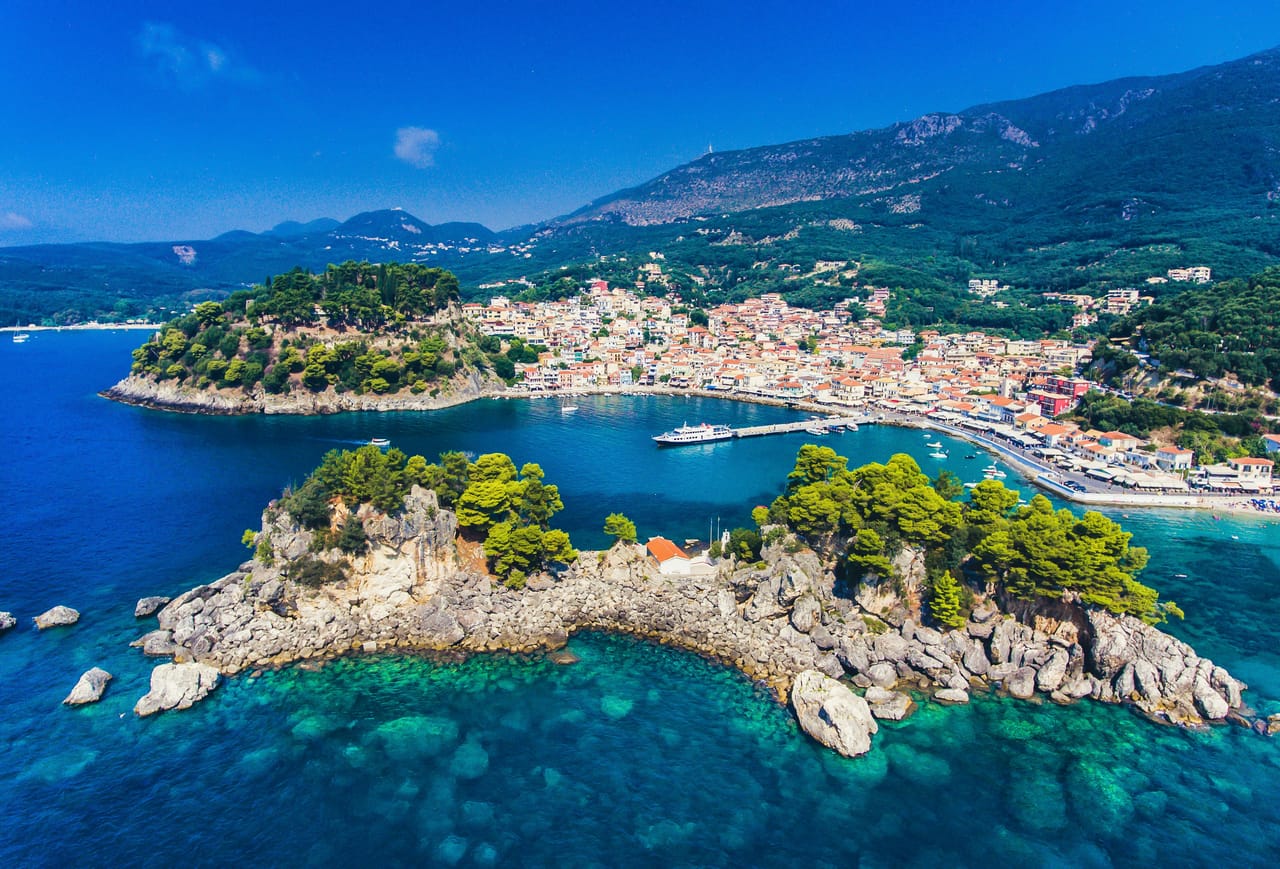
Then you head down to the sea. Near Glyki, you walk up the Acheron, the river of the Underworld for the ancient Greeks, often with your feet in cold water. Further south, near Preveza, you visit the ruins of Nicopolis, the city Octavian founded after his victory at Actium. Parga fills a bay below a Venetian castle.
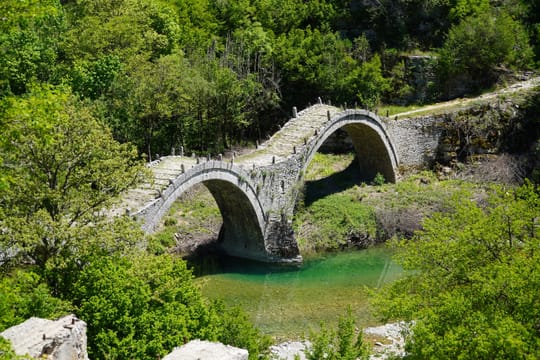
The villages of Zagori
The villages of Zagori are linked by paved paths, the kalderimia, and by arched stone bridges. One of the most photographed, near Kipi, has three arches. According to local accounts, an abbot, Serafeim, had it rebuilt in stone in 1814, in place of a wooden bridge: it is called Kalogeriko, ‘the monk’s bridge’. It is also known as the Plakidas Bridge, after the family who paid for its repair in the 1860s.
In 2023, Unesco added the Zagori Cultural Landscape to the World Heritage list. What is protected is the way the people shaped the mountains. Under the Ottomans, the villages formed a self-governing community, the Koinon of Zagori, run by a council of elders, until 1868.
Many men left to trade in Constantinople, Romania or Russia. The money they sent home paid for the bridges, fountains, schools, churches and large stone houses.
What is protected is the way the people shaped the mountains.
Ioannina and Ali Pasha
Ioannina, the main city of Epirus, stands on the shore of Lake Pamvotis. From 1788 to 1822, it was the capital of Ali Pasha, an Ottoman governor of Albanian origin who ruled almost as a king. Inside the walls of the Kastro, the Its Kale citadel houses the Fethiye Mosque, near which his tomb lies.
In December 1803, his troops took Souli. According to tradition, Souliot women then threw themselves, dancing, from the cliff at Zalongo rather than surrender. In 1819, the British handed Parga over to him, and most of its people left for Corfu. Ali Pasha was killed in 1822 on the island in the lake, at the monastery of Agios Panteleimon, which you reach by boat.
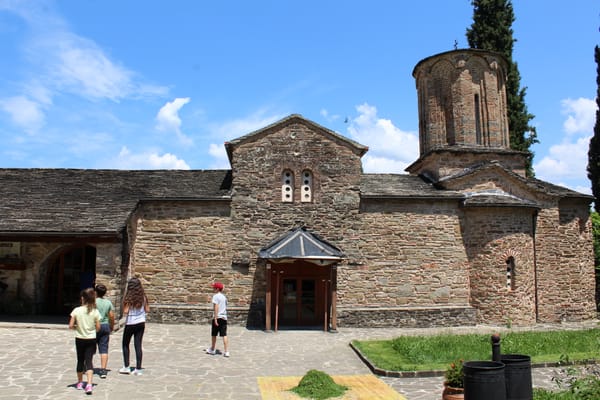
Monastery of Panagia Molyvdoskepastos
A Byzantine monastery whose name means ‘covered in lead’, near the Albanian border, where the Aoos meets the Sarantaporos. According to tradition, the emperor Constantine IV Pogonatos founded it in the 7th century. Its church keeps frescoes, some of them from the Byzantine period.
Practical notes
- When to go
- May–June and September–October. In summer, the coast is packed; in winter, snow can cover the Pindus.
- Getting there
- Ioannina has an airport and is about an hour from Igoumenitsa, where ferries from Italy arrive.
- Access
- Everything is paved. The Zagori roads are narrow and full of bends, tricky for vehicles over 7 metres. Toll motorways.
- Sleeping in a van
- Campsites on the shore of the lake at Ioannina and around Parga. Wild camping is forbidden; parking overnight outside campsites is tightly controlled, so ask locally.
- Worth knowing
- In Papingo and Monodendri, you park at the entrance to the village. The Beloi viewpoint, opposite Oxya, can only be reached on foot, from Vradeto.
- Allow
- Six days for the loop, one more to walk down the Vikos Gorge.
What not to miss
- 1The Vikos GorgeThe Guinness Book of Records listed it as the deepest in the world in proportion to its width, a title that is disputed.
- 2The Perama CaveFound in 1940 by local people fleeing the bombing, 4 kilometres from Ioannina.
- 3The Konitsa BridgeA single arch built around 1870, with a bell beneath it that rang when the wind became dangerous.
- 4MetsovoThe town of the Aromanians, or Vlachs, who speak a Romance language; you can visit the Averoff art gallery there.
- 5The Bridge of ArtaAccording to the ballad, it fell down every night, until the builder walled his wife up in its foundations.
- 6DodonaThe sanctuary of Zeus, whose oracle answered through the rustling of an oak, and its theatre from the 3rd century BC.
Epirus in pictures
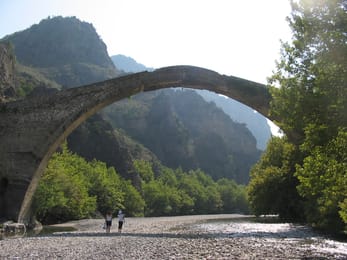
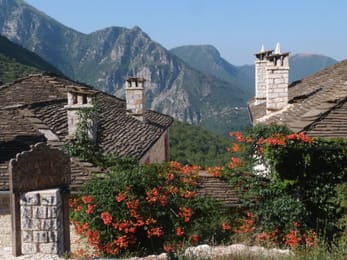
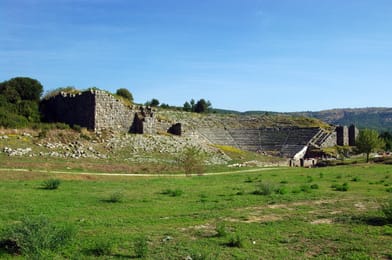
The single arch of the Konitsa Bridge above the pebbles of the Aoos.
The food of Epirus
Epirus is the land of pites, pies made with hand-stretched filo pastry and filled with wild greens, leeks, cheese or meat. In Ioannina, people also eat frogs and eels from the lake. In the mountains, lamb, kid and metsovone, a smoked cheese from Metsovo, are served.
Ioannina is known for its baklava. Metsovo has its own wine, Katogi Averoff, and everywhere people drink tsipouro, a grape spirit. In Parga, you eat grilled fish.
Loop from Ioannina


 +14stops
- 1Κάστρο Ιωαννίνων · Σπήλαιο Περάματος
- 2Γεφύρι Καλογερικό · Γεφύρι Κόκκορη · Μονοδένδρι Ιωαννίνων
- 3Βίκος Ιωαννίνων · Πάπιγκο Ιωαννίνων · Γεφύρι της Κόνιτσας
Free, no account needed — start from its places and make it yours.
Also worth reading
Wide open spaces
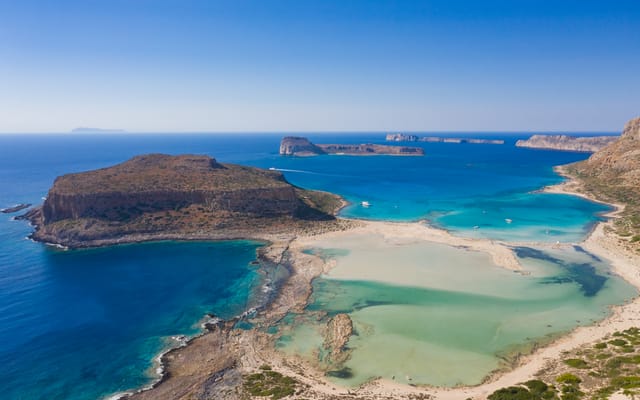
Crete, from Knossos to Balos
Greece’s largest island mixes Minoan palaces, Venetian harbours, gorges and pink-sand beaches. This nine-day trip starts in Heraklion and ends in Chania, by way of Lasithi, the south coast and the far west.
Wide open spaces
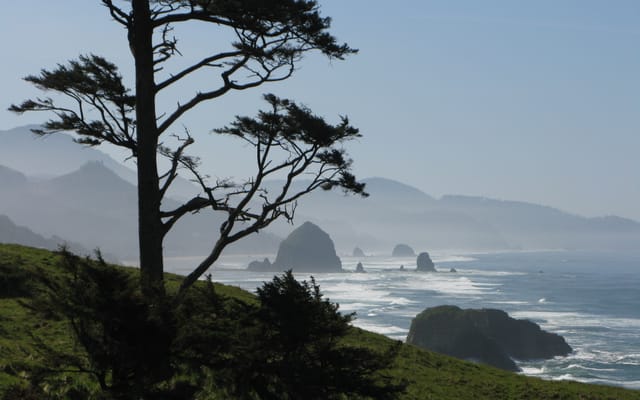
The Pacific Northwest, from the Olympic Peninsula to the Cascade volcanoes
Rainforests, a coast of headlands and lighthouses, redwoods and two active volcanoes. A two-week loop from Seattle, by way of the Olympic Peninsula, the Oregon coast and Mount Rainier.
Wide open spaces
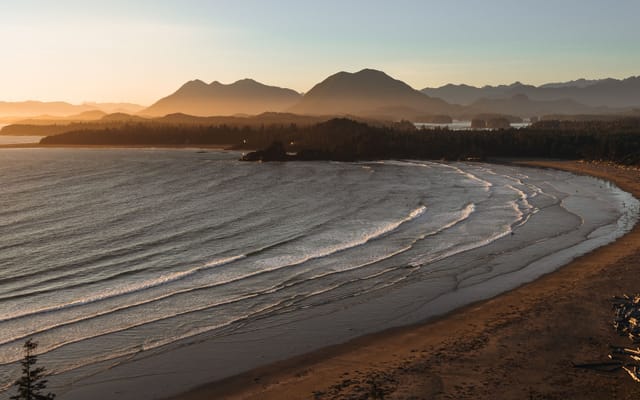
Vancouver Island, from Victoria to the beaches of Tofino
An island of giant forests, beaches pounded by the Pacific and small harbours where boats leave to see orcas. Nine days on a loop from Victoria, from Port Renfrew to Tofino and up to Telegraph Cove.
A starting point, a few wishes — ViaLooma builds the trip day by day, map, stops and roadbook included.