The Salzkammergut, from Salzburg to Hallstatt
Green and turquoise lakes at the foot of the mountains, villages on the water’s edge and salt mines worked since prehistory. A five-day loop from Salzburg, through Bad Ischl, Hallstatt, the Dachstein and the Traunsee.
The lakes road
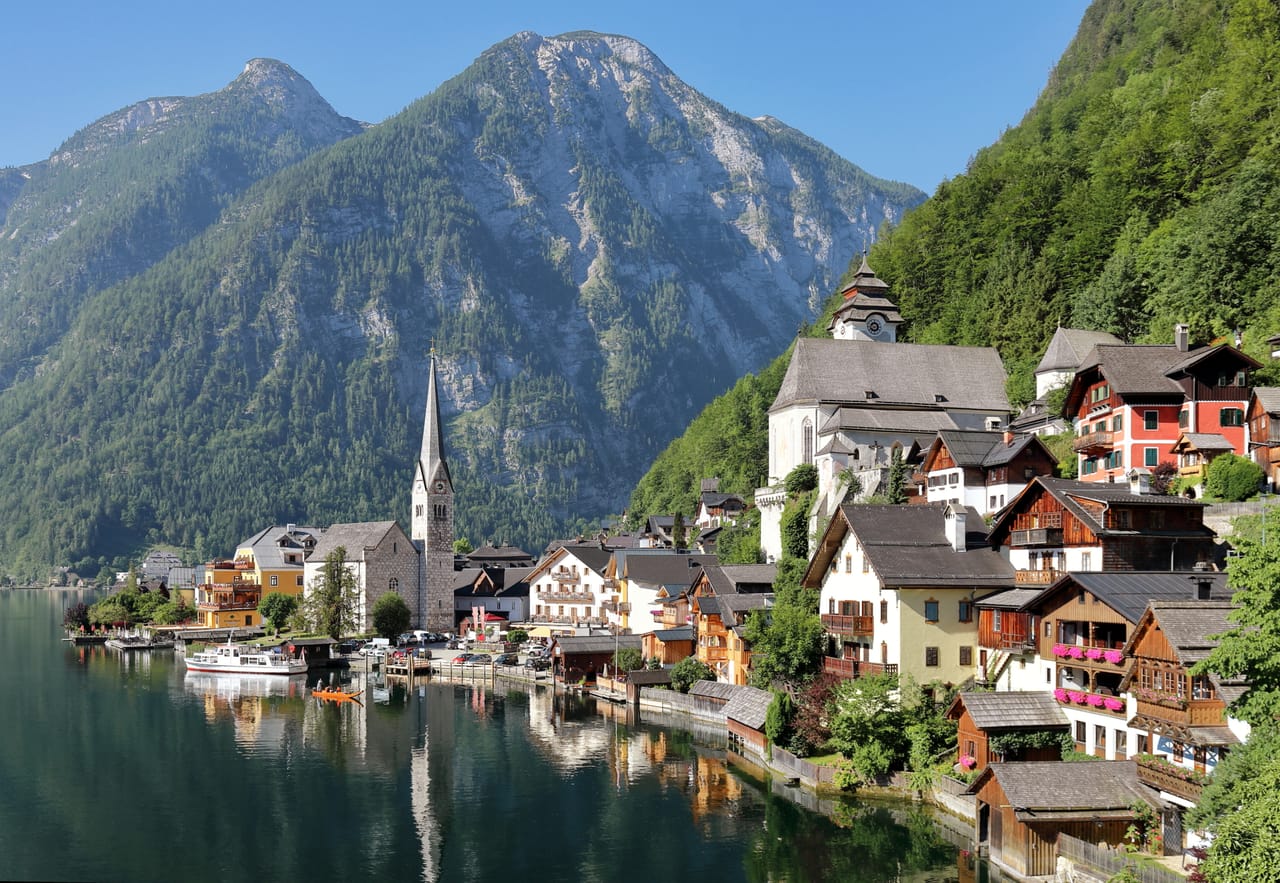
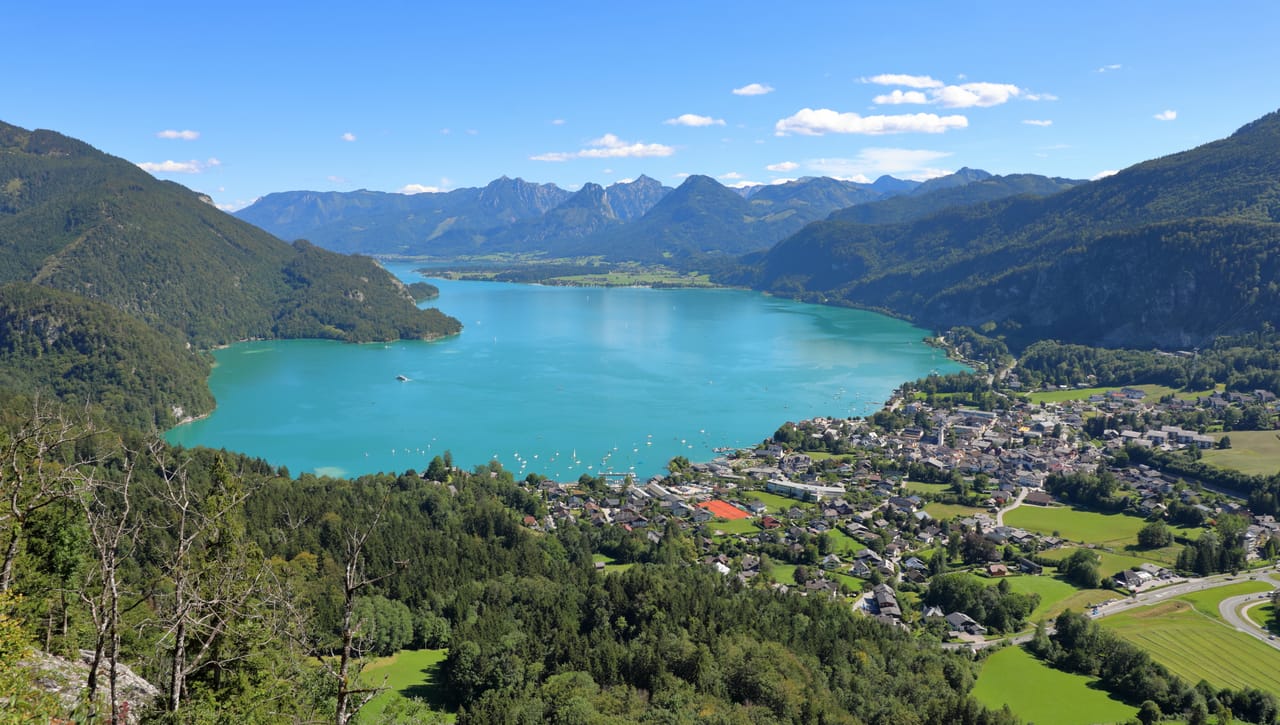
Heading east out of Salzburg, the B158 runs from one lake to the next. After the Fuschlsee, narrow and dark green, the turquoise Wolfgangsee comes into view all at once on the way down to Sankt Gilgen, with the Schafberg opposite. A boat crosses to Sankt Wolfgang, where a rack railway, running since 1893, climbs almost to the summit.
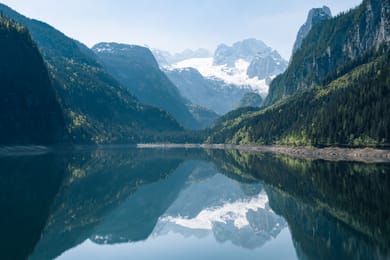
Further south, the Gosau valley ends on the shore of the Vorderer Gosausee. Early in the morning, with no wind, the Dachstein glacier is reflected in the water; the walk round the lake takes an hour. At Hallstatt, the road goes through a tunnel above the village: you park at the entrance and carry on on foot. Near the church, the ossuary in St Michael’s Chapel holds more than 1,200 skulls, about 600 of them painted. In the evening, once the coaches have left, the lanes empty.
Across the lake, at Obertraun, a cable car climbs to the Krippenstein, where the Five Fingers platform juts out over a drop of more than 400 metres. On the way back, you drive along the Traunsee, then the Attersee and the Mondsee.
Salt country
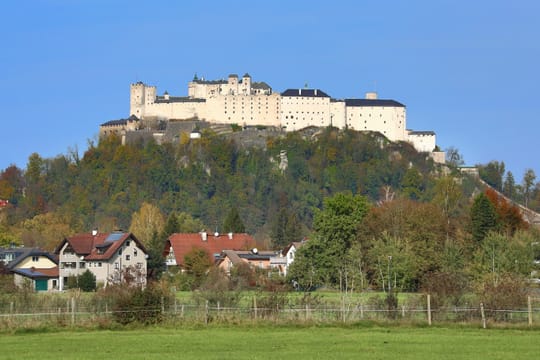
Salzburg means “salt castle”. The city grew rich on the salt mine of the Dürrnberg, at Hallein, some fifteen kilometres to the south. This salt made the fortune of the prince-archbishops, who ruled the city until 1803. Their fortress, Hohensalzburg, begun in 1077, is one of the largest medieval castles in Europe. Further east, the Salzkammergut is also named after salt: it was the “salt estate” of the Habsburg Imperial Chamber.
At Hallstatt, salt has been mined since prehistory. After a year of work, the mine reopened on 29 August 2026 with a new funicular. The tour goes down the miners’ slides and passes a Bronze Age wooden staircase, presented as the oldest in Europe. As early as 1607, a pipeline made of hollowed-out tree trunks carried brine all the way to Ebensee.
From 1846, the mine’s director, Johann Georg Ramsauer, excavated nearly a thousand graves in an Iron Age burial ground. Since then, archaeologists have spoken of the Hallstatt culture. So a village of about 750 people gave its name to a period of European prehistory.
So a village of about 750 people gave its name to a period of European prehistory.
The Habsburgs on holiday
In 1853, the young Franz Joseph became engaged in Bad Ischl to Elisabeth, known as Sisi. For their wedding, his mother gave them a villa there, the Kaiservilla, where the emperor spent his summers for decades. It was there that he signed the declaration of war on Serbia, on 28 July 1914. In 2024, Bad Ischl and the Salzkammergut were European Capital of Culture.
After the emperor came the holidaymakers, then the cinema. In Sankt Wolfgang, the Im Weißen Rössl inn gave its name to an operetta in 1930, known in English as White Horse Inn. The Sound of Music (1965) was partly filmed in the region: the wedding in the church at Mondsee, the end of “Do-Re-Mi” in the Mirabell Gardens, in Salzburg.
Altaussee
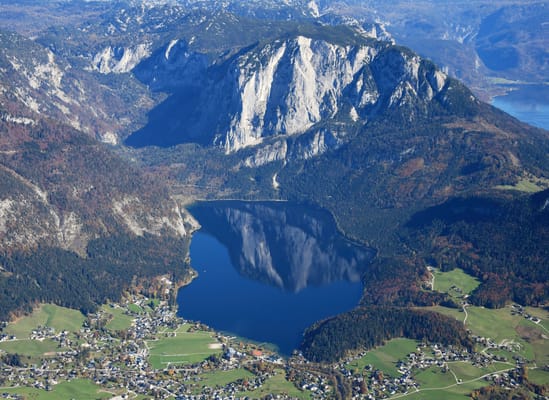
A dark lake at the foot of the Loser and the Trisselwand. At the end of the war, the Nazis hid thousands of looted works of art in the village’s salt mine, among them the Ghent Altarpiece and Michelangelo’s Madonna of Bruges.
Practical notes
- When to go
- June to September. The Dachstein ice caves and the Schafberg railway only open in the warmer months. July and August are very busy in Hallstatt.
- Getting there
- Salzburg is under two hours from Munich by motorway, with an airport and a railway station.
- Access
- Everything is tarmac. A vignette is compulsory on motorways. The centre of Hallstatt is closed to visitors’ cars: car parks P1 and P2 at the entrance.
- Sleeping in a van
- Campsites on the Wolfgangsee, at Obertraun and on the Traunsee; overnighting outside campsites is banned or tightly regulated. In Salzburg, leave the van at the southern park-and-ride, then take the bus.
- Worth knowing
- The Hallstatt salt mine reopened at the end of August 2026. Tours are guided, at about 8 °C: bring a jacket.
- Allow
- Five days for the loop, one more for Altaussee and the Schafberg.
What not to miss
- 1Salzburg’s old townMozart’s birthplace, the cathedral and the fortress, on foot.
- 2The Vorderer GosauseeThe Dachstein reflected in the lake early in the morning, then the hour-long walk round the lake.
- 3The Hallstatt salt mineThe funicular, the view over the lake, then the miners’ slides.
- 4The KrippensteinThe ice caves halfway up, then the Five Fingers platform.
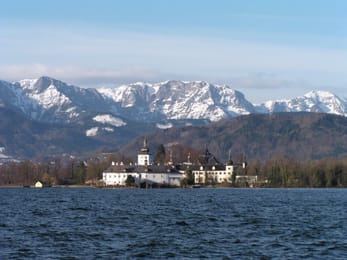
- 5Seeschloss OrtA white castle on an islet in the Traunsee, linked to the shore by a footbridge.
- 6Hellbrunn PalaceSeventeenth-century trick fountains, designed to soak the guests.
The Salzkammergut in pictures
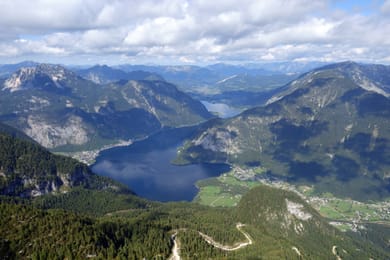
The Hallstätter See and Obertraun from the Krippenstein.
The Salzkammergut table
The lakes provide the fish: char and whitefish. They are eaten smoked, or grilled on a stick over the embers: this is Steckerlfisch. In the mountains, people eat Kasnocken, small cheese dumplings. In Bad Ischl, stop at the Zauner pâtisserie.
Salzburg has its Salzburger Nockerl, a soufflé in three peaks said to stand for the city’s hills. Its Mozartkugeln were created in 1890 by the confectioner Paul Fürst. The Augustiner brewery in Mülln, founded by monks in 1621, serves its beer in stoneware mugs in a large garden.
Loop from Salzburg


 +14stops
- 1Schloss Mirabell · Mozarts Geburtshaus · Salzburger Dom · Festung Hohensalzburg
- 2Fuschl am See · St. Gilgen · St. Wolfgang im Salzkammergut · Kaiservilla
- 3Gosau · Vorderer Gosausee · Hallstatt
Free, no account needed — start from its places and make it yours.
Also worth reading
Wide open spaces
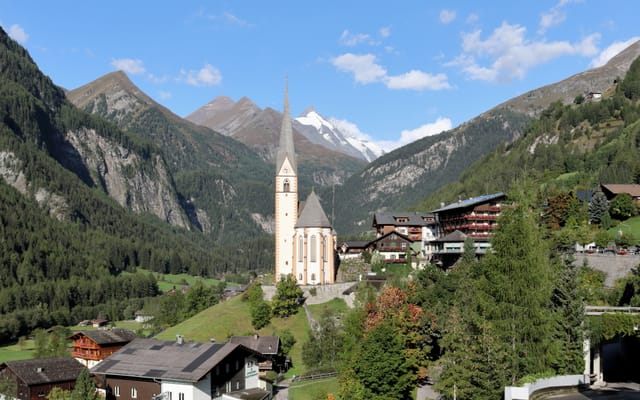
The Grossglockner Road, from Salzburg to the Krimml Falls
The Grossglockner Road crosses the Hohe Tauern at the foot of Austria’s highest mountain. Five days on a loop from Salzburg, with gorges, an ice cave and the Krimml Falls.
Wide open spaces
The Pacific Northwest, from the Olympic Peninsula to the Cascade volcanoes
Rainforests, a coast of headlands and lighthouses, redwoods and two active volcanoes. A two-week loop from Seattle, by way of the Olympic Peninsula, the Oregon coast and Mount Rainier.
Wide open spaces
Vancouver Island, from Victoria to the beaches of Tofino
An island of giant forests, beaches pounded by the Pacific and small harbours where boats leave to see orcas. Nine days on a loop from Victoria, from Port Renfrew to Tofino and up to Telegraph Cove.
A starting point, a few wishes — ViaLooma builds the trip day by day, map, stops and roadbook included.