Florida, from Miami to Key West via the Everglades
An eleven-day trip between two seas, from Miami to Key West. You cross the Everglades, follow the beaches of the Gulf, visit the Kennedy Space Center and the old Spanish town of St. Augustine, then finish on the road through the Keys.
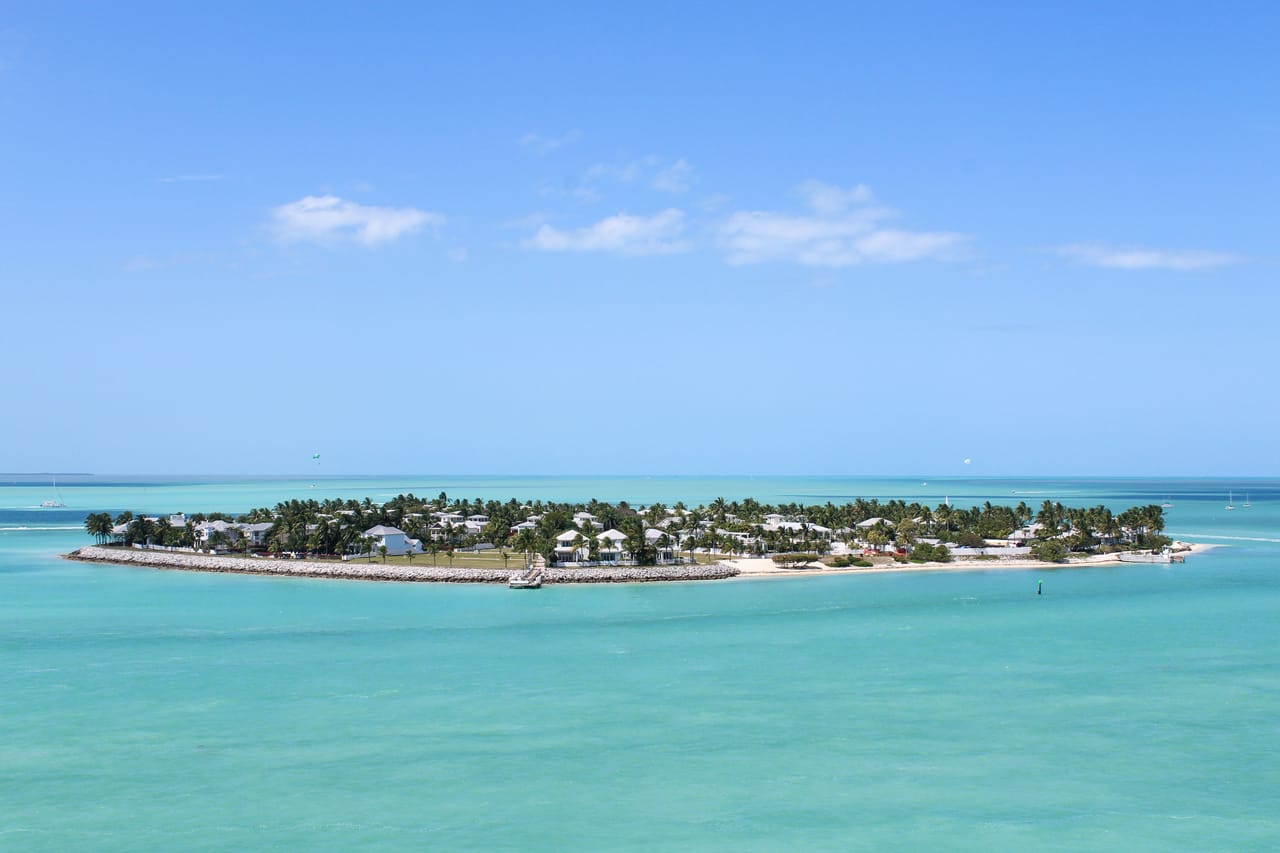
Around Florida
This trip starts in Miami, among the Art Deco fronts of South Beach, the Cuban cafés of Little Havana and the painted walls of Wynwood. Then the Tamiami Trail runs dead straight across the Everglades. Along its canal, you often see alligators from the car.
On the Gulf coast, the beaches face the sunset. On Sanibel, you collect shells; at Siesta Beach, near Sarasota, the quartz sand is almost white. On the other side of the peninsula come the Spanish streets of St. Augustine and the Kennedy Space Center.
The way back south follows the Overseas Highway, which links the Keys from island to island over dozens of bridges. It ends in Key West, with its sunset over Mallory Square.
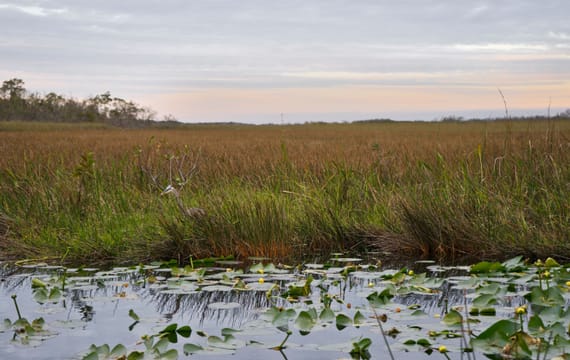
The Everglades, a river of grass
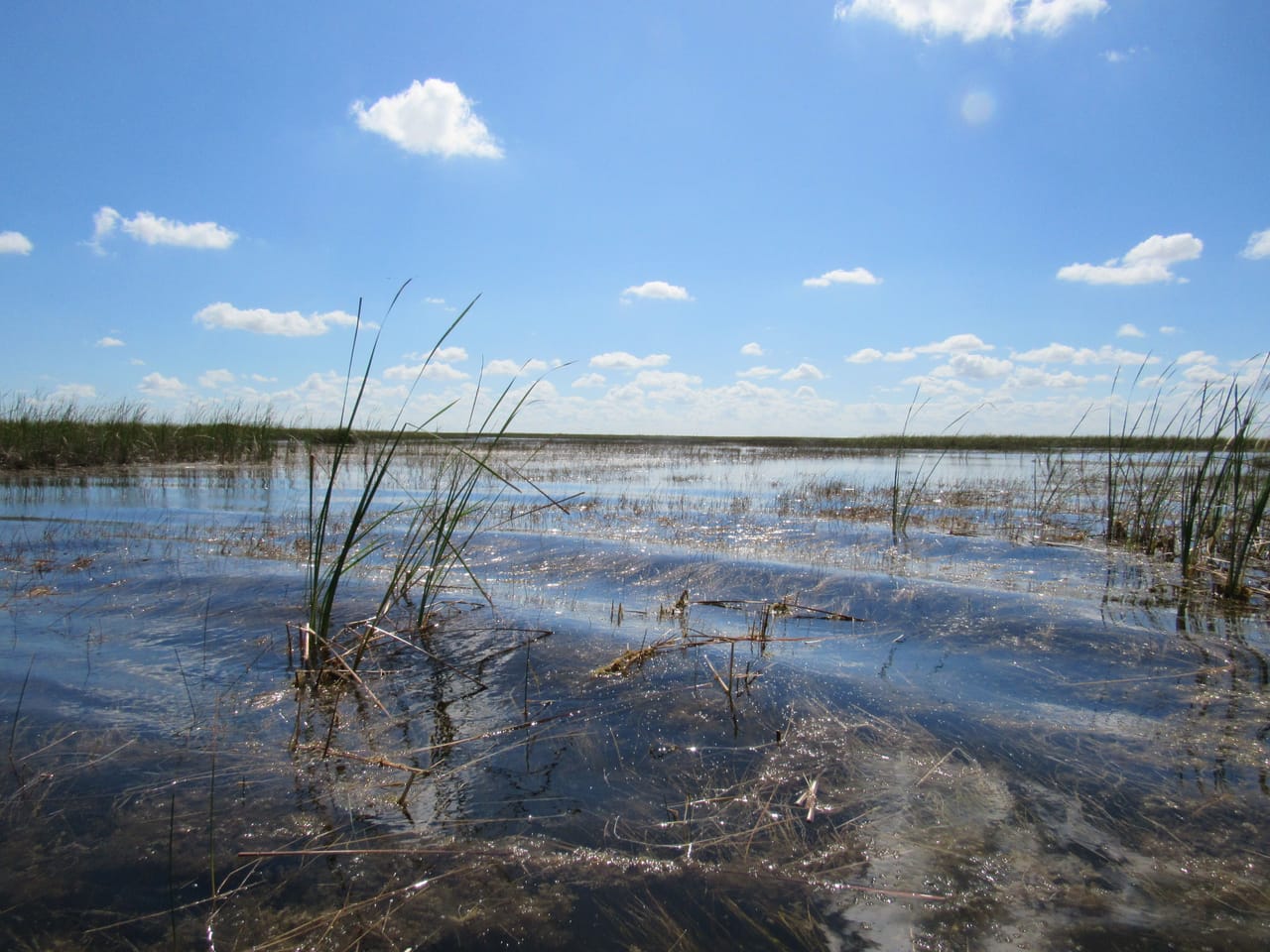
The Everglades are not a still swamp. They are a very slow river, about 100 kilometres wide, flowing from Lake Okeechobee to Florida Bay through a vast prairie of sawgrass, a plant with sharp-edged leaves. In 1947, the journalist Marjory Stoneman Douglas called them the “river of grass” in a book that became famous. The same year, President Truman opened the national park, which became a World Heritage Site in 1979. At Shark Valley, beside the Tamiami Trail, an observation tower looks out over this prairie.
According to the US Geological Survey, South Florida is the only place in the world where alligators and crocodiles live side by side in the wild. On the Anhinga Trail, a short path partly on boardwalk, near the Homestead entrance, you see the alligators up close, along with turtles and fishing birds.
About half of the original Everglades has been turned into farmland and towns. The park is also fighting Burmese pythons, released or escaped, which now breed in the wild.
In 1912, his train reached Key West, at the end of the Keys.
Henry Flagler and the railway to Key West
Tourist Florida owes a great deal to Henry Flagler, one of the founders of Standard Oil. In 1888, he opened a grand hotel in St. Augustine, then extended his railway south. In Palm Beach, his house, Whitehall, is now the Flagler Museum. In 1912, his train reached Key West, at the end of the Keys. The line was nicknamed “Flagler’s Folly”.
On 2 September 1935, the Labor Day hurricane swept away part of the track. The line was never rebuilt: its bridges were sold to the state, which ran a road over them, opened in 1938. At Marathon, the old Seven Mile Bridge was replaced by a new bridge in 1982. Since 2022, a restored section can be walked or cycled as far as Pigeon Key, the islet where the workers lived.
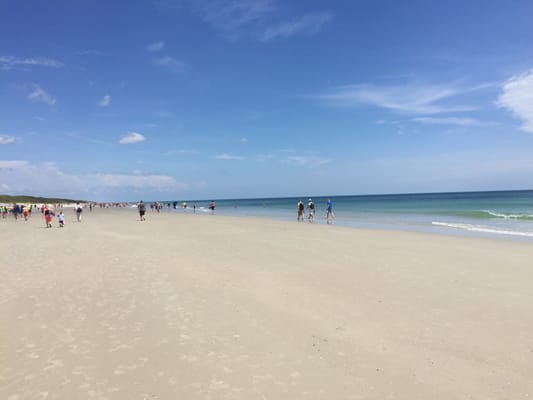
Playalinda Beach
Playalinda is the southern beach of the Canaveral National Seashore, which has nearly 40 kilometres of dunes without a single building: the longest wild coastline on Florida’s east coast. To the south, you can see the launch pads of the space centre. The beach sometimes closes before a launch.
Practical notes
- When to go
- December to April, the dry season: wildlife gathers around the water and there are fewer mosquitoes. Hurricanes are a risk from June to November.
- Getting there
- Start from Miami airport. You drop the car off in Key West, with a one-way fee, or drive back to Miami in four hours.
- Access
- Everything is tarmac. Many tolls have no booths: rental companies offer a flat-rate package.
- Sleeping in a van
- Sleeping outside a campsite is banned in the Keys and in many towns. The state park campsites in the Keys are booked months ahead, and the one in the Everglades, at Flamingo, before you leave.
- Worth knowing
- Since 2026, non-resident visitors pay a surcharge per person at the Everglades entrance, unless they hold the annual pass for non-residents. At the “Ding” Darling refuge, Wildlife Drive is closed on Fridays.
- Allow
- Eleven days, one or two more for the Orlando theme parks.
What not to miss
- 1The Anhinga TrailA path partly on boardwalk, among alligators, turtles and anhingas.
- 2Miami Beach Art DecoA district of about 960 buildings, listed on the National Register in 1979.
- 3The “Ding” Darling refugeA road through the mangroves of Sanibel, with roseate spoonbills and egrets.
- 4The Kennedy Space CenterApollo’s Saturn V, the Space Shuttle Atlantis and the launch pad from which Artemis II lifted off on 1 April 2026.
- 5The Castillo de San MarcosThe oldest masonry fort in the continental United States, built of coquina from 1672.
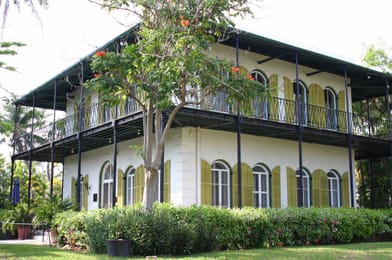
- 6Hemingway’s houseThe writer’s home in the 1930s, where some sixty cats live, many of them with six toes.
Florida in pictures
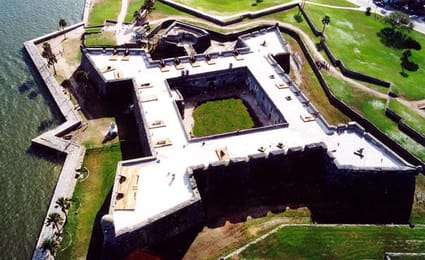
The Castillo de San Marcos and its coquina bastions, in St. Augustine.
Florida food
In Miami, you eat Cuban: a cafecito, a very strong, sweet coffee, and the Cuban sandwich, pressed and toasted. In Tampa, the Ybor City version adds salami, a legacy of Italian immigrants. From mid-October come the stone crab claws: the crab is put back in the sea and the claws grow back.
The Keys gave Florida its official pie, key lime pie, made with small limes and sweetened condensed milk. In St. Augustine, the datil pepper, brought, according to tradition, by settlers from Minorca, spices up the sauces.
Miami → Key West


 +31stops
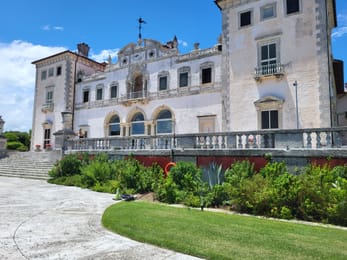
- 1Vizcaya Museum and Gardens · Wolfsonian-FIU · Miami Beach
- 2Clyde Butcher Big Cypress Gallery · Museum of the Everglades · Naples Municipal Beach and Pier
- 3Sanibel Island Light · J.N. "Ding" Darling National Wildlife Refuge · Edison and Ford Winter Estates
Free, no account needed — start from its places and make it yours.
Also worth reading
Wide open spaces
The Pacific Northwest, from the Olympic Peninsula to the Cascade volcanoes
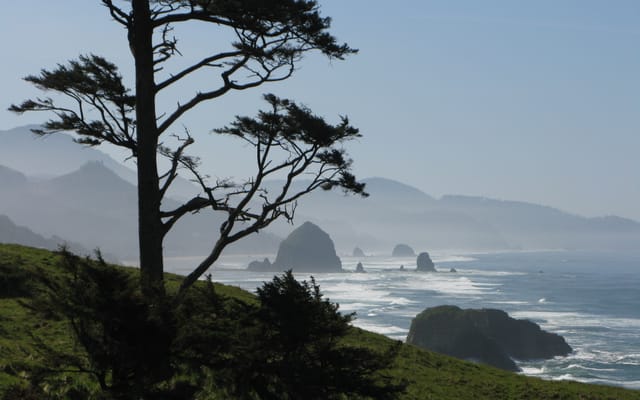
Rainforests, a coast of headlands and lighthouses, redwoods and two active volcanoes. A two-week loop from Seattle, by way of the Olympic Peninsula, the Oregon coast and Mount Rainier.
Wide open spaces
Yellowstone, Grand Teton and Glacier: the great Rockies road trip
Three national parks on one road, from the Tetons to the glaciers of Montana, by way of the geysers of Yellowstone. Twelve days from Jackson to Kalispell, with bison by the roadside and two great mountain roads.
Wide open spaces
California’s national parks, from Joshua Tree to Yosemite
Five national parks, from the lowest point in North America to the giant sequoias. A two-week loop from Los Angeles, through the Mojave Desert, Death Valley, the Sierra Nevada and Yosemite.
A starting point, a few wishes — ViaLooma builds the trip day by day, map, stops and roadbook included.