California’s national parks, from Joshua Tree to Yosemite
Five national parks, from the lowest point in North America to the giant sequoias. A two-week loop from Los Angeles, through the Mojave Desert, Death Valley, the Sierra Nevada and Yosemite.
From the desert to the sequoias
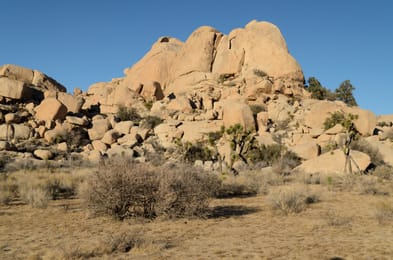
The loop leaves Los Angeles for the desert. In Joshua Tree, piles of ochre granite boulders rise among the Joshua trees, yuccas with raised branches. The road then crosses the Mojave on a stretch of Route 66, and enters Death Valley from the east.
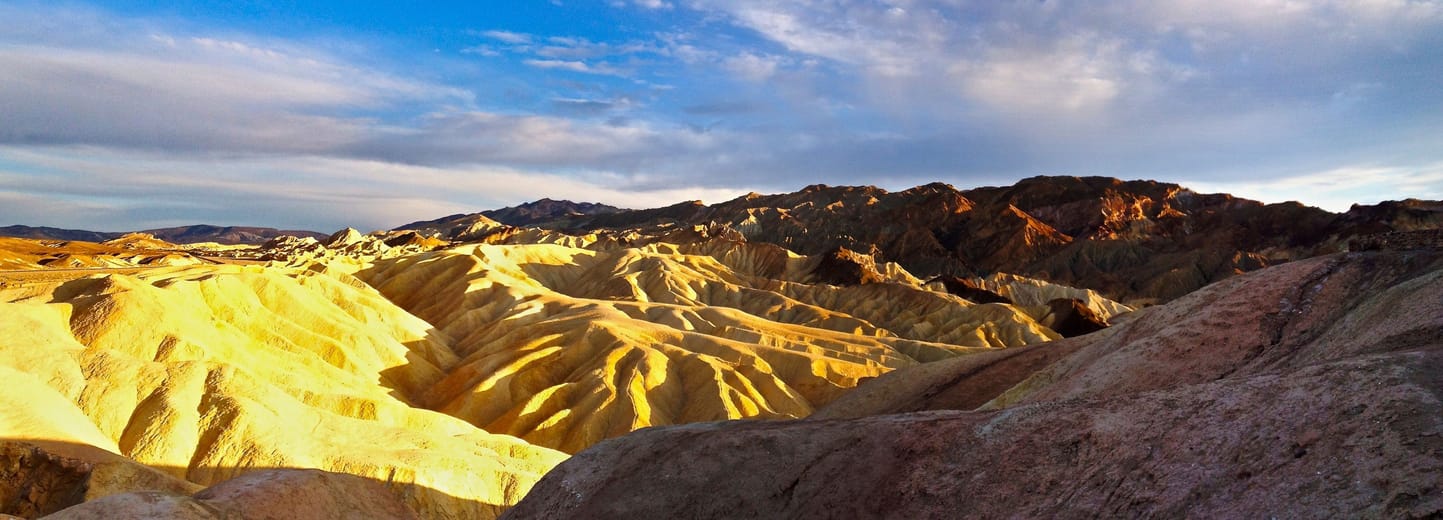
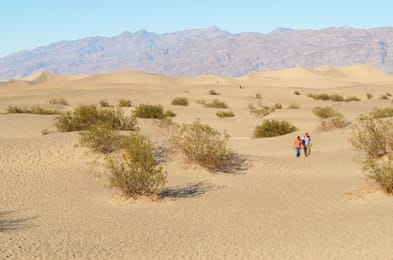
In Death Valley, Badwater Basin lies 86 metres below sea level, the lowest point in North America. In the park, you see a crust of salt, the coloured hills of Artists Palette, dunes and, at sunset, Zabriskie Point. You drive in the morning and take shelter in the afternoon.
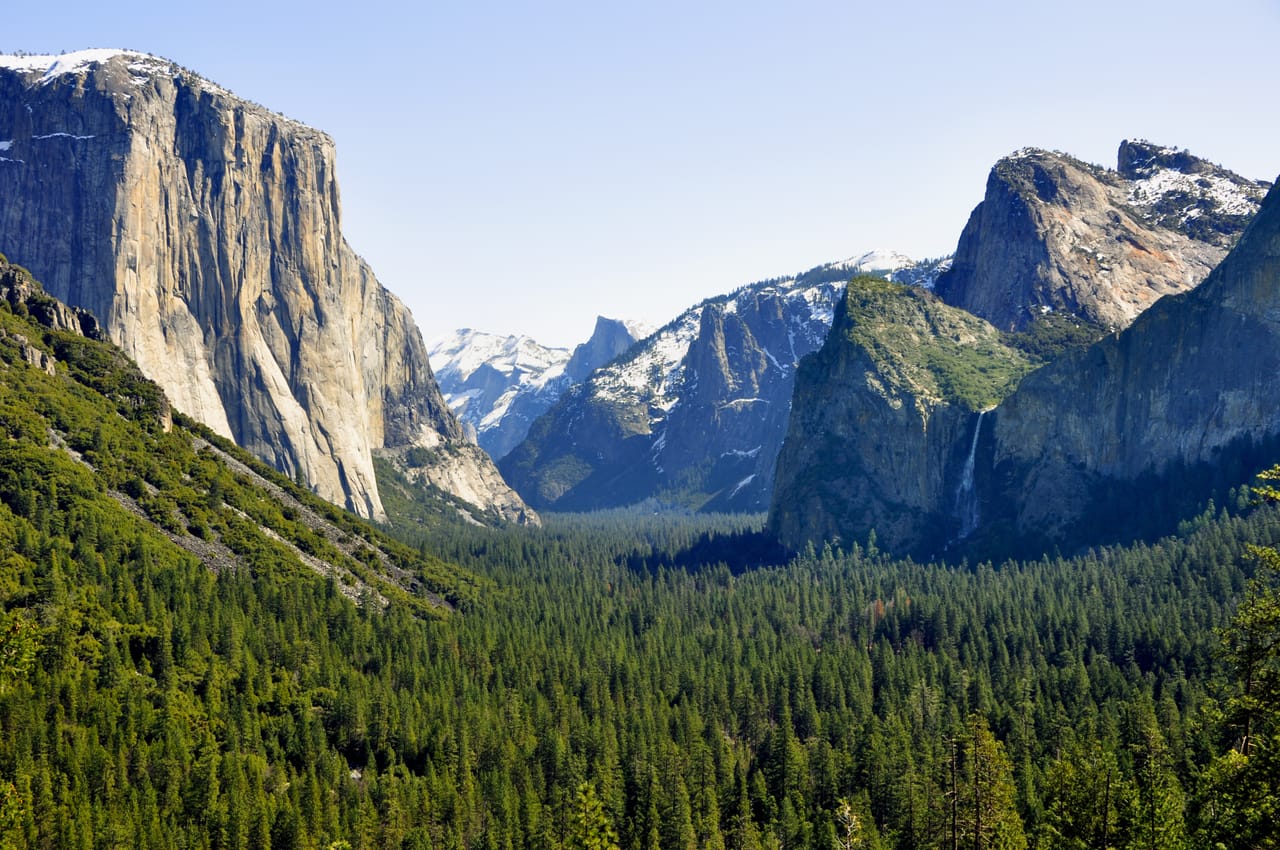
At Lone Pine, on US-395, the Alabama Hills face Mount Whitney, 4,421 metres, the highest peak in the United States outside Alaska. The Tioga Road crosses the Sierra Nevada over Tioga Pass, at 3,031 metres, the highest road pass in California, and goes down to Yosemite. You stroll at the foot of El Capitan and Half Dome. At Sequoia, you walk among the giant sequoias.
Mono Lake and the water of Los Angeles
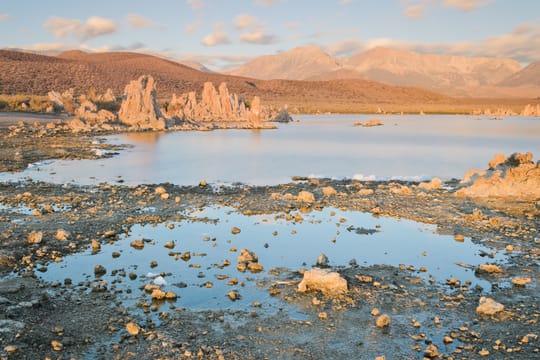
Mono Lake has been here for at least 760,000 years. It has no outlet: water only leaves it by evaporation, and the lake has become very salty and very alkaline. On the lake bed, springs rich in calcium formed columns of limestone, the tufa towers. In 1941, Los Angeles began to divert the streams that feed the lake. The lake dropped by about 14 metres, and the tufa came out of the water. The finest group is at South Tufa, 20 minutes from Lee Vining.
This water goes to the city through the Los Angeles Aqueduct, opened in 1913, which you follow along US-395. It first took the water of the Owens River: Owens Lake was dry by 1926. The farmers fought back, sometimes with dynamite. These “water wars” inspired the film Chinatown.
For Mono Lake, the story ends better. In 1994, after sixteen years of campaigning by the Mono Lake Committee, California’s state water board ordered Los Angeles to let the lake rise again. It has not yet reached the level that was set.
The lake dropped by about 14 metres, and the tufa came out of the water.
Yosemite, Sequoia and the first national parks
Yosemite Valley was home to the Ahwahneechee, driven out by a militia in 1851. In 1864, Abraham Lincoln granted the valley and the Mariposa Grove to California, to be protected and open to the public. It was the first federal protection of a landscape. The naturalist John Muir campaigned for Yosemite. In 1890, Sequoia became one of the first national parks in the United States, after Yellowstone, and Yosemite followed six days later.
The General Sherman is the largest known living tree: about 1,487 m³ of wood, 83.8 metres tall, 2,300 to 2,700 years old. The fires of 2020 and 2021 killed 13 to 19% of the large sequoias in the Sierra, according to the National Park Service.
Kings Canyon
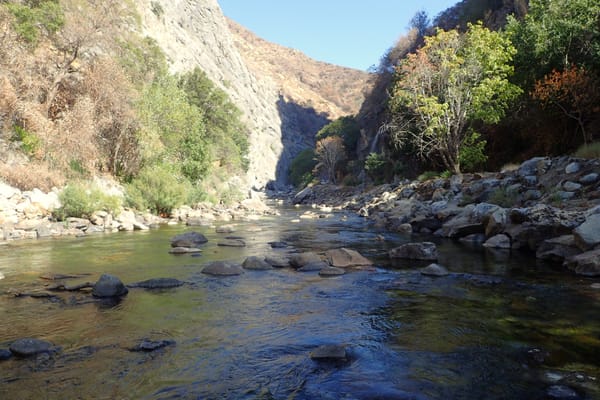
The road drops into the gorge of the Kings River, one of the deepest in the United States, down to a glacial valley that John Muir compared to Yosemite. At the end, Roaring River Falls and the flat loop of Zumwalt Meadow. The road is open from May to about mid-November.
Practical notes
- When to go
- Mid-September to mid-October. Earlier, Death Valley is scorching; later, snow closes the roads over the Sierra.
- Getting there
- A loop from Los Angeles. You can also end in San Francisco, about four hours from Yosemite, skipping Sequoia.
- Access
- Everything is tarmac, except short, easy tracks (Devil’s Golf Course, South Tufa, Alabama Hills). The Tioga Road closes with the first snow that settles; you then make a long detour via Lake Tahoe. Vehicles over 22 feet (6.7 m) are advised against on the Generals Highway; those over 25 feet (7.6 m) are banned on Artists Drive.
- Sleeping in a van
- Campsites in the parks, to book early on recreation.gov. In the Alabama Hills, designated sites with a free permit. No overnight stays along the Tioga Road.
- Worth knowing
- Since 2026, non-residents pay a surcharge at Yosemite, Sequoia and Kings Canyon, covered by the America the Beautiful pass for non-residents. Fill up in Baker before Death Valley.
- Allow
- Thirteen days, plus half a day for Kings Canyon.
What not to miss
- 1Keys ViewAt sunset, the view over the Coachella Valley and the San Andreas Fault.
- 2Badwater BasinA white salt flat, to walk early in the morning.
- 3The Alabama HillsRounded rocks where hundreds of films were shot, facing Mount Whitney.
- 4ManzanarThe camp where up to 10,000 Japanese Americans were interned, from 1942 to 1945.
- 5Tunnel ViewEl Capitan, Half Dome and Bridalveil Fall in a single frame.
- 6Moro RockMore than 350 steps up to a granite summit above the sequoias.
California’s national parks in pictures
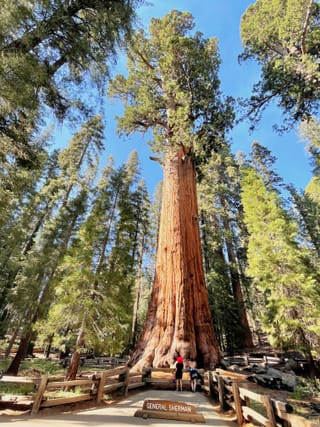
The General Sherman, from its base to its crown.
The food of inland California
Next to Joshua Tree, the Coachella Valley grows about 95% of the dates in the United States, and you also taste them as a date shake, a milkshake made with dates. In Bishop, Erick Schat’s bakery bakes a sheepherder bread said to come from the Basques.
Around Fresno, the San Joaquin Valley produces raisins and almonds. In Bakersfield, the Basque restaurants serve soup, beans and salad before the main course, to share.
Loop from L.A.


 +34stops
- 1Barker Dam · Keys View
- 2Amboy Crater · Kelso Depot
- 3Dante's View · Zabriskie Point
Free, no account needed — start from its places and make it yours.
Also worth reading
Wide open spaces
The Pacific Northwest, from the Olympic Peninsula to the Cascade volcanoes
Rainforests, a coast of headlands and lighthouses, redwoods and two active volcanoes. A two-week loop from Seattle, by way of the Olympic Peninsula, the Oregon coast and Mount Rainier.
Wide open spaces
Yellowstone, Grand Teton and Glacier: the great Rockies road trip
Three national parks on one road, from the Tetons to the glaciers of Montana, by way of the geysers of Yellowstone. Twelve days from Jackson to Kalispell, with bison by the roadside and two great mountain roads.
Wide open spaces
Highway 1, from San Francisco to Los Angeles via Big Sur
Highway 1 follows the Pacific from San Francisco to Los Angeles, past cliffs, surf beaches and towns that grew from the Spanish missions. Eight days on the road, with Big Sur in the middle.
A starting point, a few wishes — ViaLooma builds the trip day by day, map, stops and roadbook included.