Wales, from Pembrokeshire to Eryri
Medieval castles, a coast of cliffs and beaches, mountains where people speak Welsh. Eight days from Cardiff to Conwy, through the Brecon Beacons, Pembrokeshire, Cardigan Bay and Eryri.
Castles, a coast and mountains
This trip mostly follows the Welsh coast, from Cardiff to Conwy, with two stretches through the mountains. In the south, one castle follows another: Cardiff’s own, Castell Coch in the woods, then Caerphilly and its lakes. The road then reaches Bannau Brycheiniog, the Brecon Beacons, hills covered in moorland. From the Pont ar Daf car park, a path leads up Pen y Fan, 886 metres, the highest point in the south of the country.
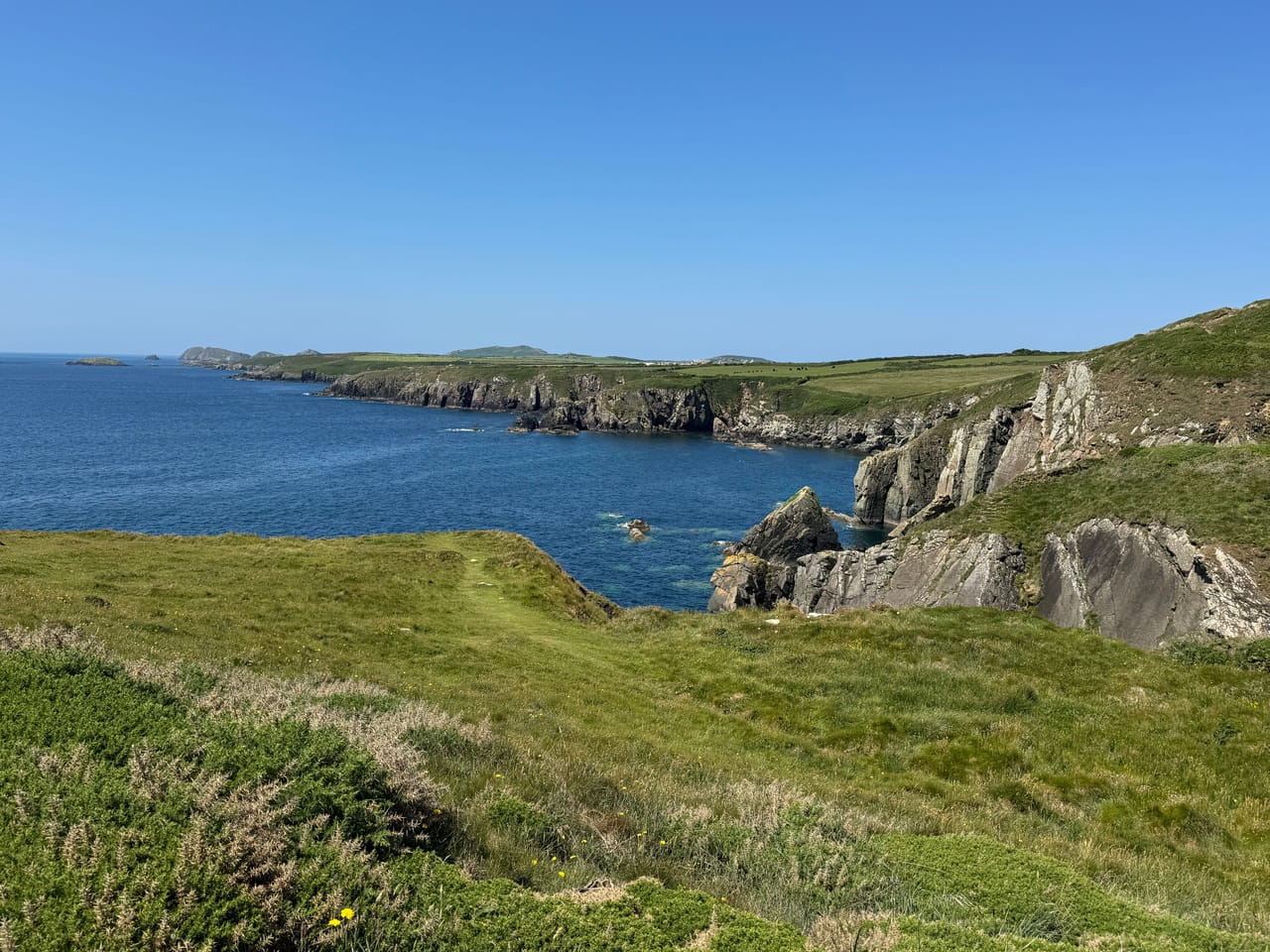
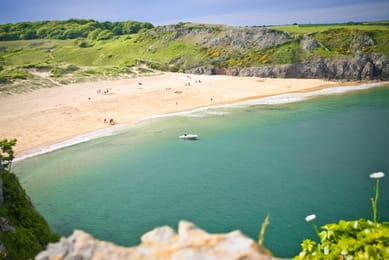
West of Swansea, the Gower peninsula ends at Rhossili Bay and the islet of Worm’s Head, which you can reach at low tide. Further on, Pembrokeshire is home to the only coastal national park in the UK. You reach Barafundle Bay on foot from Stackpole Quay. St Davids, the smallest city in the UK by population, grew up around its cathedral.
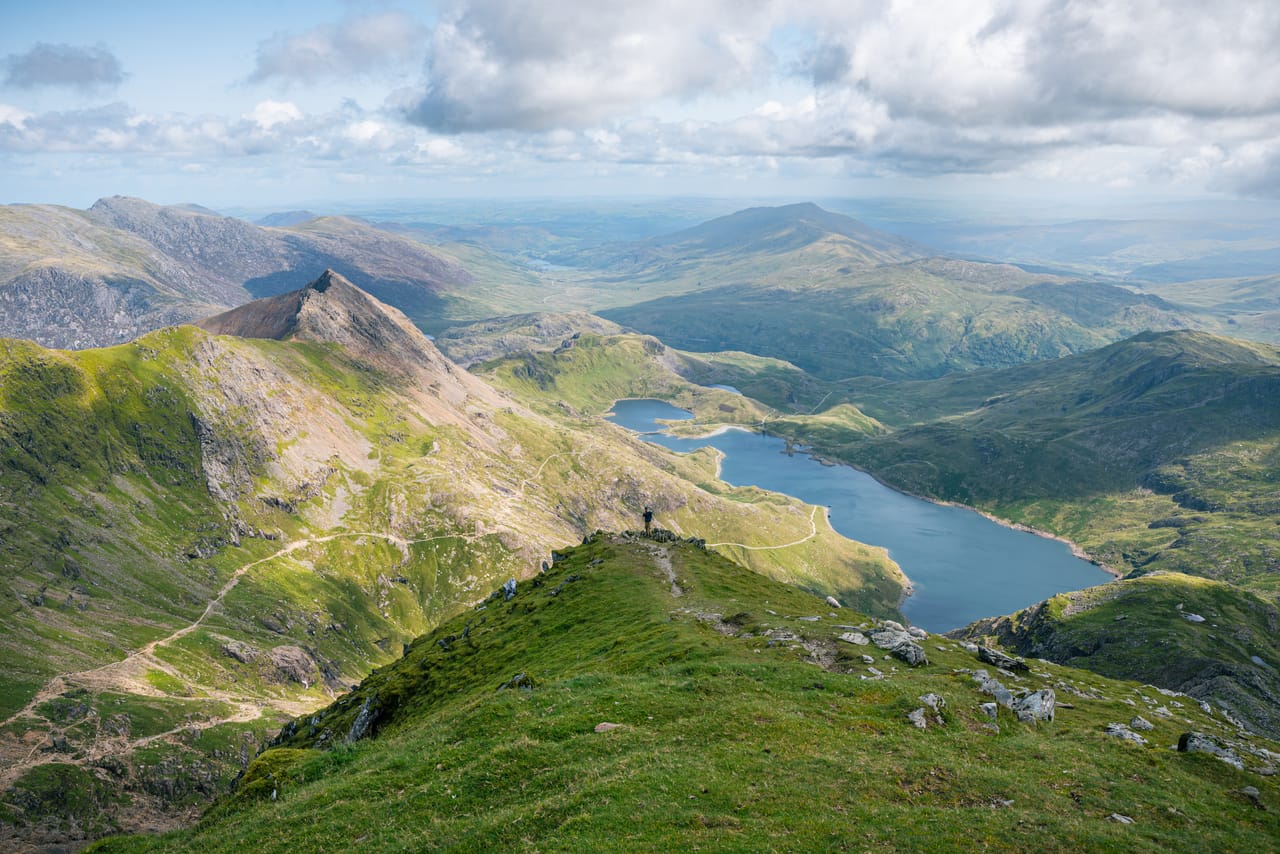
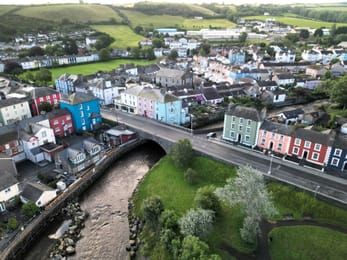
In the north, Cardigan Bay leads to Aberaeron, Aberystwyth, Harlech and Portmeirion. Then come the mountains of Eryri, Snowdonia. The Llanberis Pass climbs between cliffs up to Pen-y-Pass, where the paths to Yr Wyddfa, Snowdon, set off: 1,085 metres, the highest summit in the British Isles outside Scotland. A rack railway goes to the summit from Llanberis. After the pass, the road goes through Betws-y-Coed and follows the Conwy valley down to the sea.
The castles of Edward I
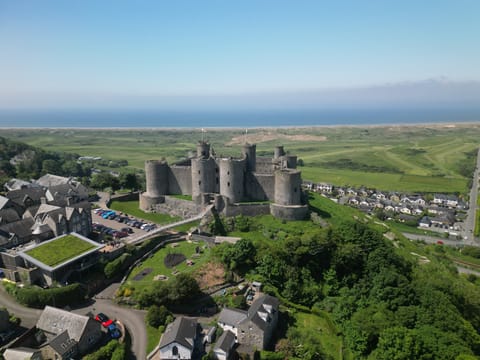
Harlech Castle looks down on the dunes from its rock. In the 13th century, the sea came almost to its foot, and the garrison could be supplied by boat. Edward I, King of England, had it built between 1283 and 1289. During the Wars of the Roses, Lancastrian supporters held it for seven years, until 1468. The siege is said to have inspired the song “Men of Harlech”.
Harlech is one of the great castles Edward I built after the death, in 1282, of Llywelyn ap Gruffudd, the last independent Prince of Wales. Together with Conwy, Caernarfon and Beaumaris, it has been a UNESCO World Heritage Site since 1986. At Caernarfon, Prince Charles was invested as Prince of Wales in 1969.
Other castles are older. Caerphilly, begun in 1268, is the second-largest in the UK. One of its towers leans. Henry Tudor, the future Henry VII, was born in 1457 at Pembroke Castle.
In the north-west, you hear Welsh every day.
Welsh and its legends
Welsh is a Celtic language, a cousin of Breton, and an official language of the country. Road signs are bilingual: Caerdydd for Cardiff, Tyddewi for St Davids. In the 2021 census, 17.8% of residents said they spoke it, and 64.4% in Gwynedd, around Caernarfon. In the north-west, you hear Welsh every day.
There are legends everywhere. In Beddgelert, a grave is said to be that of Gelert, Llywelyn the Great’s dog. The prince supposedly killed him, thinking he had attacked his son. The dog had saved the boy from a wolf. The grave was really laid out in the 18th century by an innkeeper. According to tradition, a woman who rose out of Llyn y Fan Fach, a lake in Bannau Brycheiniog, married a young local man, then went back into the lake after he had struck her three times.
Devil’s Bridge (Pontarfynach)
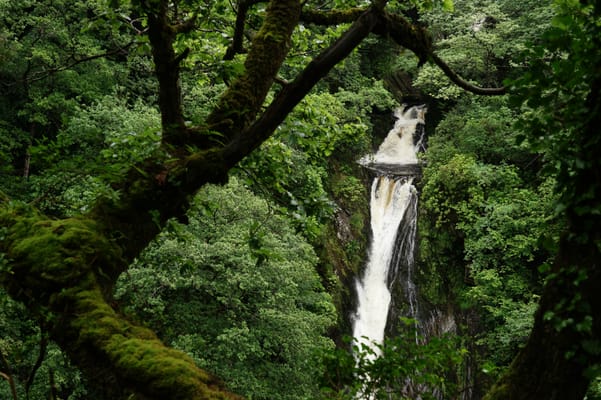
Three bridges, one above the other, span the Mynach gorge: the lowest, of uncertain date, then those of 1753 and 1901. Legend has it that the devil built the first one and an old woman tricked him with her dog. Right next to it, the river drops about 90 metres in a series of falls.
Practical notes
- When to go
- May to September, when the days are long. Rain is possible in any season.
- Getting there
- Cardiff is just over four hours from Dover, via the M20, the M25 and the M4. From Conwy, the A470 takes you back to Cardiff in about four hours.
- Access
- Drive on the left. Many single-track roads, with passing places. The speed limit is 20 mph (32 km/h) in most built-up areas.
- Sleeping in a van
- Wild camping only with the landowner’s permission. Plenty of campsites on the coast and around Llanberis.
- Worth knowing
- From late March to early November, parking at Pen-y-Pass is by online booking only. The road to St Govan’s Chapel closes on military firing days: the schedule is on gov.uk. Cardiff will charge a visitor levy from 1 April 2027.
- Allow
- Eight days, one more for Anglesey.
What not to miss
- 1Castell CochA fairy-tale castle, rebuilt in the 19th century by the architect William Burges.
- 2St Davids CathedralTucked into a hollow in a small valley, beside the ruined Bishop’s Palace.
- 3St Govan’s ChapelA small stone chapel wedged into the cliff, at the bottom of a flight of steps.
- 4LaugharneThe Boathouse where Dylan Thomas spent his last years, above the estuary.
- 5PortmeirionClough Williams-Ellis’s Italianate village, the setting of the TV series “The Prisoner”.
- 6ConwyThe castle and 1.3 kilometres of town walls, part of which you can walk.
Wales in pictures
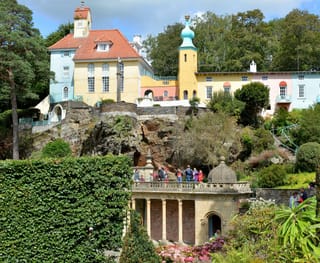
Portmeirion, its pastel houses and campanile among the gardens.
The Welsh table
The national dish is cawl, a lamb and leek stew. At teatime, there are Welsh cakes, small round cakes cooked on a griddle, and bara brith, a loaf made with dried fruit soaked in tea.
On the south coast, people eat bara lawr, or laverbread, a seaweed purée, with cockles and bacon. The Penderyn distillery, opened in 2000, brought Welsh whisky back to life.
Cardiff → Conwy


 +28stops
- 1Cardiff Castle · Castell Coch · Caerphilly Castle · Beacons Reservoir
- 2Dan yr Ogof · Rhossili Bay · Laugharne · Tenby
- 3Manorbier Castle · Barafundle Bay · St Govan's Chapel · Pembroke Castle
Free, no account needed — start from its places and make it yours.
Also worth reading
Coast and islands
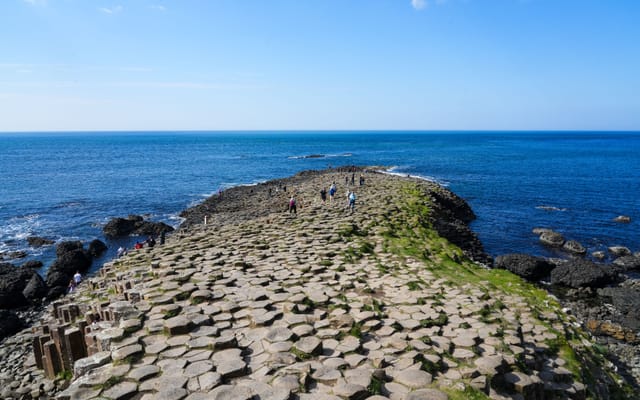
The Causeway Coastal Route, from Belfast to Derry~Londonderry
The coastal road of Northern Ireland, between cliffs, green valleys and ruined castles. Four days from Belfast to Derry~Londonderry, through the Glens of Antrim and past the Giant’s Causeway.
Wide open spaces
The Jurassic Coast, from Exmouth to Studland
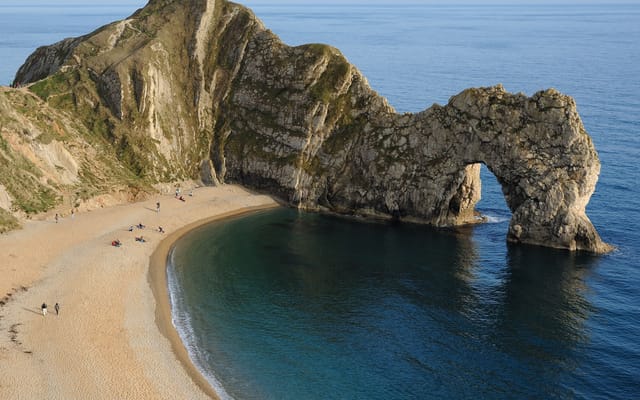
On England’s south coast, red, then golden, then white cliffs show 185 million years of the Earth’s history. This trip follows them over five days, from Exmouth in Devon to Studland in Dorset.
Wide open spaces
The North Coast 500, the great loop round the north of Scotland
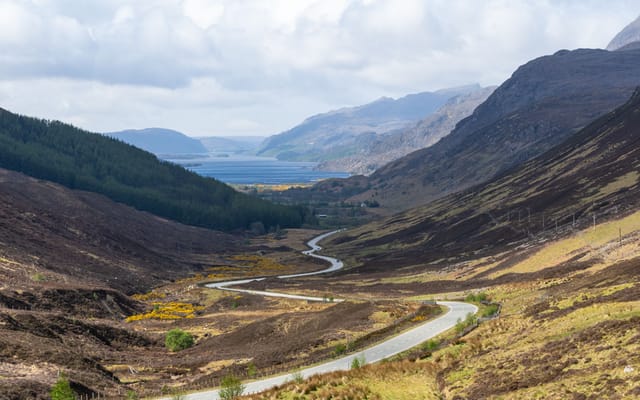
An 830-kilometre loop from Inverness, through the mountains of the west coast, the beaches of the north and the cliffs of Caithness. Nine days on roads that are often single-track, at the pace of the passing places.
A starting point, a few wishes — ViaLooma builds the trip day by day, map, stops and roadbook included.