The Cotswolds, from Blenheim to Castle Combe
Villages of honey-coloured stone, churches paid for by wool and roads between dry-stone walls and sheep. A five-day loop from Oxford, from Blenheim Palace to Castle Combe.
The Cotswolds, village by village
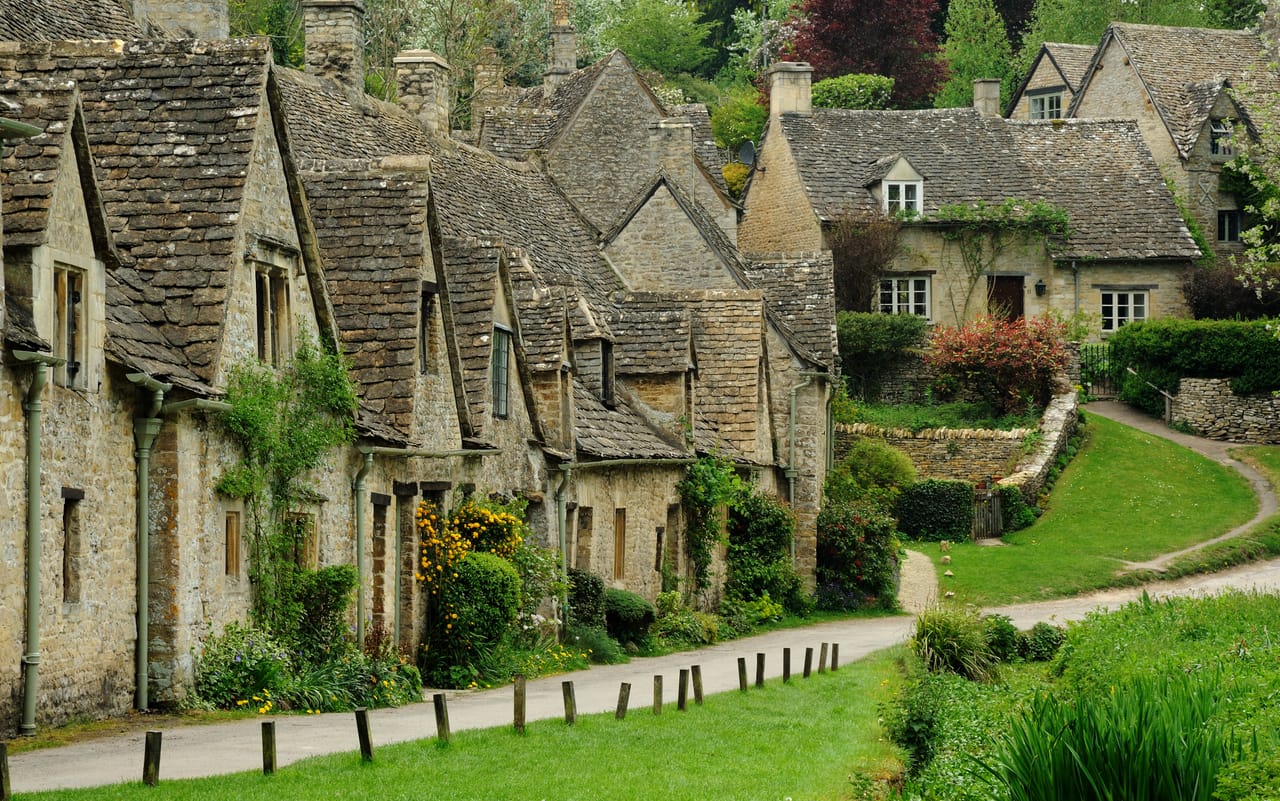
The Cotswolds are a region of limestone hills between Oxford and Bath. On the high ground, the road runs straight between dry-stone walls and sheep pastures. Then it drops into a valley, towards a village of honey-coloured houses, with its church, its pub and its little river.
In Burford, the high street runs down to the Windrush. In Bibury, which William Morris thought the most beautiful village in England, the cottages of Arlington Row line a meadow. From Bourton-on-the-Water, a footpath across the fields leads to the mill at Lower Slaughter. Stow-on-the-Wold, Chipping Campden and Broadway are old market towns.
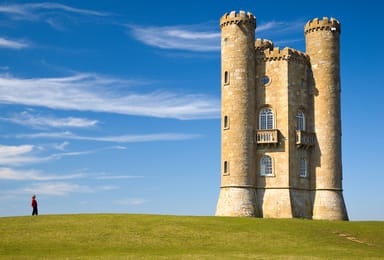
From Broadway Tower, at 312 metres, the view opens over the Vale of Evesham and, on a clear day, as far as the Malvern Hills. Along the way there are castles and gardens: Blenheim Palace, Sudeley Castle and, in spring, Hidcote Manor Garden, near Chipping Campden. The last stage is Castle Combe, at the bottom of a wooded valley.
Stone and wool
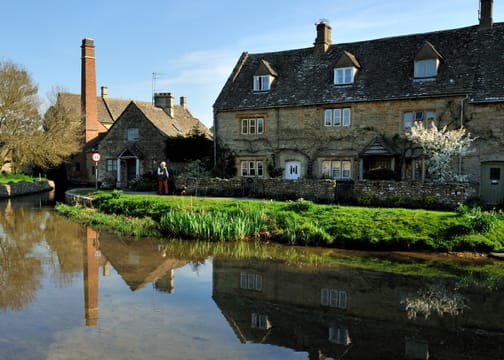
Almost everything is built of the same stone: a Jurassic oolitic limestone, quarried locally and full of fossils, such as sea urchins. You find it in the houses, the farms, the churches, the stone-slate roofs and miles of walls. Its colour changes from place to place: honey in the north, golden in the centre and the south, almost white in Bath. This is what gives the villages their unity. In Lower Slaughter, the mill and the houses along the River Eye are built of this stone.
In the Middle Ages, wool paid for many of the churches and houses. The trade peaked between 1250 and 1350, with a local long-wool breed, the Cotswold Lion, and Italian buyers. Merchants grown rich left behind wool churches, often too big for their village.
In Chipping Campden, a brass in St James’ Church honours William Grevel, who died in 1401, “the flower of the wool merchants of all England”. In Bibury, around 1380, Arlington Row was a monastery’s wool store. In the 17th century, it was turned into weavers’ cottages. It appeared inside older British passports.
In the Middle Ages, wool paid for many of the churches and houses.
From the Romans to Churchill
The Romans came long before the wool merchants. The Fosse Way, their road from Exeter to Lincoln, crosses the region in straight lines; the A429 still follows it. Cirencester, the old Corinium, was the second-largest town in Roman Britain by area. In Malmesbury, the Norman abbey holds the tomb, now empty, of King Æthelstan, the first king of all England, who died in 939.
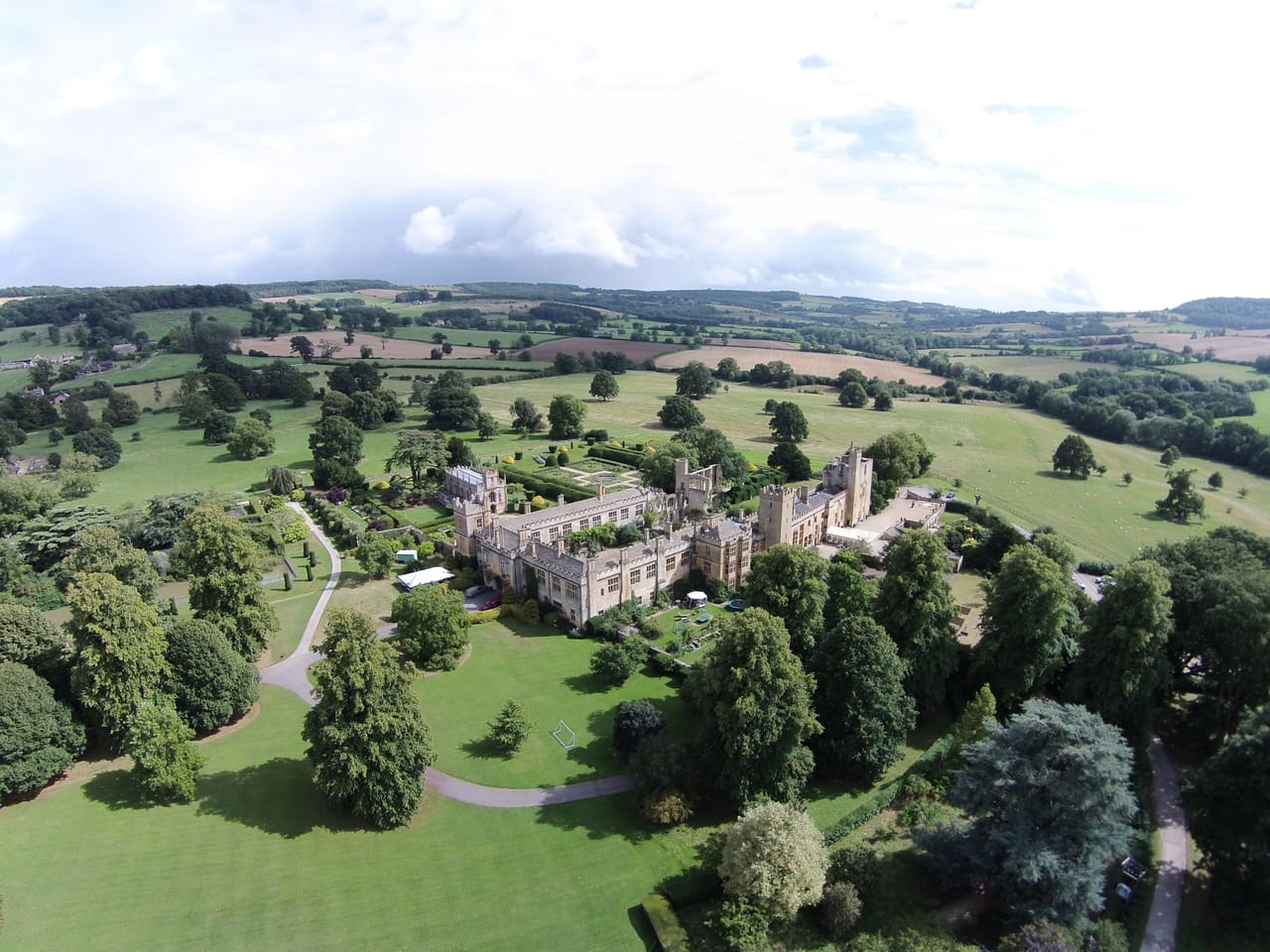
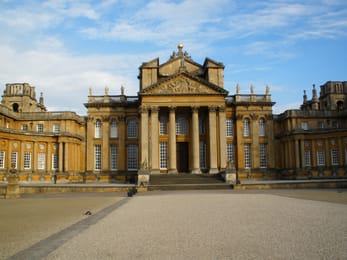
Sudeley Castle is where Catherine Parr, the last wife of Henry VIII, is buried. Blenheim Palace was built for the Duke of Marlborough after his victory of 1704. Winston Churchill was born there in 1874; since 1965 he has lain in the churchyard at Bladon, close by.
Lacock Abbey
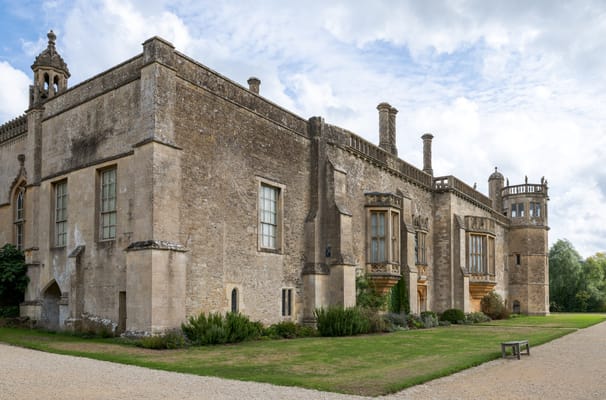
An abbey founded in 1232 for nuns, later turned into a house. In 1835, William Henry Fox Talbot made one of the oldest known photographic negatives here, of one of the abbey’s windows. Its cloisters were used as a set for the first two Harry Potter films.
Practical notes
- When to go
- April to June for the gardens, September for fewer crowds. Several castles and manor houses close from November to March.
- Getting there
- Oxford is an hour by train from London and an hour by road from Heathrow Airport.
- Access
- You drive on the left, with no tolls. In a van, avoid the narrow single-track lanes around the Slaughters and Snowshill. In Castle Combe, you park at the top of the hill.
- Sleeping in a van
- Caravan and Motorhome Club sites at Burford, Moreton-in-Marsh and Broadway. Wild camping needs the landowner’s permission.
- Worth knowing
- In Oxford, since 28 September 2026, cameras have been checking, on a trial basis, streets closed to cars without a permit (traffic filters). You get a warning first, then a fine. Use a Park & Ride.
- Allow
- Five days for the loop, half a day more for Lacock or Bath.
What not to miss
- 1Christ Church, OxfordLewis Carroll’s college, whose dining hall inspired the one at Hogwarts.
- 2Blenheim PalaceThe Baroque palace listed by Unesco in 1987, its park and its great lake.
- 3Broadway TowerA tower from 1799 and, next to it, a Cold War observation post that you can visit.
- 4Snowshill ManorMore than 22,000 objects collected by Charles Paget Wade, including 26 suits of samurai armour.
- 5PainswickIts churchyard of clipped yews; legend has it there can never be more than 99.
- 6Castle CombeAn almost untouched village on the By Brook, a filming location for War Horse.
The Cotswolds in pictures
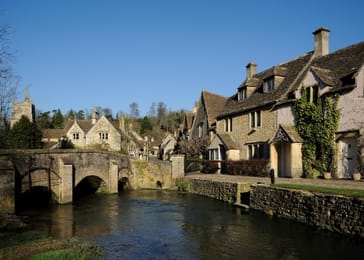
The stone bridge over the By Brook, in Castle Combe.
The Cotswolds table
Cotswolds food is country food. In the afternoon, you have a cream tea: tea, scones, clotted cream and jam. Local lamb is on pub menus. In Bibury, a farm founded in 1902 raises trout in the water of the Coln.
Double Gloucester, an orange hard cheese, is the one that is rolled every year, at the end of May, down Cooper’s Hill, near Gloucester. The pubs serve beer from local breweries, such as Hook Norton or Donnington.
Loop from Oxford


 +14stops
- 1Christ Church · St Martin's Church, Bladon · Blenheim Palace · Burford
- 2Bibury · Bourton-on-the-Water · Lower Slaughter · Stow-on-the-Wold
- 3Chipping Campden · Broadway Tower · Snowshill Manor · Broadway
Free, no account needed — start from its places and make it yours.
Also worth reading
Coast and islands
The Causeway Coastal Route, from Belfast to Derry~Londonderry
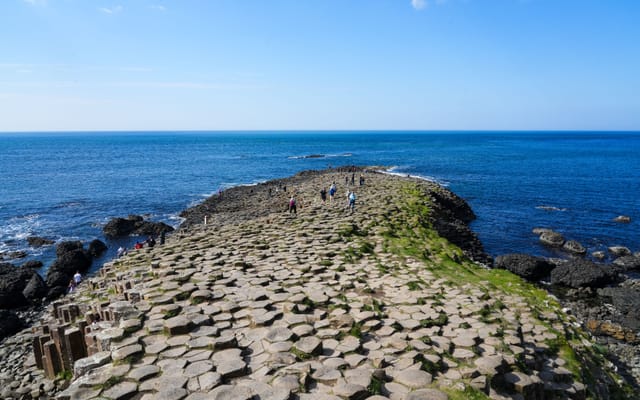
The coastal road of Northern Ireland, between cliffs, green valleys and ruined castles. Four days from Belfast to Derry~Londonderry, through the Glens of Antrim and past the Giant’s Causeway.
Wide open spaces
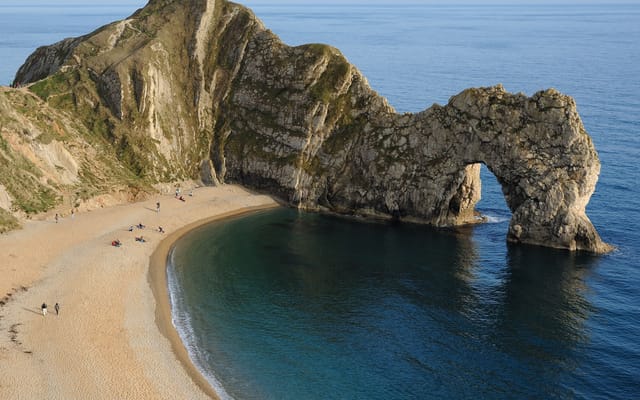
The Jurassic Coast, from Exmouth to Studland
On England’s south coast, red, then golden, then white cliffs show 185 million years of the Earth’s history. This trip follows them over five days, from Exmouth in Devon to Studland in Dorset.
Wide open spaces
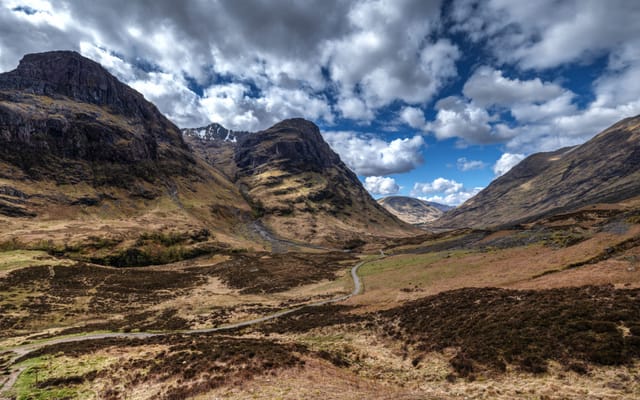
The West Highlands, from Glasgow to Inverness
Six days from Glasgow to Inverness on the great road through the west of Scotland. Lochs, Rannoch Moor, Glencoe, the Road to the Isles and castles by the water.
A starting point, a few wishes — ViaLooma builds the trip day by day, map, stops and roadbook included.