Cornwall, from Tintagel to Land’s End
Granite cliffs, fishing harbours, mines on the edge of the Atlantic and Tintagel Castle. A week on a loop from Exeter, by way of Dartmoor, to Land’s End and the Lizard.
From the moors of Dartmoor to the Atlantic cliffs
The trip begins in Devon, on Dartmoor, a high plateau of moorland and granite where ponies graze by the roadside. You climb the rocks of Haytor, then the road crosses the Tamar and reaches the north coast and its fishing villages: Port Isaac, where the series Doc Martin was filmed, then Padstow.
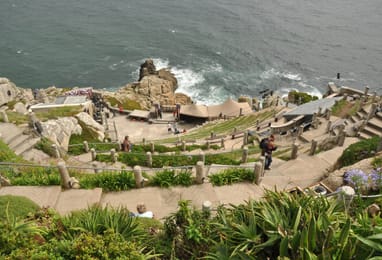
Further west, the coast is a mix of cliffs, surf beaches and old mines. From St Ives to Land’s End, the B3306 runs through Zennor, between small fields enclosed by low stone walls. Near the point, the Minack Theatre is cut into the cliff.
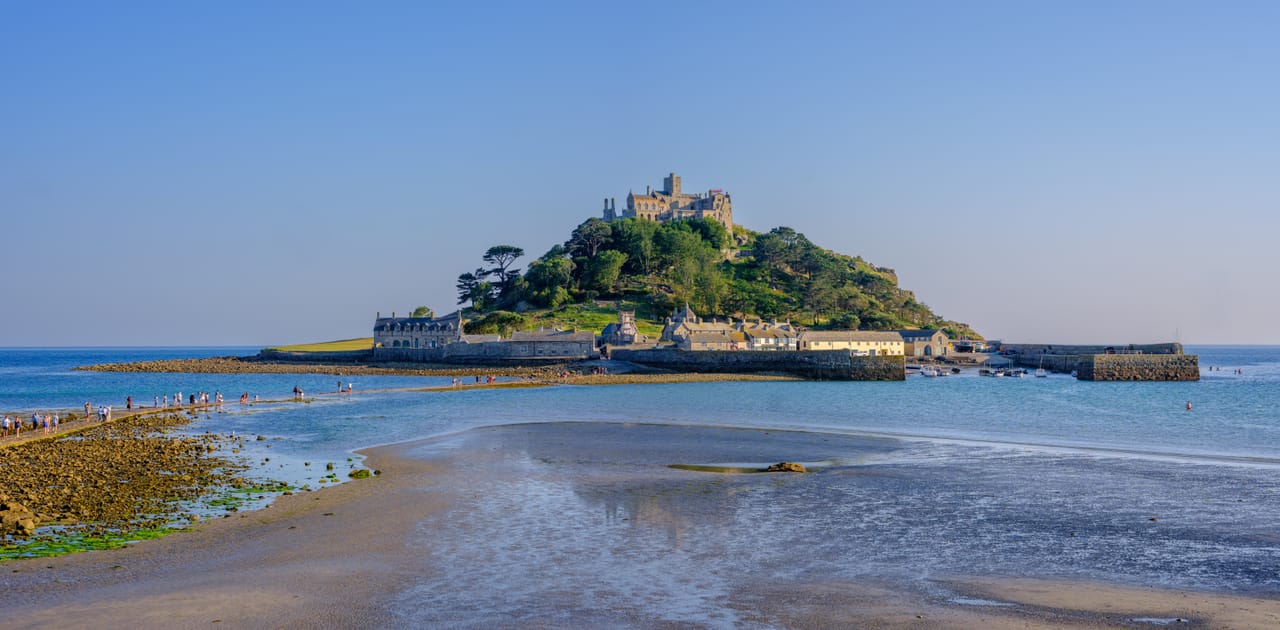
The south coast is more sheltered. You walk across to St Michael’s Mount when the tide goes out, head down to Kynance Cove on the Lizard peninsula, then back up to Falmouth and Fowey. Away from the main roads, the lanes are often single-track, between high banks that flower in spring.
Legends and language of Cornwall
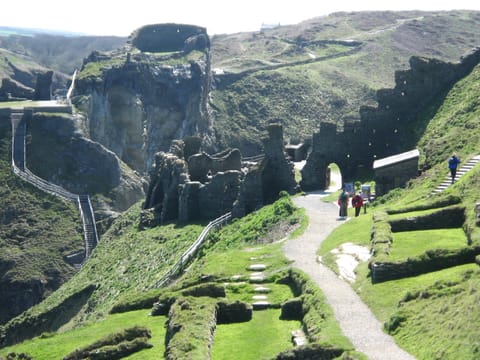
Around 1136, Geoffrey of Monmouth made Tintagel the place where King Arthur was conceived. In the 1230s, Richard, Earl of Cornwall, had a castle built there, the one whose ruins you see today, probably drawn by the legend. Excavations have shown that the site was lived in long before, in the 5th and 6th centuries, with pottery brought from the Mediterranean. Since 2019, a footbridge has led to the island.
According to tradition, the giant Cormoran lived on St Michael’s Mount and stole the farmers’ cattle, until a boy, Jack, trapped him in a pit. The island was home to a priory that belonged to Mont Saint-Michel. The St Aubyn family, who bought it in the 17th century, still live there.
Cornwall also has its own language, Cornish, a Celtic language close to Breton. Dolly Pentreath, who died in Mousehole in 1777, is said to have been its last native speaker; this is disputed. Cornish was revived in the 20th century. You find it in many place names beginning with Tre-, Pol- and Pen-, such as Tregony, Polzeath or Penzance.
At Botallack, the tunnels ran under the sea.
The land of tin and copper
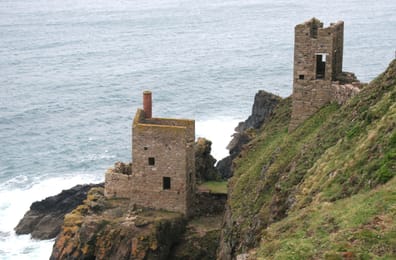
For a long time, Cornwall lived from its tin and copper mines. In the 19th century, steam engines pumped water out of the shafts. Their stone buildings, the engine houses, still stand on the cliffs at Wheal Coates and Botallack. At Botallack, the tunnels ran under the sea. This mining landscape has been a UNESCO World Heritage Site since 2006.
When the price of copper, then tin, collapsed in the 1860s and 1870s, thousands of miners left for America, Australia or South Africa. The series Poldark was filmed in these settings and at Charlestown, a harbour built from 1791. Nearby, the Eden Project has filled a former china clay pit since 2001.
Lanhydrock House
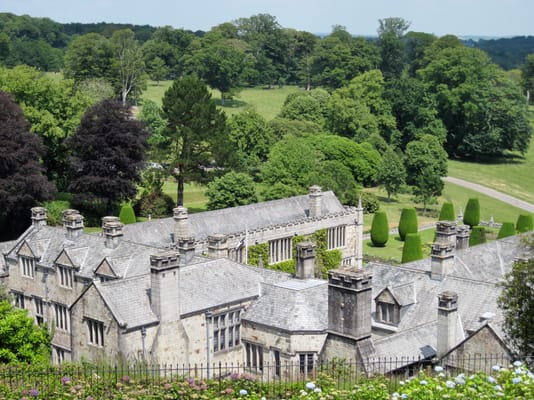
A large National Trust house, rebuilt after the fire of 1881. The north wing survived, with its long gallery and its plaster ceiling moulded with scenes from Genesis. You visit the drawing rooms, the kitchens and the servants’ bedrooms, then the park.
Practical notes
- When to go
- May–June for the cliffs in flower and the gardens, September for more peace and quiet. August is very busy. In winter, several sites open on fewer days.
- Getting there
- Exeter is about three hours from London by road. From France, ferries link Roscoff to Plymouth.
- Access
- Drive on the left. Many minor roads are single-track, with passing places: favour A roads. Port Isaac, Mousehole, Polperro and St Ives are explored on foot.
- Sleeping in a van
- Plenty of campsites on both coasts. On Dartmoor, sleeping in a vehicle is not allowed in car parks or by the roadside.
- Worth knowing
- Book Tintagel, the Minack and St Michael’s Mount online; you reach the Mount on foot at low tide or, from March to October, by boat. The Tamar Bridge charges a toll eastbound.
- Allow
- A week for the loop, ten days to take your time.
What not to miss
- 1Land’s End and the MinackThe end of England and, close by, the theatre cut into the cliff by Rowena Cade, opened in 1932.
- 2Kynance CoveA cove of serpentine rocks, whose beach disappears at high tide.
- 3Lizard PointThe southernmost point of the island of Great Britain, with its lighthouse.
- 4St IvesAn artists’ harbour town, with Tate St Ives and Barbara Hepworth’s studio and garden.
- 5GodrevyThe headland facing the lighthouse said to have inspired Virginia Woolf. You often see seals there.
- 6Mousehole and PolperroTwo fishing harbours with narrow lanes, explored on foot from the car park.
Cornwall in pictures
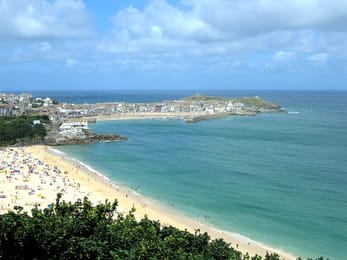
St Ives, Porthminster beach and the old town.
The Cornish table
The Cornish pasty is a pastry filled with beef, potato, swede and onion, crimped along the side, and has had protected geographical status since 2011. For a cream tea, the jam goes on the scone here before the clotted cream; in Devon, it’s the other way round. In Mousehole, stargazy pie, a pie with sardine heads poking out of the crust, is served on 23 December.
The harbours live from fishing: crab, lobster, mackerel. Padstow is known for chef Rick Stein’s fish restaurants. You can also try saffron buns, small sweet buns flavoured with saffron.
Loop from Exeter


 +22stops
- 1Haytor Rocks · Widecombe in the Moor · Postbridge Clapper Bridge · Boscastle
- 2Tintagel Castle · Port Isaac · Padstow
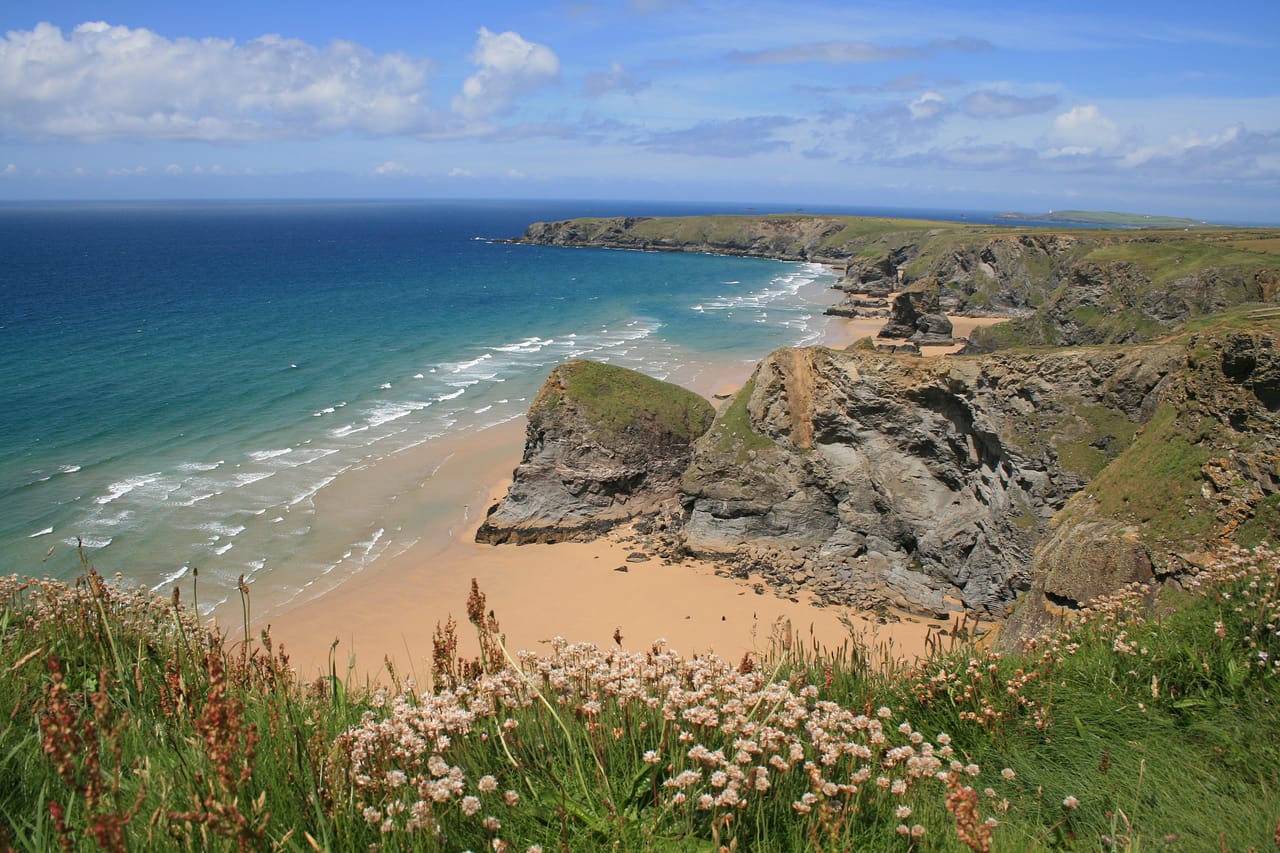
- 3Bedruthan Steps · Wheal Coates Tin Mine · Godrevy · St Ives
Free, no account needed — start from its places and make it yours.
Also worth reading
Coast and islands
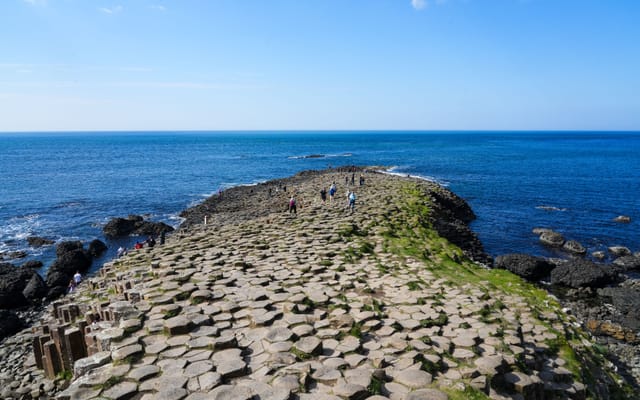
The Causeway Coastal Route, from Belfast to Derry~Londonderry
The coastal road of Northern Ireland, between cliffs, green valleys and ruined castles. Four days from Belfast to Derry~Londonderry, through the Glens of Antrim and past the Giant’s Causeway.
Wide open spaces
The Jurassic Coast, from Exmouth to Studland
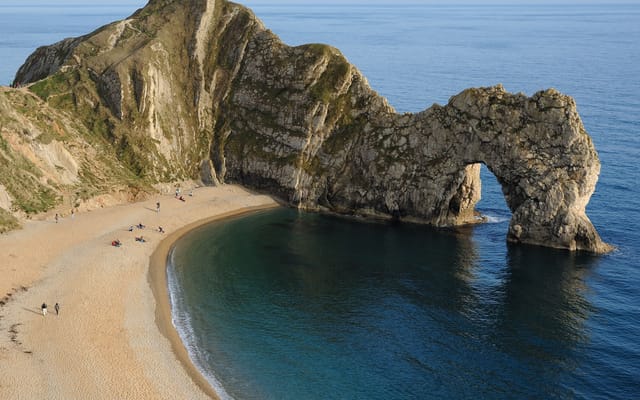
On England’s south coast, red, then golden, then white cliffs show 185 million years of the Earth’s history. This trip follows them over five days, from Exmouth in Devon to Studland in Dorset.
Coast and islands
Wales, from Pembrokeshire to Eryri
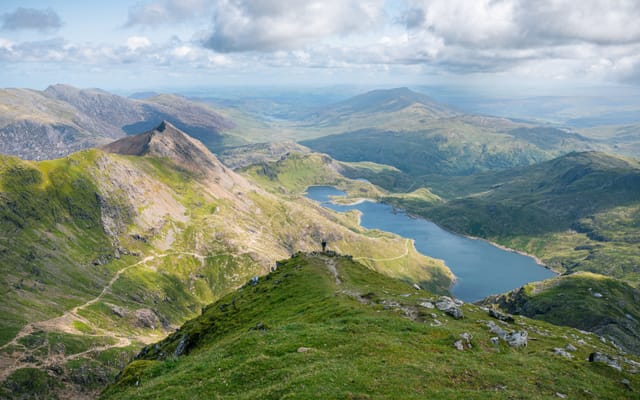
Medieval castles, a coast of cliffs and beaches, mountains where people speak Welsh. Eight days from Cardiff to Conwy, through the Brecon Beacons, Pembrokeshire, Cardigan Bay and Eryri.
A starting point, a few wishes — ViaLooma builds the trip day by day, map, stops and roadbook included.