The Costa Blanca, from Alicante to Cabo de la Nao
A rock planted in the sea at Calp, hilltop villages a quarter of an hour from the beaches, palm groves laid out by the Moors and the headlands of the Marina Alta. Five days on a loop from Alicante, between the coast and the mountains inland.
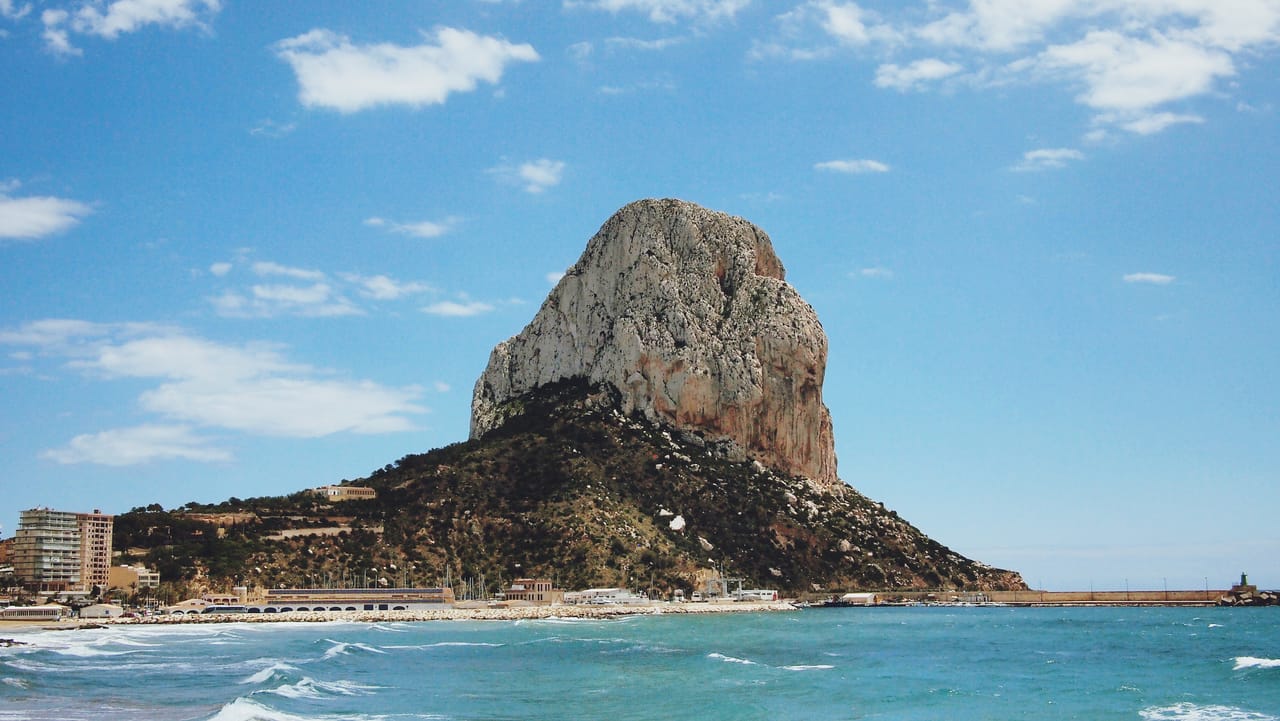
The coast and the mountains behind
The Costa Blanca road follows the sea, but the mountains are never far away. The Costa Blanca is often reduced to the towers of Benidorm. Yet between Altea and Dénia, limestone sierras over a thousand metres high tower above the coast. Their valleys of almond and cherry trees are a quarter of an hour from the beaches. You can spend the morning in a hilltop village and the afternoon in a cove.
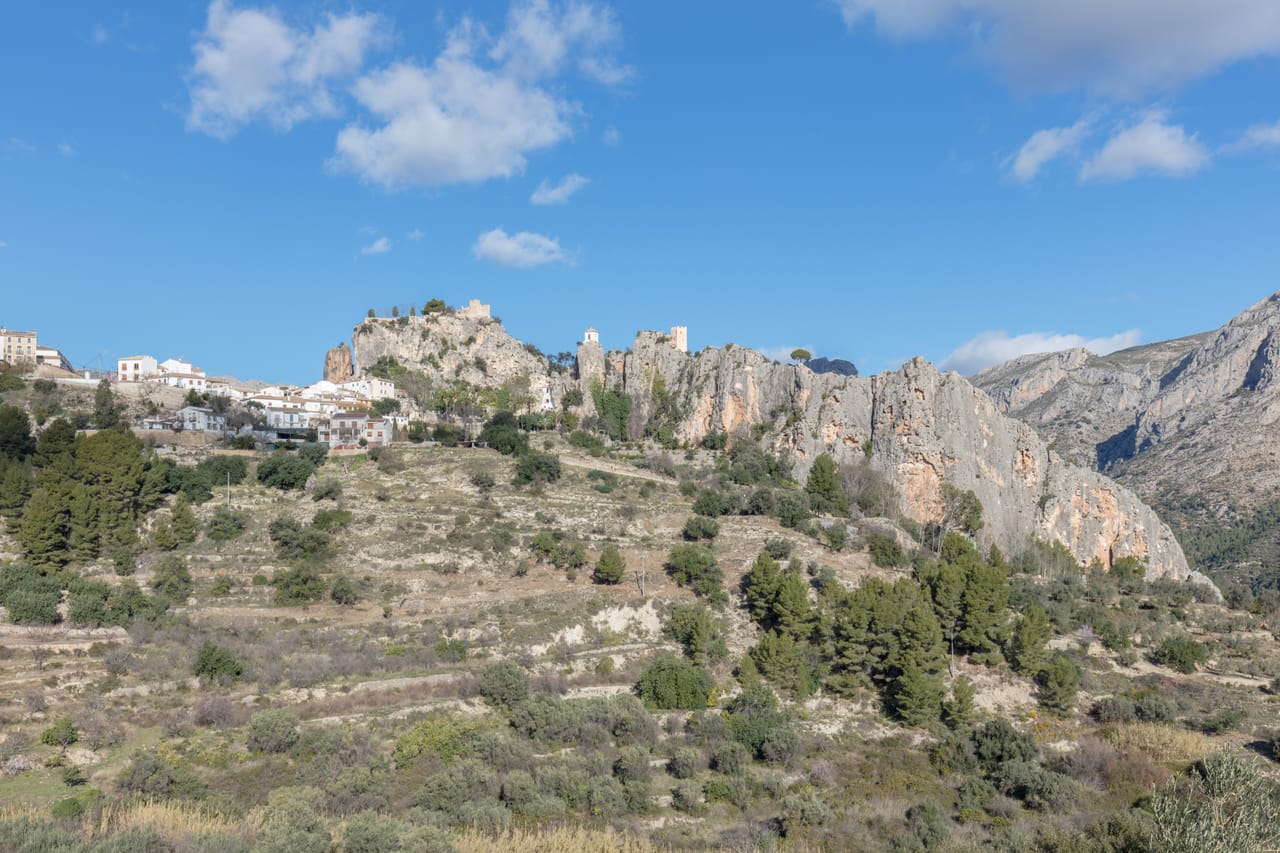
The trip starts in Alicante. Santa Bárbara castle stands on top of Mount Benacantil: from there you see the whole bay and the old Barrio de Santa Cruz. Down below, the Explanada runs along the harbour beneath the palms, paved with a wave-patterned marble mosaic. Further north, Villajoyosa lines up its brightly painted houses above the beach, near its 16th-century walls. Behind Benidorm, Guadalest is built on a rocky pinnacle above a turquoise reservoir. You enter it through a tunnel cut into the rock. On the coast, Altea climbs in white lanes up to its church with domes of blue ceramic tiles.
The climate is very mild: people here claim more than three hundred days of sunshine a year, and in winter you eat out on the terrace. The region speaks two languages, Castilian and Valencian, and the road signs say so: Alacant, Xàbia, Calp.
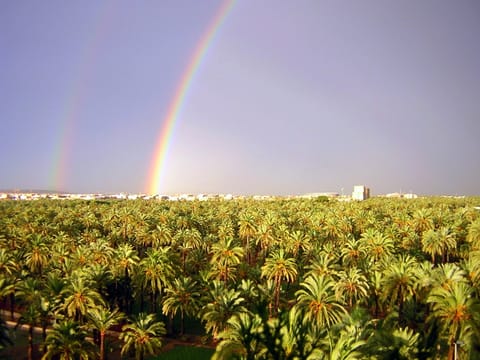
The palm grove of Elche
Half an hour from Alicante, Elche has the largest palm grove in Europe. Tens of thousands of date palms grow in the very heart of the town, in gardens called huertos. The palm grove was laid out by the Moors, with an irrigation system that still works. It has been a World Heritage Site since 2000. In the Huerto del Cura, the Imperial Palm has seven arms on a single trunk.
Every year, fronds are tied up and bleached away from the light. They are carried in Palm Sunday processions all over Spain.
It was also near Elche, at the site of La Alcudia, that the Lady of Elche, an Iberian bust, was found in 1897. Today it is kept in the National Archaeological Museum in Madrid.
On a clear day, you can make out Ibiza on the horizon.
The Peñón de Ifach and the headlands of the Marina Alta
At Calp, the Peñón de Ifach rises more than three hundred metres above the sea. It is tied to the land by an isthmus. It has been a nature park since 1987. A path climbs to the summit through a tunnel; the number of walkers is capped each day.
To the north-east, the Marina Alta reaches out towards the Balearics with two headlands, Cabo de San Antonio and Cabo de la Nao. Around them, and as far as La Granadella to the south, the coast of Xàbia is cut into coves. On a clear day, you can make out Ibiza on the horizon. Dénia, at the foot of the Montgó massif, keeps its castle above the harbour. From there, the ferries leave for the Balearics. The loop comes back inland. At Bocairent, the Covetes dels Moros are hollows carved into the cliff. The castle at Biar is the last stop.
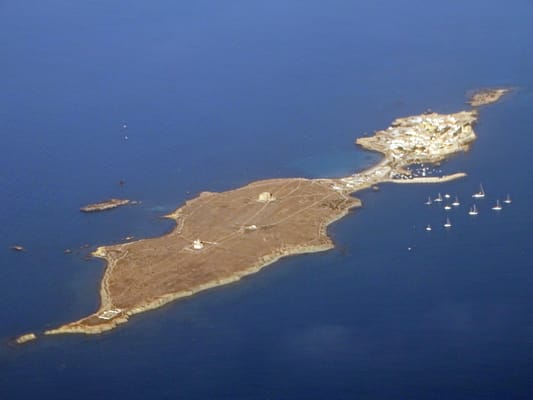
Isla de Tabarca
It is the only inhabited island in the Valencian Community. Its village was fortified in the 18th century to house former Genoese captives from Tabarka, in Tunisia. Around the island, a marine reserve protects very clear water; people come for the day, and eat caldero, a rice dish cooked with fish.
Practical notes
- When to go
- March to June, then September–October. Winter is mild and quiet; in July–August the coast is packed.
- Getting there
- Alicante has a large international airport. The high-speed train links it to Madrid in about two and a half hours. Valencia is under two hours away by road.
- Access
- All tarmac. The mountain roads inland are narrow and winding, and the coast road is busy in summer.
- Sleeping in a van
- Plenty of campsites and motorhome aires: the region is very popular in winter. Overnight parking is banned on most seafronts.
- Worth knowing
- Access to the top of the Peñón de Ifach must be booked online; parking at La Granadella is limited and often full in summer.
- Allow
- Five days for the loop, a week to add Tabarca and some hiking in the mountains.
What not to miss
- 1Santa Bárbara castleAlicante’s fortress, with the view over the whole bay.
- 2The palm grove of ElcheAn oasis in the heart of a town, and the Imperial Palm of the Huerto del Cura.
- 3GuadalestA village perched on its rock above a turquoise lake.
- 4The Fonts de l’AlgarNear Callosa d’en Sarrià, waterfalls and pools of cool water, for a swim in summer.
- 5The Peñón de IfachThe emblem of the Costa Blanca, climbed by a path to the summit.
- 6Cabo de la NaoThe cliffs and coves of Xàbia, facing the Balearics.
The Costa Blanca in pictures
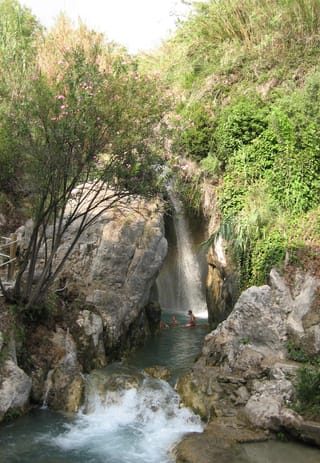
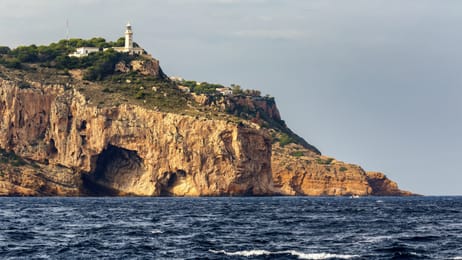
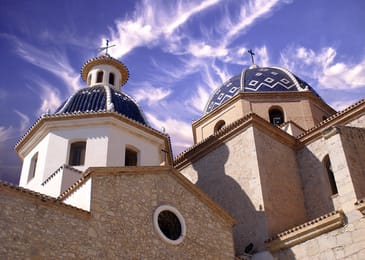
The waterfalls of the Fonts de l’Algar.
The Costa Blanca table
Here, people eat rice: paella was born further north, around Valencia, but Alicante has recipes of its own — arroz a banda, cooked in fish stock, Elche’s arroz con costra, baked under a crust of egg, and arròs negre, black with cuttlefish ink.
Turrón, a nougat of almonds and honey, comes from Xixona, in the hills inland, which has made it an industry. And in Dénia, the red prawn is rated among the best in the Mediterranean.
Loop from Alicante


 +9stops
- 1Palmeral de Elche · Castillo de Santa Bárbara
- 2Murallas de Villajoyosa · Guadalest · Fuentes del Algar
- 3Iglesia Parroquial de Nuestra Señora del Consuelo · Penyal d'Ifac
Free, no account needed — start from its places and make it yours.
Also worth reading
Coast and islands
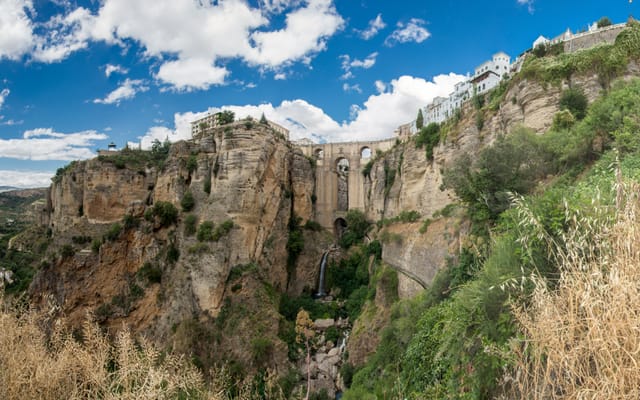
The white villages, Ronda and the Costa de la Luz
Whitewashed villages clinging to the sierras, a town split in two by a ravine, then the Atlantic, its dunes and the wind of Tarifa. Six days on a loop from Jerez, between the mountains of Cádiz and the wildest coast in Andalusia.
Coast and islands
Cantabria, Asturias and the Picos de Europa
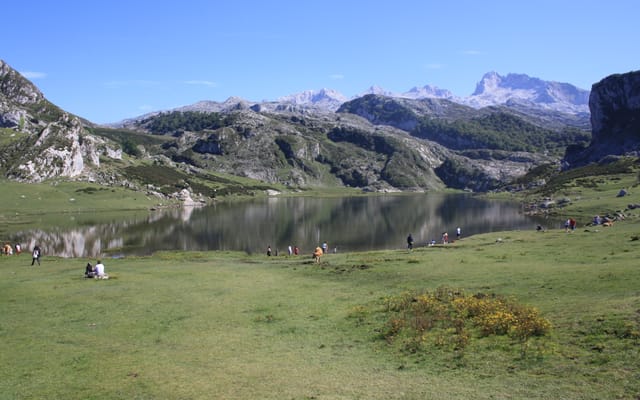
Between a coast of cliffs and limestone peaks rising twenty kilometres from the sea lies green Spain: painted caves, stone villages, high lakes and cider poured from a height. A week from Santander to Oviedo.
Coast and islands
The Costa Brava, from Girona to Cadaqués
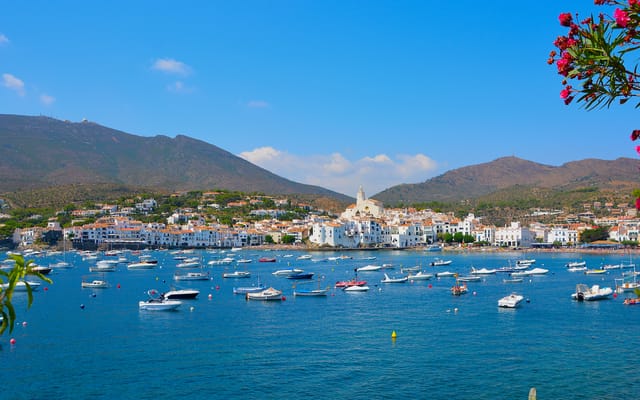
Coves between the pines, fishing villages turned artists’ refuges, medieval villages inland and, at the very end, Cap de Creus. Six days on a loop from Girona, in the footsteps of Dalí.
A starting point, a few wishes — ViaLooma builds the trip day by day, map, stops and roadbook included.