Sardinia, from hidden coves to nuraghi
People come for the turquoise water; they leave with Bronze Age towers, shepherds’ villages and a language of its own. Twelve days on a loop from Olbia, through Gallura, Catalan Alghero, Cagliari and the Gulf of Orosei.
Round the island
The route goes round Sardinia by the coast, with detours inland. In the north-east, Gallura is granite country: boulders rounded by the wind, scrub and coves of turquoise water. On this almost empty shore, Prince Karim Aga Khan founded the Costa Smeralda consortium in 1962. The coves of the Costa Smeralda became the best-known image of the island.
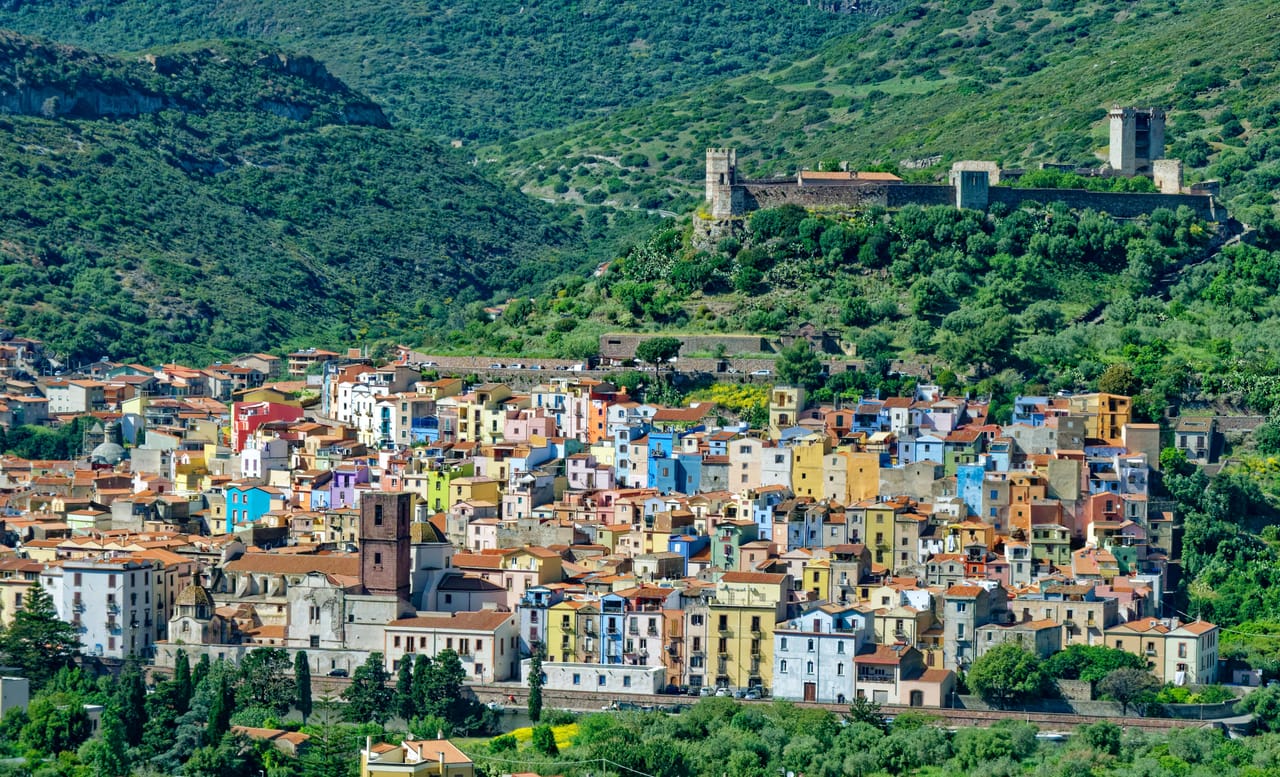
To the west, a coast road runs beside the sea, from Alghero to Bosa, whose coloured houses climb towards a castle. In the centre, the Barbagia is a land of mountains and shepherds’ villages. The Romans called it Barbaria: its tribes escaped their law. In Orgosolo, more than two hundred murals cover the façades; the first dates from 1969.
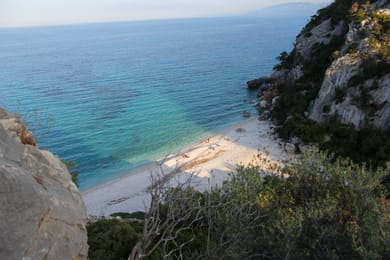
To the east, the limestone of the Supramonte drops into the sea. In places, the walls of the Gorropu gorge are more than five hundred metres high. On the Gulf of Orosei, most coves can only be reached on foot or by boat. Cala Goloritzé, below its 143-metre spire, can only be reached on foot.
The nuraghi and Su Nuraxi
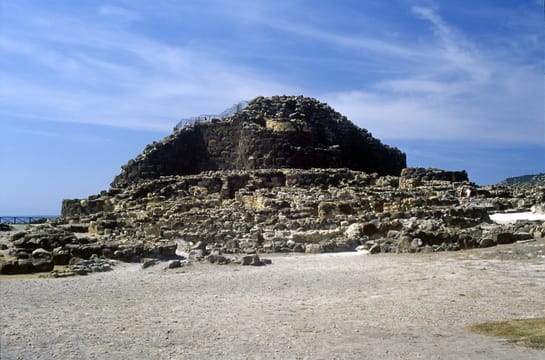
The nuraghi are dry-stone towers, raised mostly in the second millennium BC. The island has some seven thousand of them. The most famous, Su Nuraxi, at Barumini, lay buried under its own rubble for centuries. A son of the village, the archaeologist Giovanni Lilliu, uncovered it in the 1950s: a central tower that once rose to more than eighteen metres, a four-towered bastion and a village around it. A World Heritage Site since 1997, it is visited with a guide.
Everywhere, by the roadside, stand towers older than Rome. The people who built them left no writing. They also raised the giants’ tombs, as at Coddu Vecchiu, and dug sacred wells. At Santa Cristina, at noon on the equinoxes, the sun lights the stairway down to the water.
Older still, the domus de janas, the “fairy houses”, are tombs cut into the rock. They have been on the World Heritage List since 2025.
Everywhere, by the roadside, stand towers older than Rome.
One island, several languages
Before Latin, the island wrote in Phoenician. The Nora Stone, found in 1773 near Pula, is considered the oldest Phoenician inscription known outside the Levant. Today Cagliari is also Casteddu on the road signs: the region has recognised Sardinian since 1997. In the north, people speak Gallurese, close to Corsican.
In Alghero, people speak Catalan. In 1354 Peter IV of Aragon took the town and replaced its inhabitants with Catalan settlers. One resident in two can still speak Algherese, and the streets carry two names.
Caprera
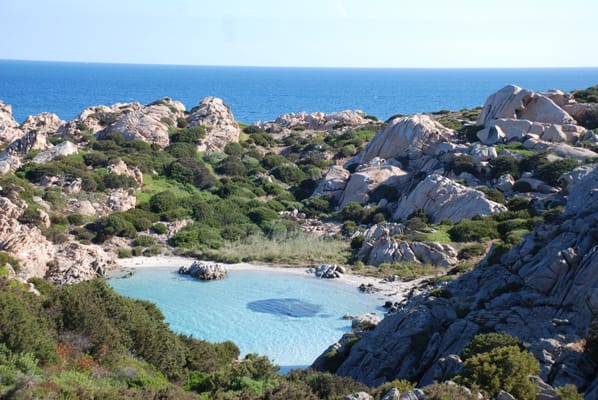
No road reaches the La Maddalena archipelago: a ferry from Palau, then a bridge to Caprera. Garibaldi lived here from 1856 until his death in 1882; his white house is a museum. The rest of the island, a national park, falls away in granite coves.
Practical notes
- When to go
- May–June and September–October. July and August overload the beaches and ferries; many excursion boats stop at the end of October.
- Getting there
- No bridge: ferries to Olbia from Genoa, Livorno and Civitavecchia, to Golfo Aranci from Livorno, to Porto Torres from Toulon, and from Bonifacio to Santa Teresa Gallura. Airports at Olbia, Alghero and Cagliari.
- Access
- All tarmac. Slow hairpins in a van on the coast road from Alghero to Bosa and over the Genna Silana pass; the climb to Golgo is narrow and steep.
- Sleeping in a van
- Aires and campsites along the coast. Many coastal towns ban motorhomes from parking overnight near the beaches.
- Worth knowing
- La Pelosa must be booked from mid-May to mid-October, Cala Goloritzé in season. Taking sand or shells is forbidden. Old town centres are often ZTL: park at the edge.
- Allow
- Twelve days for the round of the island, two weeks with La Maddalena and the south-west, from Pan di Zucchero to the island of San Pietro.
What not to miss
- 1Capo TestaA granite headland sculpted by the wind, facing Corsica.
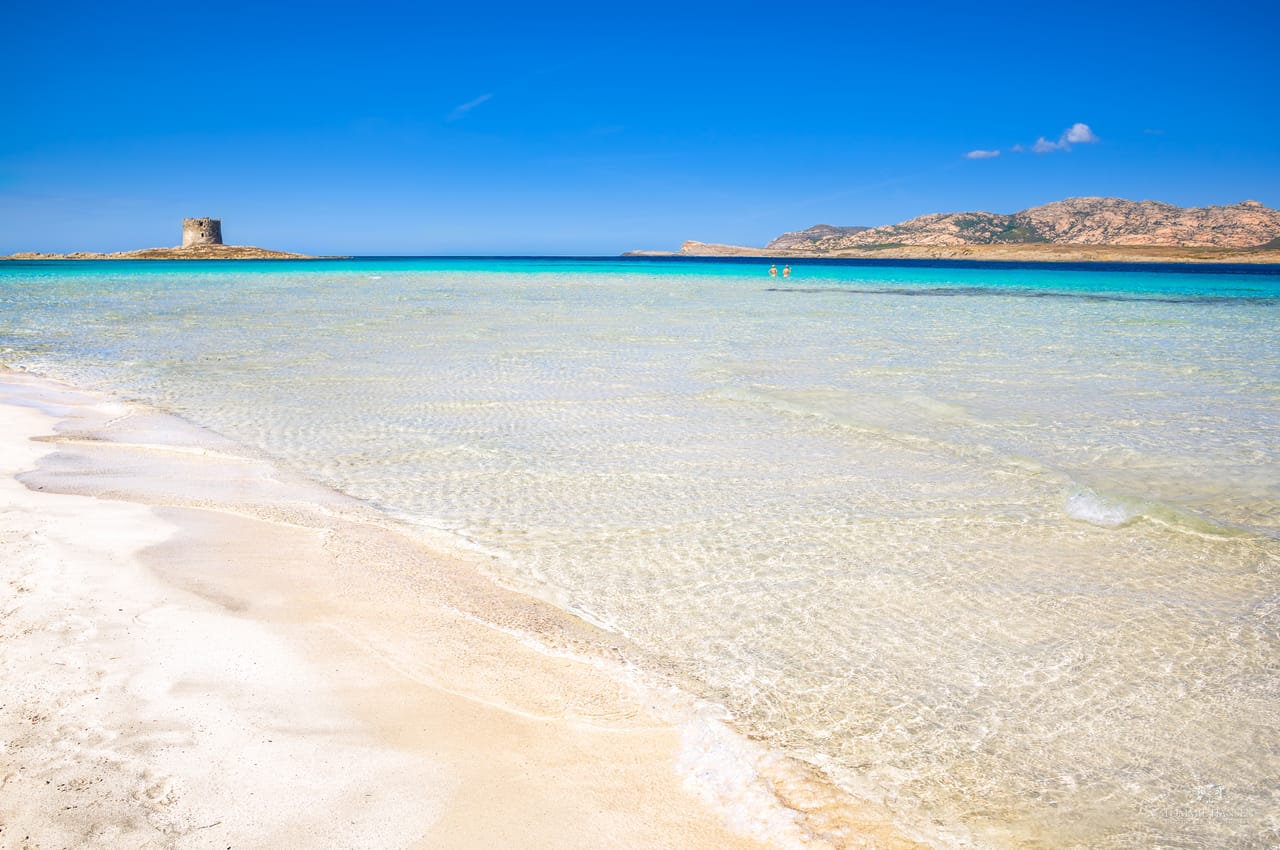
- 2La PelosaWhite sand, a watchtower on its islet and, opposite, Asinara, a prison island closed to the public until 1999.
- 3Neptune’s GrottoSea permitting, you go down 654 steps clinging to the cliff of Capo Caccia, or by boat from Alghero from April to October.
- 4The coast road from Alghero to BosaA balcony road above the sea, below the heights where griffon vultures nest.
- 5TharrosA Phoenician then Roman city at the tip of the Sinis; the giants of Mont’e Prama are on show in Cabras, close by.
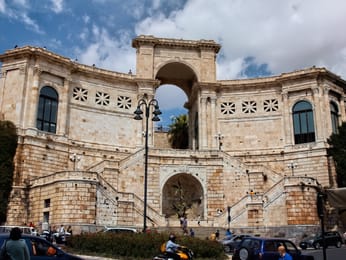
- 6Cagliari’s CastelloThe Pisans’ upper town, its fourteenth-century towers and the Saint-Remy bastion.
Sardinia in pictures
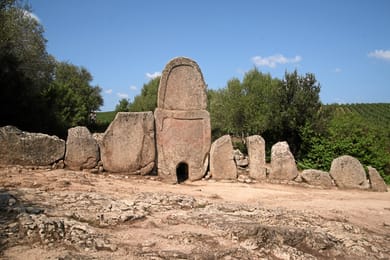
The giants’ tomb of Coddu Vecchiu, near Arzachena, and its great rounded stele.
The Sardinian table
Sardinian cuisine is first of all a shepherds’ cuisine. Pane carasau is a crisp flatbread nicknamed “music paper”. Porceddu, roast suckling pig, is eaten on feast days. In Ogliastra, culurgiones are potato, pecorino and mint ravioli, sealed like an ear of wheat.
The bottarga of grey mullet from the Cabras lagoon is the most prized. You finish with a seada, a fried cheese pastry dipped in honey, and a glass of mirto, the myrtle liqueur. Cannonau is the island’s great red; Vermentino di Gallura, its only DOCG.
Loop from Olbia


 +33stops
- 1San Pantaleo · Capriccioli · Porto Cervo · Tomba dei giganti di Coddu Vecchiu
- 2Capo d'Orso · Santa Teresa Gallura · Capo Testa · Isola Rossa
- 3Domus de janas della Roccia dell'Elefante · Castelsardo · Spiaggia della Pelosa
Free, no account needed — start from its places and make it yours.
Also worth reading
Wide open spaces
Calabria, from the Costa degli Dei to the forests of the Sila
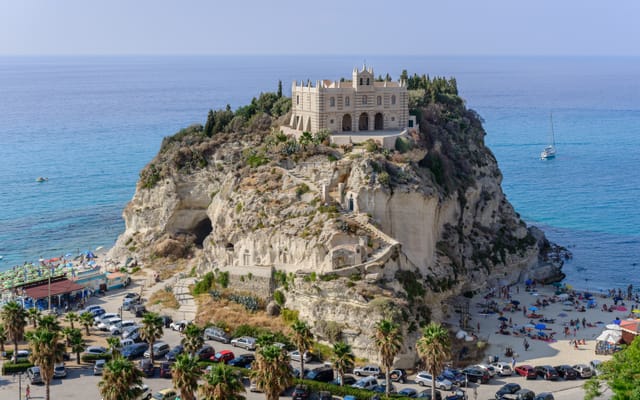
The toe of the boot, caught between two seas with barely a plain to its name: from the cliffs of Tropea to Scilla’s rock, from the temples of Magna Graecia to the pines of the Sila. A week-long loop from Lamezia Terme, first along the coast, then up into the mountains.
Coast and islands
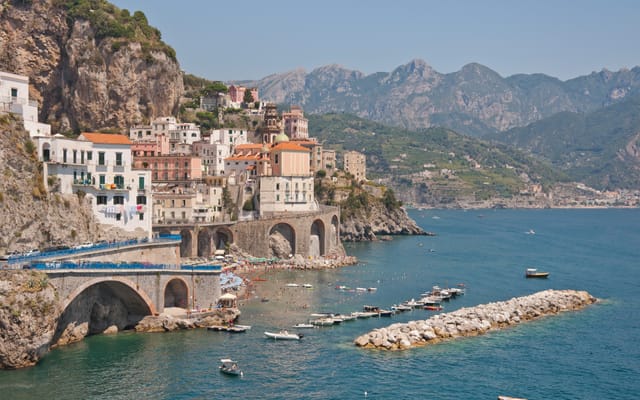
The Amalfi Coast, from Vesuvius to Ravello
Vesuvius and the towns it buried in AD 79, then the Amalfi Coast, its terraced villages and its lemon trees above the sea. Five days on a loop from Naples, from Pompeii to Ravello.
Coast and islands
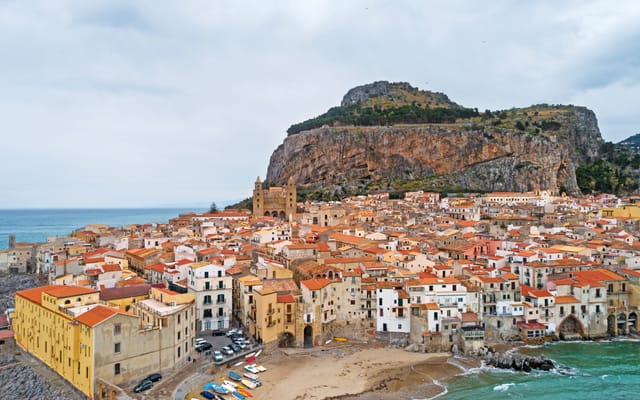
Sicily, from golden mosaics to Greek temples
Greeks, Carthaginians, Arabs and Normans all coveted this island, and each left their mark: Doric temples, golden mosaics, Baroque towns rebuilt after an earthquake. Eleven days on a loop from Palermo, by way of Etna, Syracuse and the salt pans of the west.
A starting point, a few wishes — ViaLooma builds the trip day by day, map, stops and roadbook included.