South Moravia, castles and vineyards around Brno
Castles among fishponds, hills of vines and caves you visit by boat. A five-day loop from Brno, down to the Austrian border.
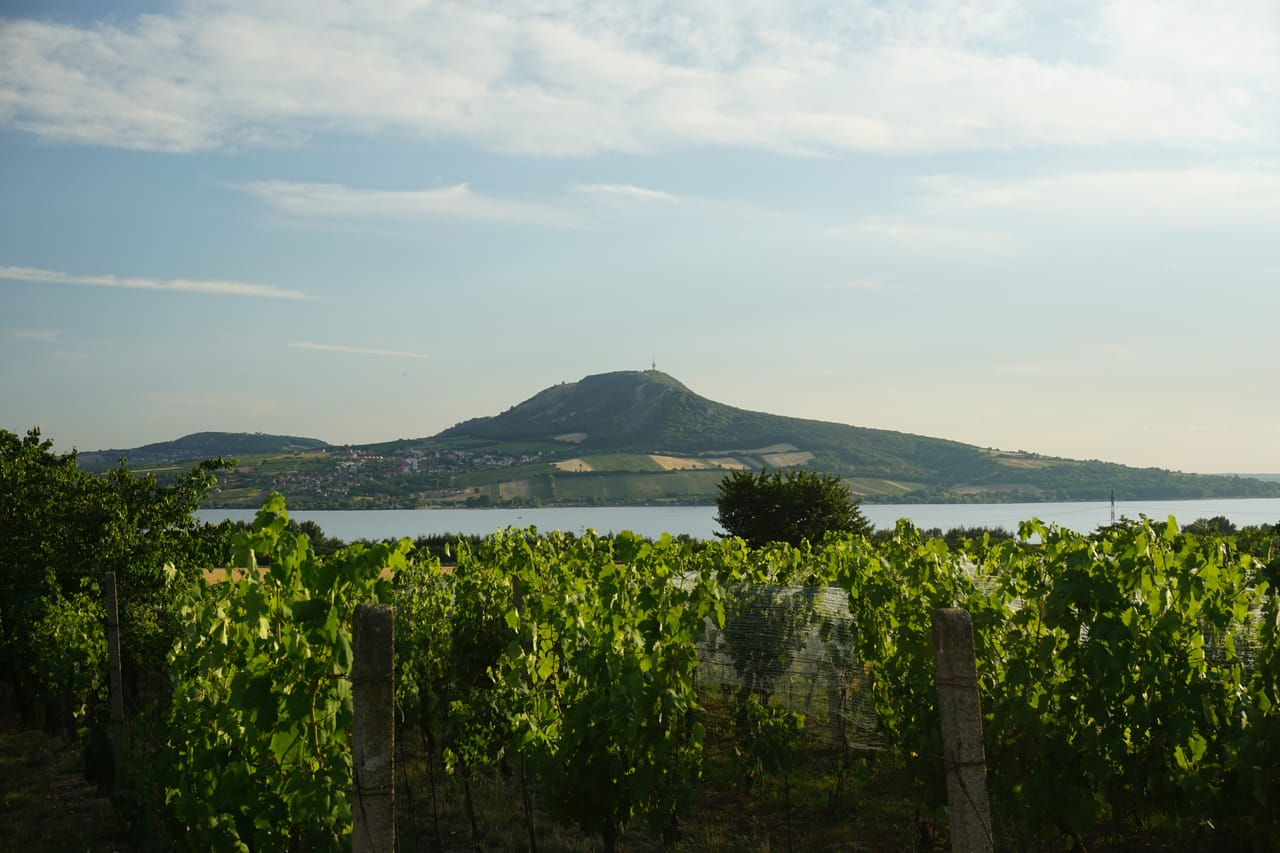
Castles, vines and caves around Brno
South of Brno, Moravia slopes gently down towards Austria. The back roads run between fishponds, tree-lined avenues and wine villages. Around Lednice and Valtice, the princes of Liechtenstein shaped a whole landscape: two castles, a park, and follies scattered through the fields and woods.
Further west, the limestone ridge of the Pálava hills rises above the plain. From the ruins of Děvičky, you can see the Nové Mlýny lakes and, below, the villages of Pavlov and Dolní Věstonice. Across the area, whole lanes are lined with wine cellars. In late summer and autumn, people drink burčák, a young wine that is still fermenting.
North of Brno, the Moravian Karst is a land of forests and caves. To the south-west, Znojmo looks down on the Dyje, which separates the Podyjí and Thayatal national parks.
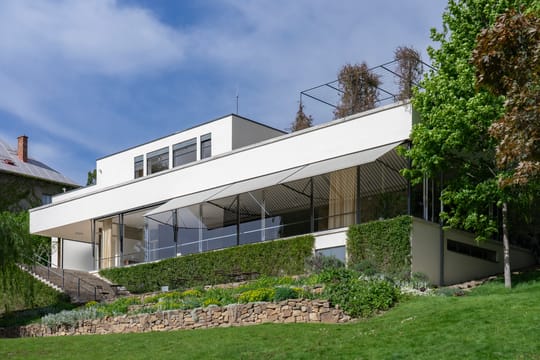
Brno and Villa Tugendhat
Brno did a lot of building between the two world wars. Its best-known building is Villa Tugendhat, built from 1928 to 1930 by Ludwig Mies van der Rohe and Lilly Reich for a family of industrialists. The living room has a wall of Moroccan onyx and two large windows that drop down into the floor. The villa has been a Unesco World Heritage Site since 2001. Visits are guided and must be booked.
On 26 August 1992, Václav Klaus and Vladimír Mečiar met at the villa to settle the split of Czechoslovakia, which took effect on 1 January the following year.
The centre is easy to explore on foot, from Špilberk fortress, once a prison of the Austrian Empire, to the cathedral on Petrov hill. At the Augustinian abbey in Old Brno, the monk Gregor Mendel discovered the laws of heredity by crossing peas.
For centuries, the border between Moravia and Austria ran through the middle of the Liechtensteins’ lands.
The Liechtensteins, from Valtice to Lednice
Long before they gave their name to a principality, the Liechtensteins were Austrian lords. They held Mikulov from 1249 to 1560. Valtice, their main residence, and Lednice belonged to them until 1945. For centuries, the border between Moravia and Austria ran through the middle of the Liechtensteins’ lands. In the early 19th century, they turned the countryside between Lednice and Valtice into a landscape park, with a minaret about sixty metres tall, a Temple of Apollo and a fake ruin. Lednice Castle was rebuilt between 1846 and 1858 in a neo-Gothic style inspired by England. The Lednice–Valtice Cultural Landscape has been a Unesco World Heritage Site since 1996.
In 1945, the Beneš decrees confiscated the family’s property, as it was considered German. In 2020, the Principality of Liechtenstein took the dispute to the European Court of Human Rights.
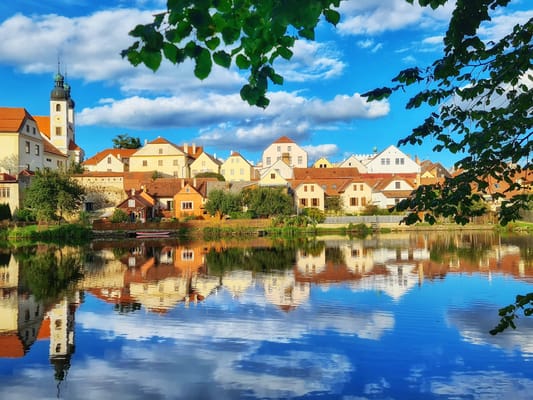
Telč
Telč is surrounded by ponds. Its arcaded main square is lined with Renaissance and baroque houses with colourful gables. The centre has been a Unesco World Heritage Site since 1992. You can head back to Brno via Telč, then Třebíč, whose Jewish quarter and Basilica of St Procopius are also on the Unesco list.
Practical notes
- When to go
- May to October, with the grape harvest in September. Most castles open from April to October.
- Getting there
- Brno is an hour and a half from Vienna and just over two hours from Prague on the D1 motorway. Airports at Brno and Vienna.
- Access
- Everything is tarmac. Cars are banned in Lednice park and on the way to the Punkva Caves, served by a little road train from Skalní mlýn.
- Sleeping in a van
- Campsites around Lednice, at the Nové Mlýny lakes, near Znojmo and in the Moravian Karst. In Brno, park and ride, then the tram.
- Worth knowing
- Electronic vignette for motorways up to 3.5 tonnes (edalnice.cz), per-kilometre toll above that. Villa Tugendhat is often fully booked weeks ahead; book Punkva too.
- Allow
- Five days for the loop, one more for Telč and Třebíč.
What not to miss
- 1The Punkva CavesA walk underground to the bottom of the Macocha Abyss, 138 metres deep, then a boat ride out along the underground river.
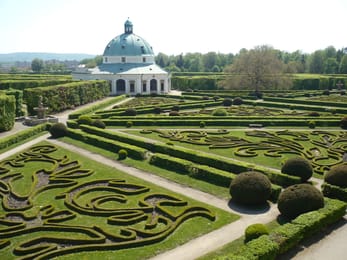
- 2KroměřížThe castle of the Archbishops of Olomouc and the baroque Flower Garden, with its 244-metre colonnade.
- 3AusterlitzThe battlefield of 2 December 1805, its Cairn of Peace and Slavkov Castle, where the armistice was signed.
- 4MikulovThe castle and its giant barrel from 1643, the Jewish cemetery and the Stations of the Cross on Holy Hill.
- 5The Znojmo rotunda12th-century frescoes showing the Přemyslid princes; small-group visits from April to October, except when it rains.
- 6The Hardegg viewpointTwo kilometres on foot from Čížov and its stretch of Iron Curtain, for a view over the Dyje and Austria.
South Moravia in pictures
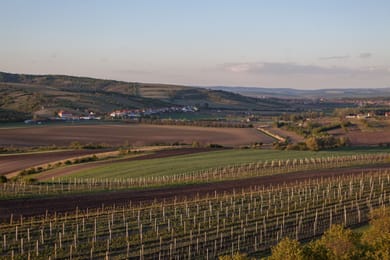
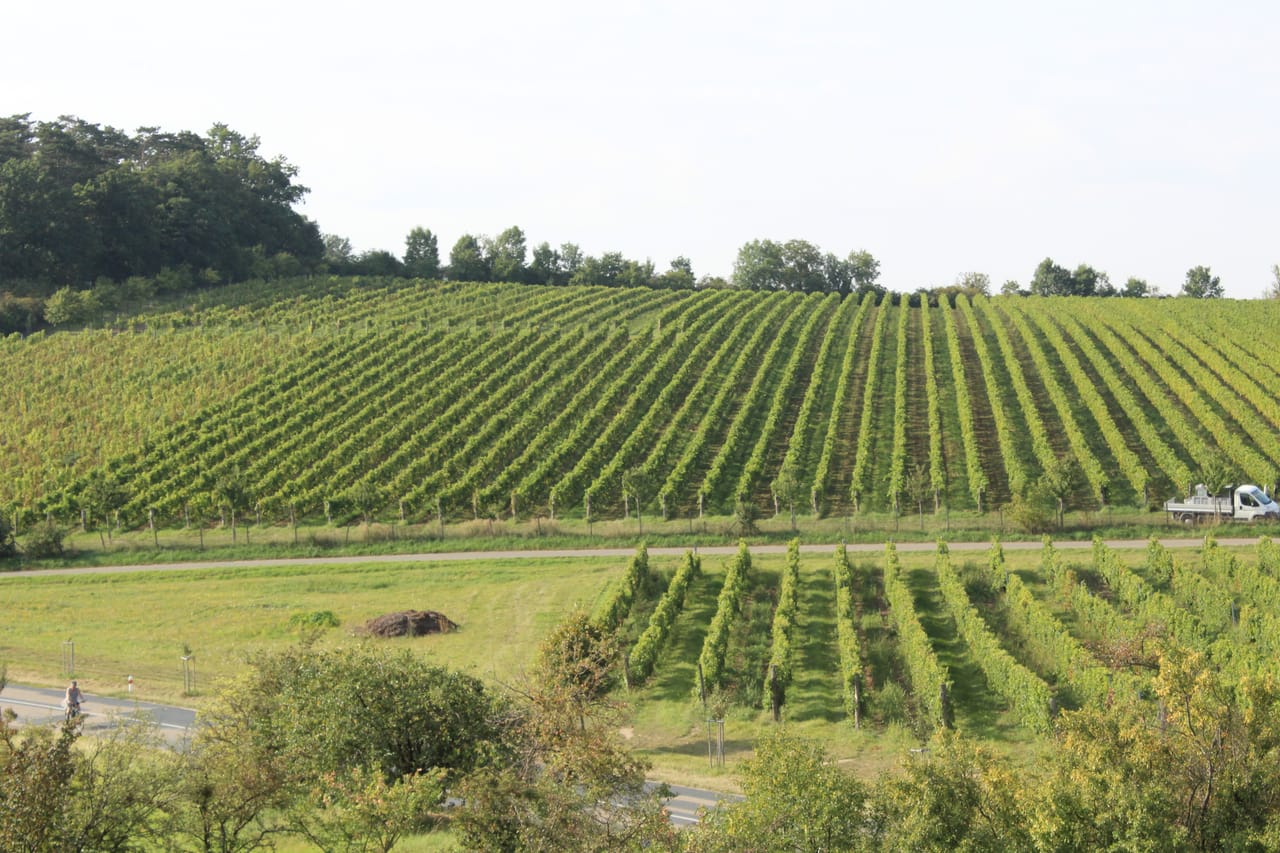
The Kraví Hora vineyards and the village of Bořetice in the evening light.
Food and wine in Moravia
Moravia makes most of the Czech Republic’s wine, mainly whites: Grüner Veltliner, Welschriesling and Pálava, a grape bred at Perná, at the foot of the ridge it is named after. The Wine Salon of the Czech Republic fills the cellars of Valtice Castle: you can taste the year’s award-winning wines there.
At the table, you’ll find svíčková, beef in a creamy sauce, served with knedlíky, bread dumplings. Znojmo is known for its gherkins. For dessert, there are koláče, small sweet buns topped with poppy seeds, curd cheese or plums.
Loop from Brno


 +13stops
- 1Špilberk · Katedrála svatého Petra a Pavla · Vila Tugendhat
- 2Punkevní jeskyně · Macocha · Květná zahrada v Kroměříži · Zámek Kroměříž
- 3Zámek Slavkov u Brna · Mohyla míru · Zámek Lednice
Free, no account needed — start from its places and make it yours.
Also worth reading
Experiences
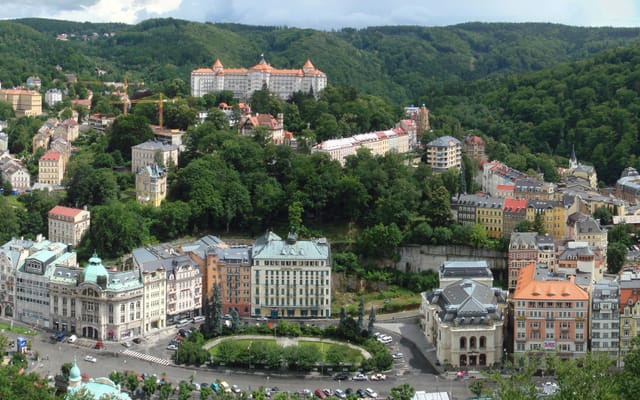
The spa towns of Bohemia, from Karlovy Vary to Mariánské Lázně
Three spa towns on the Unesco list, colonnades where you drink spring water as you walk, castles on the banks of the Ohře. A four-day loop from Prague, via Plzeň, Loket and Karlovy Vary.
Wide open spaces
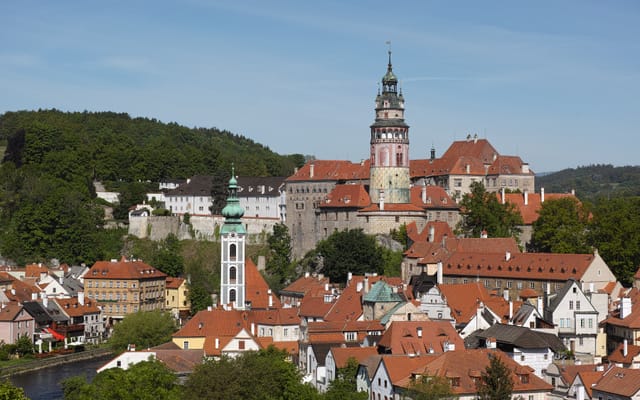
South Bohemia: Český Krumlov, Telč and the land of fishponds
Castles by the water, Renaissance towns with arcades and hundreds of carp ponds. Five days on a loop from České Budějovice, from the Vltava valley to Telč, in Moravia.
Wide open spaces
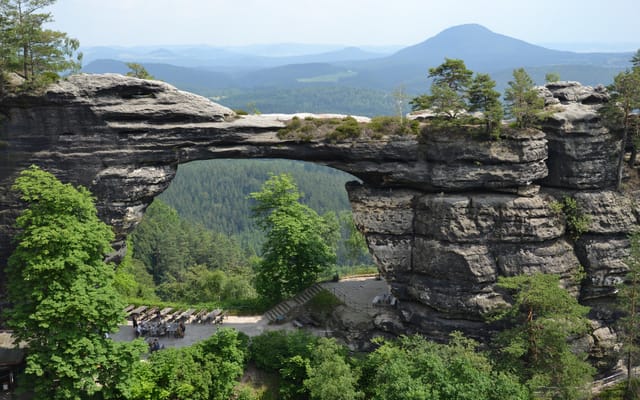
Bohemian Switzerland, from Děčín to Pravčická brána
In the north of the Czech Republic, the Elbe runs through a sandstone massif cut into towers, gorges and arches. This trip goes round it in four days from Děčín, taking in Pravčická brána, the Kamenice gorges and the basalt “organ pipes”.
A starting point, a few wishes — ViaLooma builds the trip day by day, map, stops and roadbook included.