The spa towns of Bohemia, from Karlovy Vary to Mariánské Lázně
Three spa towns on the Unesco list, colonnades where you drink spring water as you walk, castles on the banks of the Ohře. A four-day loop from Prague, via Plzeň, Loket and Karlovy Vary.
The Bohemian spa triangle
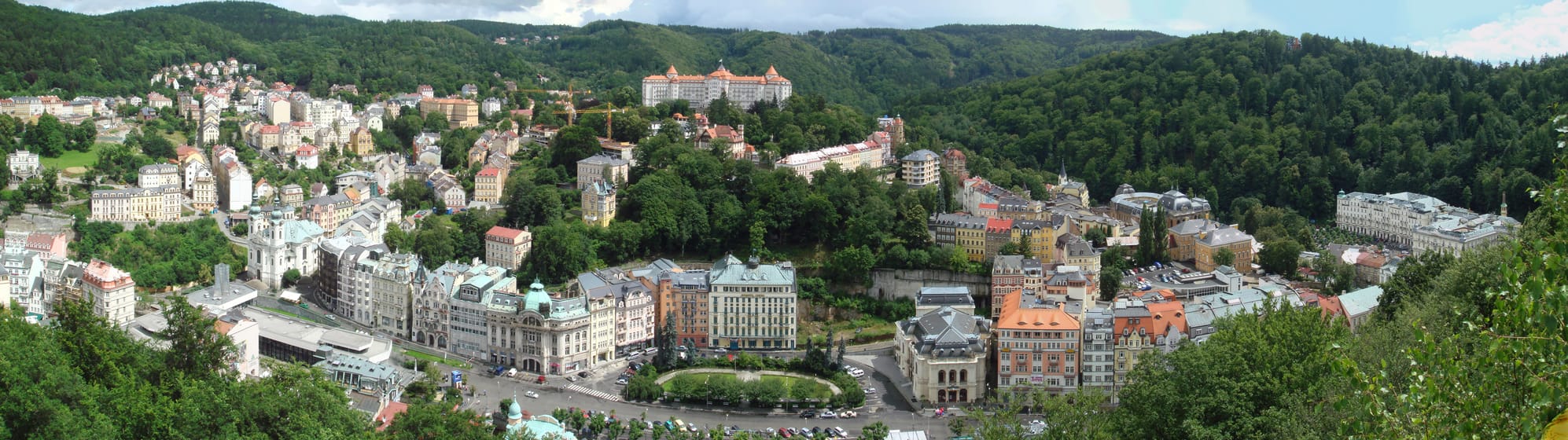
Two hours from Prague, western Bohemia is a land of forests and spa towns. Karlovy Vary, Mariánské Lázně and Františkovy Lázně form what is known as the spa triangle. Here you walk from one spring to the next, under colonnades, with a small porcelain cup in your hand.
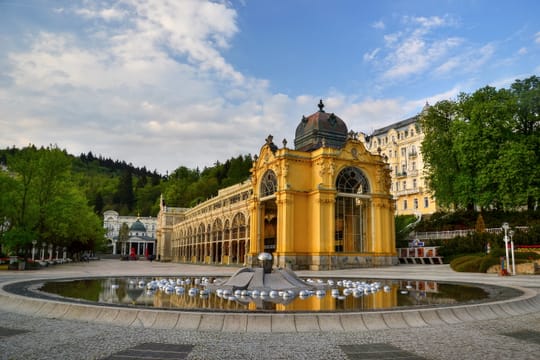
In Plzeň, you visit the brewery where pilsner was born. The Slavkov Forest, a protected area of spruce and peat bogs, stretches between the spa towns. In Mariánské Lázně, the singing fountain plays in the evening in front of the colonnade.
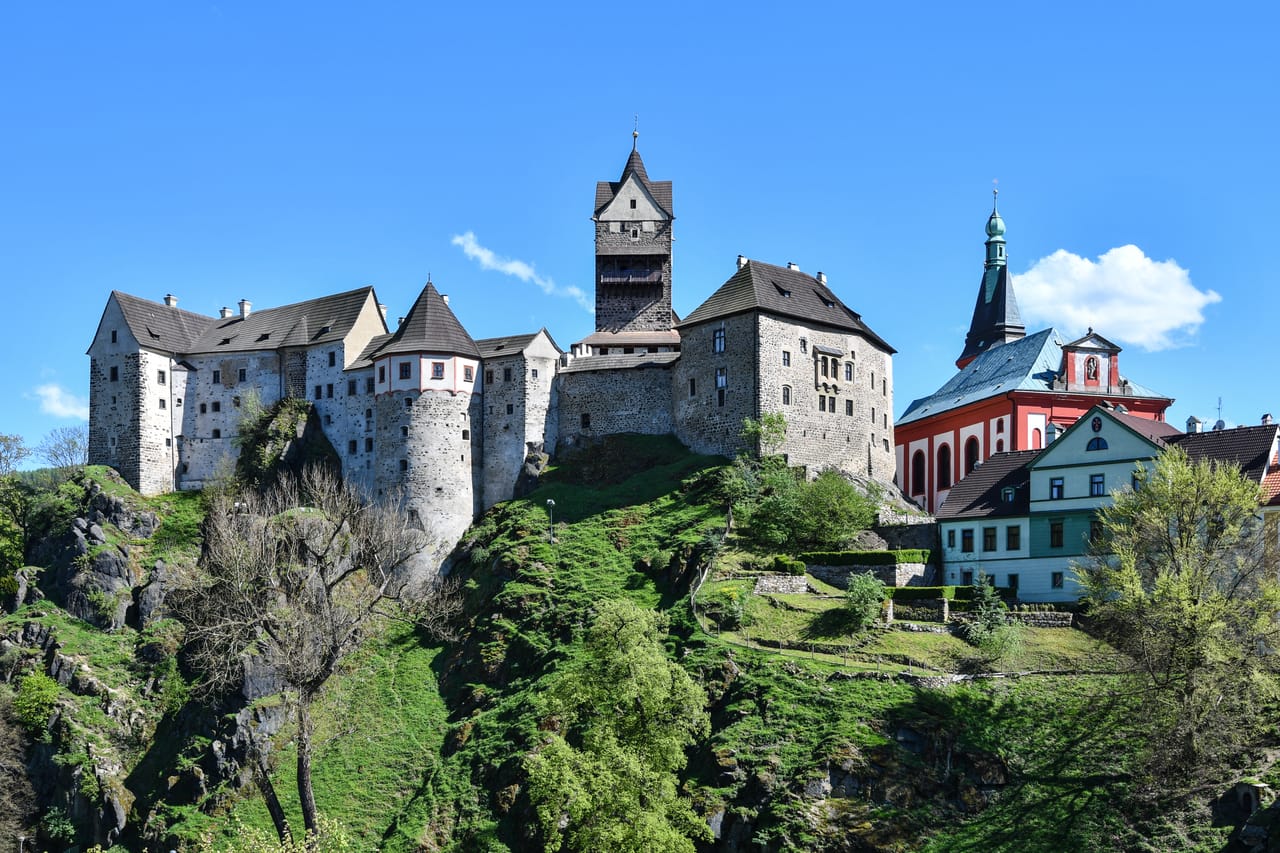
Further north, Loket sits in a bend of the Ohře, with its Gothic castle on a rock. Not far away, Karlovy Vary is visited on foot, along the Teplá.
The Great Spa Towns of Europe
In 2021, Unesco listed the Great Spa Towns of Europe: eleven towns in seven countries, including Bath, Spa, Vichy and Baden-Baden. The Czech Republic has three of them, all on this trip. In the 19th century, aristocrats, writers and crowned heads followed the same ritual there: drink the water at set times, walk in the parks, take the baths, go to a concert. In Mariánské Lázně, this ritual is still practised under the cast-iron colonnade, where you drink as you walk.
Mariánské Lázně grew out of an abbey. The springs belonged to the Premonstratensian canons of Teplá, who turned them into a resort at the start of the 19th century and changed the marshy valley into a park. Goethe met Ulrike von Levetzow here; he wanted to marry her, in vain, and in 1823 wrote the Marienbad Elegy. Teplá monastery had the colonnade built from 1888 to 1889.
Františkovy Lázně, the smallest of the three, was founded in 1793 and named after Emperor Francis II. It was one of the first towns in Europe to offer peat mud baths.
The springs of the three towns have the same origin.
Karlovy Vary and the hot water underground
According to legend, Emperor Charles IV discovered the hot spring in the 14th century while hunting a stag. The town bears his name. The Vřídlo, the main spring, gushes out at about 73 °C and rises up to 12 metres. You drink its water from the spouted cup, then walk to the Mill Colonnade, built from 1871 to 1881 by Josef Zítek. The Moser glassworks, founded in 1857, also opens its museum and its glassblowing workshops.
The springs of the three towns have the same origin. A fault runs beneath the region, the Ohře Rift, through which carbon dioxide rises from the magma. This gas dissolves in the water, which then becomes charged with minerals. In Karlovy Vary, the water comes from very deep down and emerges hot; elsewhere, it emerges cold and sparkling.
Soos
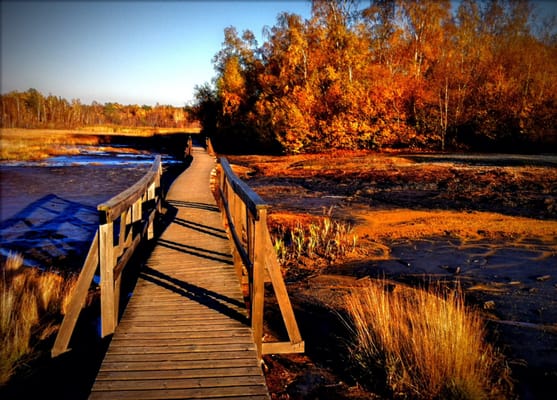
A former peat bog where carbon dioxide from below ground bubbles up through pools of mud, the mofettes. A boardwalk of just over a kilometre crosses it. Here you can see in the open air what makes the springs of the three spa towns.
Practical notes
- When to go
- May–June and September–October. The singing fountain plays from late April to late October. Several castles close or cut their opening hours after October.
- Getting there
- The loop starts from Prague. Plzeň is an hour away on the D5 motorway; the return from Teplá goes via Toužim and the D6, partly motorway.
- Access
- Everything is tarmac. The spa centre of Karlovy Vary is closed to unauthorised cars: park just outside it. In Loket and Cheb, leave the car below the old town.
- Sleeping in a van
- Campsites around Karlovy Vary, Mariánské Lázně and Cheb, most open from April to October. In the Slavkov Forest, camping is forbidden outside designated sites.
- Worth knowing
- Electronic vignette on edalnice.gov.cz; a foreign-registered electric car must declare its exemption before driving. Zero alcohol at the wheel, headlights on during the day.
- Allow
- Four days for the loop, one more to take the baths in Karlovy Vary.
What not to miss
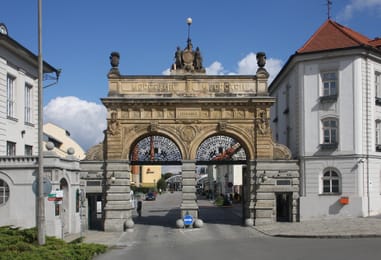
- 1The Pilsner Urquell breweryJosef Groll brewed the first pilsner here in 1842; the tour goes down into the cellars and ends with an unfiltered beer.
- 2Kynžvart CastleThe castle of Chancellor Metternich, with the cabinet of curiosities he founded there in 1828.
- 3ChebFrederick Barbarossa’s castle, its Black Tower and the half-timbered houses of the Špalíček.
- 4Loket CastleA Gothic castle on its rock, above the bend of the Ohře.
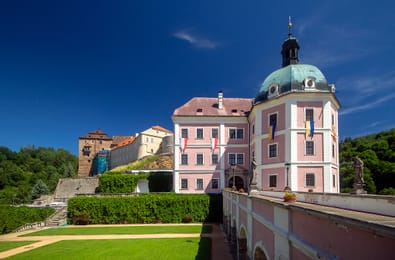
- 5The reliquary of St MaurusIn Bečov, a 13th-century shrine buried at the end of the war and found in 1985 under the castle chapel.
- 6Teplá monasteryAn abbey founded in 1193, a barracks from 1950 to 1978, with a library of more than 100,000 volumes.
The spa towns of Bohemia in pictures
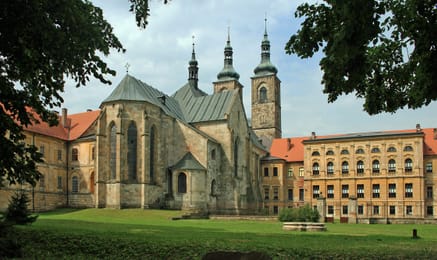
The abbey church and the Baroque buildings of Teplá monastery.
The West Bohemian table
The food is that of all Bohemia: goulash or svíčková, beef in a cream sauce served with knedlíky, slices of steamed bread. Beer is drawn from the tap, with more or less foam: hladinka, šnyt, or mlíko, almost all foam.
In Karlovy Vary, people buy oplatky, large round wafers, warm from the stall. Becherovka, a herbal liqueur made in the town since 1807, is nicknamed the thirteenth spring. At the wheel, not a drop of alcohol is allowed: in Plzeň, the passenger does the tasting.
Loop from Prague


 +10stops
- 1Pivovar Plzeňský Prazdroj · Katedrála svatého Bartoloměje · Kolonáda (Mariánské Lázně)
- 2Zámek Kynžvart · Chebský hrad · Františkovy Lázně · Loket
- 3Chrám svatého Petra a Pavla · Mlýnská kolonáda · Vřídlo · Lanová dráha Diana
Free, no account needed — start from its places and make it yours.
Also worth reading
Experiences
The American South, from Nashville to New Orleans
From Nashville to New Orleans, this trip follows American music, from country to jazz by way of the blues and rock’n’roll. Eleven days along the Natchez Trace, Highway 61 and the Mississippi, down to the bayous of Louisiana.
Experiences
The Top End: Darwin, Kakadu, Katherine and Litchfield
Floodplains full of birds, rock shelters painted over thousands of years, gorges and waterfalls where you can swim. Eight days on a loop from Darwin, through Australia’s tropical north.
Heritage and culture
South Moravia, castles and vineyards around Brno
Castles among fishponds, hills of vines and caves you visit by boat. A five-day loop from Brno, down to the Austrian border.
A starting point, a few wishes — ViaLooma builds the trip day by day, map, stops and roadbook included.