Istria, from Pula to the hilltop villages
Istria is a largely Croatian peninsula at the top of the Adriatic, between a Venetian coast and hills covered in vineyards and forests. This trip goes round it in five days from Pula, by way of Rovinj, Motovun, Mount Učka and Opatija.
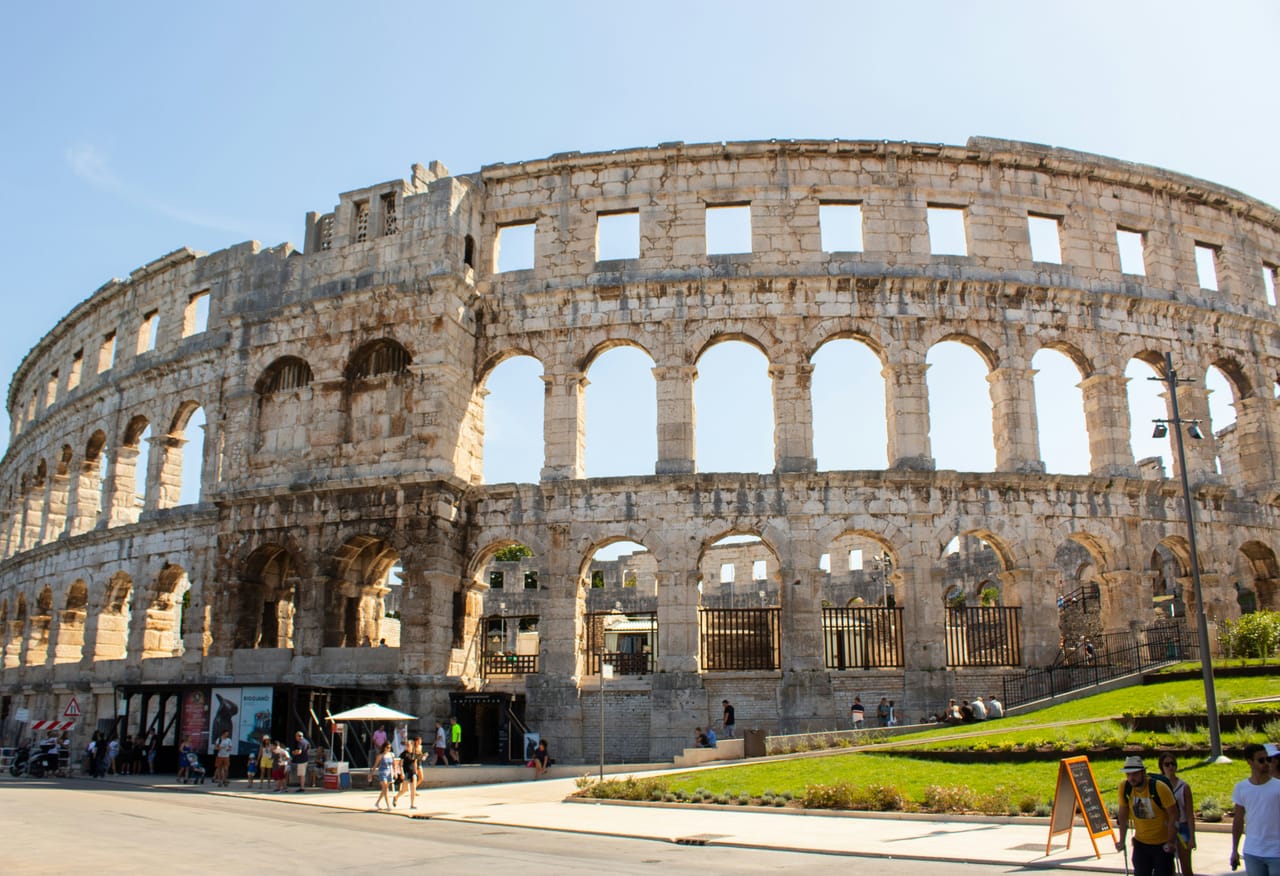
Istria, from the coast to the hills
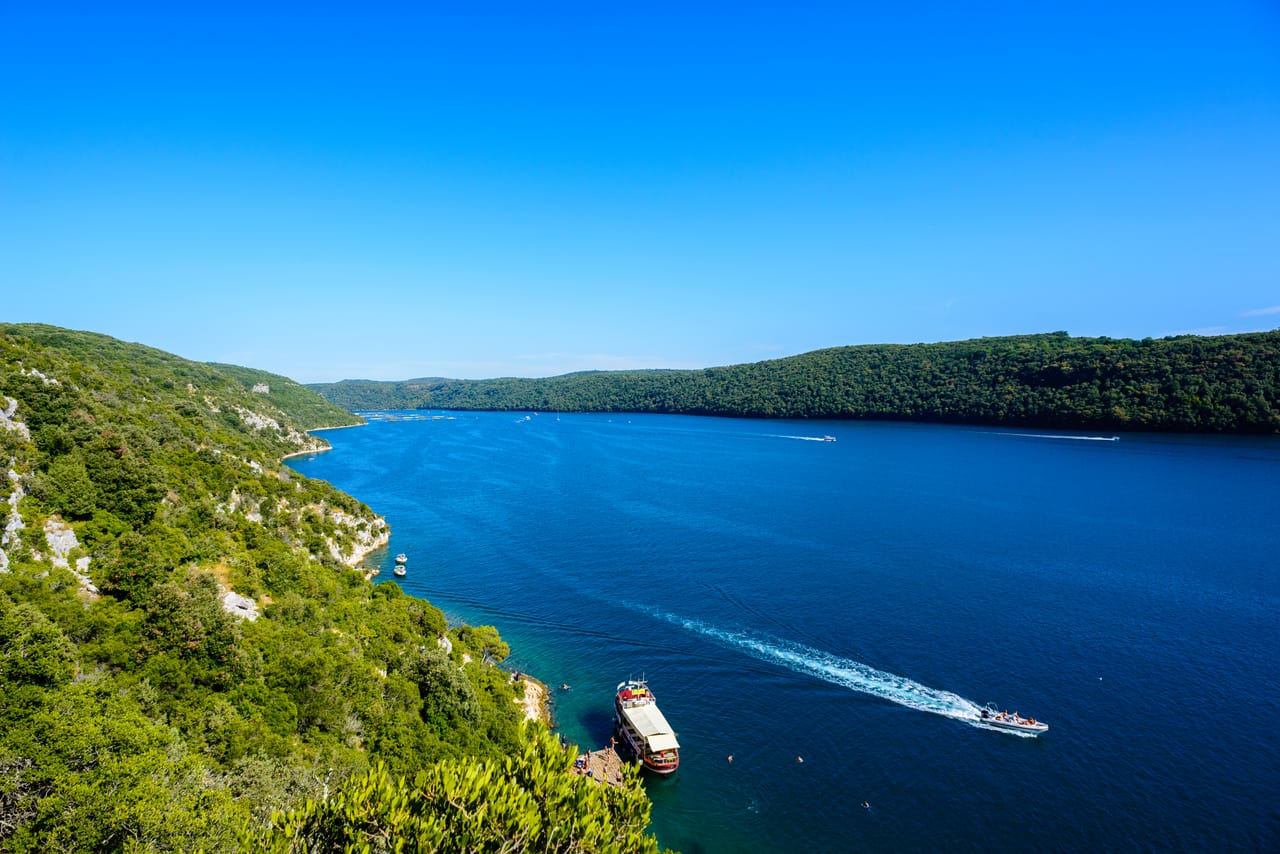
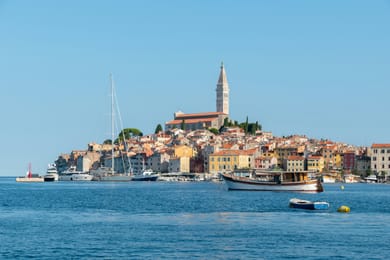
The west coast of Istria runs from Pula to Novigrad, among pines, coves and old harbours. Rovinj is built on a hill above the sea, around a large church. Further north, the road drops to the head of the Lim Fjord, down at the water’s edge, near the oyster beds.
Inland, there are green hills, vineyards and oak forests, with a village perched on every height: Grožnjan, Motovun, Buzet, Hum. The roads are slow, but the distances are short. Autumn is white truffle season here.
To the east, the road crosses the Učka massif by the Poklon Pass, at 922 metres. From Vojak, the summit, you can see the Kvarner Gulf and its islands. The road winds back down to Opatija, a seaside resort that grew up under Austria-Hungary. It then follows the coast south by way of Mošćenice, a village perched above the sea, to Labin, an old mining town.
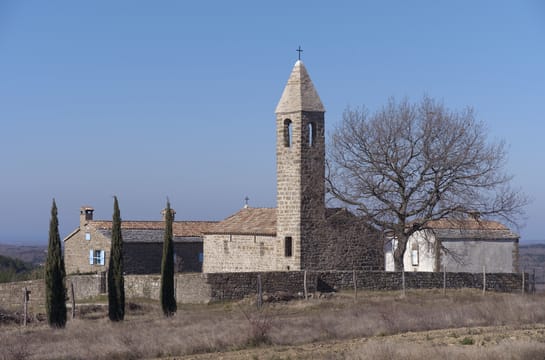
The hilltop villages of the interior
The inland villages were built high up, behind walls, above the Mirna valley. Grožnjan was almost empty in the 1960s. Painters and musicians then moved in, and today its stone streets are full of studios and galleries. Opposite, Motovun looks down on the valley from its 277-metre hill. Every summer, the village hosts a film festival.
Below Motovun, the forest along the Mirna is white truffle country. Buzet, further east, calls itself the town of truffles. In Livade, down in the valley, a shop displays a bronze copy of a 1.31-kilo truffle found in 1999, which made it into the Guinness World Records.
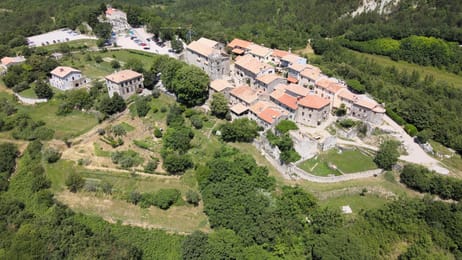
Between Roč and Hum, the road follows the Glagolitic Alley: eleven monuments set up between 1977 and 1985, over seven kilometres. They pay tribute to Glagolitic, the oldest Slavic alphabet. Hum calls itself ‘the smallest town in the world’. It has a few dozen inhabitants.
Hum calls itself ‘the smallest town in the world’.
Rome and Venice on the west coast
Pula was a Roman colony. Its amphitheatre, the Arena, begun under Augustus and enlarged under Vespasian, is one of the largest in the Roman world: 133 metres by 105. Its outer wall is preserved all the way round, with three storeys on the sea side.
In Poreč, the Euphrasian Basilica was built in the 6th century by Bishop Euphrasius, with gold-ground mosaics. It has been on the UNESCO list since 1997. Then, for centuries, the coast belonged to Venice. Rovinj’s bell tower, around sixty metres high, copies the one at St Mark’s. Later, Pula became the main naval base of Austria-Hungary, and James Joyce taught English there in the winter of 1904–1905. Italian is still an official language in several municipalities, and the towns have two names: Rovinj is also Rovigno, Poreč is Parenzo.
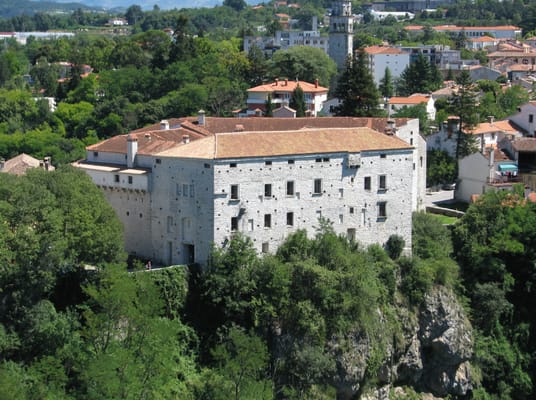
Pazin Castle
The largest castle in Istria stands on the edge of a chasm about a hundred metres deep, where the Pazinčica river disappears underground. Jules Verne has the hero of ‘Mathias Sandorf’, a novel published in 1885, escape from it. Five kilometres away, the church at Beram keeps a Dance of Death painted in 1474 by Vincent of Kastav.
Practical notes
- When to go
- May–June and September–October. Autumn for the white truffle. In winter, many sites cut their opening hours.
- Getting there
- Pula has an airport. Trieste is under two hours’ drive, through Slovenia, where a vignette is required and where Piran, a Venetian town, is worth a detour. In Croatia there is no vignette, but there are tolls.
- Access
- Everything is tarmac. The road up Vojak is very narrow: you can also walk up from the Poklon Pass.
- Sleeping in a van
- Plenty of campsites on the coast, a few aires inland. Sleeping in a van outside a campsite or authorised aire is forbidden, beaches and car parks included.
- Worth knowing
- The old towns of Rovinj, Motovun, Grožnjan, Hum and Labin are explored on foot: you park outside them.
- Allow
- Five days for the loop, one more day for the Brijuni Islands or Cape Kamenjak.
What not to miss
- 1The Pula ArenaThe arena, then the underground galleries, with an exhibition on olive oil and wine in Antiquity.
- 2RovinjLanes climbing up to the church of St Euphemia, whose sarcophagus is said to have washed ashore here around the year 800.
- 3DvigradA medieval town emptied in the 17th century by plague, malaria and war.
- 4The Lim FjordNot a true fjord, but a river valley flooded by the sea for ten kilometres.
- 5VojakThe highest point in Istria, at 1,396 metres, with a view over the Kvarner.
- 6LabinAn old town perched above Rabac, whose museum has rebuilt a coal-mine gallery.
Istria in pictures
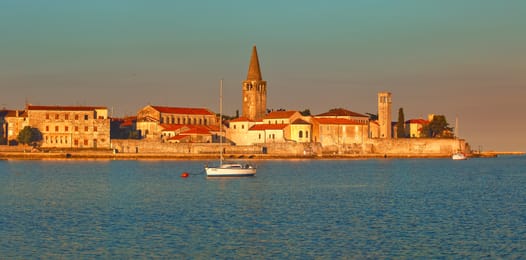
Poreč at dawn, the bell tower of the Euphrasian Basilica above the sea.
Istrian food
In Istria, truffle is grated over handmade pasta, fuži and pljukanci. People also eat maneštra, a thick soup of beans and vegetables, Istrian cured ham, and boškarin, a local breed of ox. On the Lim, you try the oysters.
The most common white wine is malvazija istarska, the red is teran. Istrian olive oil often wins prizes at international competitions. In Hum, people drink biska, a mistletoe brandy. Out of season, many konobas, the country inns, close or open only on certain days.
Loop from Pula


 +14stops
- 1Amfiteatar u Puli · Augustov hram · Crkva sv. Blaža u Vodnjanu · Crkva sv. Eufemije u Rovinju
- 2Dvigrad · Limska gradina · Eufrazijeva bazilika · Lapidarium
- 3Grožnjan · Motovun · Zavičajni muzej Buzet
Free, no account needed — start from its places and make it yours.
Also worth reading
Wide open spaces
Croatia, from Zagreb to Dubrovnik
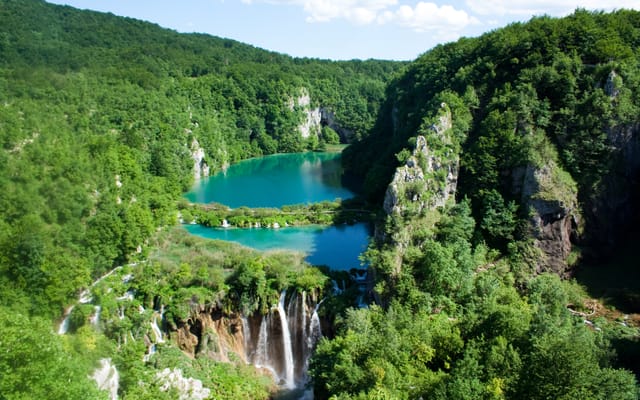
From the Plitvice Lakes to the walls of Dubrovnik, this trip crosses Croatia in ten days. It takes in Zadar, Šibenik, Split and the Biokovo road.
Coast and islands
Dubrovnik and the Pelješac Peninsula
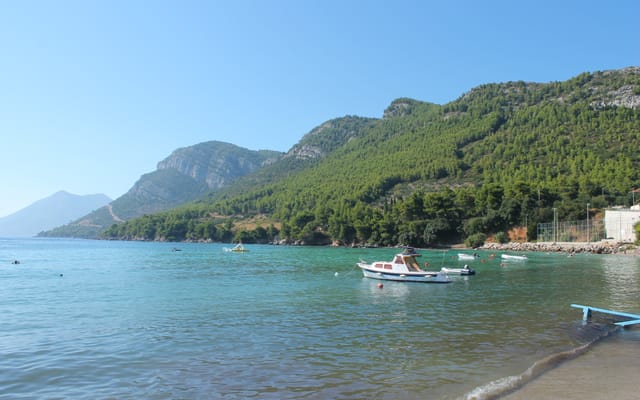
The walls of Dubrovnik, the great wall of Ston and the steep Dingač vineyards above the sea. Four days on a loop from Dubrovnik, from the Konavle valley to Orebić, across from the island of Korčula.
Wide open spaces
Northern Dalmatia, from Zadar to the Plitvice Lakes
Between the Adriatic and the Velebit mountains, Northern Dalmatia and Lika bring together Roman towns, limestone gorges and terraced lakes. This trip is a five-day loop from Zadar, by way of Paklenica, Lika and Plitvice.
A starting point, a few wishes — ViaLooma builds the trip day by day, map, stops and roadbook included.