Croatia, from Zagreb to Dubrovnik
From the Plitvice Lakes to the walls of Dubrovnik, this trip crosses Croatia in ten days. It takes in Zadar, Šibenik, Split and the Biokovo road.
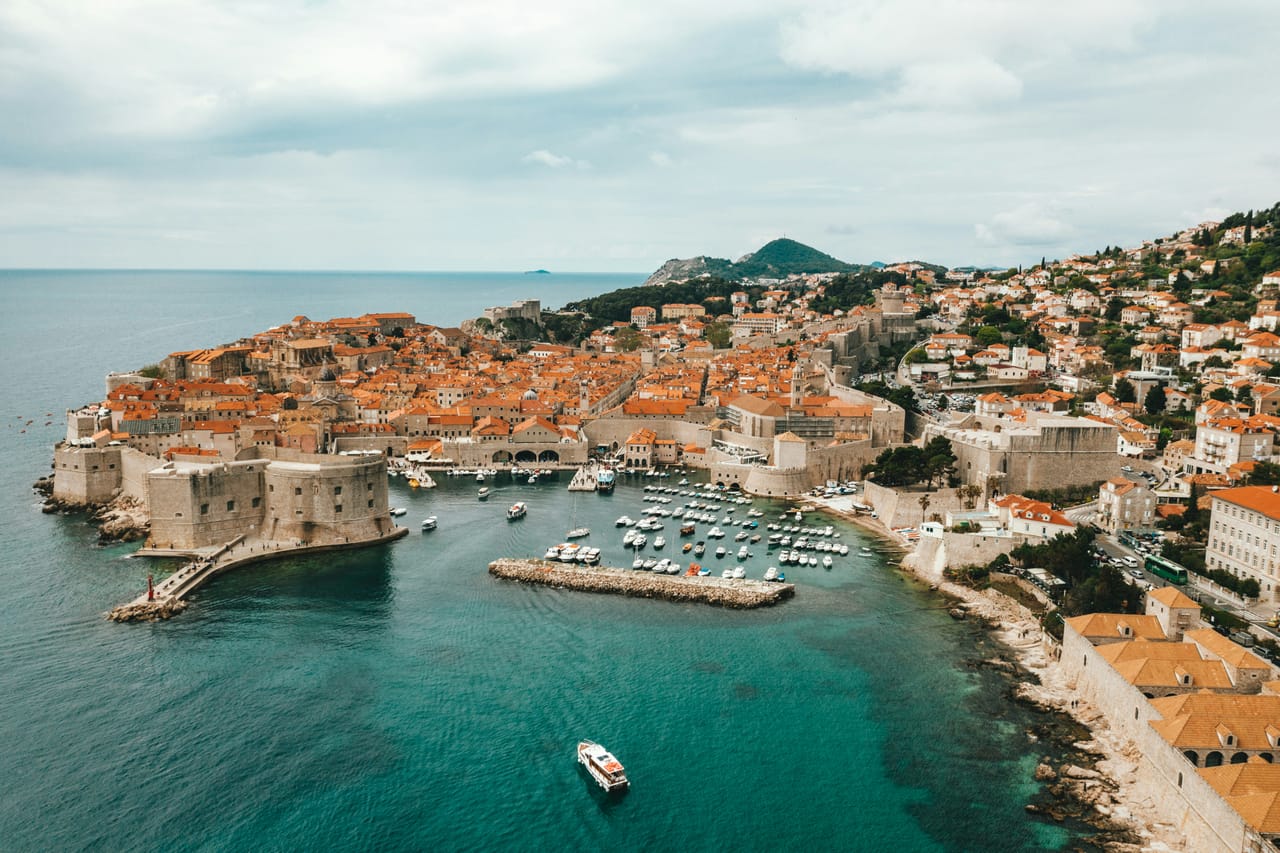
From the Plitvice Lakes to the Dalmatian coast
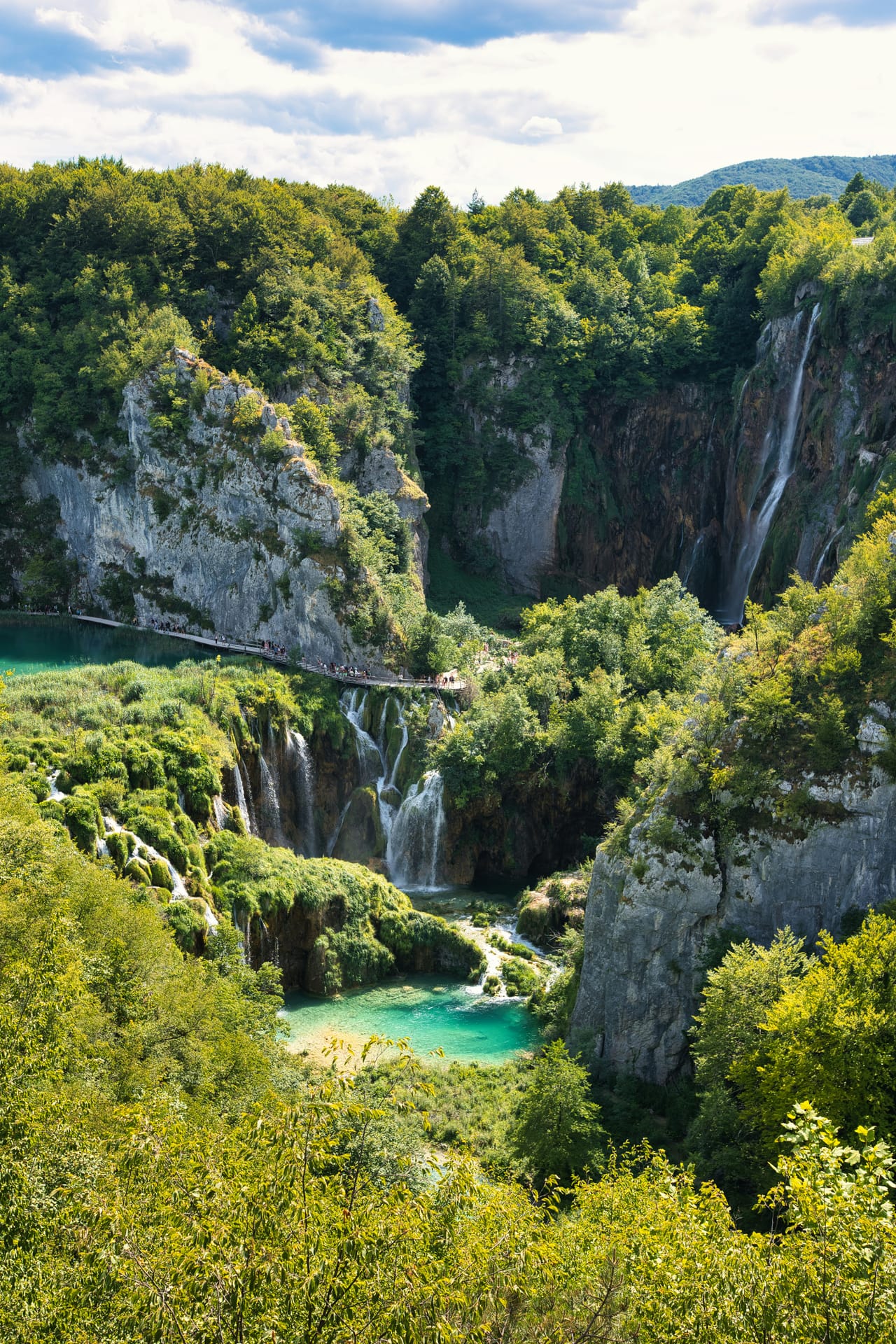
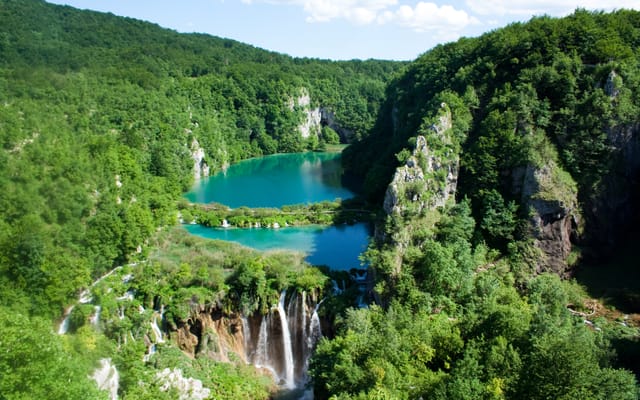
The trip begins in Zagreb, a capital you can explore on foot. To the south, the road heads for the forests of Lika. In Rastoke, old watermills sit on the waterfalls of the Slunjčica. A little further on, the Plitvice Lakes form a staircase of sixteen turquoise lakes, linked by falls and lined with wooden walkways.
Then the road goes down to the Adriatic. In Zadar, at sunset, people sit on the steps of the waterfront: under the stone, the sea organ plays with the swell. Further south, you reach the waterfalls of the Krka by shuttle or by boat.
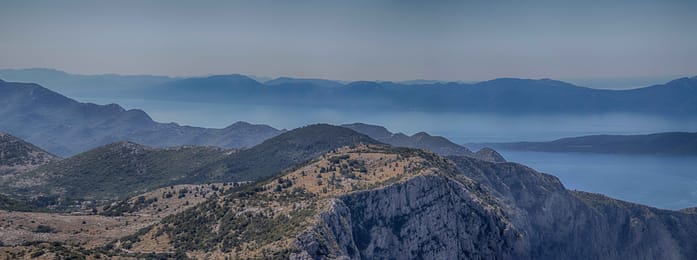
After Split, the coast road runs along the sea. Omiš is squeezed between the Cetina gorge and the sea. At Makarska, Biokovo rises to 1,762 metres behind the beaches, and a narrow road climbs up to a glass walkway. You then cross the Neretva delta, then the Pelješac Bridge, 2,404 metres long: opened in 2022, it bypasses Bosnia and Herzegovina at Neum.
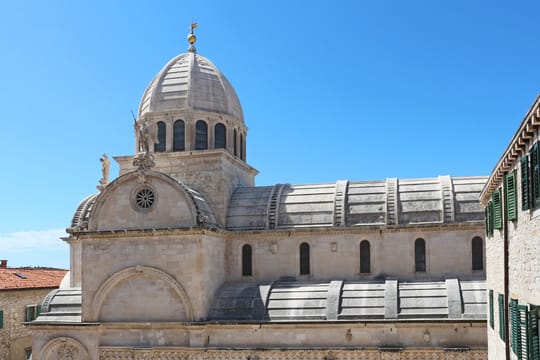
Šibenik, Trogir and Split, towns of stone
Šibenik was born Croatian, not Roman: it first appears in the records in 1066. Its Cathedral of St James was built from 1431 to about 1536, mostly by Juraj Dalmatinac, then by Nikola Firentinac. It is made entirely of stone, right up to the dome, with no brick or wood. Around the apse, a frieze of more than seventy carved heads is said to show the townspeople of the time. The cathedral has been on the UNESCO list since 2000.
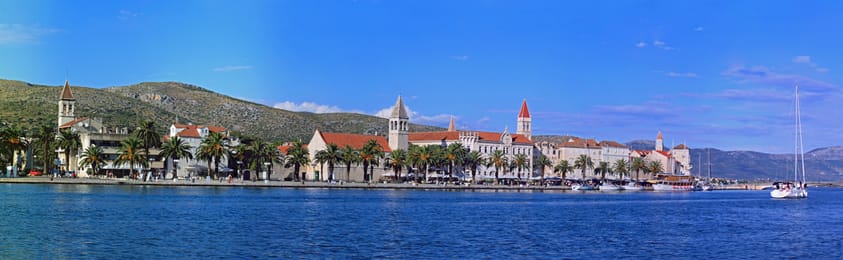
The old town of Trogir fits on a small islet. The doorway of its cathedral was signed by Master Radovan in 1240. At the end of the waterfront stands the Venetian Kamerlengo fortress. Trogir has been on the UNESCO list since 1997.
In Split, the emperor Diocletian had a palace built around 300, for his retirement. In the 7th century, the people of Salona, the nearby Roman city, took refuge there and the palace became a town. Its mausoleum is now the Cathedral of St Domnius. You have your coffee on the Peristyle, the palace’s old courtyard.
In the 7th century, the people of Salona, the nearby Roman city, took refuge there and the palace became a town.
Dubrovnik, the former Republic of Ragusa
For centuries, Dubrovnik was Ragusa, a merchant republic whose motto was Libertas. The republic drew part of its wealth from salt. To protect its salt pans at Ston, which are still worked today, it built walls from 1358 onwards. About 5.5 kilometres of them remain. Napoleon put an end to the republic in 1808.
Dubrovnik’s city walls run right round the old town for about 1,940 metres. Inside, the Stradun, the wide paved street, runs from one gate to the other. Outside the walls, Fort Lovrijenac stands on a rock above the sea. On Mount Srđ, Fort Imperial, built by the French around 1810, held out during the siege of 1991–1992.
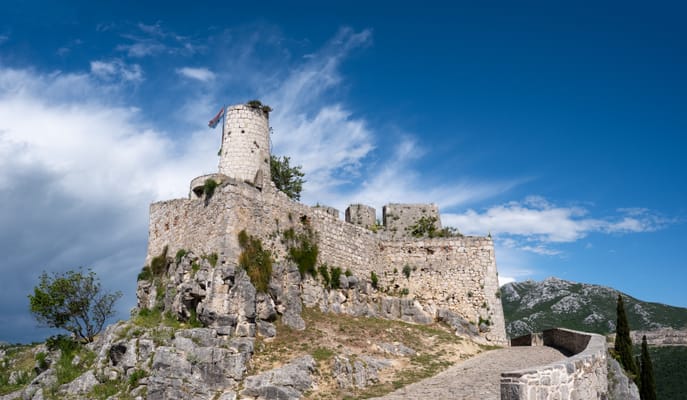
Klis Fortress
Perched on a spur, it guards the pass between Split and the hinterland. It held out against the Ottomans until 1537 and was used as Meereen in Game of Thrones. From its walls, you can see Split, Salona and the islands.
Practical notes
- When to go
- May–June and September. In July and August, the heat and the crowds weigh on Plitvice, Krka and Dubrovnik.
- Getting there
- Zagreb and Dubrovnik both have an airport. The trip is one way: check that the hire company accepts a drop-off in Dubrovnik.
- Access
- The A1 toll motorway, then the coast road. The Biokovo road, narrow and single-track, is not advised for large motorhomes. Biokovo Nature Park is closed from November to March.
- Sleeping in a van
- Wild camping is banned. Plenty of campsites on the coast and near Plitvice and Krka.
- Worth knowing
- Tickets for Plitvice and Biokovo are booked online, by time slot. At Krka, park at Lozovac or Skradin, then take the shuttle or the boat. In Dubrovnik, from April to October, car access around the old town is controlled: book your parking online.
- Allow
- Ten days, a few more for the islands of Hvar, Brač or Korčula.
What not to miss
- 1Zagreb’s Upper TownSt Mark’s Church and its roof of coats of arms, and the cannon in the Lotrščak Tower, fired at noon.
- 2Veliki slapIn Plitvice, the highest waterfall in Croatia, near Entrance 1.
- 3The Zadar Sea OrganPipes under the steps of the waterfront, played by the swell.
- 4Skradinski bukThe best-known waterfall on the Krka; swimming there has been banned since 2021.
- 5The Biokovo SkywalkA glass walkway at 1,228 metres, above the sea and the islands.
- 6Srđ at sunsetThe view over Dubrovnik and the island of Lokrum, from Fort Imperial.
Croatia in pictures
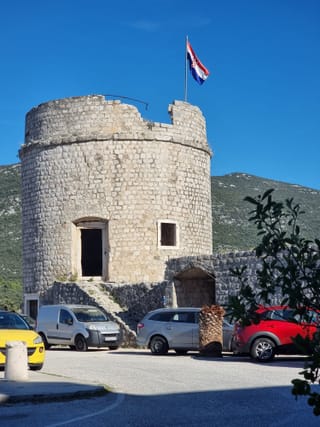
The Toljevac tower in Mali Ston, at the end of the walls, under a blue sky.
The Croatian table
On the coast, people eat grilled fish, crni rižot, a black risotto made with cuttlefish ink, and pašticada, a marinated, slow-cooked beef. Peka, meat or octopus cooked under a bell covered in embers, often has to be ordered in advance.
In Zagreb, try štrukli, a pastry filled with fresh cheese. Zadar makes maraschino, a cherry liqueur. The flat oysters of Mali Ston have a European designation of origin, and Dingač, a red from Pelješac, became Croatia’s first protected wine in 1961.
Zagreb → Dubrovnik


 +29stops
- 1Trg bana Jelačića · Zagrebačka katedrala · Crkva sv. Marka u Zagrebu · Mirogoj
- 2Rastoke · Drežnik (stari grad) · Veliki slap
- 3Kozjak (jezero) · Crkva sv. Donata u Zadru · Morske orgulje
Free, no account needed — start from its places and make it yours.
Also worth reading
Wide open spaces
Northern Dalmatia, from Zadar to the Plitvice Lakes
Between the Adriatic and the Velebit mountains, Northern Dalmatia and Lika bring together Roman towns, limestone gorges and terraced lakes. This trip is a five-day loop from Zadar, by way of Paklenica, Lika and Plitvice.
Wide open spaces
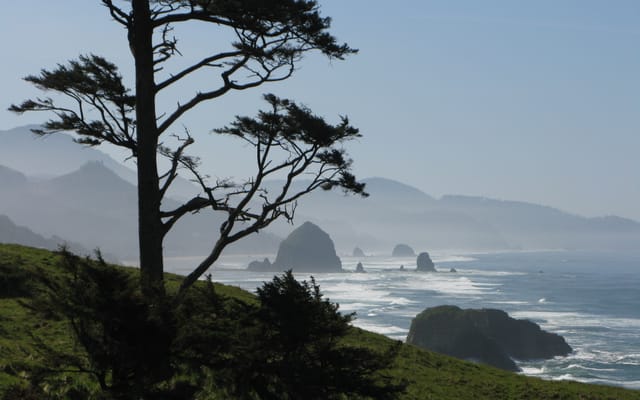
The Pacific Northwest, from the Olympic Peninsula to the Cascade volcanoes
Rainforests, a coast of headlands and lighthouses, redwoods and two active volcanoes. A two-week loop from Seattle, by way of the Olympic Peninsula, the Oregon coast and Mount Rainier.
Wide open spaces
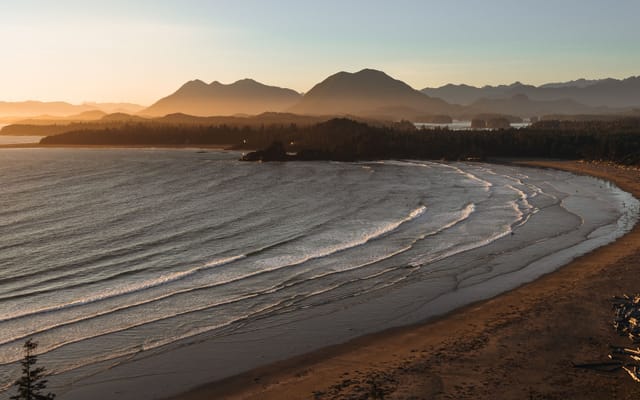
Vancouver Island, from Victoria to the beaches of Tofino
An island of giant forests, beaches pounded by the Pacific and small harbours where boats leave to see orcas. Nine days on a loop from Victoria, from Port Renfrew to Tofino and up to Telegraph Cove.
A starting point, a few wishes — ViaLooma builds the trip day by day, map, stops and roadbook included.