Dubrovnik and the Pelješac Peninsula
The walls of Dubrovnik, the great wall of Ston and the steep Dingač vineyards above the sea. Four days on a loop from Dubrovnik, from the Konavle valley to Orebić, across from the island of Korčula.
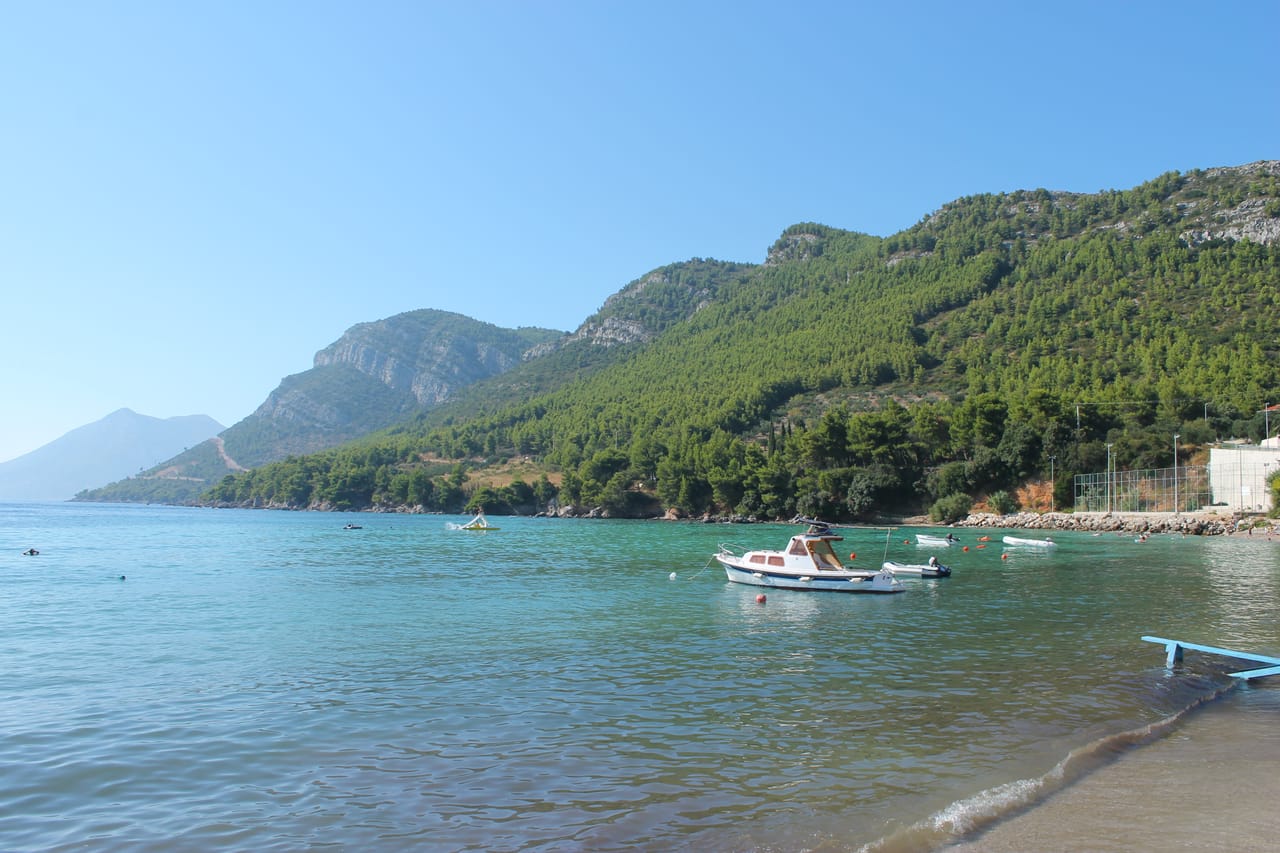
From Dubrovnik to the tip of Pelješac
Dubrovnik is a city to explore on foot. You walk right round the old town on the wall walk along the ramparts, above the orange roofs and the sea. Down below, you follow the Stradun, the wide paved main street, to the Rector’s Palace. Then you go up Srđ, at 412 metres, by cable car or by a small road, to see the whole city and the islands offshore.
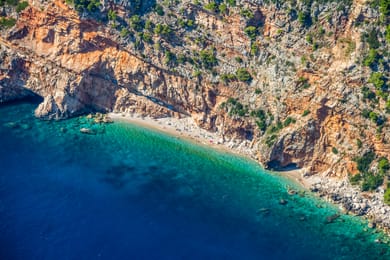
To the south, in the Konavle valley, vineyards and stone villages line up between the mountains and the cliffs; Pasjača beach is reached by a staircase cut into the rock.
To the north, the coast road passes through Ston and its wall, then runs the length of the Pelješac peninsula. Above Brijesta, the road looks down on the Pelješac Bridge. You go as far as Orebić, at the foot of Mount Sveti Ilija (961 metres), across from the island of Korčula.
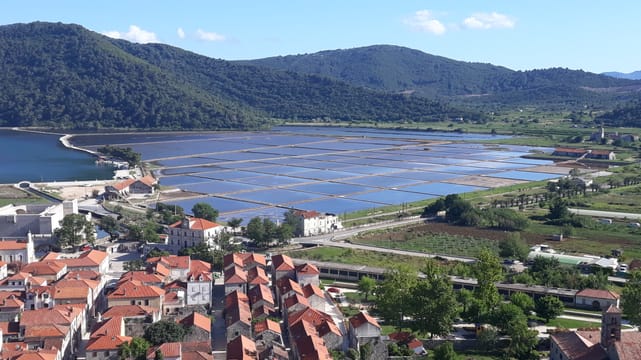
Ston, salt and the Republic of Ragusa
For centuries, Dubrovnik was the capital of a small merchant republic, Ragusa. In 1333, the republic bought the Pelješac peninsula and Ston. From 1358, it closed off the isthmus with a wall linking Ston to Mali Ston. The wall was more than 7 kilometres long, with 40 towers; about 5.5 kilometres and 20 towers remain. It protected the salt pans, one of the sources of Ragusa’s wealth. Salt is still harvested there by hand, in summer.
The republic’s motto was Libertas. Above the gate of Fort Lovrijenac, a Latin inscription says that liberty is not sold, not even for all the gold in the world. Occupied by Napoleon’s army in 1806, Ragusa was abolished in 1808.
In 1699, Ragusa gave the Neum coastline to the Ottomans. Today it is in Bosnia and Herzegovina, and it cuts the Croatian coast in two. To get around it, Croatia opened the 2,404-metre Pelješac Bridge in 2022.
Occupied by Napoleon’s army in 1806, Ragusa was abolished in 1808.
Dingač and the wines of Pelješac
Dingač became Croatia’s first protected vineyard in 1961. Its vines grow on a slope of about 45 degrees, on stony ground above the sea. The grape is plavac mali, a descendant of zinfandel. Postup, the neighbouring appellation, stretches east of Orebić.
In 1973, the winegrowers of Potomje paid for a single-lane tunnel under the ridge, so they no longer had to cross the mountain by donkey. You come out just above the vineyards, and a narrow road goes down to Borak, by the water. In Kuna, the home village of the painter Celestin Medović, a gallery shows his paintings.
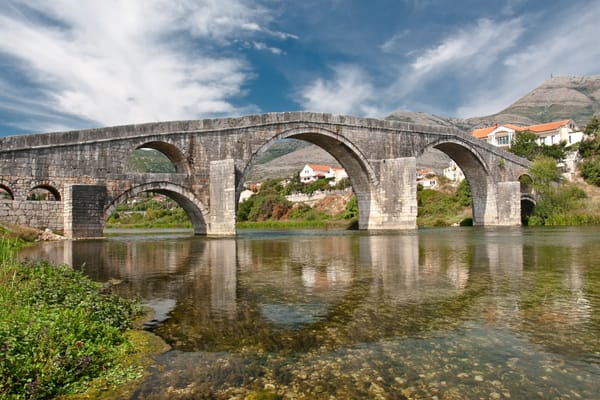
The Arslanagić Bridge
Behind the mountains, Trebinje is already in Bosnia and Herzegovina, with its Ottoman old town. Its Ottoman arched bridge dates from 1574 or from the late 17th century; threatened by a dam, it was taken down stone by stone and rebuilt further downstream. You need a green card valid for the country and, for a hire car, the rental company’s permission.
Practical notes
- When to go
- May–June and September–October, with the grape harvest in September. In summer, Dubrovnik is very crowded.
- Getting there
- Dubrovnik airport is at Čilipi. From Split, you cross the Pelješac Bridge: work on its pylons is planned until spring 2027, with traffic sometimes down to one lane but no closure expected; traffic updates on hak.hr.
- Access
- Everything is tarmac. The Dingač tunnel has a single lane and the road to Borak is narrow and steep: in a large van, stop at Potomje.
- Sleeping in a van
- Wild camping is banned in Croatia. Campsites in Dubrovnik (Babin Kuk), and around Ston and Orebić.
- Worth knowing
- In season, cameras control car access around Dubrovnik’s old town: you need a booked space in the Pile or cable car car parks, or accommodation that registers your number plate; rules on dubrovnik.hr.
- Allow
- Four days for the loop, plus half a day for Korčula by ferry from Orebić.
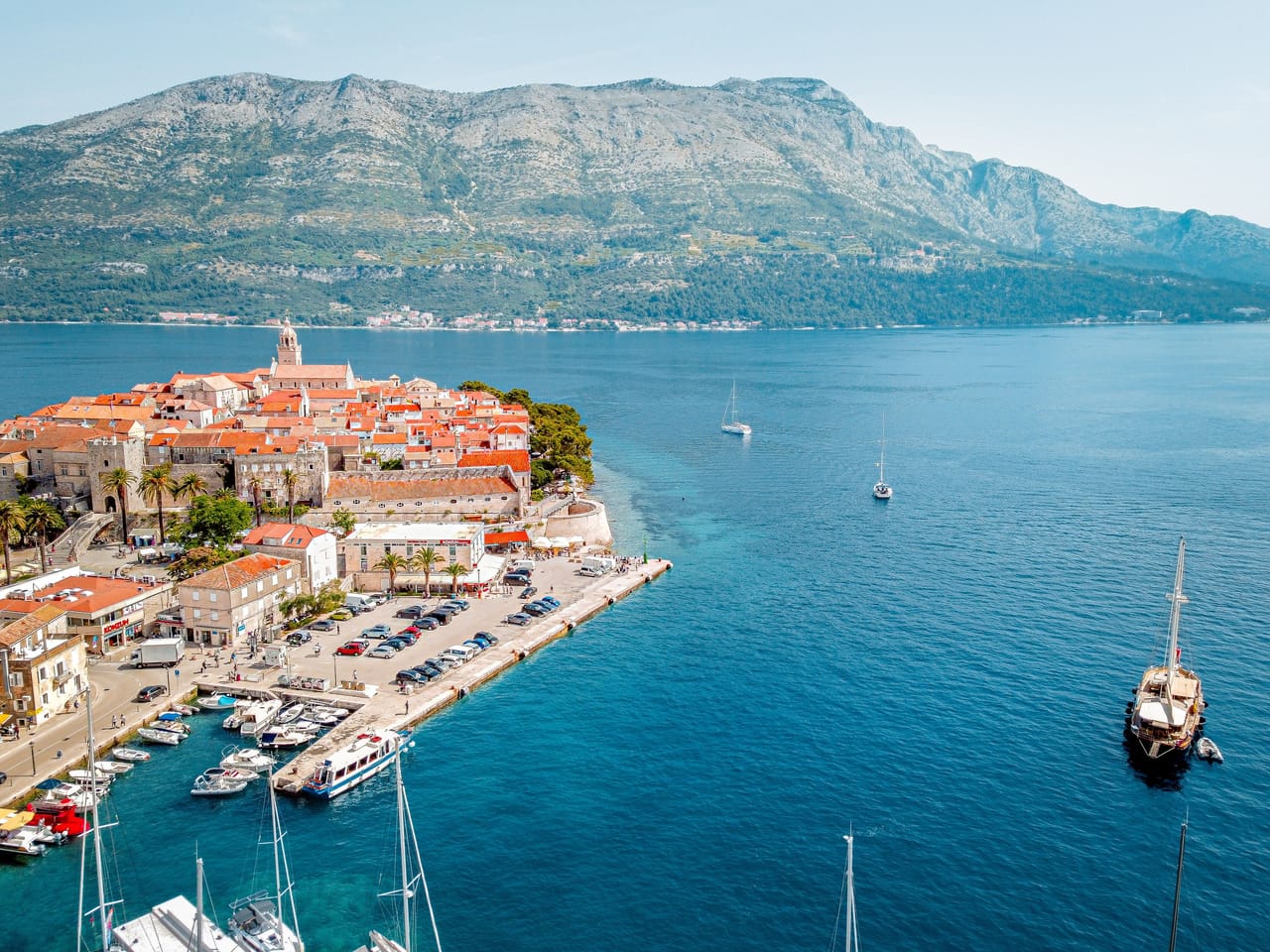
What not to miss
- 1The city wallsThe wall walk goes all the way round the old town; best go up early or late in the day.
- 2SrđFort Imperial, begun by the French around 1810, houses a museum of the Croatian War of Independence.
- 3CavtatA small harbour town on the site of ancient Epidaurum, with the Račić Mausoleum designed by Ivan Meštrović.
- 4Trsteno ArboretumA noble family’s garden, watered by an aqueduct from 1492, and a Game of Thrones location.
- 5Sokol gradA fortress on a spur above the Konavle plain, open in season.
- 6Korčula20 minutes by ferry from Orebić; local tradition says Marco Polo was born there.
Dubrovnik and the Pelješac Peninsula in pictures
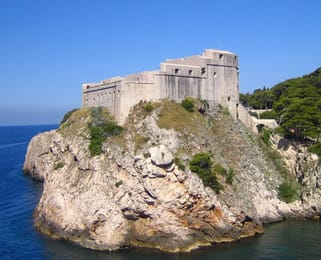
Fort Lovrijenac on its rock, above the sea.
The table of Dubrovnik and Pelješac
Mali Ston oysters are flat oysters, with a protected designation of origin since 2020. In the bay, freshwater springs rise from the seabed and mix with the sea. The oysters are eaten raw, facing the oyster beds, with Ston mussels. In Ston, you can also try stonska torta, a cake made with macaroni and walnuts.
The red wine of the peninsula is plavac mali, to taste in the cellars of Potomje and Orebić. In Dubrovnik, the classic dessert is rožata, a crème caramel flavoured with rose liqueur.
Loop from Dubrovnik


 +10stops
- 1Dubrovačke gradske zidine · Lovrijenac · Srđ · Stradun
- 2Cavtat · Sokol grad · Pasjača
- 3Arboretum Trsteno · Stonske zidine · Samostan Gospe od Anđela
Free, no account needed — start from its places and make it yours.
Also worth reading
Wide open spaces
Croatia, from Zagreb to Dubrovnik
From the Plitvice Lakes to the walls of Dubrovnik, this trip crosses Croatia in ten days. It takes in Zadar, Šibenik, Split and the Biokovo road.
Wide open spaces
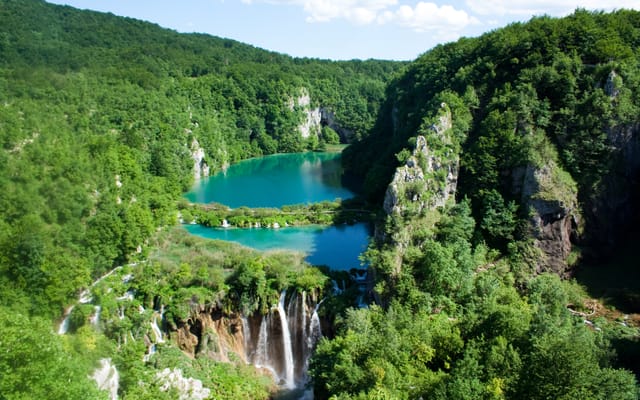
Northern Dalmatia, from Zadar to the Plitvice Lakes
Between the Adriatic and the Velebit mountains, Northern Dalmatia and Lika bring together Roman towns, limestone gorges and terraced lakes. This trip is a five-day loop from Zadar, by way of Paklenica, Lika and Plitvice.
Coast and islands
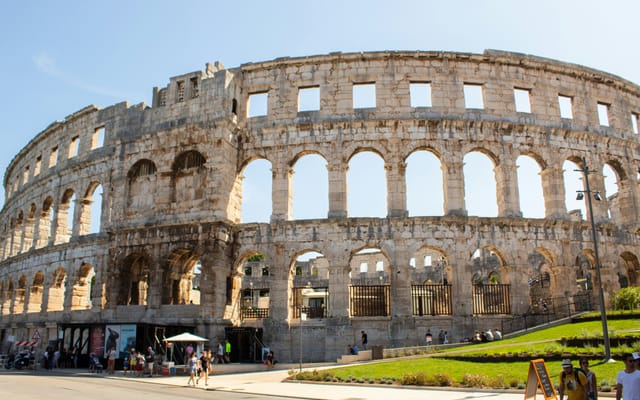
Istria, from Pula to the hilltop villages
Istria is a largely Croatian peninsula at the top of the Adriatic, between a Venetian coast and hills covered in vineyards and forests. This trip goes round it in five days from Pula, by way of Rovinj, Motovun, Mount Učka and Opatija.
A starting point, a few wishes — ViaLooma builds the trip day by day, map, stops and roadbook included.