Nova Scotia and the Cabot Trail
Lighthouses on granite, some of the highest tides in the world and a mountain road above the Gulf of St. Lawrence. Ten days on a loop from Halifax, from the Bay of Fundy to Cape Breton Island.
From the Fundy tides to the Highlands
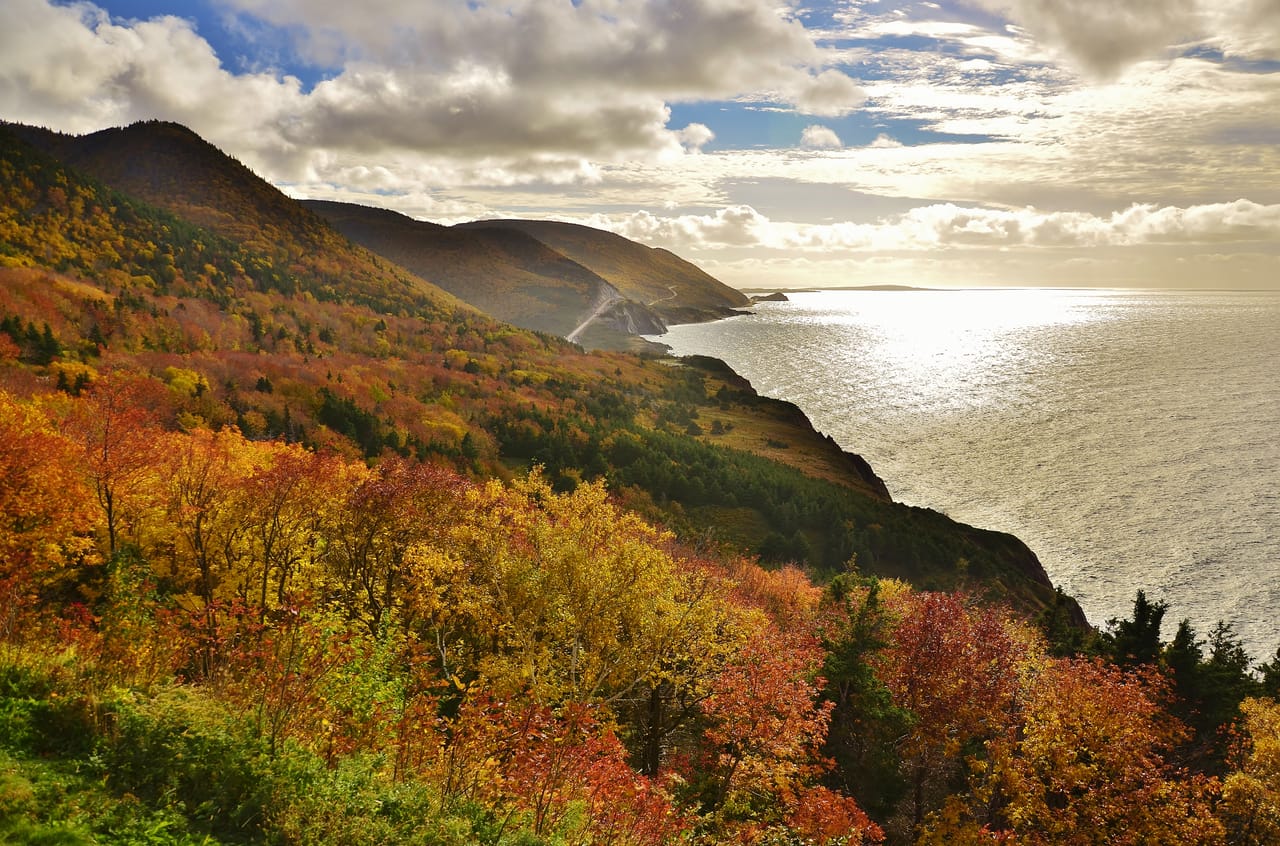
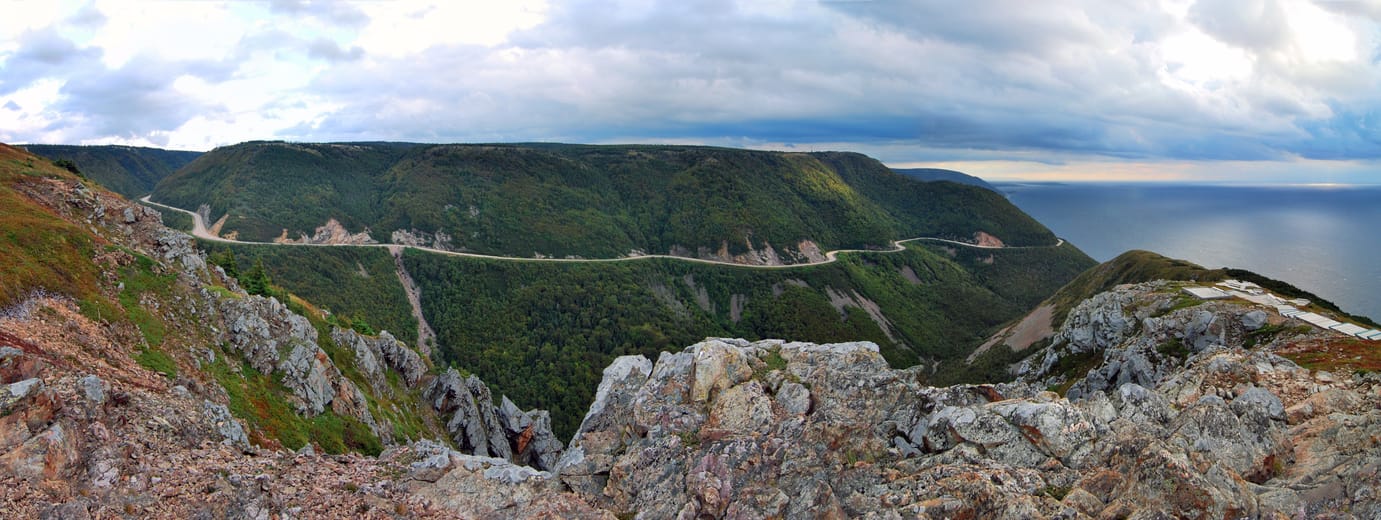
The high point of the trip is the Cabot Trail, a 298-kilometre loop around the northern tip of Cape Breton Island. From Chéticamp, the road enters Cape Breton Highlands National Park, climbs French Mountain, runs along the Gulf of St. Lawrence, then winds down to Pleasant Bay. It then crosses North Mountain and comes back down to the Atlantic by Ingonish and Cape Smokey. On the Skyline Trail, a boardwalk reaches out above the gulf: it is a good place to look out for pilot whales.
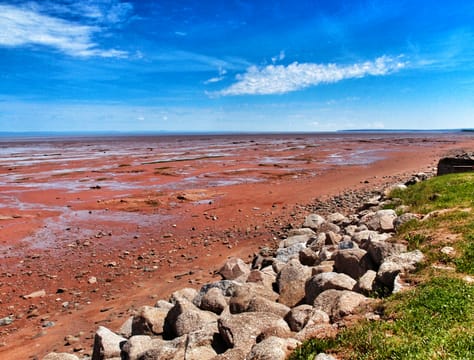
Before Cape Breton, the loop follows the south coast. At Peggy’s Cove, a white lighthouse stands on a slab of granite. Mahone Bay has three churches in a row by the water, and Lunenburg has its painted houses. Inland, Kejimkujik National Park protects lakes and Mi’kmaq petroglyphs. Then the road crosses the Annapolis Valley to the Bay of Fundy, where the sea goes out so far that you can walk on the floor of the bay.
On the west coast of Cape Breton, the Ceilidh Trail passes the beaches of Port Hood. In Halifax, a cannon fires from the citadel every day at noon.
Acadia, from Port-Royal to Grand-Pré
In 1605, Pierre Dugua de Mons and Samuel de Champlain founded Port-Royal, on the shore of the Annapolis Basin. It was one of the first French settlements in North America. The Habitation you visit today is a 1939–1940 reconstruction, based on a sketch by Champlain. The settlers, the Acadians, then made their homes around the Bay of Fundy. They built dykes fitted with aboiteaux, sluice gates with a flap valve which let fresh water drain out and hold back the tide.
Here, the fields were won from the sea, not from the forest. At Grand-Pré, these dyked meadows are still farmed; UNESCO listed them in 2012. In 1755, the British deported the Acadians, who refused to swear an unconditional oath: this was the Great Upheaval, or Grand Dérangement. In 1847, Longfellow’s poem Evangeline made the story widely known.
On the Cabot Trail, people still speak French in Chéticamp, where a museum displays the hooked rugs of Elizabeth LeFort.
Here, the fields were won from the sea, not from the forest.
The Scots of Cape Breton
The province’s name comes from a charter of 1621: Nova Scotia, Latin for “New Scotland”. The Scots came later. In 1773, the Hector landed nearly two hundred emigrants from the Highlands at Pictou; thousands more followed. Pictou has a replica of the ship. On Cape Breton, Gaelic is still taught at the Gaelic College in St. Anns. In the 1930s, the provincial premier, Angus L. Macdonald, named the Cabot Trail and the Cape Breton Highlands: he wanted to sell tourists a Scottish province.
You hear this heritage above all in the music, the music of the ceilidhs, evenings of fiddle and dancing. Every October, the Celtic Colours festival puts on concerts all over the island. In Antigonish, the Highland Games have been held every summer since 1863: according to their organisers, they are the oldest Highland games in North America.
Sherbrooke Village
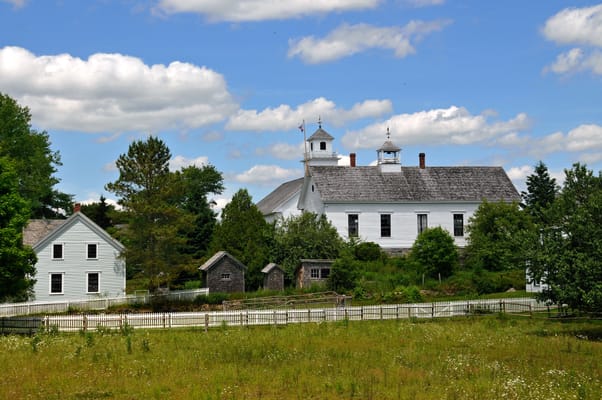
A late-19th-century village preserved on the banks of the St. Mary’s River: around thirty period buildings, including a church, a school, a forge and a general store, brought to life by guides in costume. It is open in season, roughly from June to October.
Practical notes
- When to go
- July to September, or early October for the autumn colours. Many services close from mid-October to late May.
- Getting there
- Halifax has an international airport, with direct flights from Montreal, Toronto, London and, in summer, Paris.
- Access
- Everything is tarmac, except the gravel track to Beulach Ban Falls. On the Cabot Trail, the descents are very steep: use engine braking. Moose on the road at dawn and dusk.
- Sleeping in a van
- Parks Canada campsites at Chéticamp, Broad Cove and Ingonish, to book in summer; private campsites elsewhere.
- Worth knowing
- A Parks Canada pass is required in the national park. Parking at the Skyline Trail must be booked from late June to late October. Check the tide times before you walk out into the bay.
- Allow
- Ten days for the loop, one more for the Joggins Fossil Cliffs.
What not to miss
- 1Peggy’s CoveThe lighthouse, first lit in 1915, on its granite; the black rocks at the water’s edge are slippery.
- 2LunenburgA town laid out on a grid in 1753, a UNESCO World Heritage Site and the home port of the Bluenose II.
- 3Burntcoat HeadIn 1975, the Guinness Book of Records named it the place with the highest tides in the world, with a range of up to 16.3 metres.
- 4The Skyline TrailA loop across the plateau out to a boardwalk above the gulf.
- 5The Fortress of LouisbourgA French town founded in 1713, captured twice, and partly rebuilt since 1961.
- 6BaddeckThe Alexander Graham Bell Museum, facing Bras d’Or Lake, where the Silver Dart took off from the ice in 1909.
Nova Scotia and the Cabot Trail in pictures
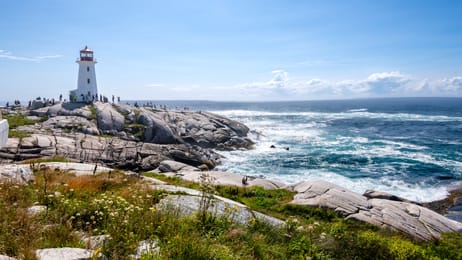
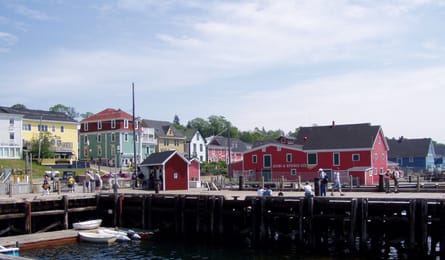
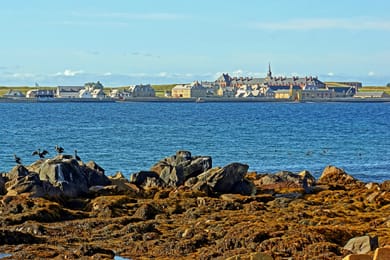
Peggy’s Point lighthouse on its granite rocks, facing the Atlantic.
The Nova Scotian table
Lobster is eaten everywhere, often at “lobster suppers” served in village halls. Acadian cooking has kept rappie pie, made with grated potatoes and chicken. In Halifax, the donair, a meat sandwich with a sweet sauce, has been the city’s official food since 2015.
Around Wolfville, the vineyards make Tidal Bay, a light, dry white wine. On Cape Breton, Glenora distils a single malt whisky, Glen Breton; the distillery kept that name in 2009, after a lawsuit brought by the Scotch whisky producers.
Loop from Halifax


 +27stops
- 1Citadel Hill · Peggy's Point Lighthouse · Mahone Bay
- 2Old Town Lunenburg · Kejimkujik National Park · Fort Anne
- 3Port-Royal National Historic Site · The Lookoff · Grand-Pré National Historic Site
Free, no account needed — start from its places and make it yours.
Also worth reading
Wide open spaces
Vancouver Island, from Victoria to the beaches of Tofino
An island of giant forests, beaches pounded by the Pacific and small harbours where boats leave to see orcas. Nine days on a loop from Victoria, from Port Renfrew to Tofino and up to Telegraph Cove.
Wide open spaces
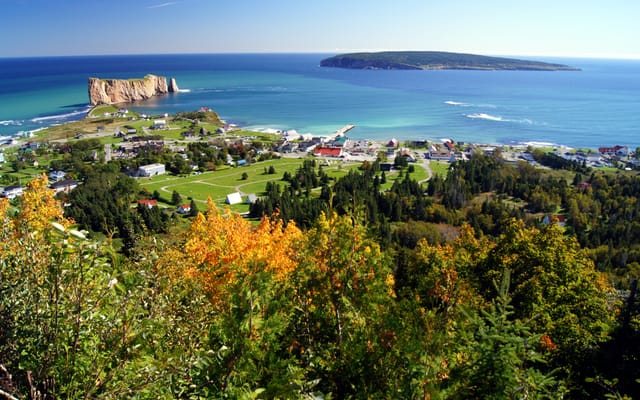
Around the Gaspé Peninsula on Route 132
A ten-day loop from Quebec City on Route 132, around the Gaspé Peninsula. Lighthouses, cliffs, treeless summits and Percé Rock, between the St Lawrence River and the Gulf of St Lawrence.
Wide open spaces
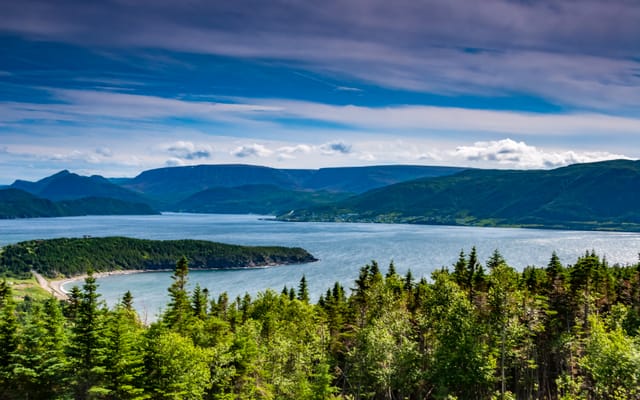
Newfoundland, from St. John’s to L’Anse aux Meadows
Icebergs offshore, lighthouses on the headlands and a freshwater fjord between 600-metre cliffs. Twelve days across the island, from St. John’s to the Viking site of L’Anse aux Meadows.
A starting point, a few wishes — ViaLooma builds the trip day by day, map, stops and roadbook included.