Southern Sweden, from Skåne to Småland
From the cliffs of Kullaberg to the stones of Ales stenar, then from the forests of Småland to Kalmar Castle. A one-week loop from Malmö, through Sweden’s southernmost province and the land of Astrid Lindgren.
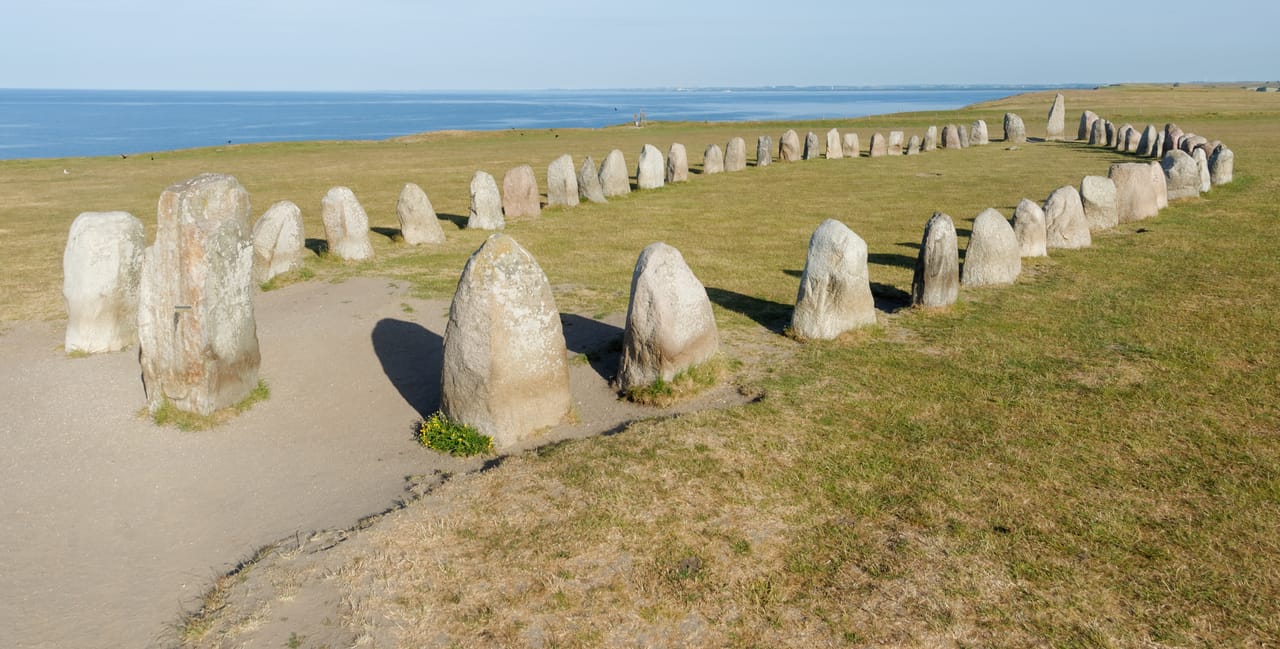
Two coasts, then the forests of Småland
Many travellers enter Sweden over the Øresund: from Copenhagen, a tunnel under the sea, then a bridge almost 8 kilometres long. On the other side, the Turning Torso, a twisted tower 190 metres tall, marks the arrival in Malmö. Around it, Skåne is a plain of wheat and rapeseed between two coasts.
In the north-west, Kullaberg ends in cliffs above the sea. You walk to Kullen lighthouse, then go back down to Mölle and Arild, two old fishing villages. In the south-east, Österlen has orchards, beaches and the beech forest of Stenshuvud. On the cliff at Kåseberga, Ales stenar traces a ship of standing stones facing the Baltic: you walk up from the harbour, ideally at sunset.
Then the road enters Småland: spruce forests, lakes, stone walls and red houses. You pass through the wooden town of Eksjö, Vimmerby and the glassworks, then head back south via Kalmar and Karlskrona.
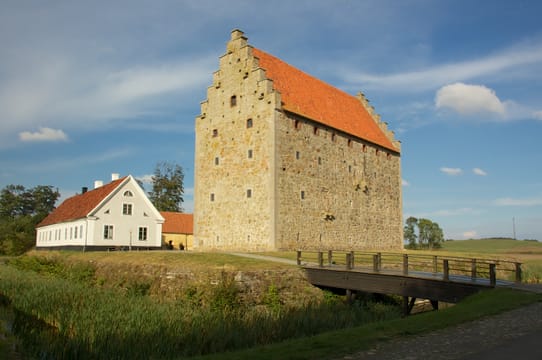
Skåne, long a part of Denmark
Until 1658, Skåne was Danish. That year, the Treaty of Roskilde gave Sweden all the Danish lands east of the Øresund. Glimmingehus, in Österlen, was built from 1499 for a Danish knight, Jens Holgersen Ulfstand. With its thick walls, its moat and its stepped gable, it is considered the best-preserved medieval fortress in Scandinavia.
In Helsingborg, Kärnan, a 14th-century tower, is all that remains of a Danish fortress that guarded the strait together with Kronborg, on the opposite shore. In Malmö, Malmöhus Castle, built in the 1520s and 1530s for the Danish kings, now houses the city’s museums.
In 1103, Lund became the seat of an archbishop for all the Nordic countries. Its Romanesque cathedral still has an astronomical clock installed around 1425. In the crypt, legend has it that the giant Finn, who wanted to pull the church down, was turned to stone against a pillar.
Until 1658, Skåne was Danish.
Småland: glass, emigration and Astrid Lindgren
Småland is a region of forests and stony land. The timber drew glassworks to the area between Växjö and Kalmar: this is the Kingdom of Crystal. In Kosta, founded in 1742, glass is still blown in front of visitors; Orrefors stopped production in the early 2010s. The poor soil also drove people abroad: about 1.3 million Swedes left for the United States in the 19th and early 20th centuries. In Växjö, the House of Emigrants tells the story of this exodus.
Astrid Lindgren was born in 1907 at Näs, in Vimmerby, where her childhood home is open to visitors. Katthult, the farm in the Emil films, is in fact the farm at Gibberyd, not far away. At the Astrid Lindgren’s World park, opened in 1981, actors perform her stories in the open air, from Pippi Longstocking to Ronia.
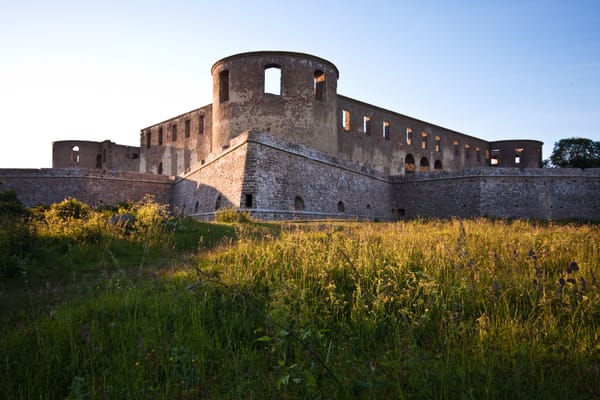
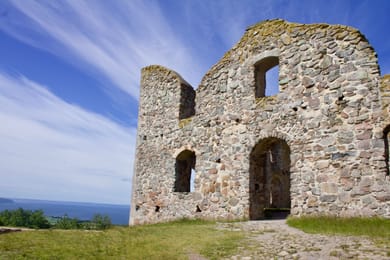
Borgholm Castle
A free 6-kilometre bridge leads to the island of Öland. The great ruin of Borgholm, burnt out in 1806, overlooks the strait, next to Solliden, the royal family’s summer residence. Further south, Stora Alvaret, a limestone plateau, is part of the Agricultural Landscape of Southern Öland, a UNESCO World Heritage Site.
Practical notes
- When to go
- Mid-May to early September, for the long days. May for the rapeseed in flower, September for the apples. Out of season, the castles cut their opening hours.
- Getting there
- Malmö is about twenty minutes by train from Copenhagen Airport. The Øresund Bridge is a toll bridge, with new prices since 14 September 2026.
- Access
- Everything is tarmac. At Kullaberg, the lighthouse road is narrow and the car parks are often full at summer weekends.
- Sleeping in a van
- The allemansrätten, the right of public access to nature, does not cover vehicles: sleep on motorhome aires (ställplatser), at campsites or, for one night, in a car park where it is allowed.
- Worth knowing
- Dipped headlights on during the day. Alcohol limit 0.2 g/l. Astrid Lindgren’s World opens every day from mid-May to mid-August, then on some weekends.
- Allow
- A week for the loop, one more day for Öland or Gränna.
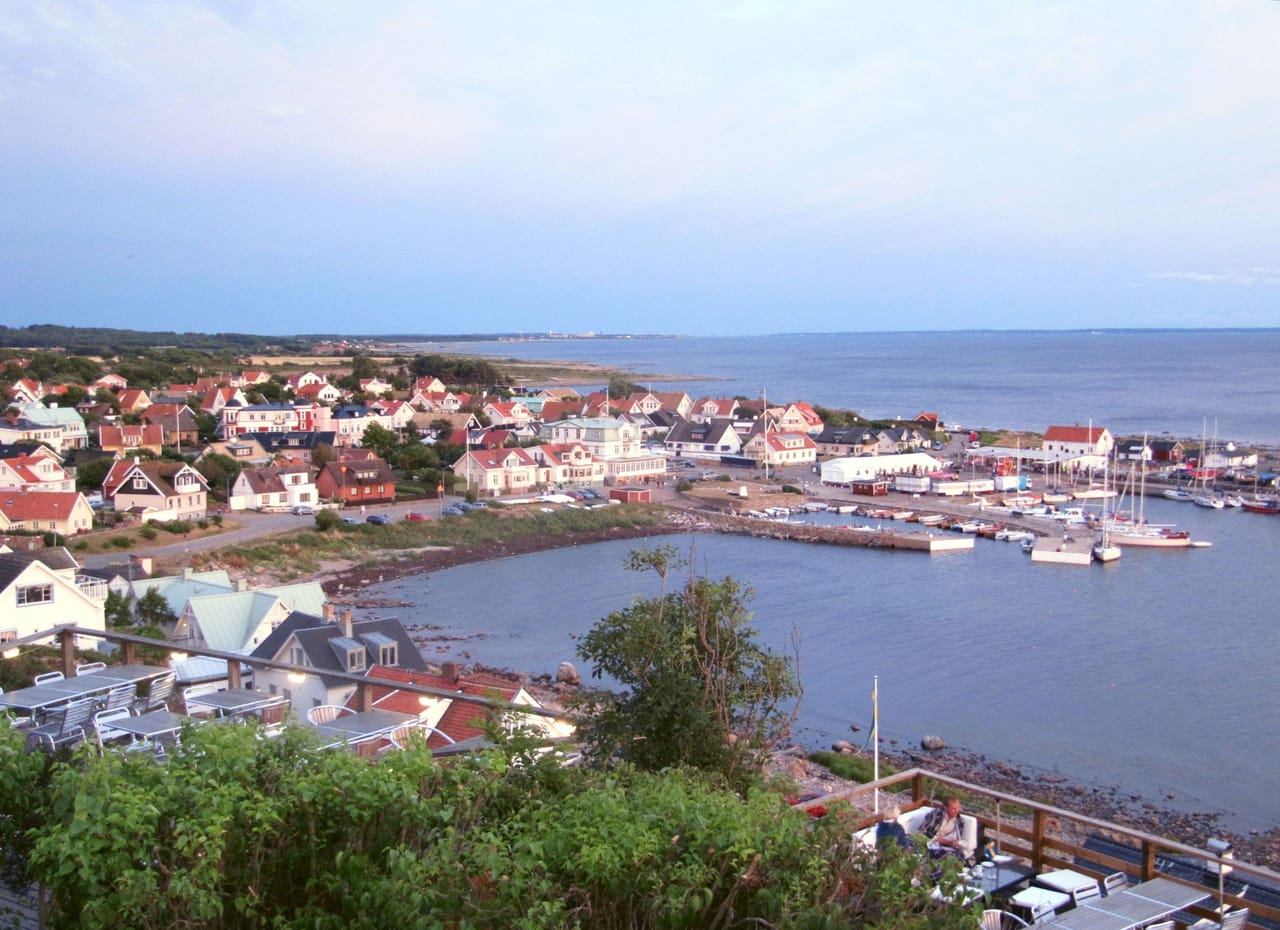
What not to miss
- 1Ales stenar59 stones that form a ship 67 metres long, raised around AD 600.
- 2KullabergClifftop paths, pebble coves and Kullen lighthouse at the tip.
- 3KungagravenNear Kivik, a Bronze Age tomb with slabs carved with ships and horses.
- 4Skurugata gorgeAn 800-metre cleft in the forest, north-east of Eksjö.
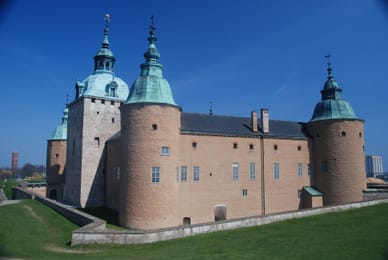
- 5Kalmar CastleThe fortress where the Kalmar Union was born in 1397, which became a Renaissance palace under the Vasa kings.
- 6KarlskronaA naval town from the late 17th century, on the UNESCO list, with its Baroque square.
Southern Sweden in pictures
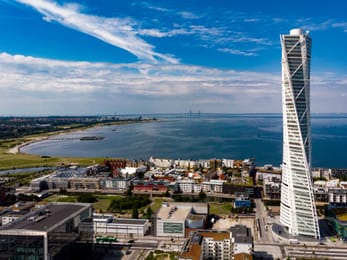
The Turning Torso above Västra Hamnen, with the Øresund Bridge in the background.
The southern Swedish table
In Skåne, äggakaka is a thick egg pancake served with bacon and lingonberries. Spettekaka is a cake of eggs and sugar baked on a spit. In Österlen, people eat eel in autumn and drink Kivik cider.
Småland has its ostkaka, a fresh cheese cake served warm with jam. In Gränna, polkagris, sticks of red and white striped rock, have been made since 1859. Everywhere, people stop for fika, a coffee break with a cinnamon bun.
Loop from Malmö


 +22stops
- 1Turning Torso · Malmöhus · Lunds domkyrka
- 2Kärnan · Sofiero · Mölle · Kullens fyr
- 3Arild · IKEA Museum · Växjö domkyrka · Kronobergs slottsruin
Free, no account needed — start from its places and make it yours.
Also worth reading
Wide open spaces
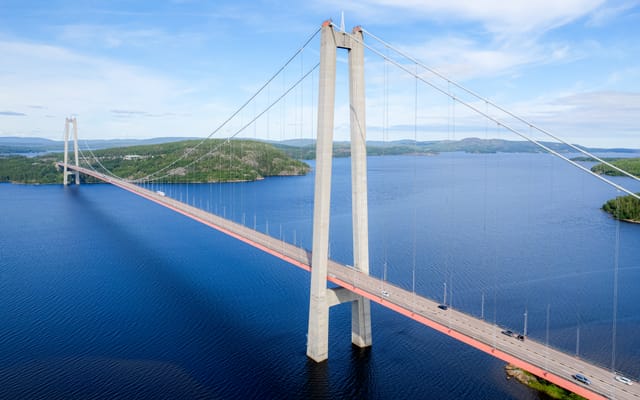
Sweden’s High Coast, between Härnösand and Örnsköldsvik
On the Gulf of Bothnia, the High Coast is a line of wooded hills, deep bays and red fishing villages. A four-day loop from Härnösand, on a coast that is still rising out of the sea.
Coast and islands
Bohuslän, from Gothenburg to Strömstad
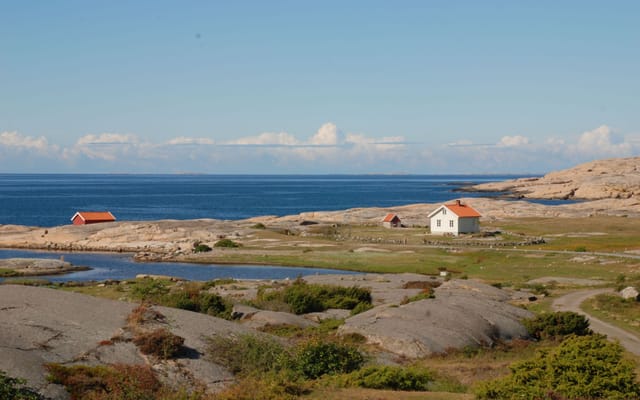
Bohuslän is the northern part of the west coast of Sweden, between Gothenburg and Norway. Granite islands, harbours with red and white huts, Bronze Age rock carvings: this trip follows this coast north in five days.
Wide open spaces
The Pacific Northwest, from the Olympic Peninsula to the Cascade volcanoes
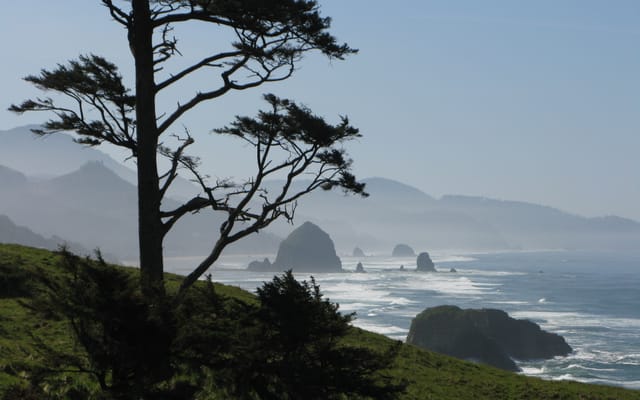
Rainforests, a coast of headlands and lighthouses, redwoods and two active volcanoes. A two-week loop from Seattle, by way of the Olympic Peninsula, the Oregon coast and Mount Rainier.
A starting point, a few wishes — ViaLooma builds the trip day by day, map, stops and roadbook included.