The Bay of Kotor, from the water to Mount Lovćen
A narrow bay between high mountains, Venetian towns on the water’s edge and a winding road that climbs up to Lovćen. Five days on a loop from Kotor, taking in Perast, Herceg Novi, Cetinje and Budva.
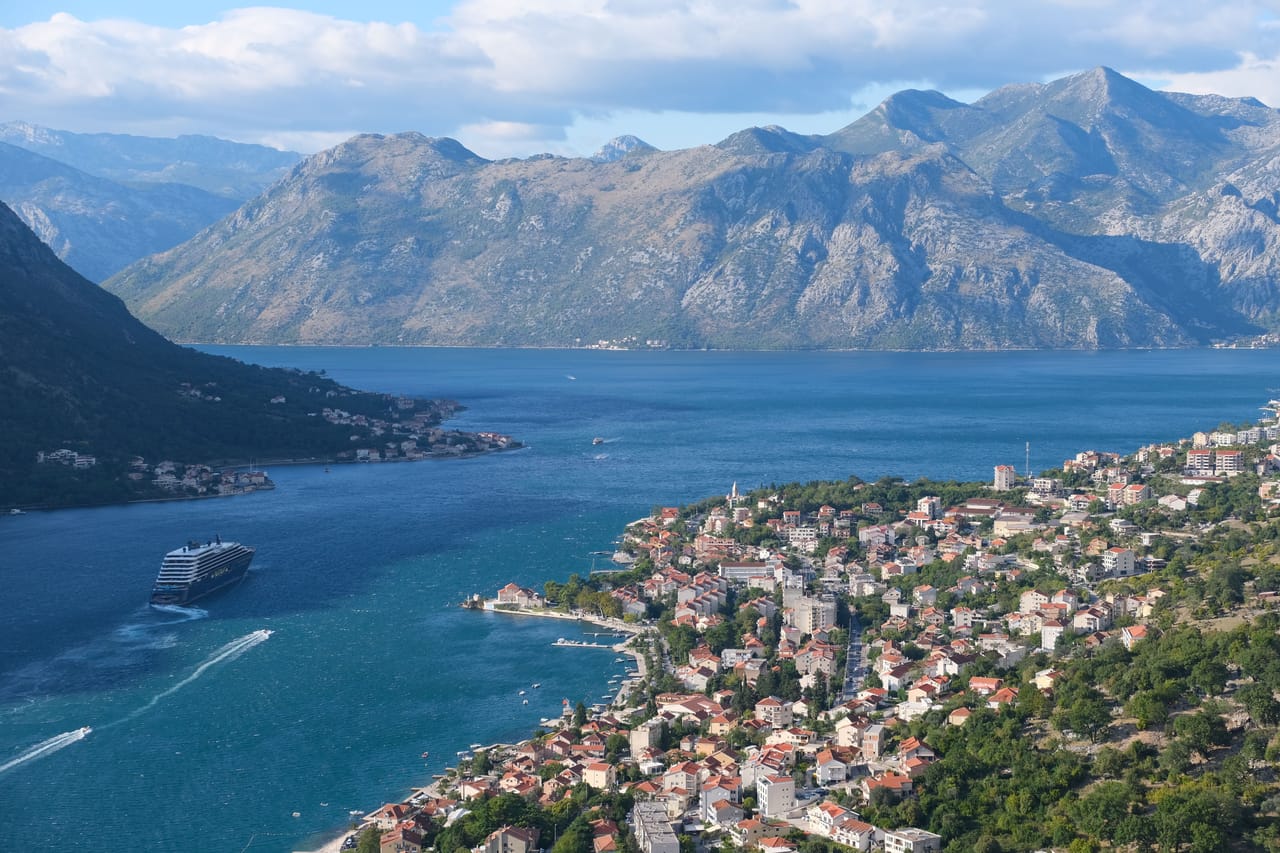
The bay, the mountain and the coast
The Bay of Kotor reaches about 28 kilometres inland. It is not a fjord but a ria, an old river valley flooded by the sea. The mountains drop almost straight into the water. The road follows the shore, often at walking pace behind coaches, and passes through Dobrota, Perast and Risan. At the Verige Strait, the bay is only 340 metres wide; a ferry crosses it in a few minutes. At the mouth of the bay, Herceg Novi is a town of steps above the water.
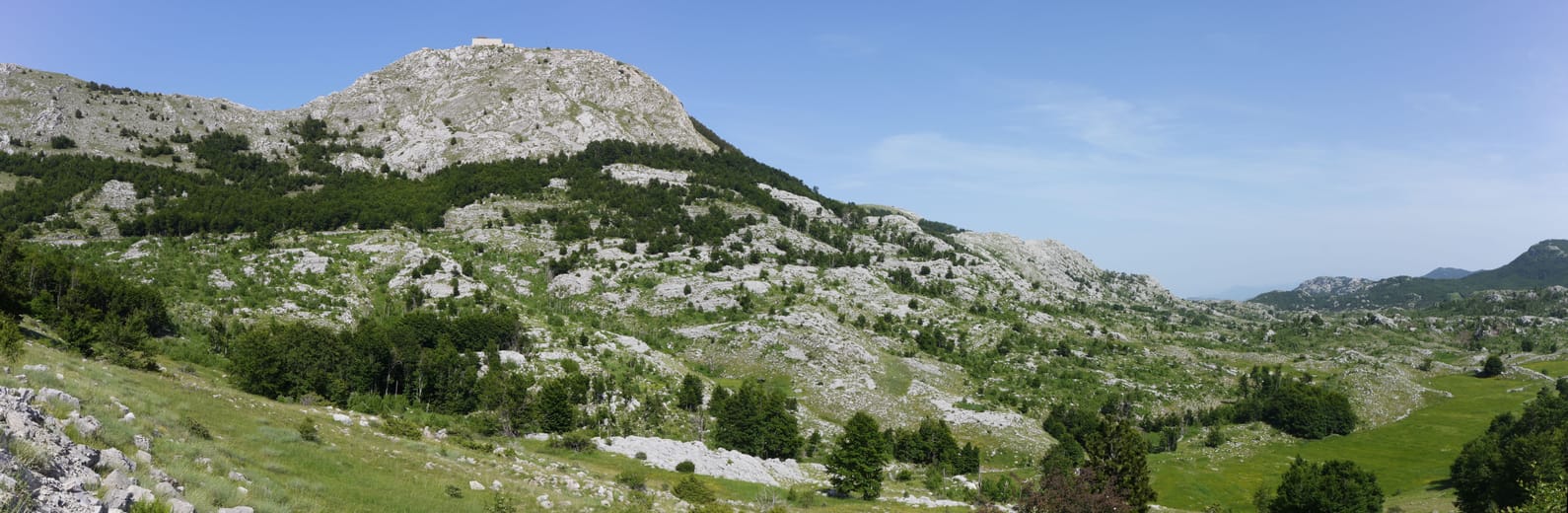
In Kotor, you climb the walls early, about 1,350 steps up to St John’s Fortress. Halfway up, the church of Our Lady of Remedy has the best-known view of the bay. Then a winding road, with about 25 hairpin bends, leaves the sea and climbs towards the stony plateau of Njeguši and Mount Lovćen.
The loop then comes back down to the open coast: the walled old town of Budva, then Sveti Stefan, an islet joined to the beach by a strip of sand.
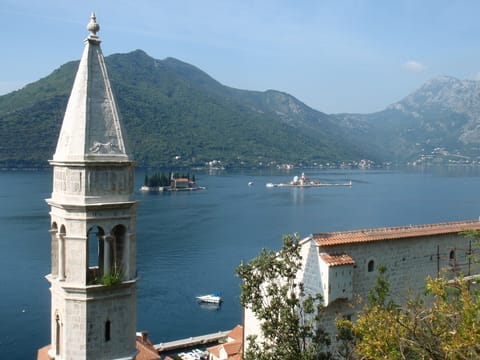
Perast and the Venetian bay
From 1420 to 1797, Kotor belonged to Venice, which called it Cattaro. Perast, near the strait, lived from the sea. The village has more than fifteen baroque palaces, built by families of shipowners and captains, and once had a well-known school of navigation. Fewer than 250 people live there today. The Bujović palace houses the town museum. Off the quay lie two islets: St George, with its abbey ringed by cypresses, and Our Lady of the Rocks.
Our Lady of the Rocks is an island built by hand. According to tradition, sailors found an icon of the Virgin on a rock on 22 July 1452, then threw stones there each time they came home from a voyage. Every 22 July at sunset, during the fašinada, local people still come out in boats to make the island bigger. You get there by boat from Perast. The church keeps an embroidery by Jacinta Kunić-Mijović. She worked on it for 25 years and sewed her own hair into it.
Kotor and its bay have been a Unesco World Heritage Site since 1979, the year of the earthquake that hit the coast hard.
Njegoš wanted to be buried on Lovćen.
Njegoš, Lovćen and Cetinje
Petar II Petrović-Njegoš, prince-bishop of Montenegro, was born in Njeguši in 1813. He is also the country’s great poet, the author of The Mountain Wreath. Njegoš wanted to be buried on Lovćen. His chapel, damaged in the First World War, was rebuilt in 1925. It was later pulled down to make way for the mausoleum by the sculptor Ivan Meštrović, opened in 1974 despite protests from the Orthodox Church. The mausoleum stands at 1,657 metres. You go up to it through a tunnel of 461 steps.
At the foot of Lovćen, on the inland side, Cetinje was once the capital of the country. Ivan Crnojević founded it in 1482. In 1838 Njegoš built his residence there, the Biljarda, named after its billiard table. After 1878, the great powers opened their legations in the town. Today, the president has a residence there, the Blue Palace.
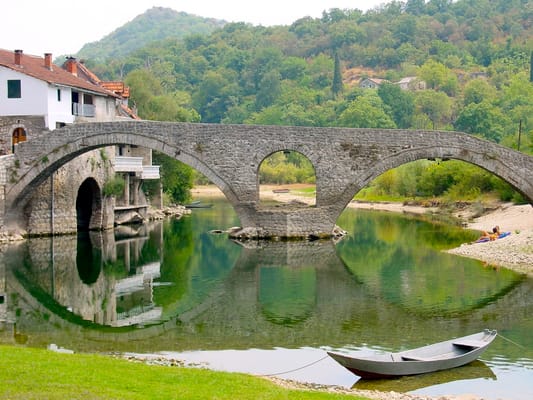
The bridge at Rijeka Crnojevića
An old stone bridge, built in 1853 by Prince Danilo, spans a green river near Lake Skadar. The village was the capital of the Crnojević family before Cetinje; today it has fewer than a hundred inhabitants. Close by, the Pavlova Strana viewpoint looks down on the river’s bend.
Practical notes
- When to go
- May to June and September to October. In July and August, Kotor and the bay road are packed. In winter, snow can close the Lovćen road.
- Getting there
- Kotor is about two hours from Dubrovnik, not counting the wait at the border. Tivat airport is very close.
- Access
- Everything is tarmac. The winding road from Kotor to Lovćen is narrow: large motorhomes are better off going via Budva and Cetinje.
- Sleeping in a van
- A few campsites around the bay and along the coast towards Budva. Outside campsites, spending the night in a van is not normally allowed.
- Worth knowing
- Montenegro uses the euro but is not in the European Union: check that your insurance covers the country. The old towns are pedestrianised.
- Allow
- Five days for the loop, plus half a day for Rijeka Crnojevića.
What not to miss
- 1The walls of KotorThe climb to St John’s Fortress, early in the morning or late in the day.
- 2The winding roadAt each hairpin, the bay comes into view from a little higher up.
- 3The Kamenari ferryA crossing of a few minutes at the Verige Strait.
- 4Herceg NoviA town founded in 1382, overlooked by the Ottoman fortress of Kanli Kula.
- 5Savina MonasteryAn Orthodox monastery above Herceg Novi, with a small church decorated with 15th-century frescoes.
- 6Budva and Sveti StefanAn old town restored after the 1979 earthquake, then Sveti Stefan, an islet turned hotel, best seen from the road.
The Bay of Kotor in pictures
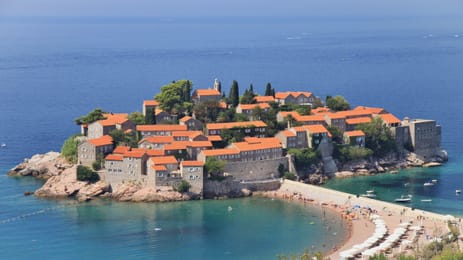
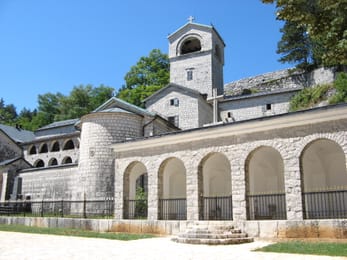
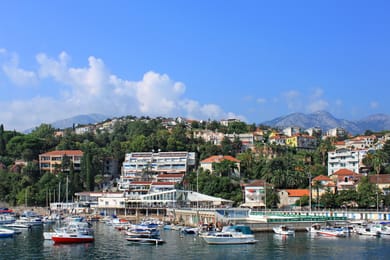
Sveti Stefan, an islet of orange roofs joined to the coast by a strip of sand.
The Montenegrin table
Around the bay, people eat mussels and grilled fish. On the Njeguši plateau, you buy pršut, a dried and smoked ham, and farmhouse cheese. Kačamak, a thick mash of maize flour or potatoes with cheese, is the shepherds’ dish.
The local red wine comes from a native grape, vranac. Near Lake Skadar, in Rijeka Crnojevića, restaurants serve carp, often smoked.
Loop from Kotor


 +14stops
- 1Катедрала Светог Трипуна · Котор (тврђава) · Museum Maritimum
- 2Saint Nicholas church · Palata Bujovic · Манастир Савина · Канли кула
- 3Njegoš birth house · Његошев маузолеј
Free, no account needed — start from its places and make it yours.
Also worth reading
Coast and islands
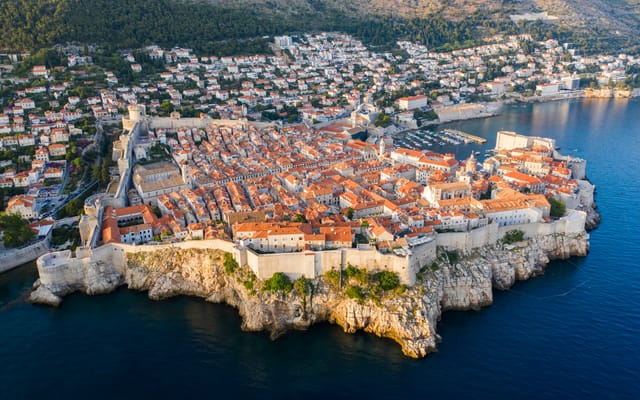
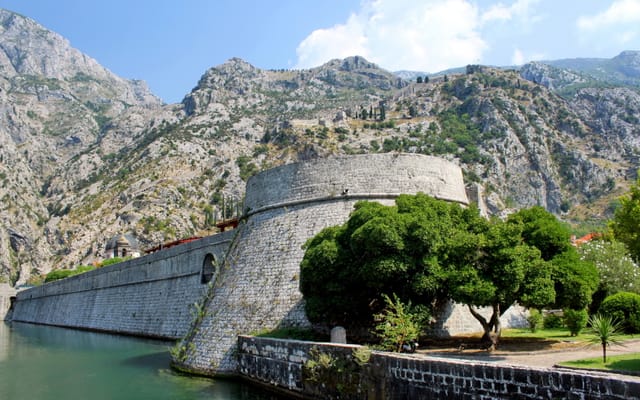
Dubrovnik, Mostar and Kotor: a loop through Croatia, Bosnia and Montenegro
A week on a loop from Dubrovnik, through three countries, two of them outside the European Union. The Croatian coast, the karst of Herzegovina and the Bay of Kotor, with three old towns on the UNESCO list.
Coast and islands
Montenegro and Albania, from Kotor to Berat
A bay ringed by mountains, a great lake, Venetian and Ottoman towns. Eight days on the road, from Kotor to Berat, in the heart of Albania.
Wide open spaces
The Pacific Northwest, from the Olympic Peninsula to the Cascade volcanoes
Rainforests, a coast of headlands and lighthouses, redwoods and two active volcanoes. A two-week loop from Seattle, by way of the Olympic Peninsula, the Oregon coast and Mount Rainier.
A starting point, a few wishes — ViaLooma builds the trip day by day, map, stops and roadbook included.