Montenegro and Albania, from Kotor to Berat
A bay ringed by mountains, a great lake, Venetian and Ottoman towns. Eight days on the road, from Kotor to Berat, in the heart of Albania.
From the Bay of Kotor to the towns of Albania
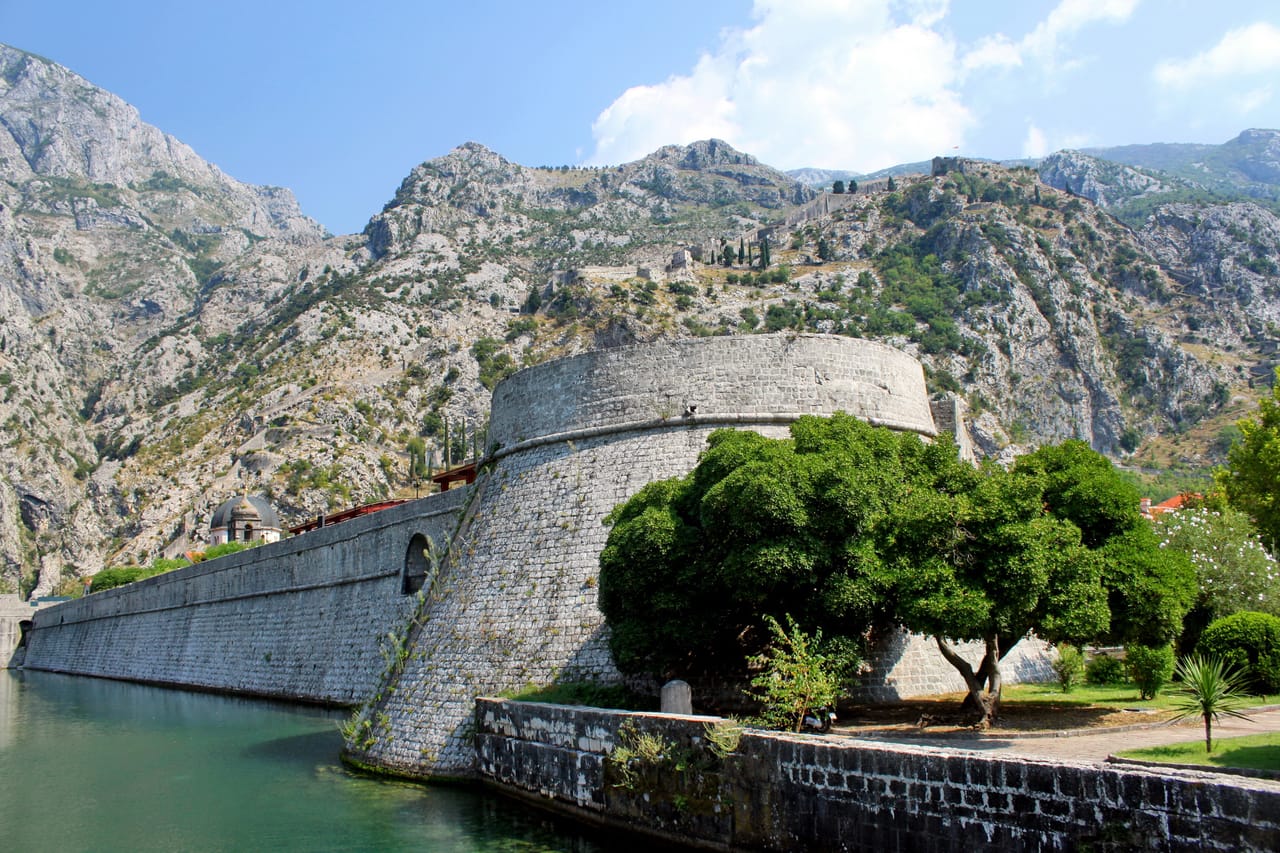
The journey begins at the far end of the Bay of Kotor. The road follows the water, below high limestone walls. People often call it a fjord, but it is an old river valley flooded by the sea. In Perast, a boat takes you in a few minutes to Our Lady of the Rocks, a church on a man-made islet.
After the beaches of Budva, the road climbs towards Cetinje and then Mount Lovćen. Further down, Lake Skadar, shared with Albania, is the largest lake in the Balkans. From the Pavlova Strana viewpoint, you see the Rijeka Crnojevića trace a horseshoe. In Virpazar, boats set off among the water lilies.
The coast ends at Ulcinj, an Albanian-speaking town, with its old town on a headland. Over the border, Shkodër is best seen by bike. Then you cross the plain to Krujë, clinging to its mountain, then Tirana and the Roman amphitheatre of Durrës. The road ends in Berat, whose white houses cover the hillside.
Albania, from Skanderbeg to Enver Hoxha
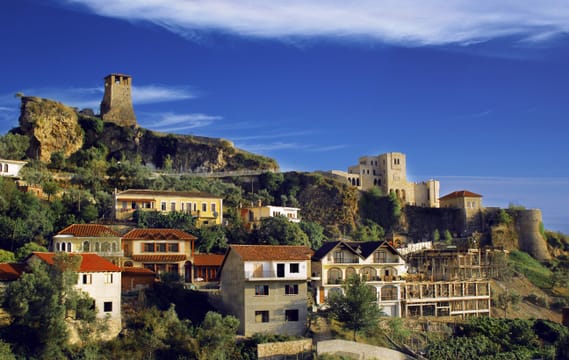
Krujë is the town of Skanderbeg, Albania’s national hero. Born Gjergj Kastrioti, this Ottoman officer rose up in 1443 and took the citadel of Krujë. It withstood three Ottoman sieges, in 1450, 1466 and 1467. Skanderbeg died in 1468, and the town fell ten years later. Skanderbeg’s black double-headed eagle is now on the Albanian flag. A museum in the citadel is devoted to him.
Five centuries later, Enver Hoxha’s Albania lived cut off from the world and covered itself in small concrete bunkers, still visible along the roads. In Tirana, Hoxha’s nuclear bunker has become a museum, Bunk’Art. The Pyramid, opened in 1988 as the Hoxha museum, became a digital skills centre for young people in 2023.
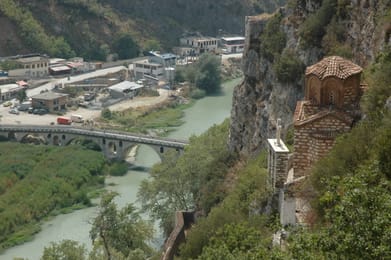
Berat, on the UNESCO list since 2008, is called the town of a thousand windows for the façades of its Mangalem quarter. Families still live inside its citadel, where a museum shows the icons of Onufri, a 16th-century painter.
Njegoš wanted to be buried on a summit of Lovćen.
Montenegro, from Venice to Njegoš
From 1420 to 1797, Kotor belonged to Venice. The town still has 4.5 kilometres of walls from that time, climbing up to St John’s Fortress, 280 metres above the town. St Tryphon’s Cathedral was consecrated in 1166. Kotor has been on the UNESCO list since 1979. In 2017, its walls joined the list of Venetian works of defence.
Cetinje, inland, is the old capital. Petar II Petrović-Njegoš, born in Njeguši in 1813, ruled there as prince-bishop and wrote The Mountain Wreath, the country’s great poem. Njegoš wanted to be buried on a summit of Lovćen. The mausoleum designed by Ivan Meštrović, opened in 1974, replaced his chapel. You reach it through a tunnel of 461 steps.
Ostrog Monastery
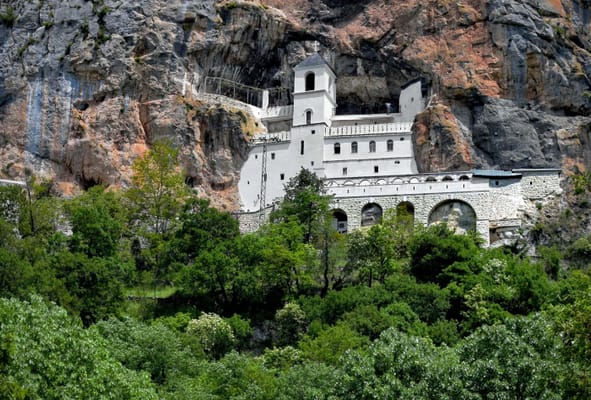
Founded in the 17th century by St Basil, whose relics rest here, this white monastery is set into a cliff above the Zeta valley. It is the most visited place of pilgrimage of the Serbian Orthodox Church. In a van, park at the lower monastery: the road to the upper one is very narrow.
Practical notes
- When to go
- May–June and September–October. Summer is hot and busy, and cruise ships fill Kotor.
- Getting there
- Airports at Tivat, near Kotor, and Tirana, about two hours from Berat. The rental company must allow you to cross the border.
- Access
- Everything is tarmac; the Sozina tunnel has a toll. The winding road from Kotor to Njeguši and the road from Rijeka Crnojevića to Virpazar are very narrow: avoid them in a large motorhome.
- Sleeping in a van
- Campsites on the Bay of Kotor, near Budva, at Lake Skadar, in Ulcinj, Shkodër and Berat. Wild camping is banned in Montenegro’s national parks.
- Worth knowing
- Outside Schengen. The euro in Montenegro, the lek in Albania. The green card covers Albania. Headlights on by day, and possible waits at the border in summer.
- Allow
- Eight days, plus one or two for Ostrog and the ancient site of Apollonia.
What not to miss
- 1Our Lady of the RocksAccording to tradition, the sailors of Perast built up the islet by throwing stones into the sea.
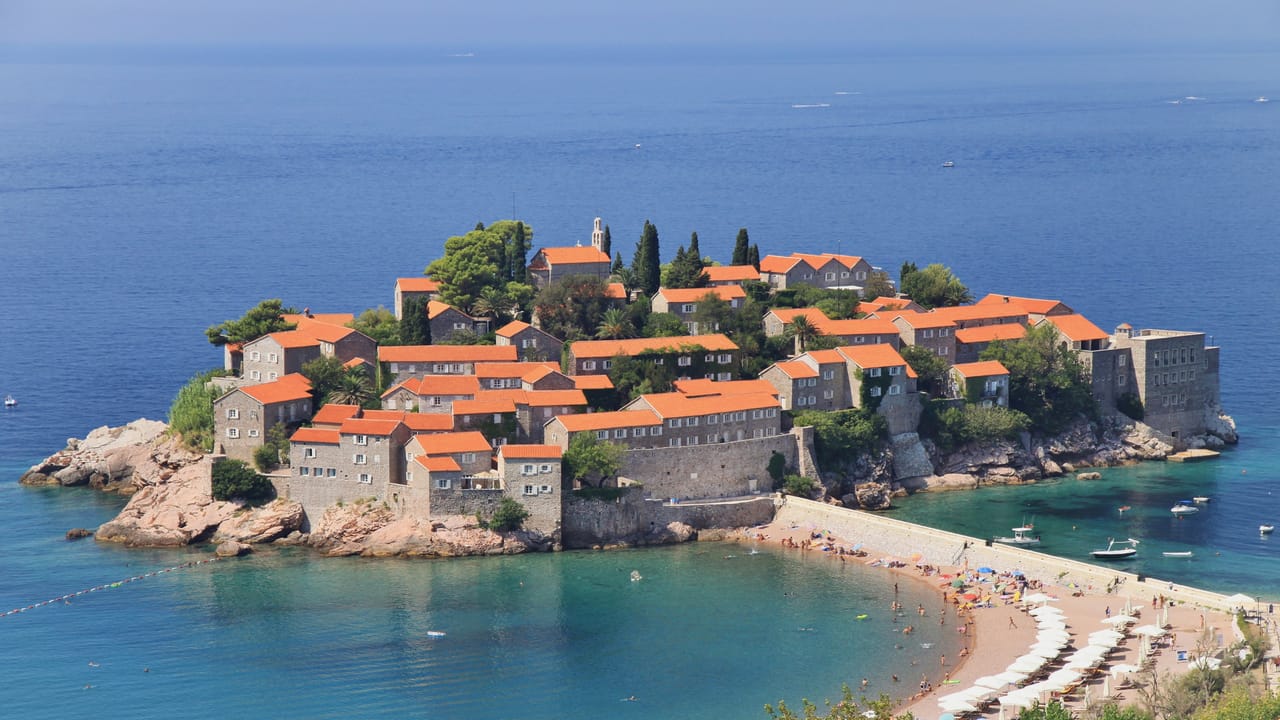
- 2Sveti StefanA fortified village turned luxury hotel, reopened in 2026: the islet is for guests only, so you admire it from the coast road.
- 3Lake Skadar by boatFrom Virpazar, among reeds and water lilies, below Besac fortress.
- 4Stari BarAn abandoned town above Bar, largely destroyed during the siege of 1877–1878.
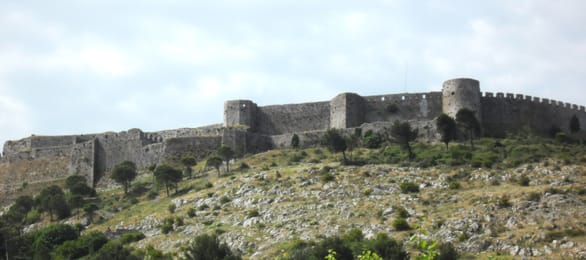
- 5Rozafa CastleLegend has it that a woman was walled up alive here, with one breast and one hand left free for her baby.
- 6The Gorica bridgeBerat’s seven-arched bridge, facing the windows of Mangalem.
Montenegro and Albania in pictures
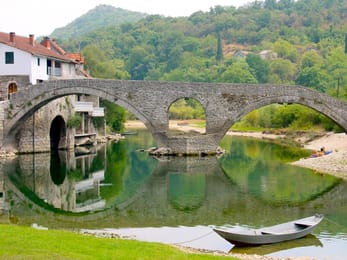
The old double-arched bridge at Rijeka Crnojevića.
The food of Montenegro and Albania
In Njeguši, on the road to Lovćen, try the village’s smoked ham and its cheese. On the shores of Lake Skadar, people eat carp and smoked bleak. The vineyards of Crmnica, near Virpazar, make a red wine, vranac.
In Albania, tavë kosi is lamb baked in the oven under a layer of yoghurt and eggs. Tirana has its fërgesë, made with peppers and fresh cheese. People eat byrek, a savoury pastry, at any time of day, and raki ends the meal. Around Berat, wine is made from a local grape, pulës.
Kotor → Berat


 +22stops
- 1Saint Nicholas church · Катедрала Светог Трипуна · Котор (тврђава)
- 2Стари град · Свети Стефан · Манастир Прасквица
- 3Цетињски манастир · Његошев маузолеј · Njegoš birth house
Free, no account needed — start from its places and make it yours.
Also worth reading
Coast and islands
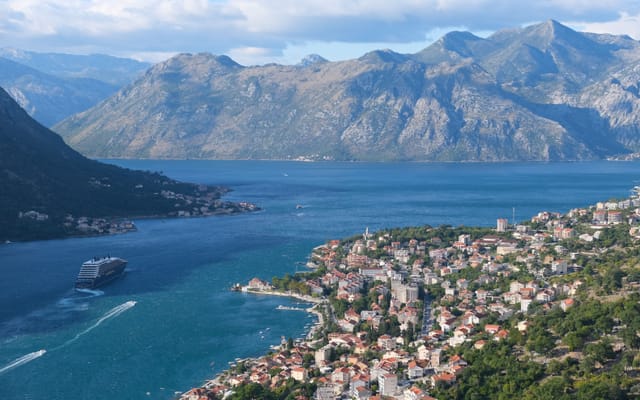
The Bay of Kotor, from the water to Mount Lovćen
A narrow bay between high mountains, Venetian towns on the water’s edge and a winding road that climbs up to Lovćen. Five days on a loop from Kotor, taking in Perast, Herceg Novi, Cetinje and Budva.
Coast and islands
Dubrovnik, Mostar and Kotor: a loop through Croatia, Bosnia and Montenegro
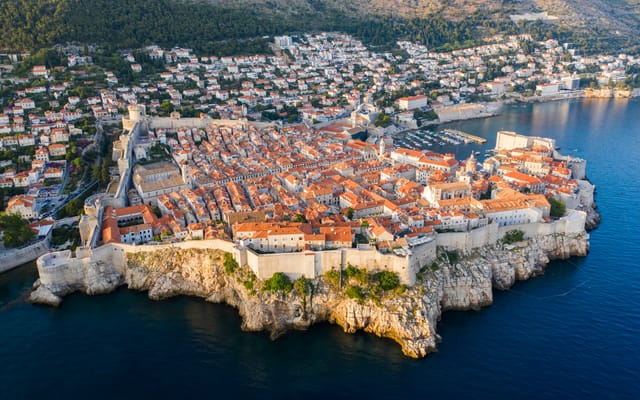
A week on a loop from Dubrovnik, through three countries, two of them outside the European Union. The Croatian coast, the karst of Herzegovina and the Bay of Kotor, with three old towns on the UNESCO list.
Coast and islands
The Albanian Riviera, from Vlorë to Ksamil
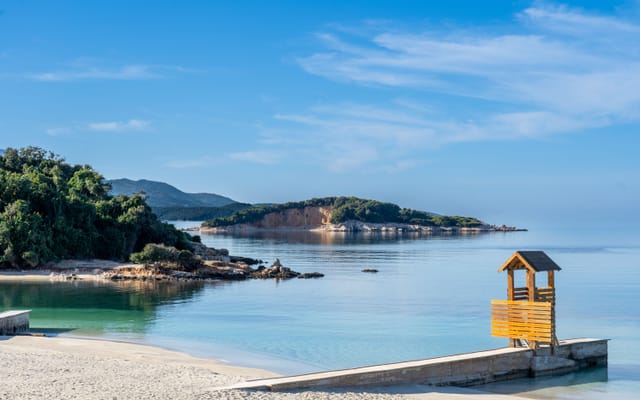
Between Vlorë and Ksamil, the Ionian coast road crosses the Llogara Pass, then runs past pebble beaches and hilltop villages. In six days, you also visit the ruins of Butrint, Ali Pasha’s forts and the blue spring of the Blue Eye.
A starting point, a few wishes — ViaLooma builds the trip day by day, map, stops and roadbook included.