Gauja National Park, from Riga to Cēsis
An hour from Riga, the Gauja flows along the bottom of a red sandstone valley, between crusader castles and pine forests. A four-day loop through Sigulda, Turaida, Līgatne, Cēsis and Valmiera.
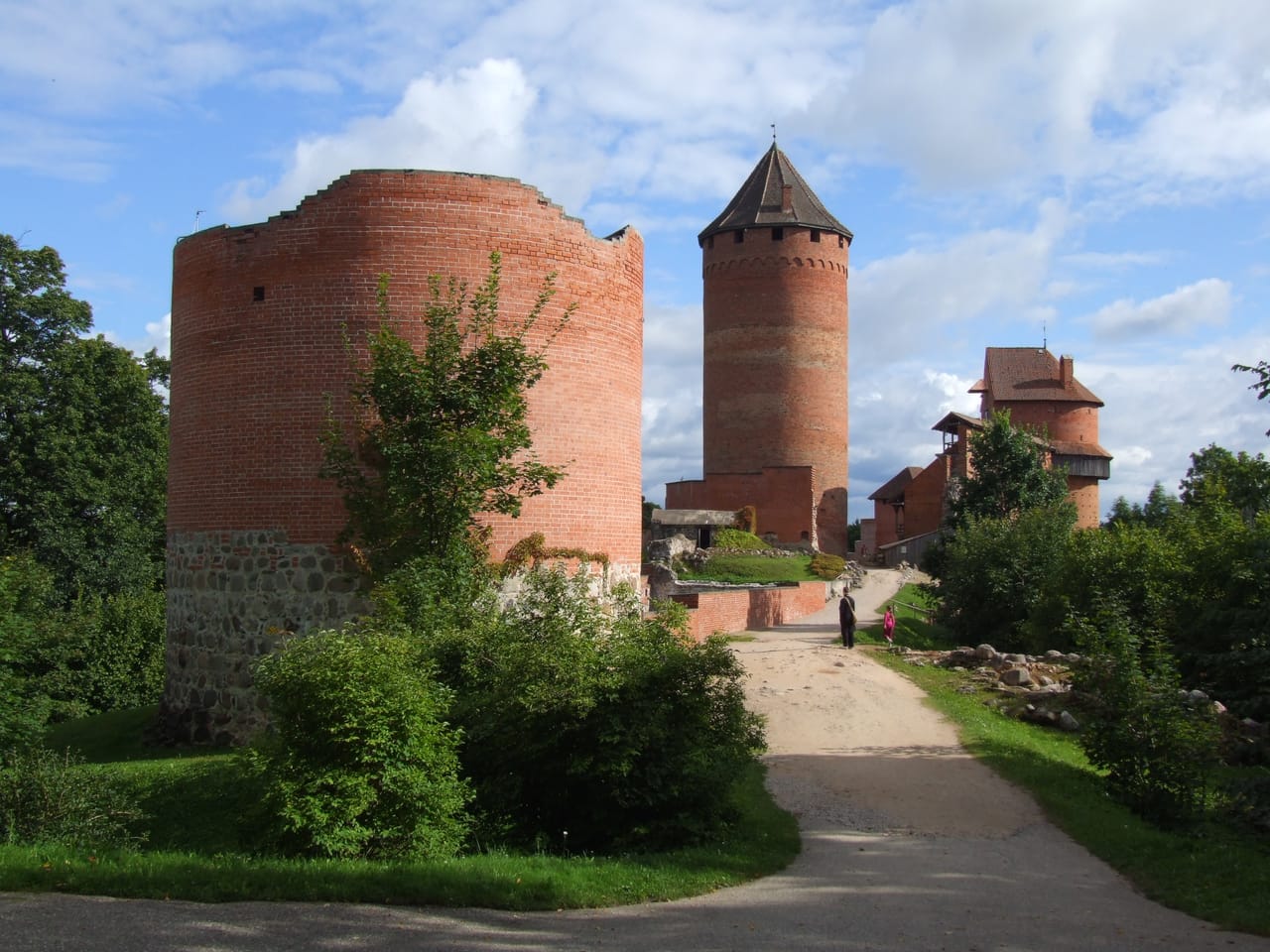
The Gauja valley, an hour from Riga
You leave Riga along Brīvības iela, past the Freedom Monument. The road becomes the A2 and crosses about fifty kilometres of plains and pine forest. Then, at Sigulda, the Gauja valley opens up all at once: deep, wooded, with red sandstone cliffs at the water’s edge.
Since 1973, it has been protected by Gauja National Park, the largest in Latvia. Forests cover almost half of the park. In Sigulda, a cable car crosses the valley to Krimulda: from the cabin, you can see the castles on both banks. Further on, at Līgatne, a cable ferry takes cars from one bank to the other. Nearby, nature trails run along the Gauja, with enclosures for bears, elk and bison.
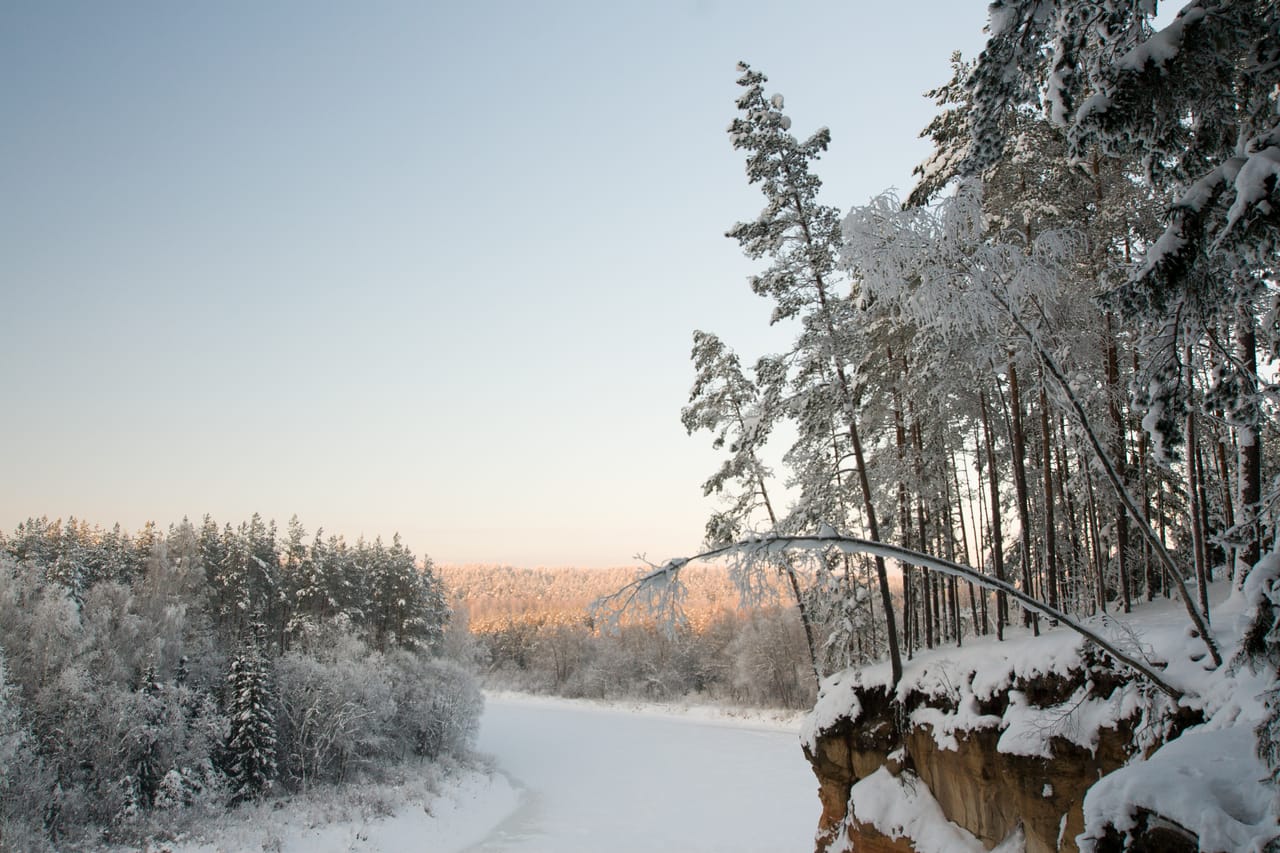
Small forest roads then lead to Cēsis, a medieval town around its castle. Towards Valmiera, the Gauja runs past the sandstone cliffs of Ērgļu klintis, about twenty metres high.
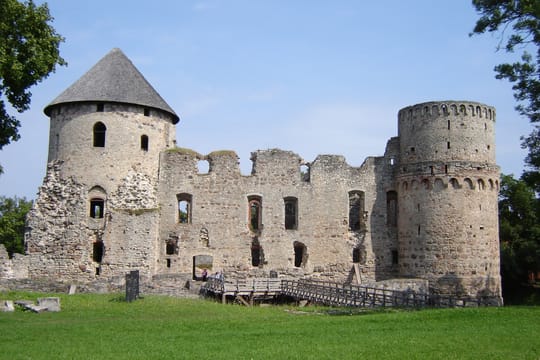
The crusader castles
In the early 13th century, German crusaders conquered the Livs and the Latgalians who lived along the Gauja. The Livonian Brothers of the Sword built Sigulda from 1207, then began the castle of Cēsis around 1213. At the end of the 15th century, Cēsis became the permanent residence of the masters of the Livonian Order. Wolter von Plettenberg, master from 1494 to 1535, added three artillery towers. In 1577, besieged by Ivan the Terrible, around 300 defenders blew themselves up with their gunpowder. Today, you visit the west tower by the light of a lantern, a tradition started in 1996.
Opposite Sigulda, Turaida was built from 1214 for Albert, Bishop of Riga, on the site of a wooden fort of the Livs. The ruins of Krimulda, close by, are those of a castle of the Riga cathedral chapter. The Order and the Church shared the land and kept watch on each other from one bank to the other. Abandoned after a fire in 1776, Turaida has been excavated since 1976. Today you can climb its keep to see the whole valley.
The Order and the Church shared the land and kept watch on each other from one bank to the other.
The Rose of Turaida and the folk songs
According to tradition, Maija was taken in as a baby at Turaida after a battle, in 1601. In 1620, a Polish deserter wanted to marry her by force. Faithful to her fiancé, a gardener at Sigulda, she claimed that her scarf made the wearer invulnerable. She asked him to strike her with his axe to test it. He killed her, at Gutmanis Cave. The grave of the Rose of Turaida, near the church, still receives flowers from newly-weds.
Above the castle, Dainu kalns, the Hill of Songs, pays tribute to the dainas, the Latvian folk quatrains. It opened in 1985 for the 150th anniversary of Krišjānis Barons, who collected these songs. Barons’s card cabinet, the Dainu skapis, has been on UNESCO’s Memory of the World Register since 2001.
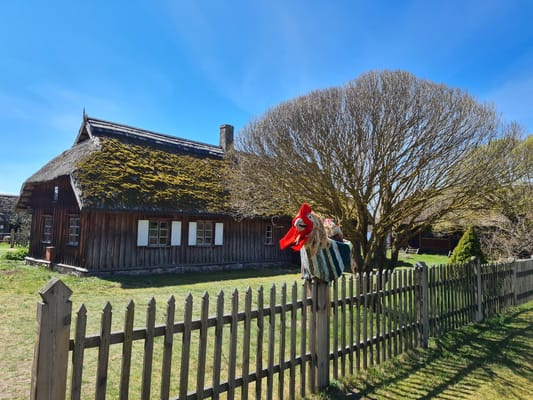
The Latvian Ethnographic Open-Air Museum
Founded in 1924, it brings together more than a hundred rural buildings in a pine forest on the shore of Lake Jugla: log farmhouses, windmills, wooden churches. It is on the road to Sigulda.
Practical notes
- When to go
- May to early October, late September for the autumn colours. In winter, the valley is under snow and the days are short.
- Getting there
- Riga has an international airport. Sigulda is an hour’s drive away on the A2.
- Access
- Everything is tarmac, except the forest tracks to the cliffs, tricky in the rain for a large motorhome. In Riga, park outside the old town, which is largely pedestrianised.
- Sleeping in a van
- Campsites around Sigulda, Līgatne, Cēsis and Valmiera. In the national park, you can only sleep on designated pitches.
- Worth knowing
- The Līgatne bunker is visited in guided groups, by booking, at Skaļupes. The Līgatne ferry stops running when the river freezes. The Latvian vignette only applies to commercial vehicles over 3 t, including N1 vans.
- Allow
- Four days for the loop, one or two more for Riga or the Gauja by canoe.
What not to miss
- 1Alberta iela in RigaA row of Art Nouveau facades, and a museum in the home of the architect Konstantīns Pēkšēns, at No. 12.
- 2The Sigulda cable carThe crossing of the valley by cabin, above the Gauja.
- 3The Sigulda bobsleigh trackA bob taxi with a pilot in winter, a bob on wheels in summer.
- 4The Līgatne bunkerA Soviet nuclear shelter, 9 metres underground.
- 5The Āraiši lake villageA Latgalian village of the 9th and 10th centuries, rebuilt on its islet.
- 6SietiņiezisA white sandstone cliff pierced with small holes, hence its name, “sieve”.
Gauja National Park in pictures
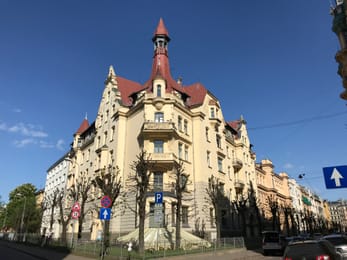
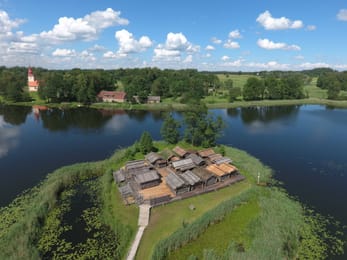
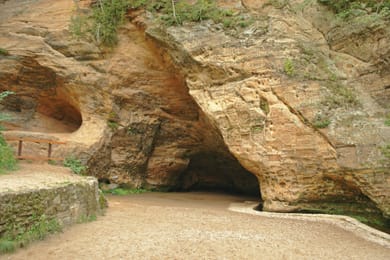
The Art Nouveau facade of No. 12 Alberta iela, in Riga.
The Latvian table
In Riga, the Central Market fills old zeppelin hangars. Here you will find black rye bread, smoked fish and, in spring, birch sap. In restaurants, order grey peas with bacon. Riga Black Balsam, a bitter herbal liqueur, is drunk neat or in a coffee.
Cēsis is the town of beer: a brewery is mentioned in the castle as early as 1590. Cēsu alus is brewed today in a modern plant.
Loop from Riga


 +13stops
- 1Muzejs "Rīgas Jūgendstila centrs" · Rīgas Doms · Melngalvju nams · Siguldas viduslaiku pils
- 2Siguldas bobsleja un kamaniņu trase · Krimuldas viduslaiku pils · Gūtmaņa ala · Turaidas pils
- 3Līgatnes Padomju slepenais bunkurs · Zvārtes iezis · Āraišu ezerpils · Cēsu viduslaiku pils
Free, no account needed — start from its places and make it yours.
Also worth reading
Wide open spaces
The Pacific Northwest, from the Olympic Peninsula to the Cascade volcanoes
Rainforests, a coast of headlands and lighthouses, redwoods and two active volcanoes. A two-week loop from Seattle, by way of the Olympic Peninsula, the Oregon coast and Mount Rainier.
Wide open spaces
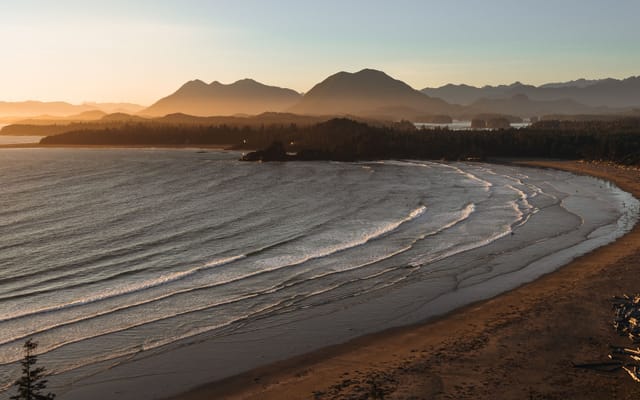
Vancouver Island, from Victoria to the beaches of Tofino
An island of giant forests, beaches pounded by the Pacific and small harbours where boats leave to see orcas. Nine days on a loop from Victoria, from Port Renfrew to Tofino and up to Telegraph Cove.
Wide open spaces
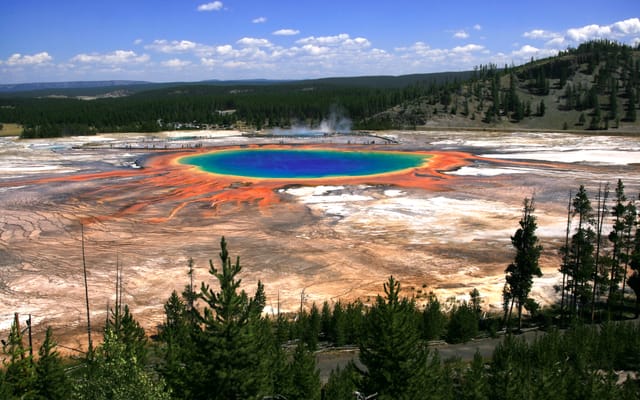
Yellowstone, Grand Teton and Glacier: the great Rockies road trip
Three national parks on one road, from the Tetons to the glaciers of Montana, by way of the geysers of Yellowstone. Twelve days from Jackson to Kalispell, with bison by the roadside and two great mountain roads.
A starting point, a few wishes — ViaLooma builds the trip day by day, map, stops and roadbook included.