The Black Forest, from Baden-Baden to the Kaiserstuhl
Ridge roads, lakes, farmhouses under huge roofs and cuckoo clocks, then the vineyards of an extinct volcano. A week on a loop from Freiburg im Breisgau, from the north of the range to the south.
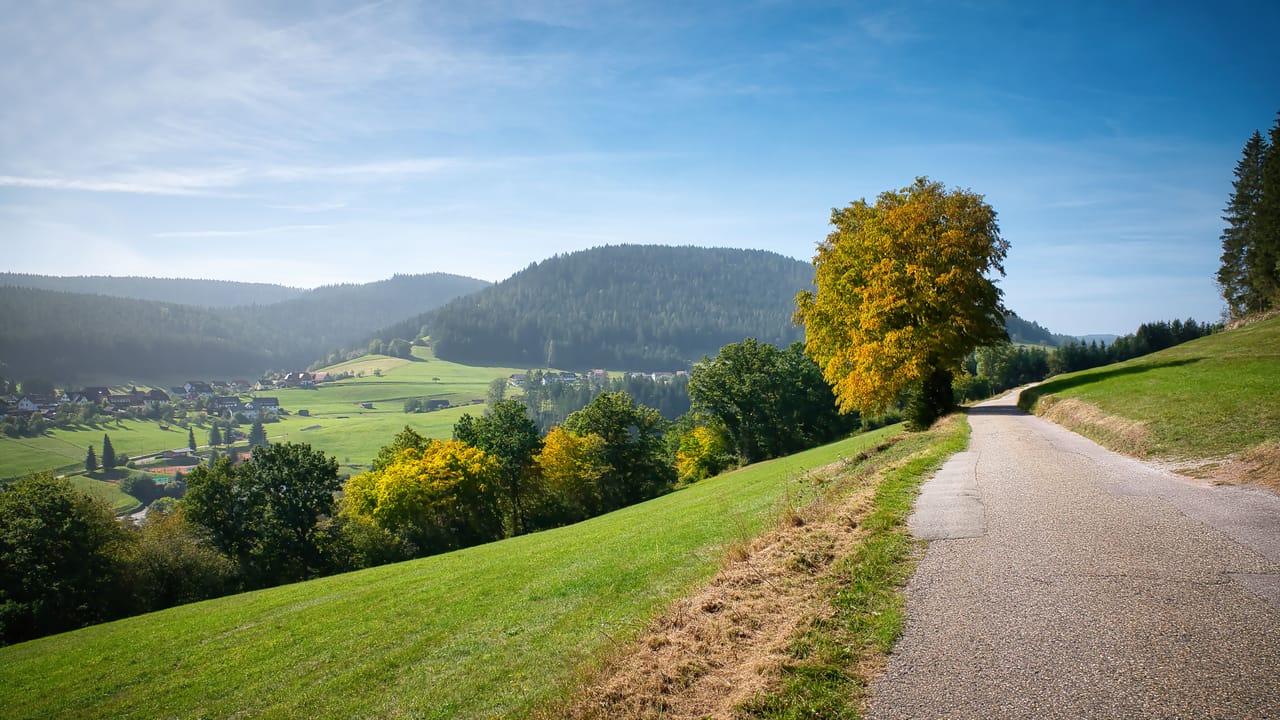
The Black Forest, from the ridge to the vineyards
The loop starts in Freiburg im Breisgau and begins with the north. From Baden-Baden, the Schwarzwaldhochstraße climbs to the ridge, then follows it at between 800 and more than 1,000 metres. It runs for about sixty kilometres to Freudenstadt. On a clear day, you can see the Rhine plain and the Vosges. You stop at the Mummelsee, a small cirque lake, then on the heathland of the Schliffkopf, in the Black Forest National Park.
The road then goes down the Kinzig valley, past half-timbered houses and farmhouses with enormous roofs. In Triberg, the Gutach drops 163 metres in a series of waterfalls, under the fir trees.
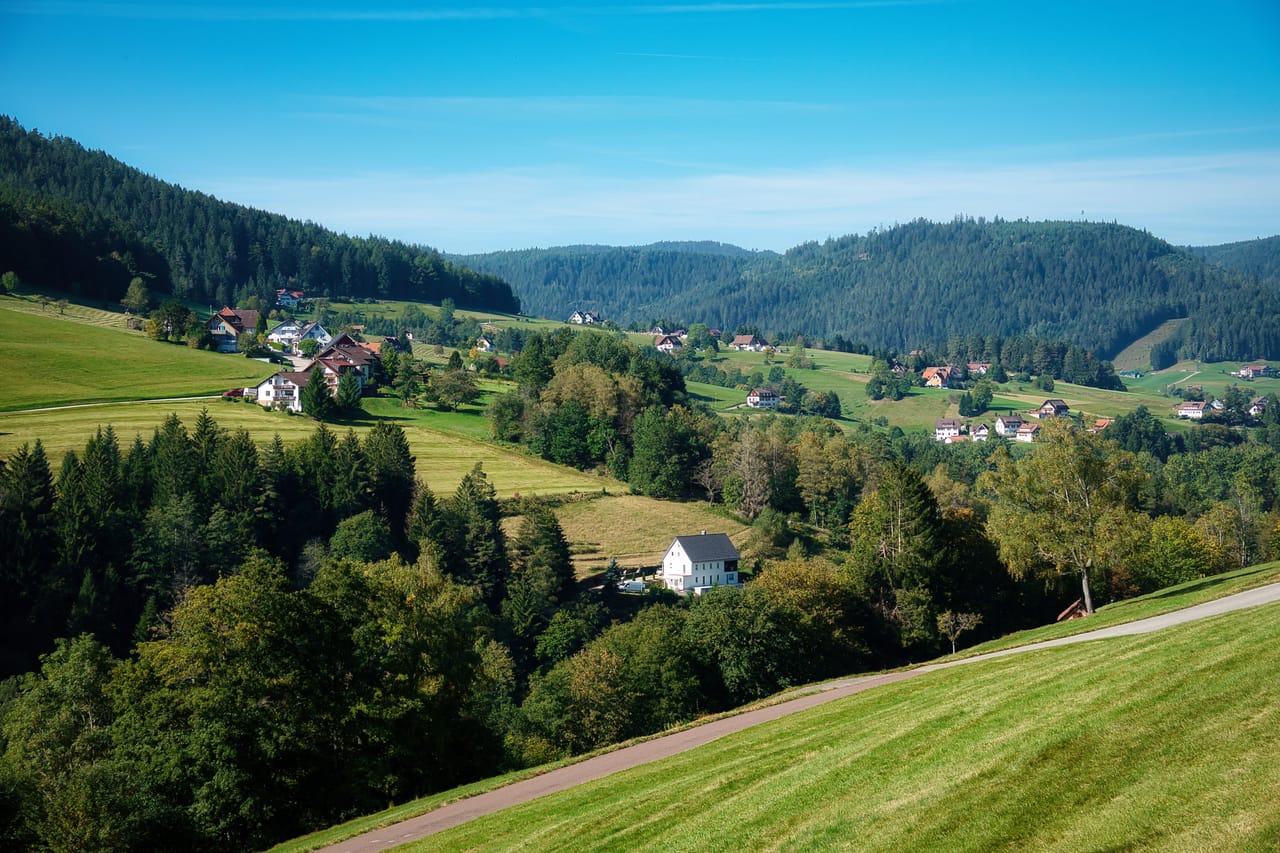
The south is higher and more open. The road crosses the Höllental, the “Valley of Hell”, runs along the Titisee and the Schluchsee, the largest lake in the range, then climbs to the Feldberg pass. You walk to the Feldsee or into the Wutach Gorge. Further west, you leave the mountains for the vineyards of the Kaiserstuhl.
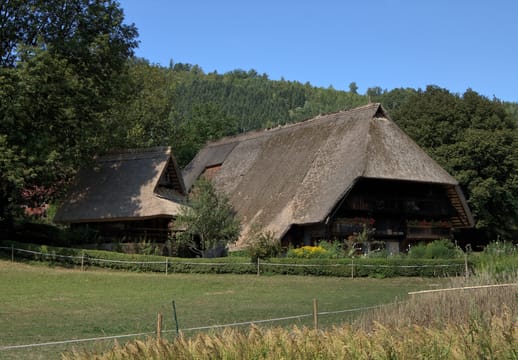
Farmhouses and cuckoo clocks
Black Forest farmhouses kept the family, the livestock and the hay under one roof. The Vogtsbauernhof, in Gutach, was built in 1612. In 1964 it became the heart of an open-air museum, where you can also visit farmhouses taken down elsewhere and rebuilt around it. Winters were long and the snow cut the farms off. Many farmers therefore made wooden clocks, which pedlars set off to sell on foot across Europe.
The first Black Forest cuckoo clocks date from the 18th century, but cuckoo clocks already existed elsewhere. The best-known design comes from a competition launched in 1850 by the clockmaking school in Furtwangen. Friedrich Eisenlohr, an architect for the Baden railways, entered a front in the shape of a railway lineman’s cottage. You find it on most of the cuckoo clocks sold today. Triberg and Schonach each claim the world’s largest cuckoo clock.
On feast days, in Gutach and two neighbouring Protestant villages, women wear the Bollenhut, a hat with big wool pompoms: red for unmarried girls, black for married women.
The Black Forest and the Vosges are two halves of the same massif.
The Rhine rift, the glaciers and a volcano
The Black Forest and the Vosges are two halves of the same massif. Tens of millions of years ago, the Earth’s crust sank between the two: this is the Rhine rift valley, where the Rhine flows. In the middle of this plain, the Kaiserstuhl is an extinct volcano, active between 19 and 16 million years ago. It is covered in loess, a dust carried in by the wind. Vines grow there on terraces, in one of the warmest corners of Germany.
In the south, glaciers shaped the land. Below the Feldberg, at 1,494 metres the highest summit in Germany outside the Alps, a glacier carved out the cirque of the Feldsee. The upper Wutach once flowed towards the Danube. During the last glacial period, it turned towards the Rhine. Since then, it has flowed at the bottom of gorges 60 to 170 metres deep.
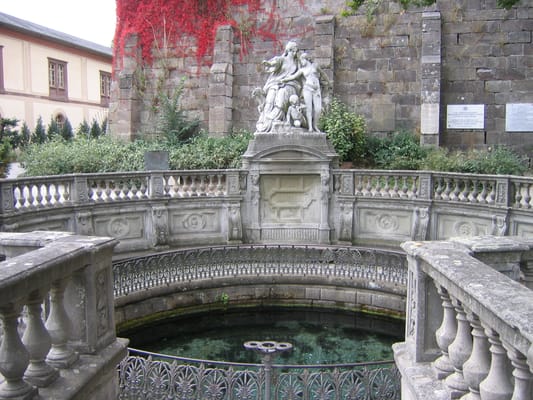
The source of the Danube
In the park of the Fürstenberg palace, a basin marks the symbolic source of the Danube, which sets off from here towards the Black Sea. Furtwangen also claims the title, for the source of the Breg. Since 2022, both towns have officially been “Danube source towns”.
Practical notes
- When to go
- May to October; grape harvest on the Kaiserstuhl in September–October. In winter, the Feldberg becomes a ski resort.
- Getting there
- Freiburg is about an hour from Basel and from Strasbourg.
- Access
- Everything is tarmac, with no tolls for cars and vans. The roads through the Höllental and up the Schauinsland are steep and winding.
- Sleeping in a van
- Motorhome aires in most small towns, campsites at the Titisee and the Schluchsee. The car parks on the ridge are not aires.
- Worth knowing
- Freiburg has had no low-emission zone since 2025. The clock museum in Furtwangen has been closed for renovation since August 2024. It is due to reopen in 2027.
- Allow
- A week, plus a day to walk the Wutach Gorge.
What not to miss
- 1Freiburg MinsterA Gothic cathedral and its 116-metre openwork tower, above the market.
- 2Baden-BadenThe 19th-century spa town, a UNESCO World Heritage Site since 2021, and its Friedrichsbad of 1877.
- 3GengenbachDuring Advent, the 24 windows of the town hall become a calendar.
- 4The Allerheiligen waterfallsFalls tumbling in steps below an abbey burnt down by lightning in 1804.
- 5The domed church of St BlasienA church inspired by the Pantheon in Rome, under a dome 36 metres in diameter.
- 6StaufenA ruined castle among the vineyards; according to tradition, Doctor Faust died in an inn in the town.
The Black Forest in pictures
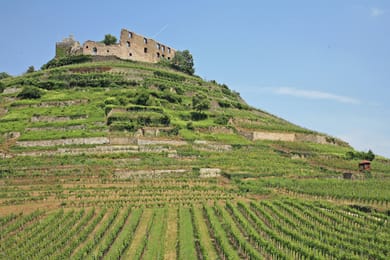
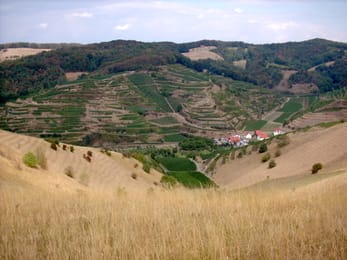
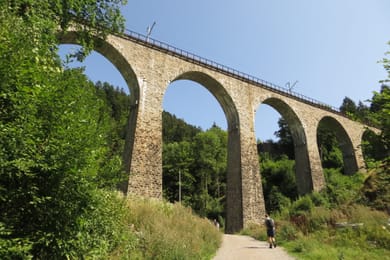
The ruined castle of Staufen above terraced vineyards.
The Black Forest table
Black Forest gateau brings together chocolate sponge, cherries, whipped cream and kirsch. In Germany, you have to be able to taste the kirsch for the cake to carry the name. Black Forest ham, salted and then cold-smoked, has a protected geographical indication.
Near the Schluchsee, the Rothaus state brewery, founded in 1791 by the prince-abbot of St Blasien, brews Tannenzäpfle. At the foot of the mountains, the Baden wine region makes mostly Pinot Noir and Pinot Gris.
Loop from Freiburg im Breisgau


 +22stops
- 1Freiburger Münster · Baden-Baden · Lichtentaler Allee
- 2Altes Schloss · Mummelsee · Schliffkopf · Allerheiligen-Wasserfälle
- 3Benediktinerabtei Gengenbach · Haslach im Kinzigtal · Schwarzwälder Freilichtmuseum Vogtsbauernhof · Triberger Wasserfälle
Free, no account needed — start from its places and make it yours.
Also worth reading
Mountains and passes
The Bavarian Alps, from the Zugspitze to the Königssee
The castles of Ludwig II, about ten lakes and the highest peak in Germany. A nine-day loop from Munich, from Neuschwanstein to the Königssee, with two short stretches through Tyrol.
Wide open spaces
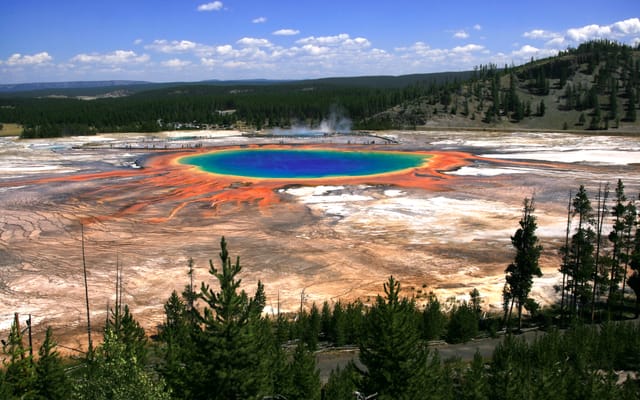
Yellowstone, Grand Teton and Glacier: the great Rockies road trip
Three national parks on one road, from the Tetons to the glaciers of Montana, by way of the geysers of Yellowstone. Twelve days from Jackson to Kalispell, with bison by the roadside and two great mountain roads.
Wide open spaces
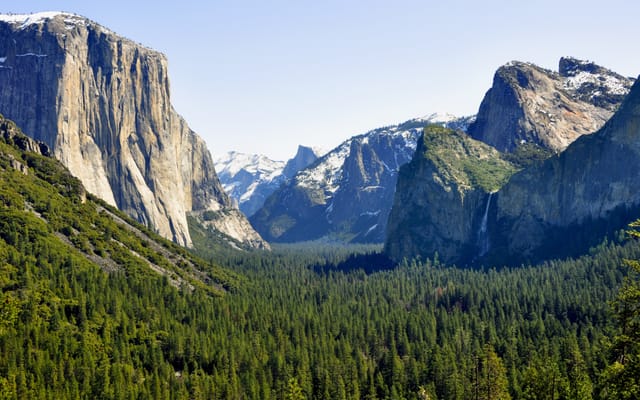
California’s national parks, from Joshua Tree to Yosemite
Five national parks, from the lowest point in North America to the giant sequoias. A two-week loop from Los Angeles, through the Mojave Desert, Death Valley, the Sierra Nevada and Yosemite.
A starting point, a few wishes — ViaLooma builds the trip day by day, map, stops and roadbook included.