Normandy, from Giverny to Mont Saint-Michel
Monet’s garden, the cliffs of Étretat, Honfleur and the Côte Fleurie, the D-Day beaches, then Mont Saint-Michel at the end of its bay. A week along the Seine and the Normandy coast. Nine centuries of history, from William the Conqueror to 6 June 1944.
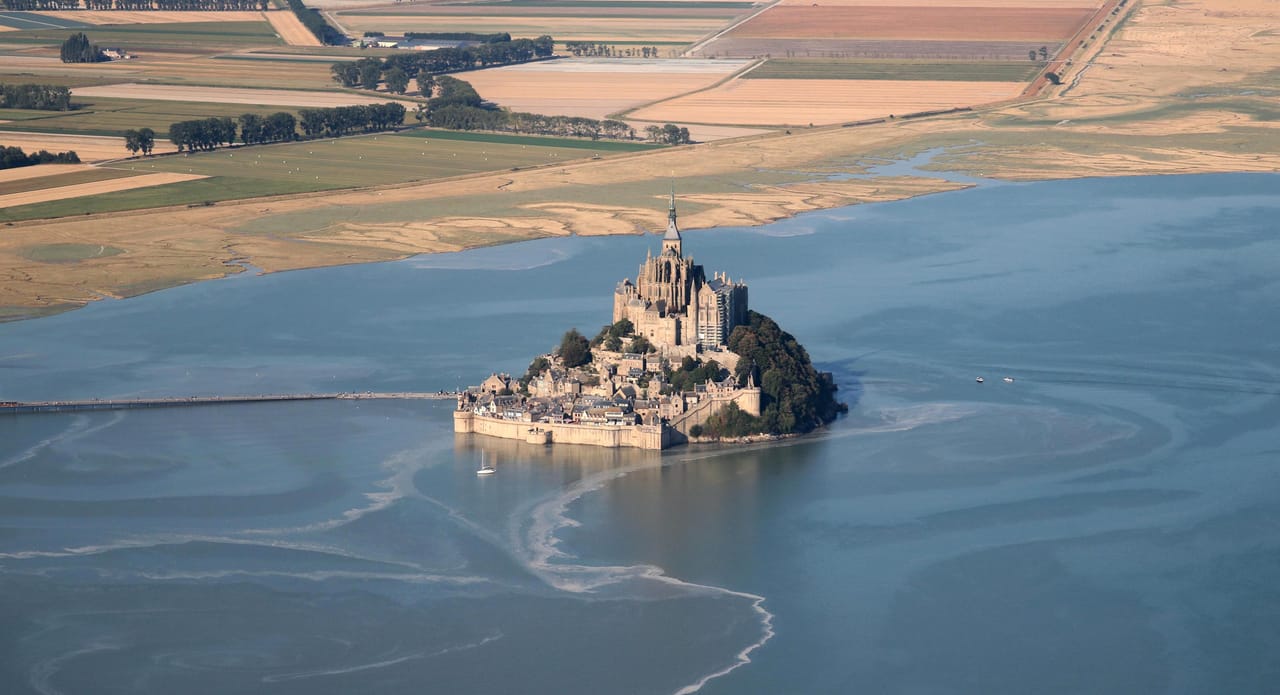
From the Seine to the bay of Mont Saint-Michel
The trip begins at Giverny, Monet’s home, then follows the Seine to the sea. The painter lived there from 1883 until his death in 1926. He created a flower garden, then a water-lily pond spanned by a Japanese bridge. He painted them for thirty years. Further downstream, the road passes beneath the ruins of Château Gaillard and reaches Rouen. On the Place du Vieux-Marché, a cross marks the spot where Joan of Arc was burned, on 30 May 1431.
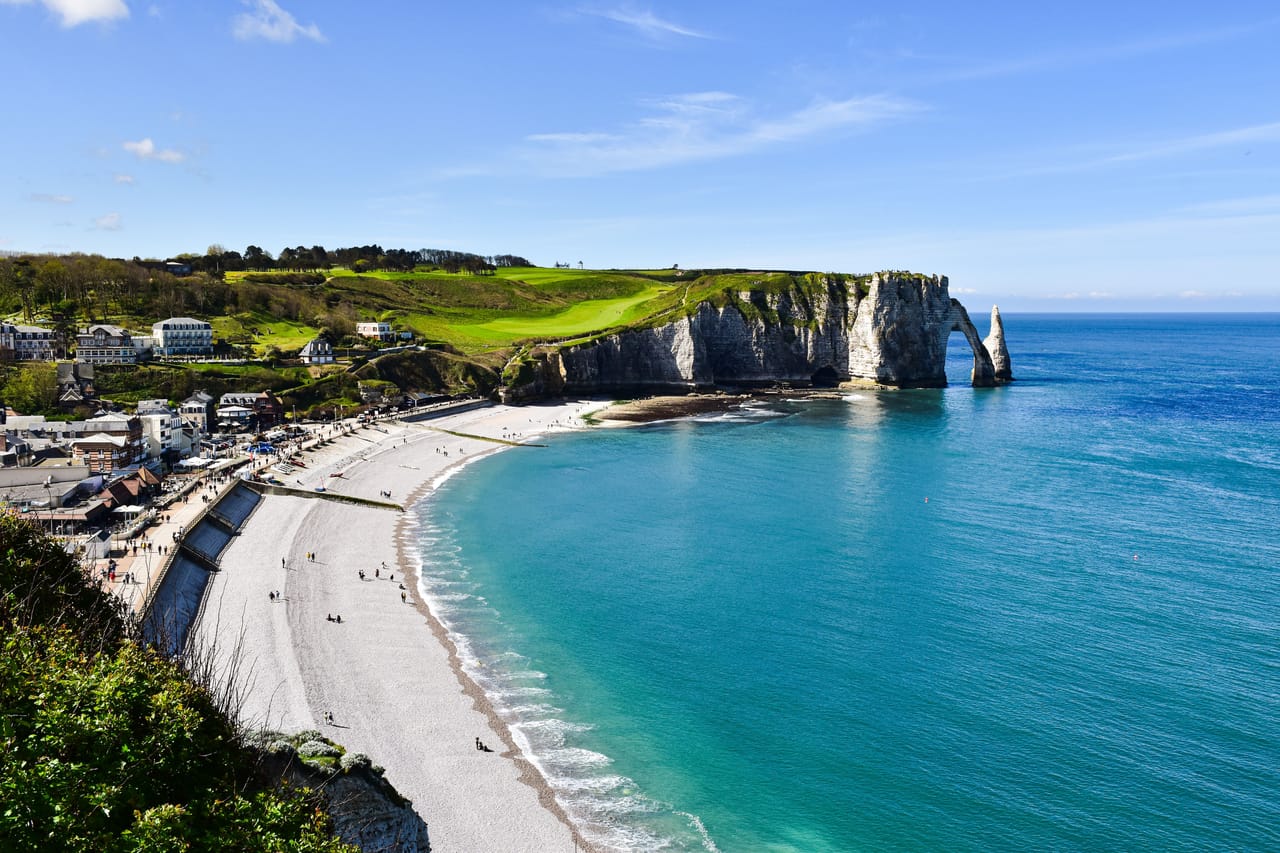
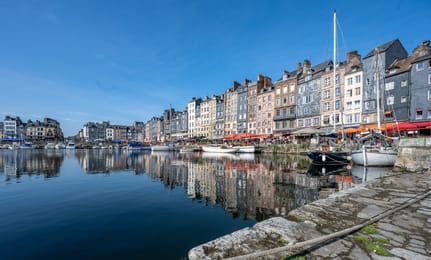
On the coast at Étretat, a path runs along the top of the chalk cliff to the Porte d’Aval and the Needle. Boudin and Courbet painted them. So did Monet, again and again. The painting that gave Impressionism its name, ‘Impression, Sunrise’, shows the port of Le Havre. The Pont de Normandie then crosses the estuary to Honfleur and its Vieux Bassin. Twenty minutes from Honfleur, Trouville and Deauville face each other: the fish market on one side, the Planches boardwalk on the other.
The trip ends at Mont Saint-Michel, a granite rock topped by a Benedictine abbey founded in 966. Together with its bay, it has been a Unesco World Heritage Site since 1979. The tides here are among the strongest in Europe: the sea, so they say, comes in ‘as fast as a galloping horse’. From the car park on the mainland, you reach the ramparts by free shuttle or on foot over the footbridge. Then you climb to the abbey on foot, by the Grande Rue.
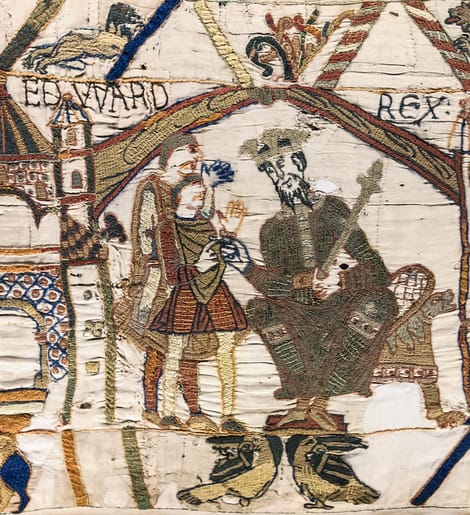
William and the Bayeux Tapestry
The Bayeux Tapestry tells in pictures the story of the conquest of England by William, Duke of Normandy, up to the Battle of Hastings in 1066. It is nearly seventy metres long. It is not a tapestry but a wool embroidery on linen cloth. William descended from the Vikings to whom King Charles the Simple ceded the region around Rouen in 911. These Northmen, the Normans, gave their name to Normandy.
The tapestry museum in Bayeux is being renovated. The embroidery is on show at the British Museum in London from September 2026 to July 2027. In Bayeux, you can still visit Notre-Dame Cathedral, where it was displayed every summer. In Caen, William founded the Abbaye aux Hommes, and his tomb lies in the choir of the church.
It is not a tapestry but a wool embroidery on linen cloth.
The beaches of 6 June 1944
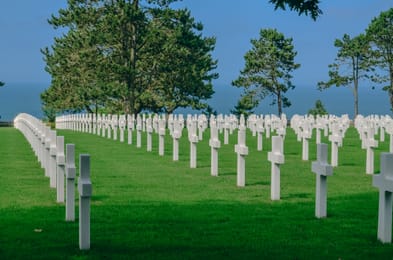
On 6 June 1944, more than a hundred and fifty thousand Allied soldiers landed on five beaches known by code names: Utah, Omaha, Gold, Juno and Sword. At Omaha Beach, American losses were the heaviest of the day. Above the beach, the American cemetery at Colleville lines up more than nine thousand graves facing the sea.
At Arromanches, the caissons of the artificial harbour, towed across from England, still rise out of the water at low tide. At the Pointe du Hoc, the plateau is still pitted with bomb craters. On 6 June, the US Rangers scaled its cliff on ropes.
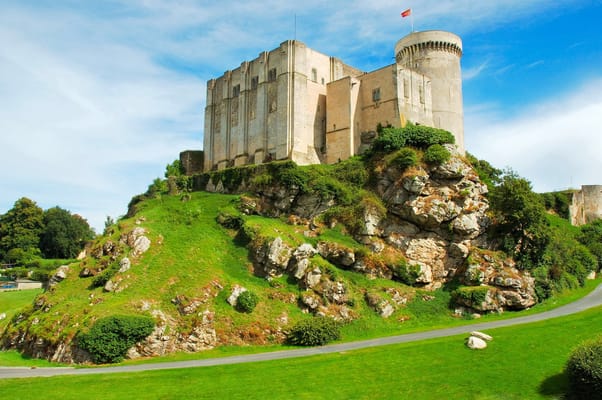
Château de Falaise
William was born in Falaise around 1027. He was the son of Duke Robert and, according to tradition, of a tanner’s daughter. The keep, built about a century later, towers over the town, and the visit tells the story of the future King of England’s childhood.
Practical notes
- When to go
- April to June, with the apple trees in blossom in May, then September. Around 6 June, the commemorations fill the beaches.
- Getting there
- Vernon is an hour from Paris on the A13. Heading home from the Mount: Rennes an hour away, Paris four hours.
- Access
- All tarmac. At Mont Saint-Michel, parking on the mainland is compulsory, then the shuttle or the footbridge on foot.
- Sleeping in a van
- Plenty of campsites on the coast and in the Bessin, and motorhome aires in most of the seaside towns.
- Worth knowing
- The Bayeux Tapestry is at the British Museum until July 2027, with tickets to book well in advance; its museum in Bayeux reopens at the end of 2027.
- Allow
- A week from Giverny to the Mount, ten days to add the Cotentin.
What not to miss
- 1Monet’s gardensThe Clos Normand and the water-lily pond, open from spring to autumn.
- 2Château GaillardRichard the Lionheart’s fortress, built in two years above a bend in the Seine.
- 3Rouen CathedralThe façade Monet painted, beneath the tallest spire in France, at 151 metres.
- 4The cliffs of ÉtretatThe Porte d’Aval, the Needle and the Manneporte, along the clifftop path.
- 5HonfleurThe Vieux Bassin, its narrow façades and the church of St Catherine, built of wood by ships’ carpenters.
- 6The American Cemetery at CollevilleRows of white crosses above Omaha Beach.
Normandy in pictures
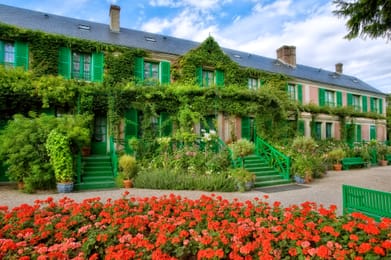
Claude Monet’s house at Giverny.
The Norman table
Normandy cooks with cream and butter, and drinks the apple. Cider and perry are sold at the farm gate, calvados ages in the cask, and pommeau, a blend of apple must and calvados, is served as an aperitif. In the Pays d’Auge, the cider route runs through Beuvron-en-Auge and Cambremer.
The cheeses bear the names of villages: camembert, livarot, pont-l’évêque, neufchâtel. On the coast, bouchot mussels and scallops, for which Port-en-Bessin is one of the great harbours. And at Mont Saint-Michel, Mère Poulard’s omelette, whisked by hand since 1888.
Vernon → Pontorson

 +15stops
- 1Fondation Claude-Monet · Château-Gaillard
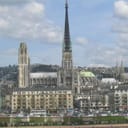
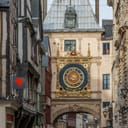
- 2Cathédrale Notre-Dame de Rouen · Gros-Horloge · Abbaye Royale Saint-Pierre de Jumièges
- 3Palais Bénédictine · Étretat
Free, no account needed — start from its places and make it yours.
Also worth reading
Coast and islands
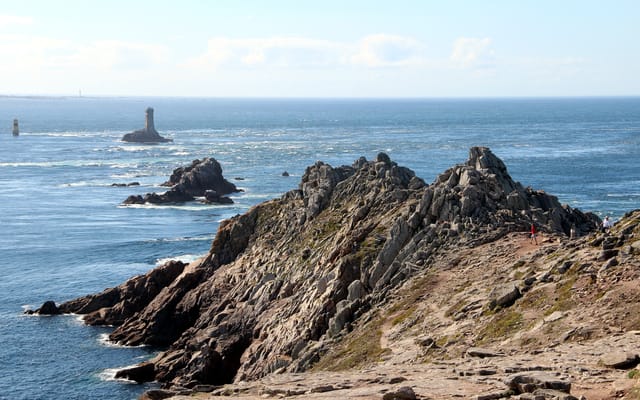
The coast of Brittany, from Saint-Malo to Vannes
The corsair city, the pink granite, the headlands of Finistère and the standing stones of Morbihan: nearly eight hundred kilometres along the coast, from the Channel to the Atlantic, in eight days.
Coast and islands
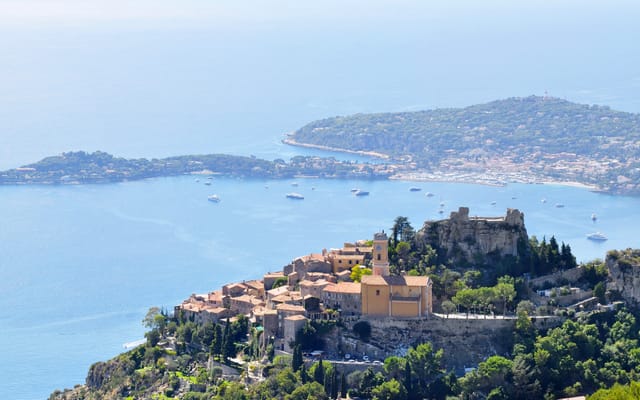
The French Riviera and the hills behind Nice
Corniche roads hanging above the Mediterranean, hilltop villages twenty minutes from the beaches, alpine valleys an hour from Nice. A six-day loop to see both faces of the Riviera.
Coast and islands
Corsica, round the island in ten days
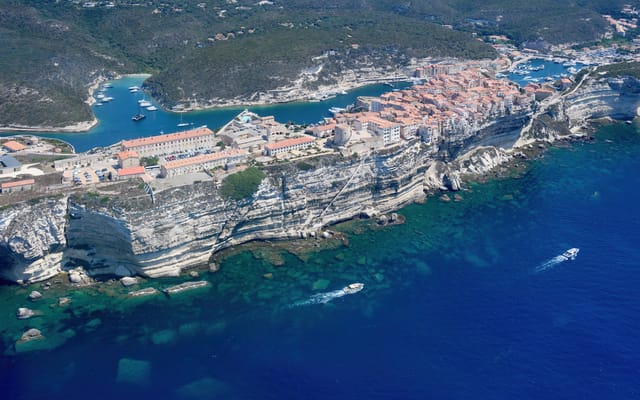
A mountain in the sea: red granite calanques, Genoese citadels, passes more than a thousand metres up, twenty kilometres from the beaches. Ten days on a loop from Ajaccio, on slow and winding roads.
A starting point, a few wishes — ViaLooma builds the trip day by day, map, stops and roadbook included.