The Finnish Lakeland, from Lake Saimaa to Kuopio
Thousands of islands, pine forests and wooden churches, a few hours from Helsinki. A week on a loop through Saimaa, the largest lake in Finland, then Savonlinna, Kuopio and Jyväskylä.
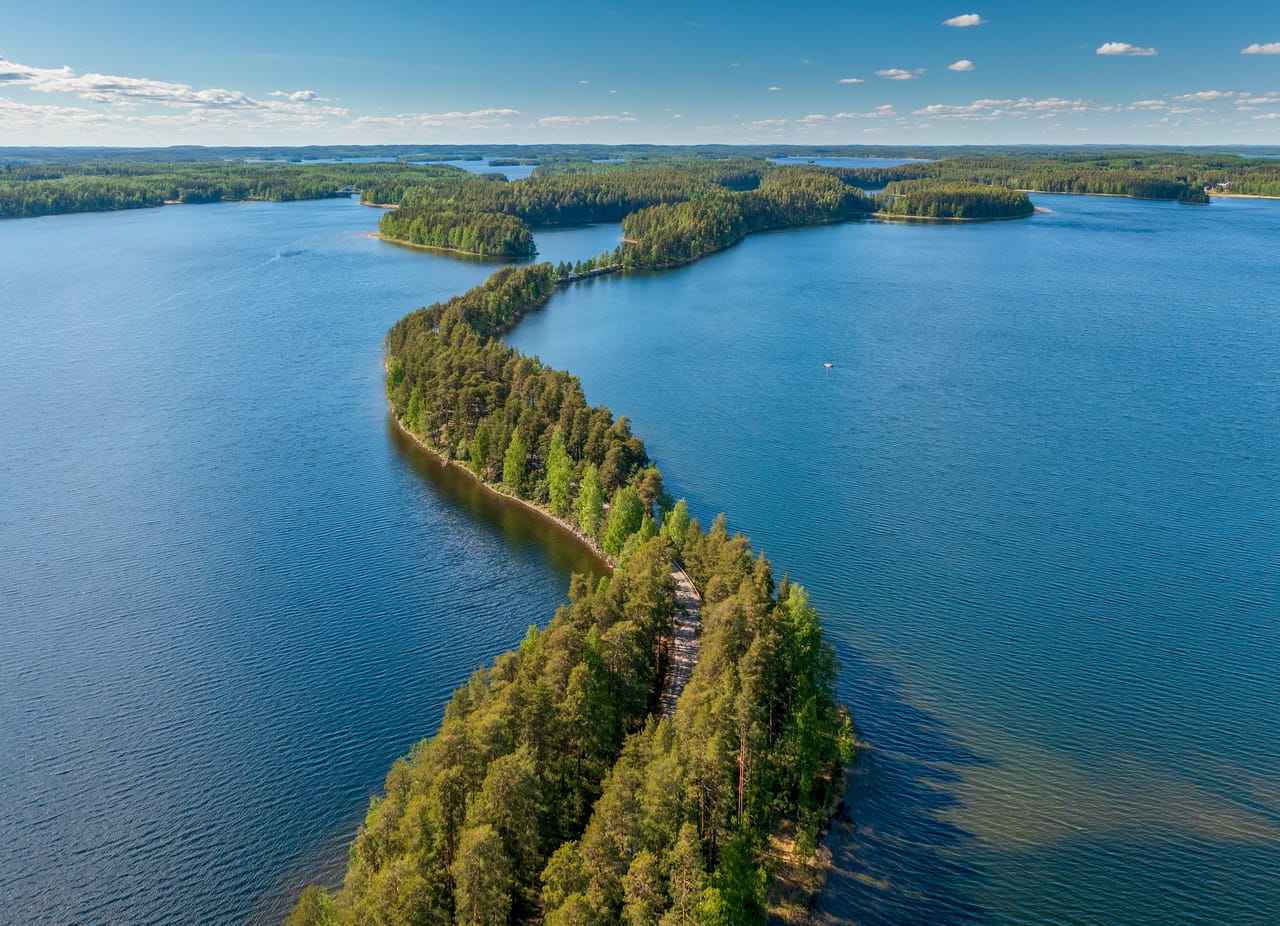
The road between the lakes
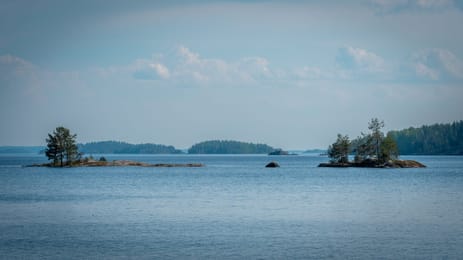
Central and eastern Finland are covered in lakes, forests and islands. The road crosses from one shore to the next on bridges and free ferries, between pines and birches. By the water, summer cottages often have their own sauna. In June and July, it barely gets dark.
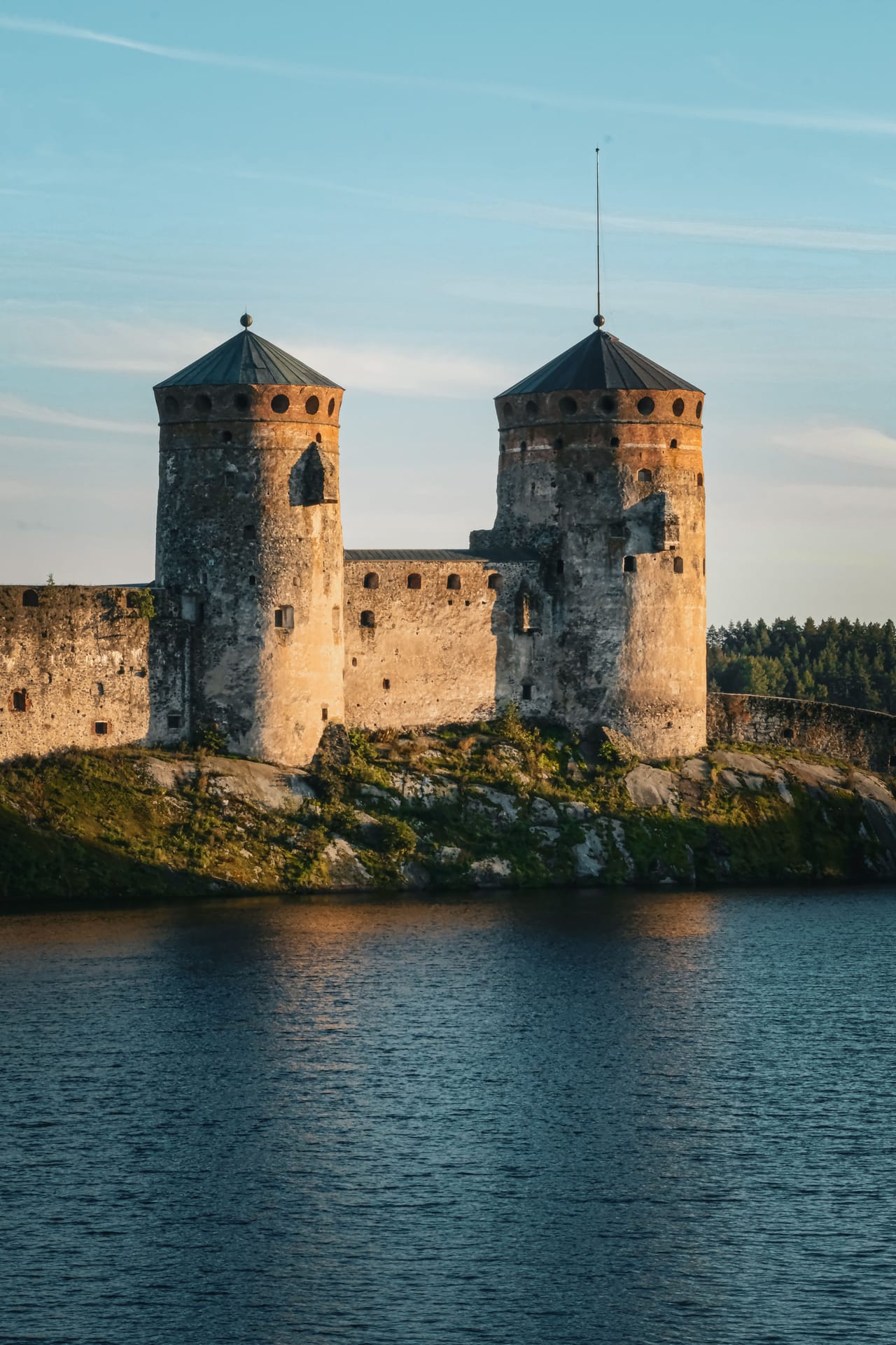
At Punkaharju, the road runs along the top of a ridge of sand and gravel left by the glaciers, about 7.5 km long, between two lakes. You can see water on both sides at once. Further on, Savonlinna is built on islands, around Olavinlinna castle, founded in 1475 on a rock in the middle of a strait. Every summer, its courtyard hosts an opera festival. Boats leave from the harbour for an hour or two on the lake.
At Imatra, in summer, a dam opens its gates at 6 pm and the almost dry gorge of the Vuoksi fills with white water. Near Kouvola, the Verla board mill is on the UNESCO list. Two hours north-east of Kuopio, the wooded hills of Koli rise above Lake Pielinen.
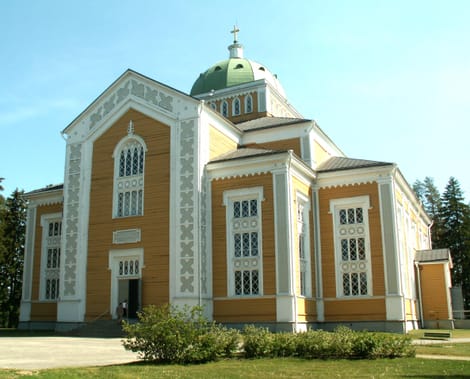
Wooden churches and Alvar Aalto
In Finland, for a long time everything was built of wood, even churches. The church at Kerimäki, built from 1844 to 1847 to plans by Anders Fredrik Granstedt, is the largest wooden church in the world according to Guinness World Records. It has more than 3,000 seats and can hold about 5,000 people. It is not heated: in winter, services take place in a small church next door. It is closed for works in 2026.
The Old Church of Petäjävesi, built from 1763 to 1765, combines log building with Gothic and Renaissance shapes. It has been on the UNESCO list since 1994.
Alvar Aalto, who grew up in Jyväskylä, built in wood, brick and copper. His Säynätsalo Town Hall, completed in 1951, is built around a raised courtyard that you reach up steps of grass. In July 2026, UNESCO added thirteen of his works to the World Heritage List, including this town hall and the Church of the Three Crosses in Imatra.
The Saimaa ringed seal lives here and nowhere else.
Lake Saimaa and its seal
Saimaa is the largest lake in Finland: about 4,300 km² and 13,700 islands. It is held back in the south by the moraines of the Salpausselkä and drains through the Vuoksi into Lake Ladoga, in Russia. Opened in 1856, the Saimaa Canal also links it to the sea, from Lappeenranta to Vyborg.
The Saimaa ringed seal lives here and nowhere else. Its ancestors were trapped in the lake at the end of the last ice age. Since 2025, it has been recognised as a separate species, Pusa saimensis. About 500 remain. Winters without snow and fishing nets threaten it. With luck, you will see one on a rock in Linnansaari National Park, on Lake Haukivesi.
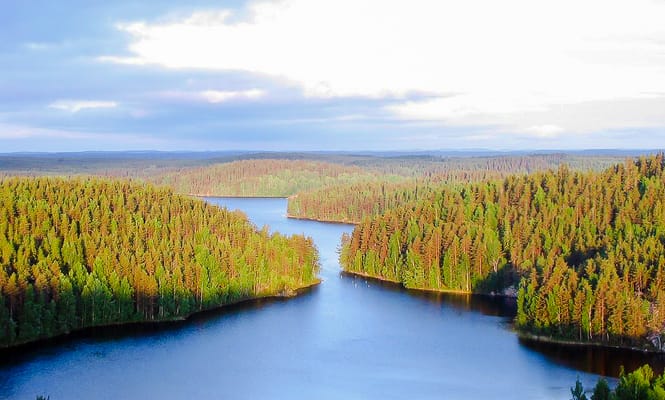
Repovesi National Park
Granite cliffs above narrow lakes: the most marked relief on the trip. The trails start from the Lapinsalmi and Saarijärvi car parks; you cross an arm of a lake on the Ketunlossi hand-pulled ferry, and the Olhavanvuori rock face draws climbers.
Practical notes
- When to go
- Mid-June to the end of August. The Imatra water releases take place in summer, Wednesday to Sunday at 6 pm; check the year’s calendar.
- Getting there
- A loop from Helsinki: international airport, ferries from Tallinn, Stockholm and Travemünde.
- Access
- The main roads are tarmac, with no tolls or vignette. Dipped headlights are compulsory by day. Watch out for elk at dusk.
- Sleeping in a van
- Plenty of campsites on the lakeshores. The right of public access to nature covers tents, not vans: sleep where overnight parking is allowed.
- Worth knowing
- Kerimäki church is closed for works, probably until summer 2027. Linnansaari is reached by boat from Rantasalmi. In July, the opera festival fills Savonlinna.
- Allow
- A week for the loop, plus half a day for Repovesi.
What not to miss
- 1The Imatra rapidsA quarter of an hour of water released into the Vuoksi gorge, at 6 pm in summer.
- 2OlavinlinnaThe castle from 1475, on its islet in the middle of the Kyrönsalmi strait, in Savonlinna.
- 3Valamo MonasteryThe monks of Valaam, evacuated from Lake Ladoga during the Winter War, refounded it in 1940 at Heinävesi.
- 4Puijo TowerA 75-metre tower on a hill in Kuopio, with views over Lake Kallavesi and its islands.
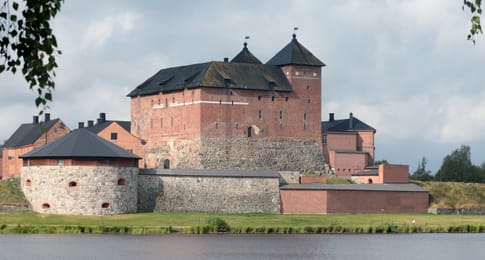
- 5Häme CastleA fortress of granite and brick on the shore of Lake Vanajavesi, in Hämeenlinna.
- 6AinolaJean Sibelius’s house near Lake Tuusula, where he lived from 1904 and where he is buried.
The Finnish Lakeland in pictures
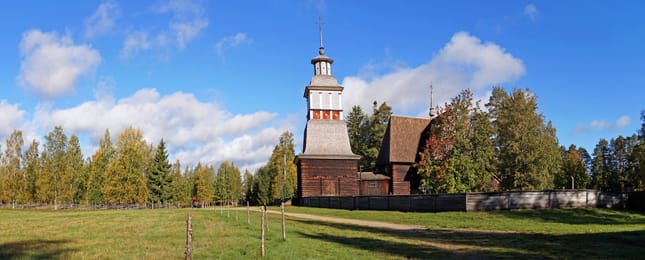
Petäjävesi’s old log church and its bell tower, in full, under blue sky.
The Lakeland table
Lake fish comes first. Muikku, or vendace, a small whitefish, is eaten fried at the markets. In Kuopio, kalakukko is a large rye loaf baked around fish and pork fat; it has been recognised as a traditional speciality guaranteed in Europe since 2002. In Savonlinna, lörtsy is a fried turnover, sweet or filled with meat.
Everywhere you will find Karelian pasties filled with rice, and smoked fish. In summer, wild berries are free for anyone to pick: bilberries, lingonberries, cloudberries.
Loop from Helsinki


 +17stops
- 1Verla · Lappeenrannan linnoitus · Imatrankoski
- 2Kolmen ristin kirkko · Punkaharju · Kerimäen kirkko
- 3Olavinlinna · Riihisaari - Savonlinnan museo · Järvikylpylä
Free, no account needed — start from its places and make it yours.
Also worth reading
Experiences
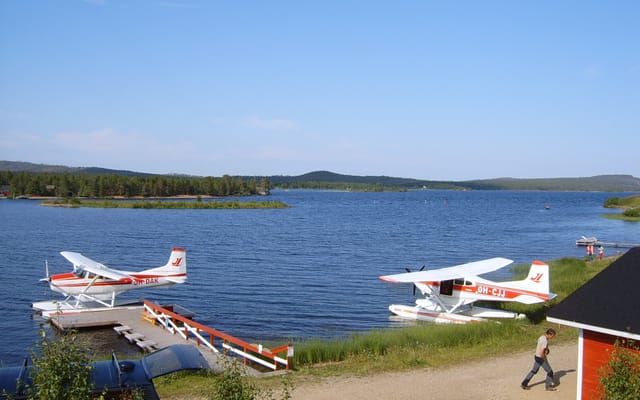
Finnish Lapland, from Rovaniemi to Lake Inari
Forests, lakes and treeless hills, reindeer on the road and Sámi country around Lake Inari. A one-week loop from Rovaniemi, under the midnight sun or in the snow.
Wide open spaces
The Pacific Northwest, from the Olympic Peninsula to the Cascade volcanoes
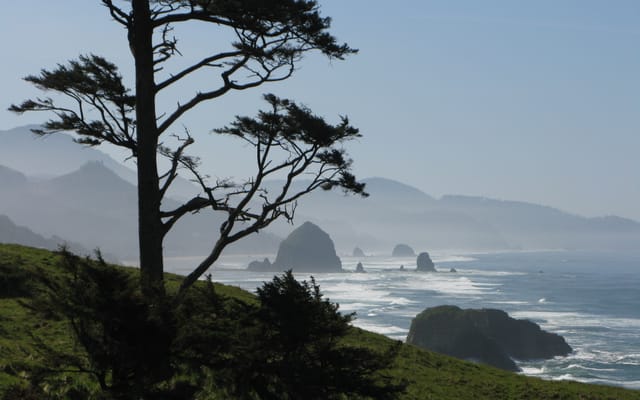
Rainforests, a coast of headlands and lighthouses, redwoods and two active volcanoes. A two-week loop from Seattle, by way of the Olympic Peninsula, the Oregon coast and Mount Rainier.
Wide open spaces
Vancouver Island, from Victoria to the beaches of Tofino
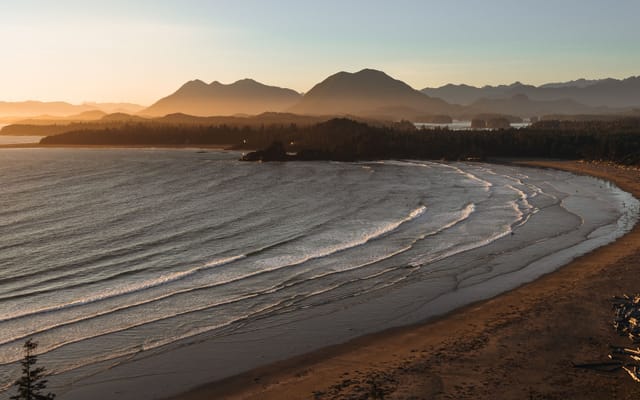
An island of giant forests, beaches pounded by the Pacific and small harbours where boats leave to see orcas. Nine days on a loop from Victoria, from Port Renfrew to Tofino and up to Telegraph Cove.
A starting point, a few wishes — ViaLooma builds the trip day by day, map, stops and roadbook included.