Berat and Gjirokastër, Albania’s towns of stone
Two Ottoman towns on the UNESCO list, limestone gorges, and springs of turquoise or warm water. Six days on a loop from Tirana, from the Adriatic plain to the mountains of southern Albania.
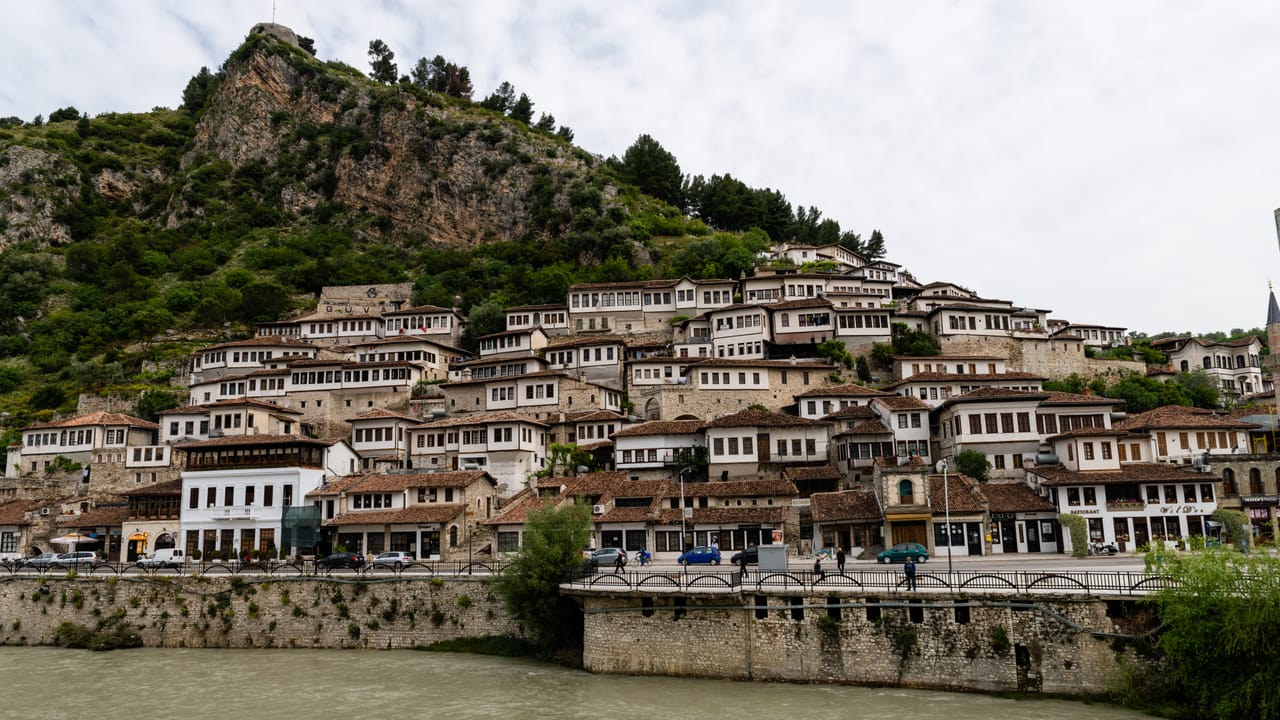
From Tirana to the gorges of the south
The loop leaves Tirana and heads south across the coastal plain, between greenhouses and olive trees. In the fields, you still see concrete bunkers from the communist era. In Durrës, a Roman amphitheatre appears among the blocks of flats. Then the road follows the Osum upstream to Berat.
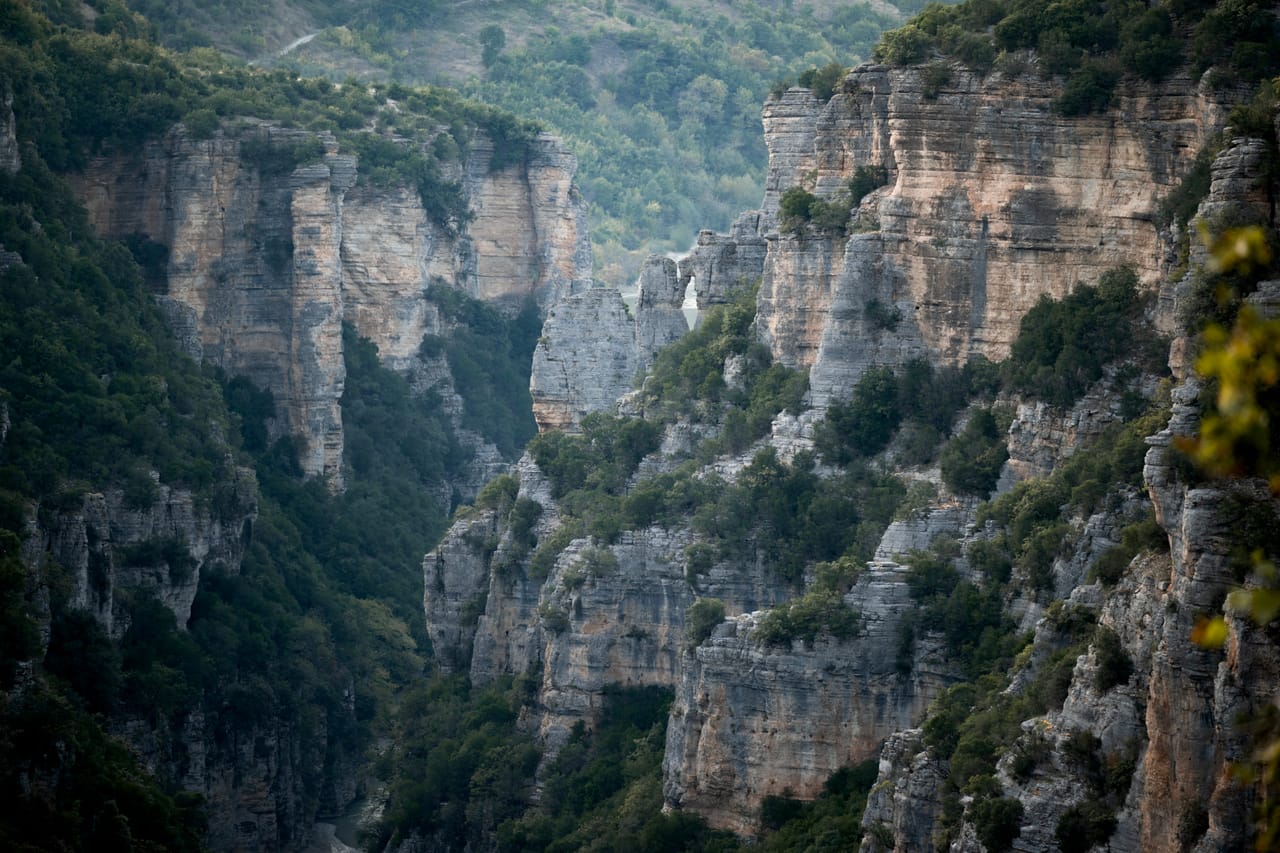
After Çorovodë, a small road runs along the edge of the Osum Canyon: limestone cliffs, viewpoints, and a green river far below. Further south, another road follows the Vjosa upstream, one of the few big rivers in Europe without a dam, through the Këlcyrë gorge to Përmet, the “city of roses”. In Bënja, warm sulphur water fills pools at the foot of an Ottoman bridge.
The Muzinë Pass then leads to the Blue Eye, a deep blue spring where the Bistricë rises. You arrive at Gjirokastër, with its castle, its cobbled lanes and its old bazaar. The roads are narrow and slow, and you come across flocks and herds on them.
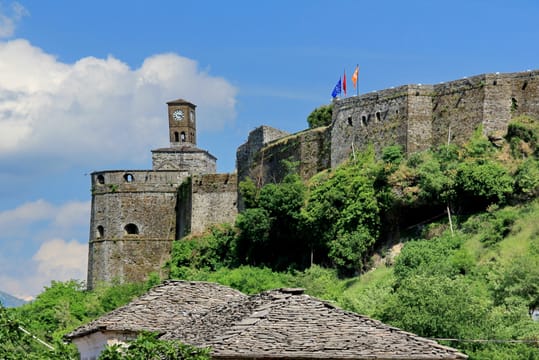
Gjirokastër and Berat, two Ottoman towns
Gjirokastër is built of grey stone on a slope, below a castle perched at 336 metres. Its tower houses, the kulla, have an almost windowless ground floor and living quarters above, under stone-slab roofs: they were also built for defence. The Zekate House, one of the finest, dates from 1811–1812. The town has been a UNESCO World Heritage site since 2005. In 2008, Berat, another rare example of an Ottoman town, joined the same listing.
Berat is white. Its old town has three quarters: Kalaja, inside the citadel, still lived in; Mangalem, at the foot of the hill, the old Muslim quarter; and Gorica, the old Christian quarter, across the Osum. In Mangalem, the houses rise in tiers up the slope: Berat is often called “the town of a thousand windows”.
The Gorica Bridge links the two banks. Built of wood in 1780, it was rebuilt in stone in the 1920s. According to the legend, the wooden bridge had a cell where a young girl was locked up to calm the spirits of the bridge.
In 1967, Enver Hoxha’s regime declared Albania the world’s first atheist state.
Churches, mosques and the communist regime
In Berat’s citadel, Byzantine churches stand next to the ruins of the Red Mosque. The Cathedral of the Dormition, from 1797, houses the Onufri Museum, named after a 16th-century icon painter known for his red. In 1967, Enver Hoxha’s regime declared Albania the world’s first atheist state. Places of worship were closed or destroyed. Listed as a “museum town” as early as 1961, Berat kept many of its churches and mosques.
Gjirokastër is the birthplace of the writer Ismail Kadare (1936–2024), who told its story in “Chronicle in Stone”. It is also Enver Hoxha’s home town: the ethnographic museum stands on the site of the house where he was born. At the castle, the prison enlarged in 1932 under King Zog later held the communist regime’s political prisoners.
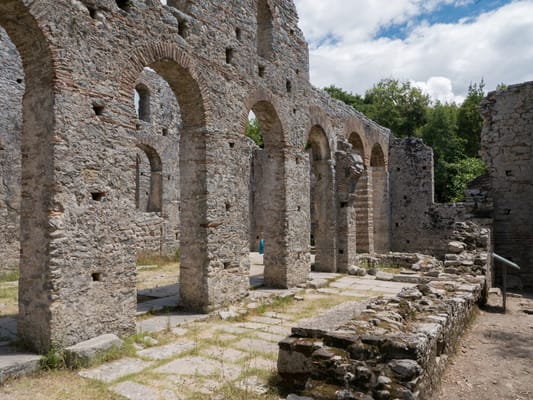
Butrint
An ancient city on a wooded peninsula, a UNESCO World Heritage site since 1992: a Greek theatre, a baptistery, a great basilica, the Lion Gate and a Venetian castle. According to Virgil, it was founded by Trojans in exile. You need a night in Saranda or Ksamil to visit it.
Practical notes
- When to go
- April–June and September–October. In July and August, it is often over 35 °C in Berat and Gjirokastër.
- Getting there
- Tirana has an international airport. Ferries link Bari and Ancona to Durrës; by road, most people come in through Montenegro or Greece.
- Access
- The whole loop is tarmac. Off the loop, beyond the Osum Canyon, the tracks are for 4×4s. Narrow roads, potholes. No tolls and no vignette.
- Sleeping in a van
- Campsites near Berat, and on the banks of the Vjosa at Tepelenë and Përmet. In the old towns, you park at the bottom.
- Worth knowing
- Works have been announced at the Bënja pools: ask in Përmet. At the Blue Eye, swimming is forbidden; arrive before 11 am. You often pay in leks, in cash.
- Allow
- Six days for the loop, three of them long days on the road. Seven, with a night in Saranda or Ksamil, to add Butrint.
What not to miss
- 1Berat’s citadelA quarter still lived in, Byzantine churches and the view over Gorica at sunset.
- 2The Osum CanyonViewpoints on the edge of the cliffs, and rafting in spring.
- 3The springs of BënjaPools of warm sulphur water at the foot of the Kadiu Bridge, at the mouth of the Lengarica canyon.
- 4The Blue EyeA spring where divers have gone down 50 metres without finding the bottom.
- 5The Zekate HouseA tower house from 1811–1812, with its two towers and its great hall, above Gjirokastër.
- 6ApolloniaThe Greek city founded around 600 BC, where the young Octavian learned of Caesar’s death.
Berat and Gjirokastër in pictures
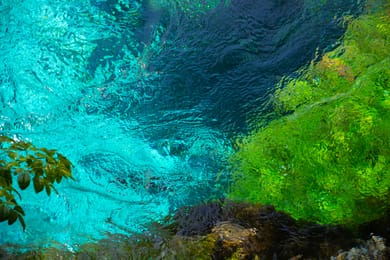
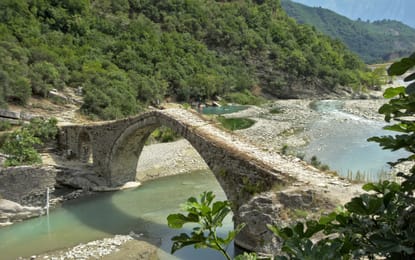
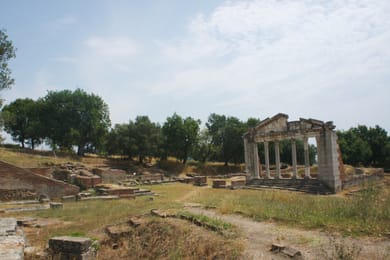
The turquoise water of the Blue Eye, where the Bistricë rises.
The southern Albanian table
In Gjirokastër, try qifqi, fried rice balls with egg and dried mint, and oshaf, a dessert of sheep’s milk and dried figs. Everywhere, people eat byrek, a flaky pie filled with spinach or cheese.
Përmet is known for gliko, fruit preserved in syrup, sometimes green walnuts or figs, and for its raki. Around Berat, family estates make wine, often from Albanian grape varieties such as shesh.
Loop from Tirana


 +15stops
- 1Sheshi Skënderbej · Bunk’Art 2 · Amfiteatri i Durrësit
- 2Manastiri i Ardenices · Apolonia · Ura e Beratit
- 3Muzeu Kombëtar Etnografik Berat · Kanionet e Osumit · Kalaja e Beratit
Free, no account needed — start from its places and make it yours.
Also worth reading
Coast and islands
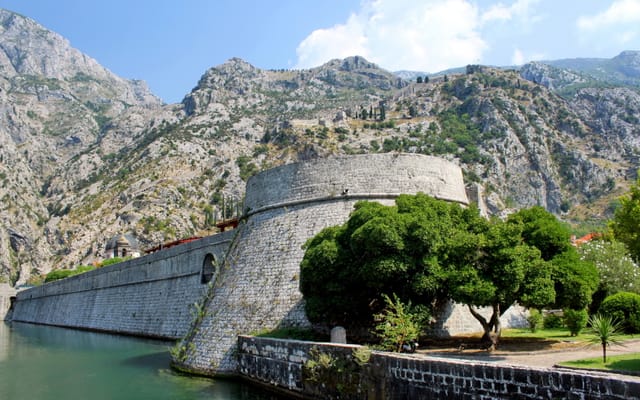
Montenegro and Albania, from Kotor to Berat
A bay ringed by mountains, a great lake, Venetian and Ottoman towns. Eight days on the road, from Kotor to Berat, in the heart of Albania.
Coast and islands
The Albanian Riviera, from Vlorë to Ksamil
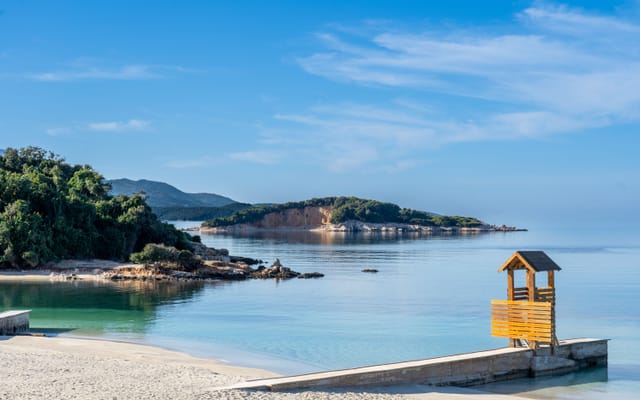
Between Vlorë and Ksamil, the Ionian coast road crosses the Llogara Pass, then runs past pebble beaches and hilltop villages. In six days, you also visit the ruins of Butrint, Ali Pasha’s forts and the blue spring of the Blue Eye.
Wide open spaces
Eastern Canada, from Toronto to Quebec City
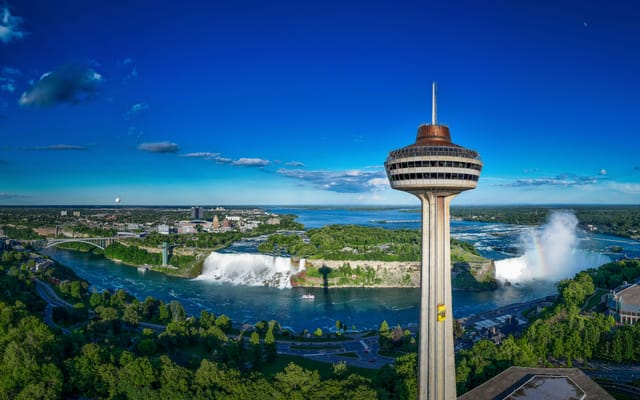
From Niagara Falls to the walls of Quebec City, the best way to see Eastern Canada is to follow the water. Eleven days on the road, through the Thousand Islands, the Rideau Canal, Ottawa, Montreal and the lakes of the Mauricie.
A starting point, a few wishes — ViaLooma builds the trip day by day, map, stops and roadbook included.